Marine battery corrosion rarely begins with a complete power failure. It often starts with a discolored terminal, deteriorating connector, or unexplained voltage drop. For commercial vessels operating on demanding schedules, these seemingly minor defects can eventually compromise electrical reliability and increase maintenance costs.
Preventing marine battery corrosion requires more than routine terminal cleaning. Fleet operators must combine appropriate battery selection, environmental protection, preventive maintenance, and supplier qualification to maintain dependable onboard power throughout the vessel’s service life.
What Causes Marine Battery Corrosion in Commercial Vessels?
Commercial vessels expose battery systems to a combination of saline moisture, temperature fluctuations, vibration, and prolonged humidity. These conditions create an environment conducive to electrochemical degradation.
Understanding the mechanisms behind marine battery corrosion helps fleet operators address its underlying causes rather than repeatedly treating visible symptoms.
Saltwater and Airborne Chlorides
Salt particles carried by marine air accumulate on terminals, connectors, and enclosure surfaces. When combined with moisture, these deposits form a conductive electrolyte that facilitates electrochemical reactions.
Chloride-induced pitting is particularly concerning because localized deterioration can penetrate protective metal surfaces while remaining difficult to identify during routine inspections.
Condensation and Persistent Humidity
Temperature differences between operating equipment and surrounding air can produce condensation inside battery compartments.
Even vessels with enclosed electrical installations may experience marine battery corrosion when moisture accumulates around cable entries, mounting hardware, or inadequately sealed interfaces.
Galvanic Corrosion Between Dissimilar Metals
When electrically connected dissimilar metals encounter a conductive liquid, the more anodic material may deteriorate preferentially. Incompatible terminals, fasteners, and cable lugs can therefore accelerate localized corrosion.
Battery Chemistry and Environmental Exposure
Flooded lead-acid batteries introduce an additional source of marine battery corrosion through electrolyte leakage and acidic aerosols.
Sealed lithium marine batteries eliminate many of these chemistry-related maintenance concerns. Nevertheless, their external electrical connections and metallic components remain susceptible to environmental degradation.
How Does Marine Battery Corrosion Affect Fleet Operations?
For commercial operators, corrosion is not merely a cosmetic defect. Its operational significance lies in the gradual deterioration of electrical connections that must remain reliable under variable loads.
Increased Electrical Resistance and Power Loss
Corroded connections can increase contact resistance, resulting in voltage drops and localized heating during high-current operation.
Consider a connection carrying 200 A:
| Additional Contact Resistance | Voltage Drop | Localized Power Loss |
|---|---|---|
| 0.5 mΩ | 0.1 V | 20 W |
| 1.0 mΩ | 0.2 V | 40 W |
| 2.0 mΩ | 0.4 V | 80 W |
| 5.0 mΩ | 1.0 V | 200 W |
Illustrative calculation using P = I²R and V = IR at a constant current of 200 A.

These figures demonstrate why marine battery corrosion becomes especially consequential in propulsion systems and other high-current installations. A seemingly insignificant resistance increase can generate substantial heat at a single connection.
Operational Disruption Across Vessel Types
| Commercial Application | Corrosion-Related Consequence |
|---|---|
| Electric passenger ferries | Propulsion interruptions and schedule disruption |
| Commercial fishing vessels | Unreliable onboard equipment and auxiliary power |
| Rental boat fleets | Reduced vessel availability and additional servicing |
| Electric workboats | Interrupted deck operations and electrical faults |
| Unmanned surface vessels | Communication interruptions and mission abandonment |
Corroded connections may also cause intermittent communication faults or unexpected protective shutdowns. A well-integrated marine battery management system can help identify certain electrical anomalies, although it cannot detect every deteriorating connection.
Over time, recurring faults increase spare-parts consumption, technician workloads, and the total cost of fleet ownership.
Which Marine Battery Components Are Most Vulnerable to Corrosion?
Corrosion risk varies across battery components. Exposure conditions, material compatibility, electrical loading, and enclosure design determine where deterioration is most likely to develop.
| Vulnerable Component | Typical Failure Mechanism | Inspection Priority |
|---|---|---|
| Battery terminals | Oxidation and increasing contact resistance | High |
| Cable lugs | Galvanic corrosion and moisture penetration | High |
| Power connectors | Contact degradation and seal deterioration | High |
| Communication connectors | Contact contamination and intermittent signals | High |
| Battery enclosures | Pitting and coating deterioration | Medium–High |
| Mounting hardware | Galvanic attack and mechanical weakening | Medium–High |
| Cable glands | Seal deterioration and moisture ingress | High |
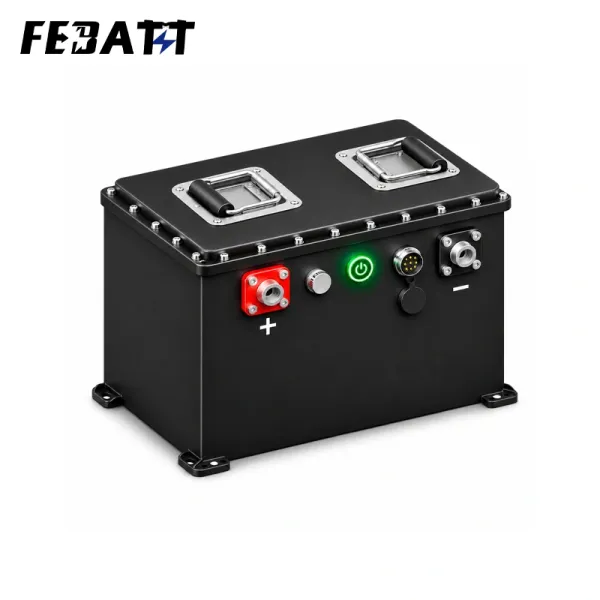
External terminals deserve particular attention because corrosion can undermine otherwise healthy battery systems.
However, marine battery terminal corrosion is not the only concern. Moisture entering a compromised enclosure may affect internal conductors, sensing circuits, insulation, and electronic components.
Corrosion resistance should therefore be assessed at the assembly level, including the interfaces between the battery pack and vessel electrical architecture.
For fleet buyers, specifying a corrosion-resistant enclosure while overlooking connector compatibility creates an incomplete protection strategy.
How Can Commercial Fleets Prevent Marine Battery Corrosion?
An effective marine battery corrosion prevention program combines engineering controls with maintenance procedures. The following six measures address the principal exposure pathways encountered in commercial marine operations.
1. Improve Battery Installation Environments
Install battery systems in appropriately protected compartments, away from foreseeable bilge water accumulation, direct salt spray, and unnecessary exposure to deck washdown.
Compartments should incorporate suitable drainage, thermal management, and ventilation where required by the approved installation design.
Reducing environmental exposure is generally more effective than repeatedly removing corrosion after it appears.
2. Specify Compatible Electrical Connection Materials
Material compatibility plays a fundamental role in controlling marine battery corrosion.
Fleet specifications should address:
- Suitably plated terminals and marine-grade cable lugs.
- Tinned copper conductors where appropriate.
- Corrosion-resistant mounting hardware.
- Properly sealed connectors and cable entries.
- Manufacturer-approved tightening torque and assembly procedures.
Hardware selection should consider electrical conductivity, mechanical loading, and galvanic compatibility rather than corrosion resistance alone.
3. Protect Exposed Electrical Connections
Manufacturer-approved terminal protectants, insulating covers, and suitable connector seals can reduce moisture and contaminant exposure.
Protective compounds should be applied according to equipment instructions, without compromising electrical contact surfaces.
Damaged connector seals and deteriorated terminal covers should be replaced rather than repeatedly treated with protective coatings.
4. Establish Exposure-Based Inspection Intervals
A standardized inspection program makes marine battery corrosion prevention more manageable across multiple vessels.
| Inspection Interval* | Recommended Activities |
|---|---|
| Before departure | Check accessible connections and visible moisture accumulation |
| Weekly | Examine exposed terminals, seals and cable entries |
| Monthly | Review corrosion progression and electrical fault records |
| Quarterly | Conduct qualified electrical and thermal inspections |
| After abnormal exposure | Assess water ingress and affected equipment before returning to service |
Illustrative intervals. Actual schedules should follow manufacturer instructions, vessel requirements and environmental severity.
5. Monitor Electrical Degradation
Effective maintenance requires measurable evidence, not visual inspection alone.
Fleet technicians should evaluate connection temperature, voltage drop under comparable loads, communication interruptions, and recurring BMS warnings.
Trending these measurements helps distinguish marine battery corrosion from battery aging, mechanical loosening, and unrelated electrical faults.
Suspected internal water ingress or abnormal heating requires isolation and qualified assessment under the vessel’s approved safety procedures.
6. Standardize Maintenance Across the Fleet
Establish common inspection records, approved replacement components, technician procedures, and escalation criteria.
A consistent approach allows fleet managers to identify recurring marine battery corrosion associated with particular vessel designs, operating routes, or installation configurations.
Such information also informs future battery procurement decisions.
What Should Buyers Look for in Corrosion-Resistant Marine Lithium Batteries?
Selecting corrosion-resistant marine batteries requires examining the complete pack configuration rather than relying exclusively on cell chemistry, enclosure appearance, or marketing descriptions.
Evaluate Protection at the Pack Level
A credible marine battery corrosion protection specification should address:
| Procurement Criterion | Buyer Requirement |
|---|---|
| Enclosure construction | Suitable materials and documented protective treatments |
| Terminal design | Durable plating and compatible connection hardware |
| Connector protection | Appropriate sealing and environmental suitability |
| Cable entry design | Moisture protection and mechanical strain relief |
| Internal electronics | Appropriate environmental protection for control circuits |
| Serviceability | Accessible inspection and approved replacement procedures |
Lithium iron phosphate chemistry offers practical advantages over flooded lead-acid systems by eliminating routine acid-related maintenance. However, LiFePO4 chemistry alone does not establish resistance to marine battery corrosion.
Understand the Limitations of IP Ratings
An IP67 rating indicates dust-tight protection and resistance to temporary water immersion under defined test conditions. However, it does not guarantee resistance to salt spray, galvanic corrosion, prolonged immersion or high-pressure washdown.
Under IEC 60529, ingress protection describes enclosure performance against specified intrusion conditions. Separate environmental validation is necessary to evaluate marine battery corrosion resistance.
Match Protection to Actual Vessel Applications
An electric ferry operating daily in coastal waters may require different environmental protection from an inland rental boat or an offshore monitoring vessel.
OEM buyers should incorporate operating exposure, connector configuration, installation location, vibration, and maintenance accessibility into their marine battery pack specification.
The objective is dependable system performance throughout the intended operating conditions, not simply a higher nominal protection rating.
How Should OEMs Verify Marine Battery Corrosion Resistance Before Bulk Orders?
Purchasing batteries without documented environmental qualification can transfer considerable technical and financial risk to the vessel manufacturer.
Marine battery corrosion resistance should therefore be incorporated into the procurement specification and verified before production approval.
Request Relevant Environmental Test Evidence
IEC 60068-2-52:2017 provides a cyclic salt mist testing method for equipment exposed to saline environments. For marine battery corrosion prevention, OEM buyers should verify that the test conditions reflect the intended operating environment and that the results apply to the proposed battery configuration.
Request test documentation identifying:
- Tested battery configuration and sample identification.
- Applied test method, severity and exposure conditions.
- Pre-test and post-test inspection results.
- Electrical functionality and applicable insulation measurements.
- Acceptance criteria and recorded deviations.
A test report for enclosure material alone should not automatically be accepted as evidence of complete pack resistance to marine battery corrosion.
Establish Application-Specific Acceptance Criteria
| Validation Item | Expected Procurement Evidence |
|---|---|
| Salt mist exposure | Documented results against agreed test criteria |
| Electrical connections | Acceptable post-test contact performance |
| Enclosure and seals | No unacceptable deterioration or ingress |
| BMS and communication | Verified operation after environmental exposure |
| Production consistency | Controlled materials, assembly and inspection records |
Test severity and acceptance limits should be established with the supplier according to the vessel’s operating environment and applicable marine requirements.
Salt spray exposure hours must not be interpreted directly as years of field service.
Approve Pilot Batteries Before Fleet Deployment
A representative pilot batch allows OEMs to assess installation compatibility, maintenance accessibility, electrical behavior, and marine battery corrosion under actual service conditions.
Suppliers should also document relevant material or component changes that could invalidate earlier environmental qualification.
For repeat orders, corrosion protection must remain a controlled production characteristic rather than an undocumented feature of the original prototype.
Frequently Asked Questions About Marine Battery Corrosion
Q: Why do marine battery terminals corrode?
A: Marine battery terminals corrode when salt deposits, humidity and incompatible metals facilitate electrochemical reactions. Acidic emissions from flooded lead-acid batteries can accelerate deterioration.
Q: Do lithium marine batteries corrode in saltwater environments?
A: Yes. Lithium marine batteries can experience corrosion at terminals, connectors and metallic enclosures. Sealed lithium chemistry reduces acid-related corrosion but does not eliminate saltwater exposure risks.
Q: Can marine battery corrosion cause power loss?
A: Yes. Marine battery corrosion can increase electrical contact resistance, causing voltage drops, localized heating and intermittent power delivery. Severe deterioration may interrupt vessel operations.
Q: Does an IP67 marine battery resist saltwater corrosion?
A: Not necessarily. IP67 indicates dust and temporary water immersion protection under defined conditions. Separate salt mist testing is needed to establish resistance to saline environmental exposure.
Q: How can OEMs verify marine battery corrosion resistance before purchasing?
A: OEMs should request representative salt mist test reports, material specifications and post-test electrical results. Pilot validation and production quality controls provide further procurement assurance.
Preventing marine battery corrosion begins before installation. Appropriate material selection, environmental qualification, and vessel-specific integration can reduce avoidable maintenance and improve long-term electrical reliability.
FEBATT supports marine OEMs and commercial fleet buyers through customized battery pack development, enclosure configuration, BMS integration, and project-specific validation planning.
Explore custom power battery solutions for commercial applications and discuss your vessel operating environment, installation requirements, corrosion protection objectives, and anticipated procurement volumes.