An order picker battery may appear adequate on a specification sheet yet fail when the warehouse hits its busiest picking window. The best choice is not necessarily the pack with the largest capacity. It is the one that keeps the assigned truck moving, lifting, and completing orders through its real shift—with verified fit, safe integration, and a workable replenishment plan.
For fleet buyers, order picker battery approval should follow a practical sequence: classify the picking application, measure duty, confirm truck requirements, trial the candidate pack under peak demand, and compare suppliers against documented acceptance criteria.
Which Order Picker Battery Fits Each Picking Application?
An order picker is not interchangeable with a reach truck or pallet jack. For every order picker battery, the operator, platform, load-handling method, and lift pattern determine the electrical duty. The battery must match the truck’s specific picking duties, not merely the vehicle’s broad warehouse-equipment category.
- Low-level picking: Frequent stop-start travel, rapid replenishment routes, and repeated operator entry or exit can create a high number of short acceleration events. Some trucks also raise the operator to reach upper pick faces.
- Mid-level picking:Alternating aisle travel and platform elevation places more emphasis on the interaction between traction, lift demand, and available usable energy.
- High-level picking: Elevated operator platforms, successive vertical moves, narrow-aisle guidance, and denser rack locations make lift-current behavior and predictable end-of-shift performance especially important.

The order picker battery assigned to a high-bay parts warehouse may consequently need a different validation plan from one supporting ground-level e-commerce picking. A stock picker lithium battery offered for multiple truck classes should never be treated as universally interchangeable.
For a useful distinction between pallet-handling trucks and operator-up picking, see the narrow-aisle reach truck battery guide. The selection criteria overlap, but the work cycles do not.
Which Picking Activities Actually Drive Battery Demand?
Warehouse teams should measure the route, not estimate consumption from a shift clock. An order picker battery can spend much of a nominal eight-hour shift waiting for pick confirmation, then experience concentrated bursts of travel and hydraulic lifting during dispatch cutoffs.
Build an order picker battery duty profile using at least several representative busy shifts. Record the following by truck model, shift, and picking zone:
- Travel intensity: distance per route, loaded and unloaded movements, stops per aisle, and acceleration frequency.
- Vertical workload:platform lifts per hour, typical lift heights, time spent elevated, and concurrent lift or travel requests where permitted by the truck.
- Fulfillment pressure: picks per hour, order-wave peaks, operator handovers, breaks, and queue time at packing or replenishment points.
- Operating conditions: ambient temperature, cold-room transitions, floor gradient, truck condition, and the actual opportunities to recharge.

A high-level order picker battery should be evaluated particularly against repeated raise-and-lower cycles, while a low-level electric order picker battery may be governed more by travel intensity and stop density. Neither profile can be inferred reliably from ampere-hours alone.
Use battery-management logs, truck telemetry, or calibrated energy measurement wherever available. The order picker battery requirement should be a consumption envelope: average energy per active hour, short-duration peak current, energy per completed order wave, and the weakest shift-end reserve. That envelope gives suppliers an intelligible engineering brief.
What Must Buyers Verify Before Approving Truck Compatibility?
The first order picker battery approval gate is mechanical and functional. Even an order picker lithium battery with ample energy can be unsuitable if it compromises stability, cannot report faults to the truck, or does not fit the approved enclosure.
- Fit and retention: confirm tray dimensions, mounting points, vibration restraint, cable clearance, access for inspection, and service removal.
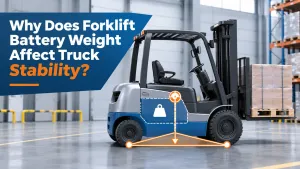
- Mass and stability: obtain the truck maker’s approved battery weight range and center-of-gravity constraints. A lighter replacement is not automatically an acceptable replacement, especially in elevated-platform equipment.
- Electrical interfaces: check the truck’s permitted operating range, sustained and transient traction/lift currents, contactors, fusing, connectors, and emergency-disconnect behavior.
- Communications and interlocks: verify BMS-to-truck messages, state-of-charge presentation, fault signaling, lift inhibit behavior, and safe recovery after protective shutdown.
- Charger and environment: confirm an approved charging profile, thermal limits, ingress requirements, and low-temperature charging protection where relevant.

This is where an order picker forklift battery project differs from a catalogue replacement. Before approving an order picker battery, procurement needs written confirmation from the truck OEM or a competent integration authority for any change affecting stability, controls, or the manufacturer’s approval conditions.
An order picker battery must also preserve the machine’s established operator-safety functions. OSHA’s guidance for narrow-aisle order pickers identifies the elevated-operator hazard; a battery upgrade is not permission to bypass lift interlocks or other safety provisions.
How Can Buyers Prove Runtime in Peak Picking Shifts?
A pilot should reproduce the warehouse’s hardest work, not a lightly loaded demonstration. The order picker battery must support the intended picking window without an unplanned shutdown, loss of authorized lift function, or unacceptable decline in performance near the agreed minimum state of charge.
Start with a measured energy budget. For example, if an order picker uses 9.6 kWh during a representative peak shift and the fleet wants to retain 20% of its available energy as a reserve, it would need at least 12 kWh of usable energy at the start of the shift (9.6 ÷ 0.80). The battery’s nominal capacity may need to be higher once the permitted SOC range, temperature, aging and other system limitations are considered. This is an illustrative calculation, not a universal capacity requirement.
Then run a representative order picker battery pilot over comparable busy shifts, capturing these acceptance measures:
| Fleet acceptance measure | Evidence to collect | Pass condition |
|---|---|---|
| Shift completion | Actual orders, pick waves and stoppages | Assigned work finished without battery-caused interruption |
| Lift performance | Lift events and current at high and low SOC | No unauthorized lift loss or unacceptable speed reduction |
| Available reserve | Start/end SOC and measured energy delivered | Agreed minimum reserve retained in the worst valid shift |
| Protection behavior | BMS warnings, temperature and fault logs | No unexplained trips; faults reported as specified |
Test with the actual operator/load pattern and the busiest rack levels; include the site’s relevant temperature extremes. The order picker battery supplier should provide a test report showing conditions, logging method, firmware revision, and any deviations—not simply a declaration of ‘all-day runtime.’
Where work continues across shifts, validate the entire sequence of discharge, permitted recharge windows, and return to service. A high-level order picker battery that meets one isolated shift but cannot recover enough energy before the next wave may still be the wrong fleet choice.
How Should Fleets Compare Procurement Options and Lifecycle Cost?
Order picker battery tenders often compare unit prices while treating downtime as invisible. Instead, evaluate each order picker battery offer against the cost of completed picking work over its expected service period.
A conventional lead-acid arrangement may preserve familiar swap procedures but bring labor, watering, maintenance, or spare-pack handling requirements. An integrated lithium option may simplify replenishment if the truck and charger already support it. A customized order picker battery can address atypical battery bays or communication needs, although engineering approval and prototype testing become essential.
A defensible comparison includes purchase price, integration work, approved charger changes, spare units, labor, service visits, energy use, expected replacement exposure, and the value of interrupted order waves. Ask every bidder to use the same assumptions about shift count, service life, and warranty exclusions.
If multiple truck models are involved, classify them by verified compatibility rather than forcing one pack across the fleet. The fleet battery replacement rollout guide explains how staged implementation and contingency cover can reduce disruption during a wider transition.
The lowest battery price does not necessarily deliver the lowest cost per completed order. Nor is lithium automatically economical at every site. The business case becomes persuasive only when pilot results, recharging access, and after-sales obligations support it.
What Should an Order Picker Battery RFQ Require?
A precise RFQ shortens clarification cycles and makes supplier responses comparable. For every order picker battery model or approved truck group, buyers should provide the same operational facts and request evidence against the same acceptance gate.
- Fleet and site:truck make, exact model/year, quantity, warehouse zones, shift structure, annual utilization, and deployment country.
- Picking duty:peak orders, lifts per hour, lift-height distribution, route intensity, measured energy consumption, and minimum acceptable reserve.
- Integration dossier:current battery and tray drawings, required weight and restraint, controller and charger specifications, connector pinout, communication protocol, and safety interlock conditions.
- Validation package:proposed usable-energy window, discharge-current limits, cold/hot behavior, BMS protections, representative test plan, and agreed pass/fail criteria.
- Commercial controls:sample lead time, minimum order quantity, production change control, warranty boundaries, replacement availability, diagnostics, and service response arrangements.
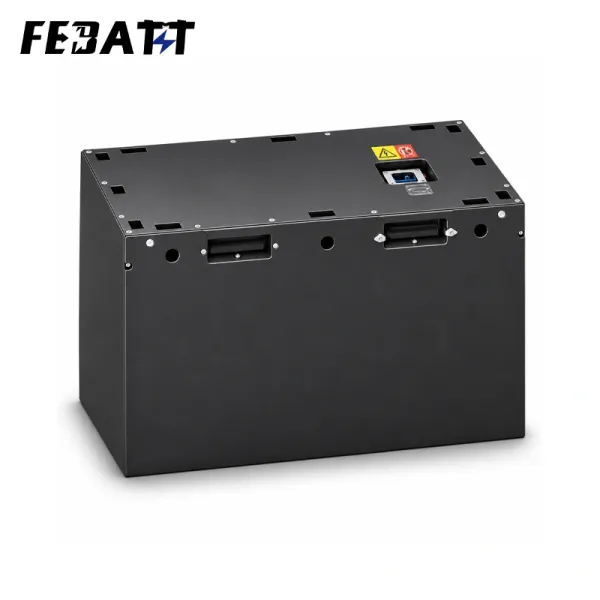
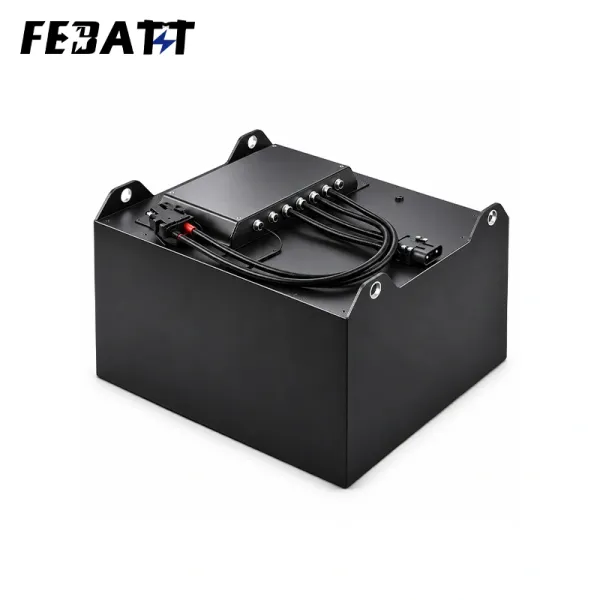
For example, a warehouse lithium battery designed for several material-handling applications can serve as an initial product reference; application claims still require model-specific checks of battery mass, fit, controls, and shift demand. The order picker battery should be released for volume procurement only after the pilot configuration is documented and approved.
Teams coordinating a mixed equipment program can use the industrial power battery solution overview to structure their application and customization requirements without substituting a generic specification for the truck-level RFQ.
Frequently Asked Questions About Order Picker Batteries
Q: What battery is suitable for an electric order picker?
A: A suitable order picker battery meets the truck maker’s weight, fit, current, control, and charger requirements while completing measured picking shifts with an agreed energy reserve.
Q: Can high-level and low-level order pickers use the same lithium battery?
A: The same order picker battery works for both only if each model passes mechanical, stability, electrical, and communication checks. Different lift profiles and battery-weight rules may prevent sharing.
Q: How long should an order picker battery last during a warehouse shift?
A: An order picker battery should cover the scheduled work interval and its busiest picking waves, retaining the fleet’s agreed reserve. Confirm runtime in a real-duty pilot, not a catalogue claim.
Q: How does frequent platform lifting affect battery selection?
A: For an order picker battery, frequent platform lifting adds hydraulic demand and transient current peaks. Buyers should measure lift cycles, height, load, and low-charge performance before approval.
Developing a lithium battery solution for order picker fleets? FEBATT can review custom battery requirements based on truck compatibility, installation space, battery weight, lift-current demand, charging windows and production volume. Share your equipment specifications and operating data to discuss a suitable battery configuration and prototype validation plan before bulk ordering.