Commercial patrol boats, harbor workboats and short-route service vessels rarely draw steady power. Thrusters and onboard equipment create peaks that can leave generators running inefficiently. A hybrid marine battery offers a practical buffer: diesel equipment supplies sustained energy while LiFePO4 storage handles fast-changing loads or planned low-noise periods. For fleet buyers, the test is fewer interrupted missions.
According to the Maritime Battery Forum ship register, more than 2,000 battery-equipped commercial vessels had been delivered or were on order by October 2026; 68% of that registered group used hybrid configurations. The figure covers multiple chemistries and energy sources, not only diesel-LFP vessels.
Where Can a Hybrid Marine Battery Solve Fleet Bottlenecks?
A hybrid marine battery makes the strongest business case where daily missions involve recurring power swings, predictable harbor calls or costly engine idling. Different fleets need different operating strategies:
| Fleet Application | Operational Bottleneck | Battery Role | Buyer Verification |
|---|---|---|---|
| Harbor Workboats | Thruster surges and idle periods | Peak shaving and load leveling | Recorded power profile |
| Patrol and Inspection | Frequent speed changes | Rapid response and quiet maneuvering | Peak-current validation |
| Passenger and Service Craft | Port approaches and auxiliary loads | Lower-noise operating windows | Actual route energy log |
| Coastal Support Fleets | Generators under variable demand | Engine-load optimization | Fuel and uptime baseline |
These are opportunities, not guaranteed savings. All-electric workboat operators can separately review commercial workboat duty-cycle requirements; a hybrid marine battery project adds generator coordination and failure-mode planning.
Why Pair LiFePO4 Storage With Diesel Generation?
A diesel-electric vessel needs sustained operating range, yet its highest loads may last only seconds or minutes. A hybrid marine battery can absorb these peaks, help stabilize generator loading and support reduced engine running during selected operations. A LiFePO4 hybrid marine battery offers cycle-life potential, fast power response and comparatively stable thermal behavior. Benefits depend on validated cells and controls.

Real-world results illustrate the potential without promising the same return everywhere. DNV reported 15–25% fuel savings in the FellowSHIP offshore supply-vessel project following battery hybridization. Vessel route, engine sizing and load profile determine whether another operator can approach that result. The investment should be justified against measured fuel consumption, not an advertised universal percentage.
How Should Fleets Size a Hybrid Marine Battery?
Start with a measured mission: transit, maneuvering, standby, equipment operation and return-to-port reserve. For a hybrid marine battery, both power in kW and usable energy in kWh matter. Peak discharge must cover short bursts; usable capacity must cover the required duration without relying on the full nameplate rating.
Consider a clearly illustrative case: 25 kW of average battery support for 90 minutes requires 37.5 kWh delivered to the load, before system losses, operating reserve and permitted depth of discharge. This example is not vessel performance data. Engineers should validate the final hybrid marine battery against measured waveforms, temperatures and generator recovery behavior.

Specify continuous-current limits, state-of-charge window, mounting constraints and service access. Oversizing raises capital cost and weight; undersizing can trigger power limits precisely when the vessel needs support.
What Must Integrators Verify Before Installation?
The battery system is part of an interconnected marine power plant, not a drop-in accessory. The battery management system (BMS) reports safe limits, while the energy management system (EMS) coordinates the generator, converters, propulsion and auxiliary loads. Loss-of-communication behavior, isolation logic and emergency operating modes must be agreed before procurement.

Review marine BMS protection and communication principles for the cell-level safeguards; then ask the integrator to demonstrate system-level responses under an actual propulsion load. A hybrid marine battery also needs environmental verification for vibration, moisture, corrosion and the intended installation location.
Do not treat “marine grade” as a universal certificate. Applicable approvals depend on vessel type, class, flag and installation design. DNV’s July 2026 ship-rule update includes battery-ready provisions, but project-specific classification and fire-safety requirements still require confirmation with the responsible authorities.
How Can Procurement Teams Compare Lifetime Value?
A hybrid marine battery creates value when avoided fuel, maintenance and missed-service costs outweigh ownership expenses. Compare supplier proposals using the same vessel operating profile, fuel baseline, battery replacement assumptions, warranty conditions and planned service life. Include crew training, spares and diagnostic access in the tender.
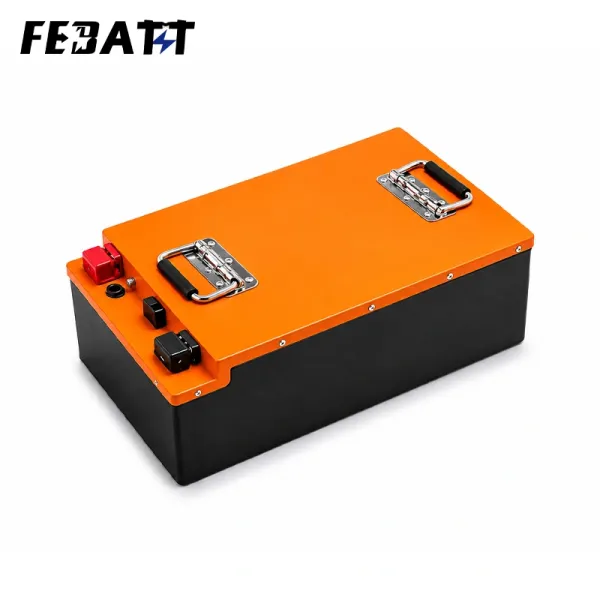
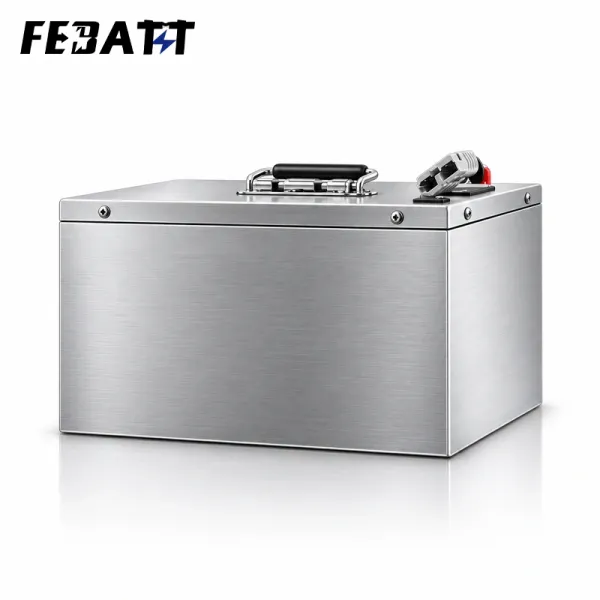
For a realistic product-specification reference, the 20.16 kWh marine LiFePO4 battery listing shows nominal energy, dimensions and BMS information that buyers can request in quotations. It is an electric-boat reference, not evidence of hybrid certification. For custom configurations, the application-matched power battery solution outlines requirement analysis, BMS matching and OEM/ODM support. Every hybrid marine battery installation needs independent compatibility and approval checks.
What Should a Fleet RFQ Require?
Before ordering a hybrid marine battery, request these deliverables from each bidder:
- Duty-cycle evidence: load traces, operating hours, port schedule and minimum reserve.
- System boundaries: battery, converters, EMS interfaces, protective devices and responsibility matrix.
- Acceptance tests: peak-load events, fail-safe isolation, communications loss and environmental checks.
- Commercial terms: traceable test reports, spares, service response, warranty and end-of-life arrangements.
A comparable RFQ prevents the lowest quoted pack price from disguising higher installation risk. The winning hybrid marine battery proposal should demonstrate operational fit before volume purchasing.
Frequently Asked Questions About Hybrid Marine Batteries
Q: How does a hybrid marine battery work on a diesel-electric vessel?
A: The battery supplies fast-changing power while diesel generation handles sustained demand. An EMS coordinates both sources so the vessel can manage peaks, engine loading and selected low-noise operations.
Q: Is LiFePO4 better than lead-acid for hybrid marine propulsion?
A: For frequently cycled commercial duty, LiFePO4 commonly offers advantages in usable energy, cycle life and maintenance. Buyers must still confirm pack-level protection, installation suitability and lifecycle economics.
Q: How much fuel can a hybrid marine battery save?
A: Savings vary by route and engine operation. DNV documented 15–25% in a specific offshore supply-vessel project; that result should be treated as an example, not a guarantee for another fleet.
Q: Can existing diesel workboats be retrofitted with hybrid batteries?
A: Sometimes. A hybrid marine battery retrofit depends on space, vessel stability, electrical compatibility, safety design and class approval. Commission a vessel-specific integration assessment first.
Q: What should B2B buyers check before ordering a hybrid marine battery?
A: Request measured load data, power and usable-energy ratings, EMS/BMS interface documents, environmental test evidence, approval responsibilities and clear acceptance criteria. Compare lifecycle support as carefully as purchase price.
For commercial fleets, the right hybrid marine battery is not simply the largest pack. It is the lithium system that coordinates with existing machinery, survives its operating environment and protects the timetable that keeps the fleet profitable.