Commercial vehicles often work in conditions far harsher than a laboratory test room. Electric tricycles may run for long hours on hot roads, forklifts can operate near ovens or inside poorly ventilated warehouses, golf carts may remain parked in direct sunlight, and RV battery systems can experience heat buildup in enclosed compartments. In these applications, temperature directly affects usable capacity, power delivery, service life, maintenance frequency, and fleet uptime.
A high temperature battery is not simply a standard lithium pack carrying a wider temperature label. It is a complete system in which the cell chemistry, electrolyte, separator, current collectors, thermal design, BMS strategy, enclosure, and duty cycle must work together. When any of these elements is poorly matched, heat accelerates side reactions and causes irreversible capacity loss.
This guide explains how elevated temperature affects the cathode, anode, electrolyte, and separator. It then converts those mechanisms into practical purchasing criteria for OEMs, fleet operators, importers, and equipment manufacturers evaluating extreme temperature battery solutions.
Why Does a High Temperature Battery Lose Capacity Faster?
Heat increases the rate of chemical reactions. Some reactions support normal charging and discharging, but unwanted reactions also become faster. They consume active lithium, alter electrode surfaces, generate gas, increase resistance, and reduce the energy that the cell can reversibly store.

Capacity fade usually combines several mechanisms: resistive cathode deposits, transition-metal migration, repeated damage and rebuilding of the anode’s solid electrolyte interphase (SEI), electrolyte decomposition, separator contamination, and uneven cell aging caused by local hotspots.
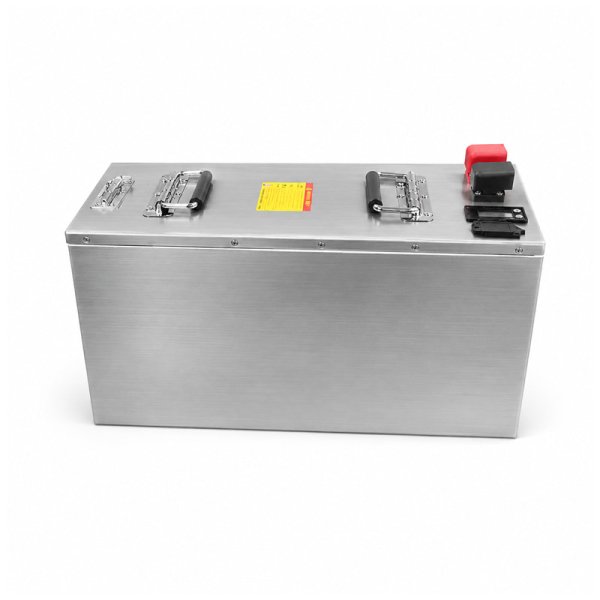
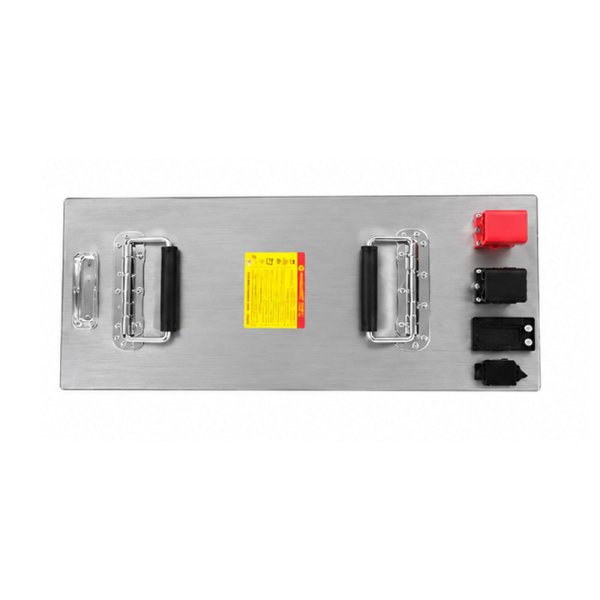
For B2B projects, a high heat commercial battery should therefore be evaluated as a pack-level engineering product rather than by cell chemistry alone. FEBATT’s power battery solution shows how cell selection, BMS control, structure, and application requirements must be matched in a high temperature battery.
How Does Heat Affect the Cathode in a High Temperature Battery?
The cathode is a major factor in thermal stability. Under comparable conditions, materials with more stable crystal structures generally tolerate heat better. A commonly cited practical trend is that lithium iron phosphate, or LFP, usually provides stronger thermal stability than cobalt-rich or high-nickel layered oxides. Actual performance still depends on formulation, coating, particle design, voltage, and cell quality.
LFP is often selected for a high temperature battery because its phosphate framework is structurally stable and less prone to oxygen release than many high-nickel chemistries. This does not make an LFP pack immune to heat. Electrolyte degradation, SEI growth, separator aging, and pack-level hotspots can still reduce capacity.
Surface Byproducts and Impedance Growth
During hot storage or operation, reaction products accumulate on the cathode surface. In high-nickel materials, the surface may develop more electrochemically inactive rock-salt-like regions. These regions do not provide useful capacity and can obstruct lithium-ion transport.
Material analysis may show limited change in the bulk crystal structure while microscopy reveals a rougher surface and more deposits after heat exposure. This distinction is important: the electrode can appear structurally intact in bulk testing even when the electrode-electrolyte interface is becoming less conductive.

Fluorine-containing products such as LiF and lithium phosphorus oxyfluoride compounds may accumulate when LiPF6-based electrolytes undergo side reactions. Because these deposits generally conduct ions or electrons poorly, their buildup increases internal resistance, creates greater voltage drop under load, and reduces usable vehicle power.
Transition Metal Dissolution
Heat can promote the dissolution of transition metals from some cathodes. The dissolved species may travel through the electrolyte and deposit on the graphite anode, where they disrupt the SEI and encourage further electrolyte decomposition.
This creates a damaging cycle. The SEI is damaged, additional active lithium is consumed to repair it, resistance rises, and permanent capacity is lost. A nickel-containing high temperature battery therefore requires controlled moisture, voltage, electrolyte composition, surface stability, and storage state of charge.
Coating and Doping Strategies
Surface coating can reduce direct contact between the cathode and electrolyte, suppress interfacial reactions, and limit transition metal dissolution. Bulk doping can stabilize the layered structure and reduce transformation into less active spinel-like or rock-salt-like phases.
These strategies improve battery thermal resilience only when materials and processing are controlled. Finished-cell and pack validation therefore matter more than brochure claims.
What Happens to the Anode at High Temperature?
At the anode, the main concern is often degradation of the SEI rather than immediate destruction of the active material. The SEI is a thin passivation layer formed during initial cell formation. A stable layer allows lithium ions to pass while limiting continuous electrolyte decomposition.
At elevated temperature, the SEI can dissolve, crack, react with contaminants, or be attacked by products generated elsewhere in the cell. Each repair cycle consumes active lithium and electrolyte. The result is a gradual loss of cyclable lithium, higher resistance, and lower capacity.
A high temperature battery therefore needs an anode-electrolyte system that forms a stable interface across the intended temperature and voltage range. Formation procedures, moisture control, additive selection, electrode porosity, and storage conditions all affect this stability.
Why Does Graphite Often Outperform Silicon-Oxide Blends?
Graphite commonly shows better hot-storage stability than silicon-oxide-rich anodes. Silicon-containing materials can increase energy density, but they also introduce larger volume change and more complex interfacial behavior. In some silicon-oxide systems, the SEI is more soluble in the electrolyte at elevated temperature, increasing self-discharge and active-lithium loss.
Residual alkaline compounds from some pre-lithiation processes may also contribute to gas generation. Surface electronic properties affect early charge transfer and interphase composition.
Microscopy comparisons often show limited surface change on graphite after controlled hot storage, while parts of the SEI on silicon-oxide electrodes may appear dissolved. Silicon-based anodes are not automatically unsuitable for a high temperature battery, but they demand more careful surface treatment, electrolyte design, formation, and validation.
Why Is the Electrolyte Critical to a High Temperature Battery?
The electrolyte transports lithium ions between the electrodes, but it is also one of the most heat-sensitive parts of the cell. Its performance depends on solvent selection, lithium salt stability, additives, and electrode-interface reactions.
A formulation for a high temperature battery must balance conductivity, viscosity, wetting, film formation, gas control, electrochemical stability, and compatibility with both electrodes. An electrolyte optimized only for room-temperature power may age poorly during hot storage or continuous commercial operation.
Solvent Volatility and Gas Generation
Low-viscosity, low-boiling-point solvents may support strong kinetic performance, but they can create higher vapor pressure at elevated temperature. Dimethyl carbonate, or DMC, and some carboxylate solvents therefore require careful use in hot-environment formulations.
As vapor pressure and side reactions increase, gas can form inside the cell. Gas may raise internal pressure, reduce electrode contact, disturb electrolyte distribution, and cause swelling. A high temperature battery should consequently be validated for the expected combination of temperature, state of charge, voltage, and exposure time. A maximum operating-temperature number alone does not show how capacity or resistance changes after prolonged use.
Lithium Salt Stability and HF Formation
LiPF6 remains widely used because it provides a practical balance of conductivity and interfacial performance. Its weakness is limited thermal and hydrolytic stability. At elevated temperature it can form reactive decomposition products; when those products encounter trace moisture, hydrofluoric acid, or HF, may be generated.
HF can attack cathode surfaces, promote transition metal dissolution, damage the SEI, and contribute to separator discoloration. High-purity materials, strict moisture control, suitable additives, and stable interfaces are therefore important in a high temperature battery.
LiFSI is considered in advanced formulations because of its conductivity and thermal characteristics, but it is not a universal replacement. Concentration, voltage range, additives, aluminum-current-collector compatibility, and corrosion control must be engineered together.
Additives and Protective Interphases
Electrolyte additives react preferentially during formation and help build the SEI and the cathode electrolyte interphase, or CEI. These films influence hot-storage stability, gas generation, resistance growth, and cycle life.
Certain sulfur-containing additives, including PS-, PST-, and MMDS-type compounds, have been investigated for improving interfacial stability in particular systems. Other additives may help during cycling yet generate more gas during high-voltage hot storage. Their performance is chemistry- and condition-dependent.
A credible supplier should therefore validate the complete formulation rather than promote one additive as universally effective. For a B2B buyer, the useful evidence is measured performance from the finished high temperature battery under the intended duty cycle.
Side Reactions and Electrolyte Dry-Out
Continuous side reactions consume electrolyte and can leave parts of the electrode insufficiently wetted. This dry-out increases local resistance and creates uneven current distribution, which can generate more heat and further accelerate aging.
Solid and semi-solid electrolytes may reduce solvent volatility and some gassing mechanisms, but they introduce other challenges, including interfacial resistance, contact loss, manufacturing complexity, and material compatibility. For current commercial vehicle projects, a proven high temperature battery using mature cell technology, controlled manufacturing, suitable BMS protection, and effective heat dissipation may provide the more practical solution.
How Does High Temperature Degrade the Separator?
The separator keeps the positive and negative electrodes apart while allowing lithium ions to move through its pores. Polyethylene separators can discolor after prolonged heat exposure, especially on the side facing the cathode.
Yellowing or dark deposits may result from oxidation of the base membrane and accumulation of electrolyte reaction products. Degradation can alter air permeability, pore structure, mechanical strength, and resistance. A blocked or weakened separator reduces power performance and may narrow the safety margin.
Ceramic Coatings and Separator Stability
Ceramic coatings based on alumina or boehmite are widely used to improve dimensional and thermal stability. These polar materials can also interact with acidic species and help reduce some interfacial reactions. Their effectiveness depends on coating thickness, adhesion, particle distribution, porosity, and electrolyte compatibility.
A suitable coating provides a physical barrier, while controlled permeability limits reaction-product buildup. Excessive coating or poor pore control can increase resistance, so the design must balance safety, wettability, permeability, and power.
In a high temperature battery, separator quality should be considered together with shutdown behavior, puncture resistance, thermal shrinkage, electrolyte uptake, and cell-level abuse testing. The phrase “ceramic separator” is not meaningful without supporting specifications and validation.
What Does High-Temperature Aging Mean for Commercial Vehicles?
Electric Tricycles and Electric Motorcycles
Commercial electric tricycles and motorcycles combine hot ambient conditions, frequent acceleration, payload, vibration, and long operating hours. Heat produced by current demand adds to environmental heat. An underspecified pack may show voltage sag, reduced range, faster imbalance, and shorter replacement intervals.
For these vehicles, a high heat commercial battery should be matched to peak current, continuous current, daily mileage, payload, enclosure ventilation, and charging schedule. Battery thermal resilience is especially important for delivery or passenger fleets where downtime directly reduces income.
Forklifts, AGVs, and AMRs
Forklifts can work in hot warehouses, foundries, loading yards, or multi-shift facilities. AGVs and AMRs may repeat routes with little cooling time. Lifting, acceleration, and opportunity charging can generate substantial internal heat even when ambient temperature is moderate.
A high temperature battery for material-handling equipment should use representative temperature sensing, current derating, consistent cell matching, and a structure that avoids concentrated hotspots. Buyers should confirm whether cycle-life claims apply to the actual temperature, charge rate, depth of discharge, and shift pattern.
Golf Carts and Utility Vehicles
Golf carts and utility vehicles often remain outdoors. A dark battery compartment in direct sunlight can become much hotter than the reported ambient temperature, while extended storage at a high state of charge can intensify calendar aging.
A high temperature battery should be evaluated for both operation and storage. Ventilation, charger settings, compartment layout, seasonal idle periods, and maintenance practices all affect capacity retention.
RV and Mobile Power Systems
RV batteries may sit in enclosed spaces near heat-producing equipment or remain in hot climates for long periods. They also face long-duration loads, inverter demand, solar charging, and extended storage.
A high temperature battery for an RV should address thermal monitoring, compartment ventilation, charge limits, standby consumption, and current derating. Operating, charging, and storage temperature ranges must be defined separately because they are not interchangeable.
How Should B2B Buyers Evaluate a High Temperature Battery?
A credible high temperature battery evaluation must go beyond nominal voltage, capacity, and one maximum-temperature figure. Buyers should ask the supplier to define the test conditions behind each claim:

- What are the allowed charging, discharging, and storage temperature ranges?
- At what temperature does the BMS begin current derating, and when does it disconnect?
- How much capacity remains after a defined hot-storage test at a stated state of charge?
- How does direct-current resistance change before and after testing?
- Is cycle-life data available at the expected temperature, C-rate, and depth of discharge?
- How many temperature sensors are installed, and where are they positioned?
- What is the maximum cell-to-cell temperature difference under continuous load?
- How does the enclosure release heat while meeting the required ingress protection?
- Which vibration, transport, safety, and environmental tests have been completed?
- Can a sample or pilot batch be validated under the customer’s actual duty cycle?
A reliable high temperature battery supplier should explain tradeoffs clearly. Energy density, power, temperature range, cost, and service life cannot always be maximized at the same time. The correct design depends on vehicle type, load profile, available space, climate, service model, annual volume, and total cost target.
Technical Relevant FAQ
1.What Makes a High Temperature Battery Different from a Standard Lithium Battery?
A high temperature battery is engineered and validated for sustained operation or storage in elevated-temperature conditions. It may use more thermally stable chemistry, optimized electrolyte, ceramic-coated separators, controlled electrode interfaces, additional sensors, BMS derating, heat-dissipation paths, and an application-specific enclosure. The claimed range should be supported by defined tests.
2.Why Is LFP Commonly Used for High-Temperature Commercial Vehicles?
LFP is frequently selected because its phosphate-based cathode structure provides strong thermal stability and a lower tendency to release oxygen than many high-nickel materials. It also offers long cycle life for commercial fleets. The finished pack still requires suitable electrolyte, separator, BMS, cell matching, and thermal design.
3.How Does Heat Cause Permanent Battery Capacity Loss?
Heat accelerates reactions that consume active lithium and electrolyte. Cathode deposits increase resistance, transition metals may damage the anode interface, the SEI repeatedly dissolves and reforms, and electrolyte decomposition can generate gas or corrosive species. These changes make part of the original capacity permanently unavailable.
4.Can a High Temperature Battery Operate Safely in an Outdoor Forklift?
It can be suitable when the pack is designed and validated for the actual ambient temperature, load, duty cycle, enclosure, and charging method. Safe operation depends on cell limits, BMS monitoring, sensor placement, current derating, heat dissipation, installation, and applicable pack- and vehicle-level requirements. “Outdoor use” alone is not a sufficient specification.
5.Does a Ceramic-Coated Separator Prevent All Heat-Related Degradation?
No. A ceramic coating can improve dimensional stability and reduce shrinkage, but it cannot prevent cathode degradation, SEI growth, electrolyte decomposition, overcurrent, poor cooling, or uneven pack temperatures. It is one component of a complete high temperature battery design.
6.Are Solid-State Batteries the Best Extreme Temperature Battery Solutions?
Solid-state technology may reduce solvent volatility and some liquid-electrolyte failure mechanisms, but performance still depends on interface stability, pressure management, manufacturing quality, and operating conditions. For many current B2B applications, a validated high temperature battery using liquid-electrolyte LFP cells offers a more mature balance of reliability, cost, serviceability, and supply availability.
7.What Information Should an OEM Provide for a Custom Project?
The OEM should provide voltage, capacity target, peak and continuous current, load profile, daily runtime, charging strategy, ambient and compartment temperatures, available space, vibration exposure, ingress-protection needs, communication protocol, certification market, and expected volume. These inputs allow the supplier to design battery thermal resilience around real operating conditions.
Conclusion
High-temperature capacity fade is the combined result of cathode surface instability, transition metal dissolution, SEI degradation, electrolyte decomposition, gas generation, separator aging, and uneven heat inside the pack. No single material or marketing feature solves every mechanism.
For electric tricycles, electric motorcycles, forklifts, golf carts, RVs, AGVs, AMRs, and utility vehicles, a high temperature battery must be selected according to the full duty cycle. Cell chemistry matters, but BMS protection, thermal pathways, enclosure design, manufacturing consistency, and application testing are equally important.
B2B buyers should request evidence under defined temperature, state-of-charge, current, and time conditions. A supplier that explains limitations, tradeoffs, and validation methods is more valuable than one that only quotes an unusually wide operating range.
The goal is not merely to keep the pack functioning on the hottest day. It is to preserve capacity, control resistance growth, maintain cell consistency, reduce replacement frequency, and protect fleet uptime throughout the service life. That is the practical standard for evaluating a high temperature battery.