A cargo tricycle battery can be new and still deliver disappointing range when the vehicle carries heavy goods, climbs ramps, or repeats stop-start routes all day. For a B2B cargo tricycle fleet, that can mean missed deliveries and higher replacement cost.
Short range is not always caused by one bad battery. Heavy payload changes traction demand. A cargo tricycle battery must provide enough usable energy for the route and enough current for acceleration and climbing. This power battery solution matches capacity, discharge current, installation, BMS, charger, and operating environment as one system.
Why Can a New Cargo Tricycle Battery Still Lose Range?
A new cargo tricycle battery may pass a no-load check but perform poorly once the vehicle is working. Cargo weight raises energy demand, while frequent stops create repeated current peaks.
Capacity and power are different. Capacity tells a fleet how much energy is stored. Discharge capability shows whether the pack can deliver that energy fast enough under heavy load. A high-Ah pack can still feel weak if the cells, BMS, cables, or connectors cannot support the required current.
For example, a 3 kW traction demand on a 48 V system equals about 62.5 A before losses. This shows why a cargo tricycle battery should be matched to motor and controller demand, not only Ah.
If a fleet already sees sudden range loss or abnormal sag, this battery health check for electric tricycle fleets provides a useful diagnostic framework.
Why Does Heavy Payload Make Voltage Sag More Visible?
When a cargo tricycle battery supplies high current, internal resistance causes terminal voltage to fall temporarily. Resistance in cables, terminals, and connectors adds further loss.
A battery under heavy load can show a sharp voltage drop during acceleration or hill climbing, then recover when the vehicle stops. Some voltage sag is normal. Excessive sag can reduce motor performance or push the controller or BMS close to an undervoltage limit.
For a commercial tricycle battery, resting voltage alone is not enough. Fleet technicians should compare pack voltage, minimum cell voltage, current, temperature, SOC, and BMS events under a representative payload.
Could the Vehicle Be Mismatched to the Cargo Tricycle Battery?
A cargo tricycle battery replacement should not be approved by nominal voltage and capacity alone. B2B buyers should confirm maximum payload, motor power, controller current limit, route length, gradients, stop frequency, charging window, temperature, and end-of-route reserve.
An agricultural or industrial route can combine rough surfaces, long climbs, and repeated high-current starts.
A three wheeler battery should therefore be specified from the application backward. For procurement teams, heavy payload battery performance should be validated on the hardest normal route, not the easiest test drive.
Can Chargers and Connections Make a Good Battery Look Weak?
Yes. A cargo tricycle battery can be correctly sized while the charging or electrical system limits performance.
Fleet teams should check charger compatibility, connector condition, terminal tightness, cable sizing, corrosion, and abnormal heating, especially when replacing lead-acid with lithium.
Poor charger matching may reduce usable energy, while a high-resistance connector can create extra voltage drop during heavy acceleration. A commercial tricycle battery should therefore be treated as part of the complete power system.
When Does Lithium Make More Sense for a Cargo Tricycle Fleet?
For high-frequency cargo work, LiFePO4 is usually the stronger option to evaluate first when the fleet values lower maintenance, lighter installed weight, repeat cycling, and stable high-current output.
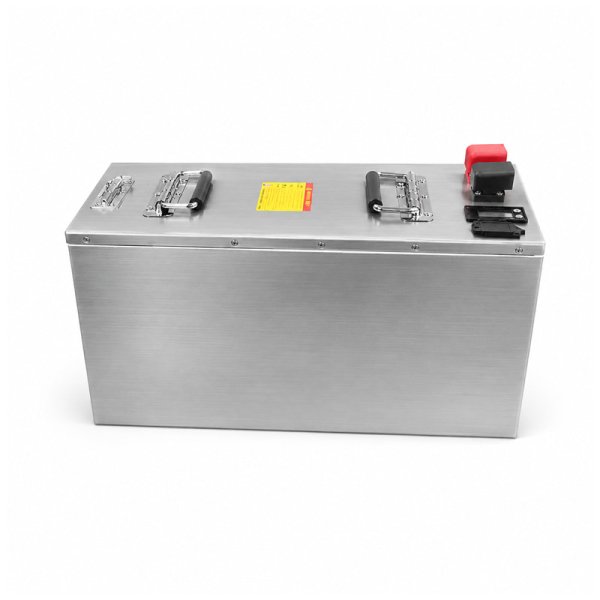
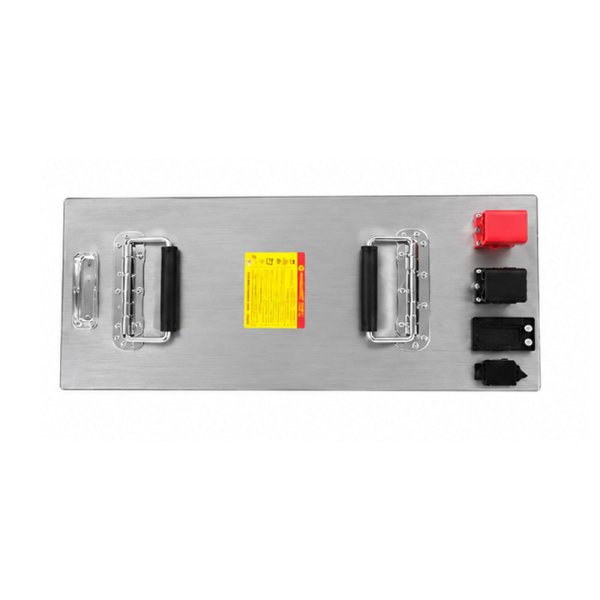
FEBATT’s current 48V 45Ah LFP power battery pack provides 2,160 Wh of nominal energy, weighs 17.2 kg, is listed at 1,500 cycles, and is specified for applications including three-wheel tricycles. These figures are model-specific, not universal for every cargo tricycle battery.
A correctly matched lithium cargo tricycle battery can reduce maintenance pressure, improve usable payload through lower battery mass, and provide BMS data for diagnosis.
How Should Fleets Validate a Cargo Tricycle Battery Before Bulk Purchase?
A B2B fleet should test the cargo tricycle battery under the same conditions that cause complaints in service.
The test should include representative cargo mass, repeated starts, the steepest normal gradient, realistic route distance, and expected temperature. Record loaded voltage, peak and continuous current, battery temperature, minimum cell voltage, SOC behavior, BMS events, and remaining route reserve.
The cargo tricycle battery should complete the required work without repeated protection events, excessive voltage sag, or an unacceptably small reserve. This also separates three problems: insufficient energy, insufficient power capability, and vehicle-system losses.
Should Fleets Choose a Larger Cargo Tricycle Battery?
Only when measured route energy shows that the existing pack has too little usable energy.
If the real problem is excessive current demand, poor charger matching, connector resistance, wiring loss, or inappropriate BMS limits, adding Ah can increase cost without solving the failure mode.
For a cargo tricycle fleet, the better question is whether the cargo tricycle battery can deliver route energy and heavy-load power with enough reserve for predictable operation.
Frequently Asked Questions About Cargo Tricycle Batteries
Q: Which battery is best for a cargo tricycle?
A: For high-use fleets, a LiFePO4 cargo tricycle battery is often a strong option. Final selection should match payload, route, current demand, installation space, and charger.
Q: How long does a lithium cargo tricycle battery last?
A: There is no universal number. Service life depends on cell quality, depth of discharge, current, temperature, charging, payload, and daily energy throughput.
Q: Why does a battery voltage drop under heavy load?
A: High current creates voltage loss through internal battery resistance and resistance in cables and connections.
Q: Can lithium replace lead-acid in an electric tricycle?
A: Yes, but an electric tricycle battery conversion should verify current capability, dimensions, mounting, connectors, charger compatibility, BMS requirements, and vehicle balance.
Q: How should a cargo tricycle battery be tested before a bulk order?
A: Test it with representative payload, gradients, stop-start operation, route distance, and temperature while recording current, loaded voltage, temperature, SOC, BMS events, and route reserve.