For procurement teams, understanding battery lifespan also helps forecast replacement investment and avoid unplanned fleet interruptions. Forklift battery lifespan becomes a business problem when a truck starts missing dispatch windows or leaving pallets unfinished. Warehouse managers need to know how long the battery can support its assigned workload, and when to reserve a replacement budget.
For intensive fleets, a correctly matched lithium system offers longer cycling potential and fewer routine service interruptions. In this comprehensive guide, forklift battery lifespan is assessed through shift coverage, operating conditions, and evidence of deterioration.
How Long Do Forklift Batteries Last in Fleet Use?
There is no universal retirement age. Forklift battery lifespan depends on the pack, annual energy throughput, operating temperature, and remaining usable capacity. The forklift chassis and battery also age separately; replacing a weak pack does not automatically require replacing a serviceable truck.
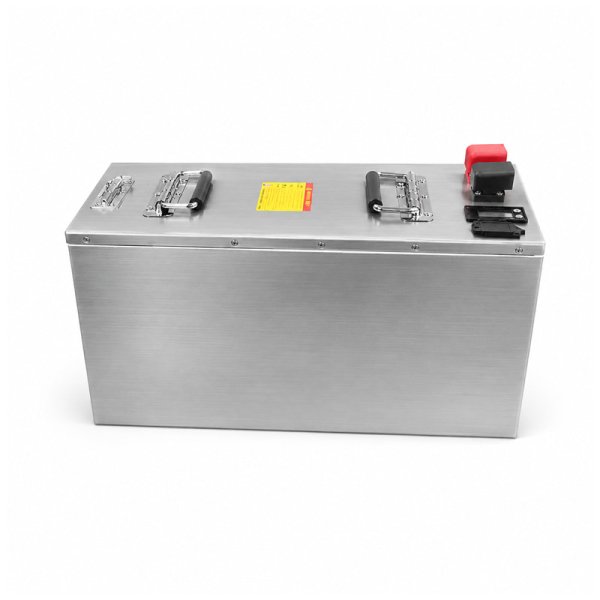
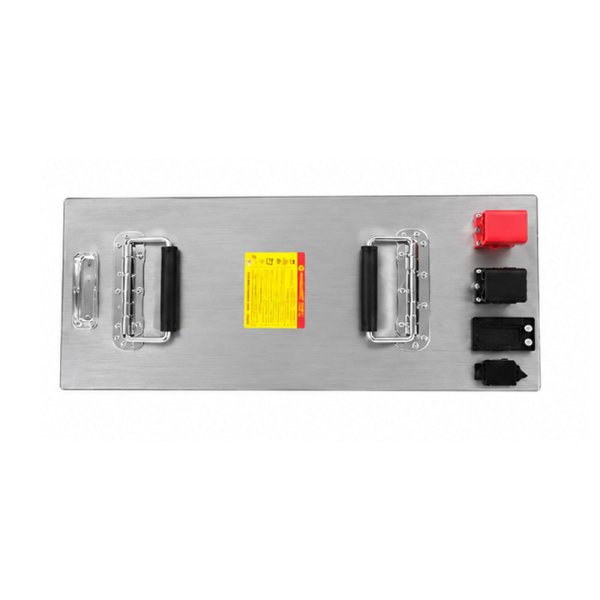
Start with the assigned application. This power battery solution supports application assessment, BMS matching, and customization. Its lithium forklift battery range provides a starting point for compatible warehouse equipment. Once the remaining service window is established, use the fleet battery replacement guide to plan installation and rollout.
A useful forklift battery lifespan estimate states what the truck must still accomplish at the end of that period. Completing the required shift matters more than a battery simply continuing to accept charge.
Why Can Similar Fleets Have Different Battery Lifespans?
Two batteries installed together can age differently when one truck handles occasional transfers and another repeatedly lifts heavy pallets. Forklift battery lifespan should therefore be reviewed by workload group.
| Fleet application | What changes the service window | What to track |
|---|---|---|
| Single-shift distribution | Seasonal peaks and time in storage | Peak-day shift coverage |
| Multi-shift logistics | Higher annual energy throughput | Usable energy and completed shifts |
| Heavy manufacturing | Repeated lifting and sustained current | Temperature and protection events |
| Cold-chain handling | Cold-related energy loss can resemble aging | Capacity under comparable temperatures |
Forklift battery lifespan can appear shorter after workload expansion even when degradation remains modest. Compare like-for-like routes, loads, starting charge, and temperatures before treating reduced runtime as permanent capacity loss.
What Do Published Lithium Life Figures Actually Mean?
Manufacturer figures help frame lithium forklift battery lifespan. Toyota’s published lithium battery specifications list a 5-year, 3,500-cycle warranty for its 5/35 range and an 8-year, 5,000-cycle warranty for its 8/50 range. These are product-specific warranty figures, subject to terms; they do not establish FEBATT coverage or a universal service life.

When comparing forklift battery cycle life, request the discharge depth, temperature, current, cycle definition, and capacity endpoint. A high cycle count without these conditions is difficult to use in purchasing decisions.
Forklift battery lifespan also includes calendar aging. Dividing a cycle rating by daily cycles alone cannot establish a retirement date. For industrial lithium battery lifespan, require pack-level evidence and warranty conditions that reflect the actual application.
How Can Fleets Assess Remaining Forklift Battery Lifespan?
Before selecting a replacement battery, fleets should evaluate shift hours, load profile, operating environment, and required runtime rather than replacing based only on battery age. Record usable energy, completed operating hours, and recurring battery-related stops against the commissioning baseline. Review forklift battery lifespan using several comparable shifts. A BMS state-of-health estimate helps identify trends, but confirm it against measured capacity and field performance.
Consider an illustrative planning case: a truck originally delivered 8 productive hours and now delivers 6 under comparable conditions—a 25% runtime reduction. If its assigned work requires 7 hours, the pack no longer covers that duty. These figures demonstrate the decision method; they are not FEBATT customer results.

Set forklift battery lifespan review dates around the remaining workload margin and procurement lead time. Diagnose recoverable faults before approving replacement. Repeated shortfalls after diagnosis justify bringing the forklift battery replacement cycle forward; safety faults require immediate action under the manufacturer’s procedures.
Why Is Lithium a Strong Choice for Intensive Fleets?
A properly selected lithium system can improve available service life and shift consistency in intensive forklift applications. For logistics and manufacturing fleets, that means fewer scheduled interruptions and less dependence on consistent manual battery servicing. Approved opportunity charging can also help maintain shift coverage as usable capacity gradually declines.
Protect lithium forklift battery life through application matching, appropriate thermal protection, and dependable service support. Ask FEBATT for a duty-specific lithium proposal with documented end-of-life criteria and warranty terms. This makes forklift battery lifespan a measurable requirement in the purchase agreement.
What Should Fleet Buyers Know About Battery Life?
Q: How long do forklift batteries last?
A: Forklift battery lifespan varies with chemistry, workload, and care. Crown describes typical properly maintained lead-acid life as 1,000–1,500 charging cycles. Lithium products can offer several thousand cycles; compare documented conditions and shift coverage before setting a replacement year.
Q: How many years does a lithium forklift battery last?
A: A six-year service period is possible: Crown describes up to 3,600 cycles, which can equate to about six years for its V-Force range. Lithium forklift battery lifespan still depends on the application; use the specific pack’s documentation.
Q: How many cycles can a forklift battery last?
A: Forklift battery lifespan ratings depend on the test endpoint and cycle definition. Toyota’s examples specify 3,500 and 5,000 warranty cycles. Partial top-ups do not necessarily count as full cycles; compare accumulated energy throughput using the manufacturer’s stated method.
Q: When should a forklift battery be replaced?
A: Treat forklift battery lifespan as exhausted for an assignment when verified capacity or power no longer meets that duty safely and reliably. Investigate changes in workload and recoverable faults first, then schedule replacement before the remaining operating margin disappears.
Q: Do lithium forklift batteries last longer than lead-acid?
A: Industrial lithium products often support longer cycling service and eliminate watering and equalization. That can improve forklift battery lifespan and availability in intensive fleets. Confirm the specific pack’s evidence; chemistry alone does not guarantee a longer useful service window.