LiFePO4 can be a practical chemistry for electric motorcycles, electric cargo tricycles, golf carts, and sightseeing fleets. But chemistry alone does not make the packs interchangeable. Commercial battery pack design must reflect load, current demand, installation space, operating hours, charging windows, communication needs, and the service target. For B2B vehicle projects, battery pack design covers cell configuration, current path, BMS, enclosure, connectors, thermal strategy, mechanical integration, communication, and validation for production.
For B2B buyers, the rule is simple: the same LiFePO4 chemistry may suit all three applications, but the battery specification should not be shared across them. This Power Battery Solution applies the same application-first logic by evaluating current, capacity, installation, environment, BMS matching, and customization before a pack is finalized.
Why Can’t One LiFePO4 Pack Fit Every Vehicle?
A strong battery pack design starts with the application rather than a catalog voltage and Ah rating. Usable energy, peak and continuous power, temperature, lifetime, mass, volume, and charging targets interact. A compact motorcycle may be limited by weight and battery-box geometry; a cargo tricycle by sustained current under payload and gradients; a sightseeing cart by passenger load, hills, daily hours, and fleet charging windows.
SAE battery-system guidance treats physical, electrical, environmental, safety, retention, thermal, and packaging requirements as part of one system. That is why battery pack design is an integration task, not a cell-selection shortcut.
What Should Battery Pack Design Prioritize for Electric Motorcycles?
For electric motorcycles, battery pack design usually has to solve a tight packaging problem. The pack must provide enough usable energy without adding unnecessary mass or exceeding the available volume. Peak current also matters because repeated acceleration can create short high-power events even when average route energy is modest.

The cell configuration, current path, connector, fuse, and BMS must support those peaks without nuisance trips or excessive voltage drop. For delivery fleets, battery pack design should also cover removable versus fixed architecture, route range, stop density, ingress protection, locking, and swap ergonomics rather than capacity alone. For fleet OEMs, battery pack design should be frozen only after representative sample validation.
What Changes for Electric Cargo Tricycles?
Cargo tricycles shift battery pack design toward payload and sustained work. Loaded starts, gradients, low-speed torque, route energy, vibration, and repeated stop-start operation can keep current elevated for longer periods. A pack that performs on an unloaded prototype can still be underspecified once the vehicle carries commercial payload.
Thermal and mechanical design therefore become more visible. NREL work shows that pack-level interconnects can add heat compared with standalone cells, while SAE vibration guidance recommends using actual vehicle measurements where possible. For B2B tricycles, battery pack design should reflect road quality, mounting location, payload, connector restraint, brackets, and enclosure stiffness during validation. In cargo programs, battery pack design should be tested under working payload rather than empty-vehicle conditions.

What Should Golf Cart and Sightseeing Fleets Prioritize?
Golf carts and sightseeing vehicles usually place more emphasis on passenger load, hill climbing, repeated daily routes, long operating hours, charging windows, fleet visibility, and replacement planning. Here, battery pack design is less about the smallest possible package and more about predictable availability across the fleet. Battery pack design should be checked against the full daily operating schedule, not only a laboratory capacity target.

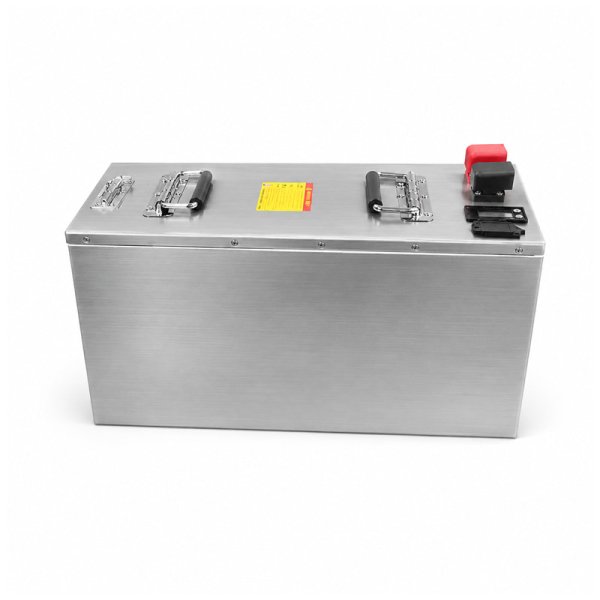
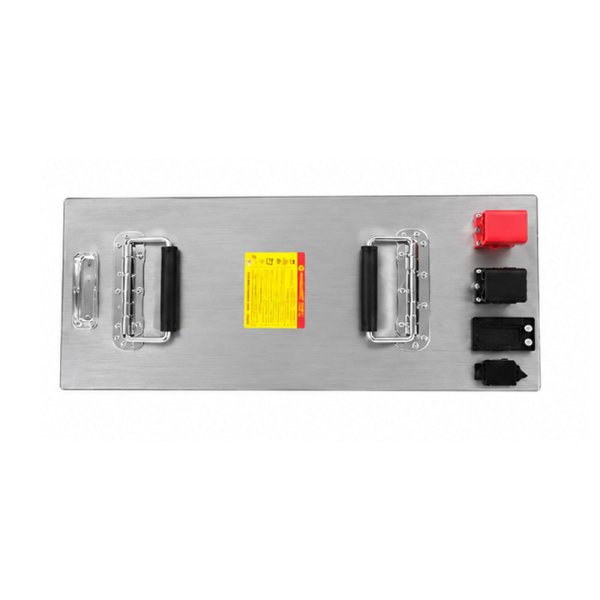
The 51.2V 105Ah LiFePO4 golf cart battery illustrates this platform-specific approach: the published specification combines 5.376 kWh, 105A continuous discharge, 120A instantaneous discharge, CAN/RS485 communication, and defined dimensions. Those values should not be copied to a motorcycle or cargo tricycle without revalidation. For cart fleets, battery pack design should also account for fleet charging and spare-battery strategy.
B2B buyers can review the 51.2V 105Ah LiFePO4 golf cart battery as an example of energy, current, dimensions, BMS communication, and application being specified together.
Which Battery Pack Design Parameters Must Change Across Vehicle Types?
The chemistry may remain LiFePO4, but the engineering targets change. Use the following comparison as an RFQ starting point, not as a universal specification.
| Design factor | Electric motorcycle | Cargo tricycle | Golf / sightseeing cart |
|---|---|---|---|
| Primary constraint | Space, mass, acceleration | Payload, sustained current, vibration | Runtime, passengers, fleet uptime |
| Energy target | Route range + reserve | Route energy under payload | Daily hours + charging window |
| Power target | High peak current | Peak + sustained current | Hill-climb and repeated route demand |
| Mechanical design | Compact or removable pack | Heavy-duty enclosure and mounting | Robust fixed pack and serviceability |
| BMS focus | Peak-current protection, SOC | Current/temperature protection, diagnostics | SOC visibility, communication, consistency |
TI notes that battery monitoring commonly measures cell voltage, current, and temperature and can integrate protection and balancing. BMS limits are therefore part of battery pack design and should be matched to the vehicle instead of copied from another platform. Across all three vehicle types, battery pack design should connect engineering requirements with procurement criteria.
Why Is LiFePO4 Still a Strong Chemistry Across These Applications?
Different specifications do not weaken the case for LiFePO4. NREL has described LiFePO4 cathode material as having strong thermal and overcharge stability relative to common lithium-ion cathode chemistries. For fleets that operate frequently or carry passengers and cargo, that is a useful foundation for battery pack design.
The commercial value is strongest when chemistry and engineering are separated: choose LiFePO4 where its characteristics fit, then build battery pack design around the vehicle’s real duty cycle. Do not turn chemistry advantages into a universal cycle-life promise; service life still depends on cell selection, current, temperature, depth of discharge, charging, vibration, and validation conditions.
What Should B2B Buyers Put in a Battery Pack Design RFQ?
A useful RFQ should make every supplier solve the same operating problem. Provide the vehicle type, motor/controller data, daily hours, route or work cycle, payload or passenger load, gradients, continuous and peak current, usable-energy target, charging windows, temperature, installation L × W × H, mounting method, connector, communication protocol, removable or fixed-pack requirement, service-life target, sample quantity, and annual volume.
Ask the supplier to return the proposed battery pack design with nominal and usable energy, continuous and peak current, dimensions, weight, enclosure concept, BMS protections, CAN/RS485 requirements where applicable, charger matching, temperature limits, validation plan, traceability, and production controls. Validate each vehicle separately under representative load, route, vibration, temperature, and charging conditions before bulk production.
Conclusion
LiFePO4 is a strong option for commercial two-wheelers, cargo tricycles, golf carts, and sightseeing vehicles, but chemistry is not a finished specification. The B2B lesson is that battery pack design must change with the vehicle.
Electric motorcycles prioritize compact packaging and peak current; cargo tricycles sustained power, payload, and vibration; golf and sightseeing fleets runtime, hills, charging windows, and communication. The best battery pack design is the one engineered around the real application.
Frequently Asked Questions About Battery Pack Design
Q: What is battery pack design?
A: It turns application requirements into a complete battery system: cells, electrical architecture, BMS, current path, enclosure, connectors, thermal strategy, mounting, and validation.
Q: How do you design a battery pack for an electric vehicle?
A: Start with duty cycle, usable energy, continuous and peak current, voltage range, installation space, mass, temperature, charging window, BMS functions, communication, and service-life target.
Q: How do you choose battery capacity for an electric vehicle?
A: Use route or shift energy plus a justified reserve, then confirm current capability, weight, installation space, and charging time. Do not choose by Ah alone.
Q: What does a BMS do in a lithium battery pack?
A: A BMS can monitor cell voltage, current, and temperature, manage protection and balancing, estimate operating state, and communicate with the vehicle or charger.
Q: Is LiFePO4 suitable for motorcycles, tricycles, and golf carts?
A: Yes, but battery pack design should change by application. Motorcycles prioritize packaging and peak current; cargo tricycles emphasize payload and sustained current; golf and sightseeing fleets focus more on runtime, hills, charging windows, and uptime.