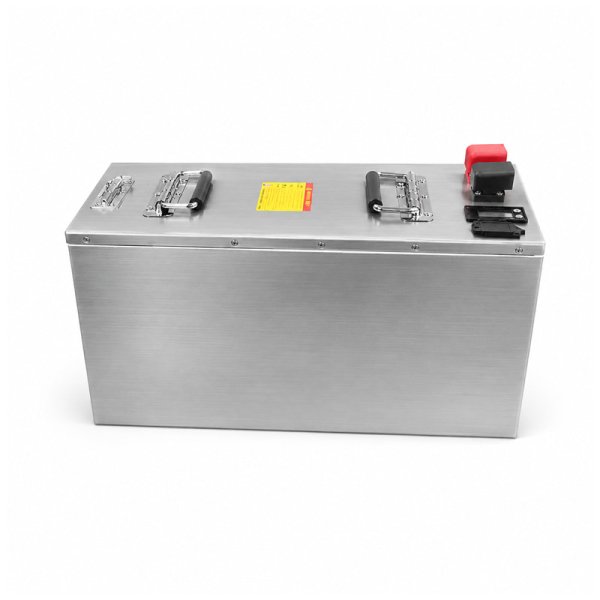
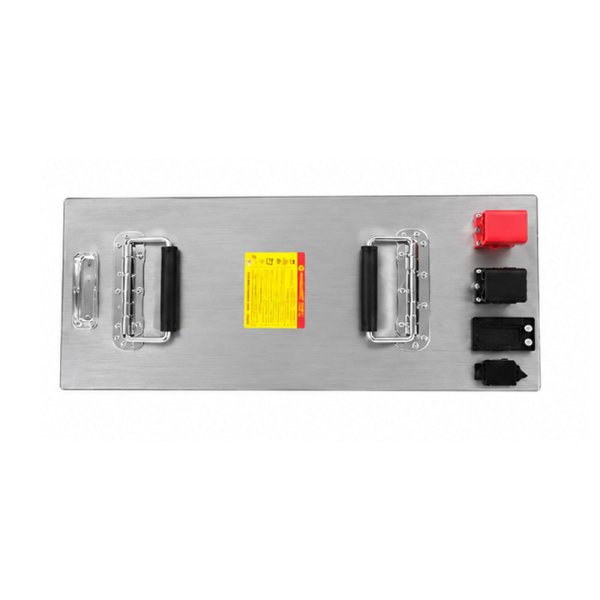
A reach truck battery should be specified around the warehouse duty cycle, not around a headline amp-hour figure. For narrow-aisle fleets, the real buying question is whether the pack can support repeated lifting, acceleration, long shifts, limited charging windows, tight compartment geometry, and model-specific stability requirements without creating downtime.
For fleet managers, material-handling procurement, maintenance teams, forklift dealers, and cold-storage operators, the fastest route to a defensible specification is to convert actual operating data into pack-level requirements before asking suppliers to quote. This power battery solution can provide broader context for vehicle integration and custom pack engineering.
In practice, a reach truck battery project fails when procurement treats mechanical fit, energy demand, charging access, and service support as separate decisions. The RFQ should connect them in one controlled specification.
What Does a Reach Truck Battery Need to Deliver in Narrow Aisles?
Reach trucks combine short travel distances with frequent lift events, precise maneuvering, repeated stop-start operation, and high rack work. A reach truck battery therefore has to deliver both usable energy and recurrent power without nuisance protection trips, excessive voltage sag, or thermal instability.
Average current alone is not enough. Buyers should consider travel intensity, lift frequency, lift height, payload, shift duration, idle time, and charging access together. A lithium battery for reach truck use should be evaluated against this combined profile rather than selected from nominal capacity alone.
The commercial target is predictable truck availability. A battery that lasts through an easy shift but fails during peak replenishment, high-level picking, or congestion is not a successful fleet specification.
Which Duty-Cycle Data Should Buyers Capture First?
Before requesting a quotation, collect data from the actual warehouse. Different aisle layouts, rack heights, pallet weights, traffic patterns, and operator behavior can change energy demand enough to make another site’s battery specification unreliable.
| Duty-cycle input | What procurement should record | Why it matters |
|---|---|---|
| Truck and fleet | Make, model, year, quantity | Defines fit and fleet grouping |
| Shift pattern | Shifts/day, productive hours, idle windows | Defines daily throughput |
| Load profile | Typical and maximum pallet mass | Affects lift and travel demand |
| Lift work | Typical/max lift height, lifts per hour | Drives hydraulic peaks |
| Travel | Pick distance, congestion, gradients | Affects energy and current |
| Temperature | Ambient and minimum temperature | Affects usable power and charging |
| Charging access | Breaks, shift changes, charger access | Defines usable-energy margin |
For a reach truck battery for multi-shift warehouse operations, the charging window can be as important as installed energy. This guide to forklift battery charging for multi-shift fleets can help buyers connect break structure, opportunity charging, and reserve margin before finalizing pack size.
Cold-store fleets should identify freezer exposure at this stage. The guide to lithium batteries for freezer forklift applications adds context for low-temperature validation so a reach truck battery for cold storage is engineered around the real thermal cycle rather than treated as a late option.
How Should Weight and Compartment Fit Be Controlled?
Reach truck battery weight requirements are a safety and integration constraint. On many reach-truck platforms, battery mass contributes to the engineered weight distribution. Replacing a heavy lead-acid unit with a much lighter lithium pack without checking the truck maker’s permitted range can affect stability assumptions.
Procurement should confirm minimum, target, and maximum pack mass for each truck model, along with any approved ballast approach. Rated capacity, mast configuration, lift height, load center, and truck configuration should be checked against the manufacturer’s documentation.
The reach truck battery compartment size should also be frozen as an installation envelope, not recorded as one rough tray dimension. Measure length, width, height, lid clearance, cable exit, connector clearance, restraint features, lifting points, rails or rollers, and service access.
For mixed fleets, create a compatibility matrix that links each truck model to the approved reach truck battery, pack mass, compartment envelope, connector arrangement, mounting method, and communication interface. This prevents field improvisation during commissioning.
Procurement should also define what evidence is required before a reach truck battery can be approved: controlled drawings, verified weight, interface records, pilot data, and a frozen production configuration.
How Should Peak Current and Electrical Interfaces Be Specified?
Lift height affects how long hydraulic power is demanded, while acceleration creates repeated transient loads between pick faces. A reach truck battery that provides enough total shift energy can still trip or overheat if short-duration current capability is underspecified.
The RFQ should distinguish continuous current from recurrent peak current and define peak duration where possible. Buyers should provide controller limits, recorded current data if available, lift height, payload, gradients, and the most demanding combined operating case.

Electrical interfaces require the same discipline. Freeze connector family, current rating, keying, polarity, cable length, cable gauge, exit direction, auxiliary contacts, and any interlock requirements. If the battery communicates with the truck or charger, define the interface before production.
The supplier should validate the proposed reach truck battery against recorded or reconstructed duty data. The objective is not a laboratory peak number; it is stable performance during repeated lift, travel, and acceleration events.
How Should Multi-Shift Charging Shape Usable Energy?
Opportunity charging can reduce the energy capacity required between shifts, but only when the charging windows are dependable. A theoretical break that is routinely interrupted should not be treated as guaranteed energy recovery.
Buyers should define the shortest dependable charging window, expected charging frequency, queueing risk, target state-of-charge range, and reserve needed when one charging opportunity is missed. The reach truck battery should still support service continuity on a conservative operating day.

This changes the commercial trade-off. More installed energy may reduce charging pressure but increase mass and cost. Smaller capacity may work well when charging access is reliable, but it can create a bottleneck if chargers are occupied or breaks disappear.
For multi-shift sites, reach truck battery sizing should therefore be based on usable energy between charge events, not simply on nominal capacity or a full-shift range claim.
How Should BMS and Cold-Storage Requirements Be Defined?
The BMS should protect the battery while giving maintenance teams enough information to diagnose problems quickly. Useful fleet functions can include state-of-charge reporting, temperature monitoring, current and voltage history, event logging, fault codes, protection limits, and communication with compatible chargers or vehicle controllers.
In mixed fleets, define the interface model by model. Some trucks may require CAN communication; others may use discrete signals or a conventional power connector. Firmware, message mapping, and charger settings should be placed under change control after validation so later deliveries remain repeatable.
A reach truck battery for cold storage needs a specification built around the full temperature sequence: freezer dwell, staging time, charging location, condensation exposure, and battery temperature when charging begins. Buyers should define minimum operating and charging temperatures, required output at low temperature, enclosure protection, and any approved heating strategy.
Cold-storage validation should reproduce the warehouse sequence rather than rely only on a static cold soak. The reach truck battery should be checked through representative lift, travel, transition, and charging cycles at the intended temperature.
What Should a Pilot Prove Before Fleet Release?
A controlled pilot should use representative trucks and meaningful workloads. Avoid validating only the easiest route or the least demanding shift.
The pilot should record start and end state of charge, energy used per shift, peak current, temperature, charging time, fault events, connector or mounting issues, and maintenance feedback. Include high rack levels, heavier pallets, intensive travel periods, and the least convenient charging window.
For cold storage, repeat the pilot after the pack has stabilized at the intended low temperature. For multi-shift operations, run consecutive days so the team can see whether energy deficit or thermal constraints accumulate.
Commercial release should freeze the approved reach truck battery configuration: cell type, BMS hardware and firmware, enclosure, connectors, cable set, pack mass, drawings, communication parameters, charger settings, labels, and test limits. A successful pilot becomes valuable only when the production configuration is controlled.
For fleet release, each reach truck battery should be traceable to the approved configuration and acceptance criteria used during the pilot.

Which Commercial Terms Reduce Fleet Risk?
Technical fit is only part of the buying decision. Procurement should also define how the supplier will support the reach truck battery after commissioning.
- approved configuration and change-notification rules;
- reach truck battery warranty conditions tied to the agreed duty cycle;
- diagnostic evidence required for claims;
- repair or replacement response expectations;
- spare-pack or service-part availability;
- firmware and BMS version control;
- lead times for replacement units;
- escalation contacts for fleet-critical failures.
For dealers and integrators, these terms matter because a technically compatible pack can still create customer downtime if fault diagnosis, replacement logistics, or configuration control are weak.
Price comparisons should therefore include more than the pack quotation. Evaluate installation work, ballast or tray changes, charger requirements, service labor, spare inventory, downtime exposure, and expected replacement intervals. The strongest reach truck battery offer is the one that combines fit, repeatable performance, serviceability, and predictable lifecycle cost.
A reach truck battery supplier should state which parameters are fixed, which options remain configurable, and what change process applies after approval.
Conclusion
A reach truck battery should be treated as part of the narrow-aisle operating system, not as a stand-alone component. The strongest B2B specification starts with measured warehouse duty, then controls weight and fit, current demand, charging strategy, BMS interfaces, cold-storage requirements, and commercial support.
When those inputs are converted into a controlled pilot and frozen production specification, procurement can compare suppliers on evidence rather than catalogue claims. That reduces integration risk and makes reach truck battery deployment more repeatable across the fleet.
Frequently Asked Questions About Reach Truck Battery
Q: How long should a reach truck battery last during a warehouse shift?
A: A reach truck battery should cover the planned work interval plus a practical reserve. Runtime depends on lift frequency, load, travel, rack height, temperature, charging access, and the fleet’s real shift profile.
Q: Can lithium replace lead-acid in a reach truck without changing counterbalance?
A: Not automatically. The pack must remain within the truck maker’s approved battery-weight and stability limits. A lighter lithium battery may require approved ballast or another engineered solution.
Q: What data should a buyer include in a reach truck battery RFQ?
A: Include truck models, pack envelope, required mass, payload, lift height, shifts, pallet moves, current demand, connectors, charging windows, temperature, communication needs, and fleet volume.
Q: Can one reach truck battery design serve several truck models?
A: Yes, if the trucks share compatible envelope, weight, electrical, connector, and communication requirements. Use a model-by-model compatibility matrix and complete validation before fleet release.
Q: How should a reach truck battery be validated for cold storage?
A: Validate it at the real minimum temperature with representative lift, travel, transition, and charging cycles. Record usable energy, current, temperature, faults, condensation effects, and charging behavior.