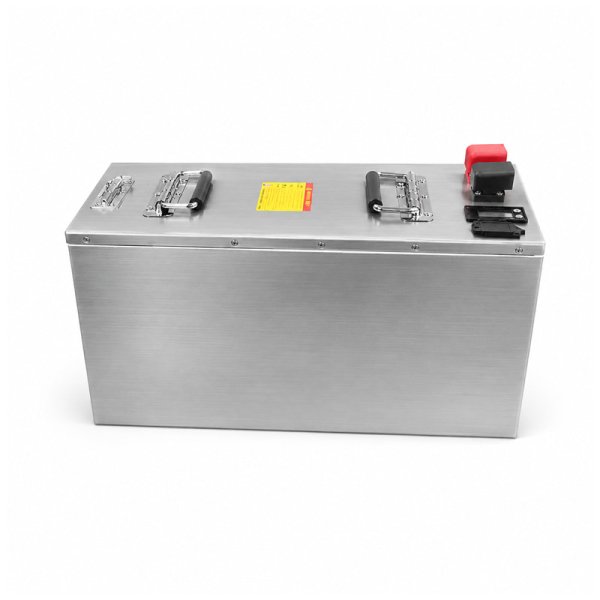
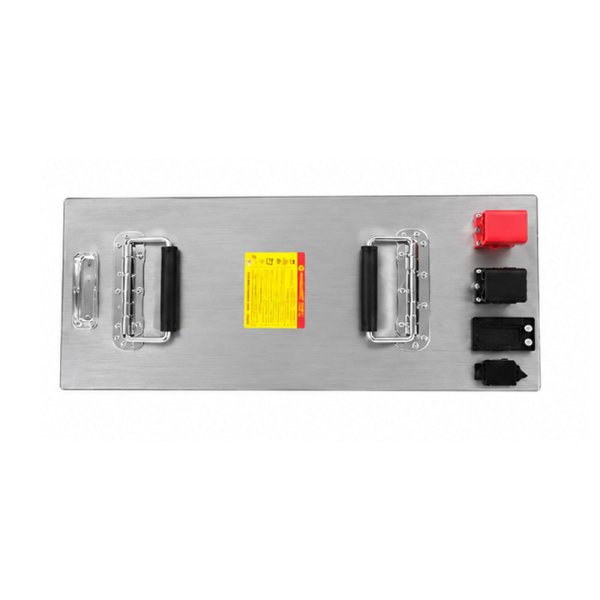
For an electric motorcycle OEM, delivery fleet, shared-mobility operator, distributor, or system integrator, the lowest battery quote is rarely the lowest operating cost. Motorcycle battery price changes with usable energy, chemistry, BMS functions, current capability, thermal limits, warranty, mechanical design, validation, and the engineering needed to integrate the pack into the vehicle.
For B2B procurement, motorcycle battery price should therefore be treated as a lifecycle decision rather than a one-line quotation. Buyers that are still defining baseline pack options can first review the electric motorcycle battery range before comparing suppliers. A useful motorcycle battery price comparison starts with the same vehicle duty cycle, payload, operating hours, charging window, climate, and service-life target. Electric motorcycle battery price is only meaningful when suppliers are quoting against the same commercial requirement.
Why Is Motorcycle Battery Price More Than the Initial Quote?
Two packs can have the same Ah rating and still deliver very different value. Motorcycle battery price should be compared against nominal energy, usable energy, continuous and peak discharge capability, cycle-life test conditions, BMS capability, temperature range, enclosure protection, warranty, and validation requirements.
Amp-hours alone do not show total stored energy. Nominal energy in watt-hours is approximately nominal voltage multiplied by rated capacity. For example, 64 V × 23 Ah is about 1,472 Wh, or 1.47 kWh. This calculation does not prove usable range, but it gives purchasing teams a better baseline for checking whether motorcycle battery price is being compared on equivalent energy.
A supplier quotation may also include different engineering scope. One pack may include stronger current capability, CAN or RS485 communication, more robust sealing, vehicle-specific mounting, charger coordination, validation testing, traceability, and after-sales support. Another may only provide a basic pack. Comparing motorcycle battery price without defining what is included can make the cheaper quotation look better than it actually is.

How Does LiFePO4 Affect Motorcycle Battery Price and Fleet Cost?
LiFePO4 is often a strong starting chemistry for high-use commercial motorcycles because the business case goes beyond purchase price. Its thermal stability, long service potential, cobalt-free cathode chemistry, and relatively low routine maintenance can help make fleet operating costs more predictable. For that reason, motorcycle battery price should be viewed together with replacement frequency, vehicle availability, warranty exposure, and cost per operating day.
According to BloombergNEF, battery packs for two- and three-wheeled vehicles averaged about $133/kWh in 2025. Its 2025 price survey also reported average LFP pack prices across all segments at $81/kWh compared with $128/kWh for NMC. The IEA reported that LFP packs were more than 40% cheaper per kWh on average than NMC alternatives in 2025. These are industry benchmarks, not direct quotations for a custom motorcycle pack.

Small traction packs, custom housings, BMS electronics, connectors, testing, logistics, and engineering can push electric motorcycle battery price above broad market $/kWh averages. The better B2B question is therefore not “What is the cheapest price per kWh?” but “What does this pack cost for each productive vehicle day over the project life?”
For a fleet that operates every day, a well-matched LFP pack can justify a higher initial motorcycle battery price if it reduces replacement events, avoids unscheduled downtime, and keeps more vehicles available for revenue-producing or operational work.
Which Specifications Should Be Compared Before Price?
A B2B price comparison should start with specification control. Motorcycle battery price is only meaningful when the packs being compared are designed for the same operating requirement. The electric two-wheeler battery selection guide can help procurement teams define application requirements before an RFQ, making motorcycle battery price comparisons more meaningful. Procurement teams should define the vehicle and duty cycle first, then compare suppliers against the same engineering basis.
Nominal Wh should be consistent with stated voltage and Ah. Chemistry should be identified clearly. Continuous and peak current should be based on the motor, controller, payload, acceleration, gradients, and route profile. A pack can have sufficient Ah yet still trigger protection or lose performance if the cells or BMS cannot support the real current demand. That risk belongs in any motorcycle battery price comparison.
Packaging also affects cost and application fit. LFP generally has lower energy density than NMC, so a given energy target may require more pack volume or mass. For an OEM, that can affect battery-box geometry, vehicle balance, mounting points, removable-pack handling, and available cargo or chassis space. A lower motorcycle battery price has little value if the pack requires an expensive vehicle redesign.
Temperature requirements should also be defined before sourcing. LFP can be attractive in warm, high-utilization applications, but low-temperature charging and power performance require appropriate control. Heating, insulation, temperature sensing, current limits, and charger logic may be needed for colder environments. These engineering items can change electric motorcycle battery price and should be included in the RFQ instead of added after sample testing.

Why Do BMS and Integration Change Motorcycle Battery Price?
A good cell does not create a reliable vehicle battery by itself. BMS quality, cell matching, wiring, connector selection, enclosure design, sealing, vibration resistance, thermal management, firmware, and communication with the vehicle all affect field performance. Motorcycle battery price therefore reflects more than cell cost.
For fleet and OEM projects, the BMS should match the real current profile and provide the protections and diagnostics required by the application. CAN or RS485 may be required for state-of-charge reporting, fault handling, charger coordination, controller integration, or service diagnostics. More capable electronics and engineering can increase motorcycle battery price, but they can also reduce fault-finding time and integration risk. For supporting technical context on chemistry, integration, charging, and lifecycle topics, the electric motorcycle battery guide provides a broader reference for B2B buyers. This helps teams review motorcycle battery price alongside the technical choices that influence field reliability.
An unusually low motorcycle battery price deserves technical review. The quotation may reflect simpler protection, lower current capability, fewer diagnostics, limited mechanical validation, weaker traceability, or less engineering support. Buyers should ask what is included, what has been tested, and what warranty conditions apply before treating two quotations as equivalent.
When Is LFP a Better Fit for Commercial Fleets?
For high-utilization commercial motorcycles, LFP is usually worth evaluating first when thermal stability, cycle-life potential, predictable lifecycle cost, and lower replacement frequency matter more than minimum pack size. These conditions are common in delivery fleets, shared-mobility programs, rental operations, and other applications where vehicle downtime has a direct operating cost.
NMC can still be appropriate when energy density, minimum pack size, low mass, or cold-weather performance dominates the vehicle design. Lead-acid can remain viable in low-use or highly price-sensitive applications, but its weight, maintenance needs, usable-energy limitations, and replacement profile can make it less attractive for demanding daily duty.
The chemistry decision should therefore follow the application. Route length, payload, stop frequency, daily operating hours, available charging windows, ambient temperature, pack envelope, expected service life, and acceptable downtime should be fixed before motorcycle battery price is ranked. For many B2B fleets, LFP offers a strong balance between safety margin, durability, and commercial predictability.
What Should B2B Buyers Confirm Before Ordering?
Before requesting a motorcycle battery price, provide the vehicle model, motor and controller requirements, continuous and peak current demand, daily distance, payload, gradients, operating hours, temperature range, charging windows, available battery space, connector, communication needs, service-life target, expected annual volume, and target market.
Then confirm nominal Wh, usable-energy assumptions, chemistry, BMS functions, current limits, temperature limits, enclosure protection, vibration requirements, charger matching, communication protocol, validation plan, traceability, warranty, lead time, change control, and after-sales response. A useful motorcycle battery price quotation should let procurement compare the same duty cycle across suppliers. For projects that extend beyond one motorcycle platform or require custom motive-power engineering, this power battery solution provides a broader application framework.
Motorcycle battery price should not be ranked until these items are aligned:
| Purchase Factor | Weak Comparison | Better B2B Check |
|---|---|---|
| Unit price | Cheapest pack wins | Delivered cost for the same validated specification |
| Capacity | Ah only | Nominal Wh, usable energy, and current capability |
| BMS | “Included” | Protection, diagnostics, communication, and current limits |
| Service life | Marketing claim | Test conditions, end-of-life criteria, and warranty |
| Integration | Dimensions only | Connector, mounting, charger, controller, and communication |
| Supply | Sample price | Volume pricing, lead time, traceability, and change control |
| Downtime | Ignored | Replacement lead time, spare strategy, and service support |
Conclusion
For an OEM, fleet operator, distributor, or integrator, motorcycle battery price should answer a bigger question than “How much is one pack?” The real issue is how much reliable vehicle operation the battery delivers over its service life and how much risk the supplier removes from the project.
LiFePO4 is increasingly attractive for commercial motorcycle programs because it combines strong thermal stability, long service potential, cobalt-free chemistry, and competitive pack economics. Its lower energy density and weaker cold-temperature performance than NMC in some applications should be engineered into the project rather than ignored.
The best sourcing decision is not simply the lowest motorcycle battery price. Motorcycle battery price becomes meaningful only when operating requirements are fixed and suppliers are compared on the same duty-cycle basis. When usable energy, current capability, BMS, mechanical design, temperature limits, charger compatibility, validation, warranty, supply continuity, and after-sales support are aligned, motorcycle battery price becomes a useful procurement metric instead of a misleading headline number.
Frequently Asked Questions About Motorcycle Battery Prices
Q: How much does a motorcycle battery cost for an electric fleet?
A: Motorcycle battery price varies with usable energy, chemistry, current capability, BMS, enclosure, order volume, customization, testing, logistics, and warranty. Broad $/kWh averages are useful market references, but a commercial traction pack should be quoted against the actual vehicle and duty cycle.
Q: Why does LiFePO4 motorcycle battery price vary between suppliers?
A: Suppliers may be quoting different cell grades, current capability, BMS functions, enclosure protection, communications, validation, warranty, and engineering scope. The unit price is comparable only after those items are aligned.
Q: How should fleets calculate motorcycle battery cost per cycle?
A: Start with delivered pack cost and validated cycle-life conditions, then include expected replacement frequency, downtime, replacement labor, freight, spare-pack inventory, warranty recovery, and end-of-life handling. Cost per productive vehicle day can be more useful than motorcycle battery price alone.
Q: Does BMS quality affect motorcycle battery price?
A: Start with delivered pack cost and validated cycle-life conditions, then include expected replacement frequency, downtime, replacement labor, freight, spare-pack inventory, warranty recovery, and end-of-life handling. Cost per productive vehicle day can be more useful than motorcycle battery price alone.
Q: How can B2B buyers verify rated battery capacity?
A: Check whether nominal Wh is consistent with nominal voltage multiplied by rated Ah, then ask for the discharge test method, current, temperature, cutoff conditions, usable-energy assumptions, and sample validation data. Capacity should be verified under conditions relevant to the commercial vehicle.