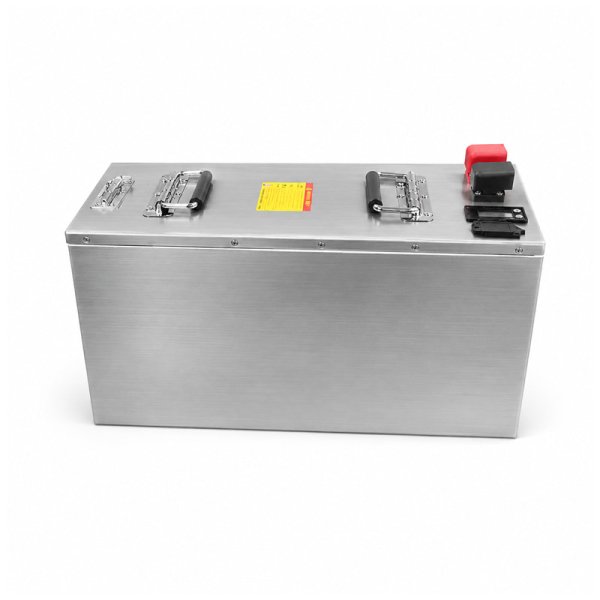
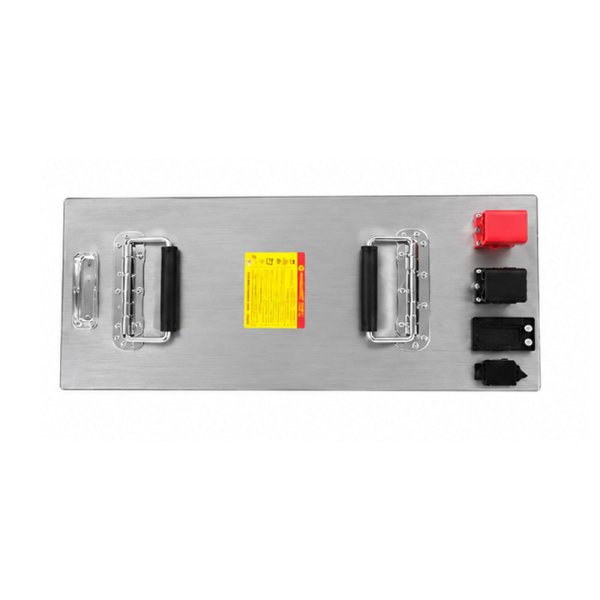
A stand up forklift battery should be specified around the work the truck performs, not around a catalogue capacity figure. Compact chassis space, repeated stop-start travel, frequent lifting, operator-platform balance, and short charging windows can turn a technically compatible pack into an operational problem.
For fleet managers, warehouse procurement teams, maintenance departments, and forklift integrators, the practical sequence is clear: measure the duty cycle, freeze compartment and weight limits, define current demand and interfaces, plan charging, confirm service access, and convert the results into one controlled RFQ. That approach reduces fitment surprises, nuisance faults, charging bottlenecks, and inconsistent supplier quotations. It also makes stand up forklift battery procurement easier to compare across qualified suppliers.
Why Do Stand-Up Forklifts Need a Different Battery Specification?
Stand-up forklifts work in dense warehouse traffic where short travel segments, rapid direction changes, and repeated lift events are normal. Traction, hydraulic lift, steering, and auxiliary loads may overlap many times during a shift. A stand up forklift battery therefore has to support repeated bursts of power as well as total daily energy.
Packaging is equally restrictive. A compact chassis gives engineering teams less freedom to change enclosure length, cable exit position, connector location, or service clearance. Battery mass may also contribute to the truck’s approved weight distribution, so a lighter lithium pack should not be treated as automatically better.
Buyers building a broader forklift specification can use this forklift battery selection guide to structure truck-level requirements. When the project needs a non-standard enclosure, communication interface, or fleet integration, the power battery solution provides a path from application data to an engineered pack.
The stand up forklift battery should therefore be treated as part of the truck and warehouse operating system, not as an isolated energy box.
Which Operating Data Should Fleets Measure Before the RFQ?
Before asking a supplier to size a stand up forklift battery, collect data from the actual warehouse. Nameplate information is necessary, but it does not show congestion, acceleration frequency, lift intensity, charger access, or the hardest recurring shift.
A practical operating-data sheet should capture:
| RFQ input | What the fleet should record | Why it matters |
|---|---|---|
| Travel pattern | Distance per shift, short travel segments, direction changes | Energy use and repeated current demand |
| Lift work | Loaded/unloaded lifts, lift height, payload range | Hydraulic demand and peak current |
| Shift pattern | Hours per shift, shifts per day, breaks | Usable energy and charging opportunity |
| Site conditions | Ramps, dock plates, floor condition, temperature, dust or washdown | Thermal and enclosure requirements |
| Charging access | Real windows, queueing, parking layout, operator behavior | Fleet availability and reserve margin |
A representative week is usually more useful than one unusually busy day. The goal is to identify the hardest recurring operating pattern the stand up forklift battery must support without chronic derating or unplanned charging.

For two- or three-shift sites, charging should be reviewed during battery sizing rather than after the pack is selected. This multi-shift forklift battery charging guide can help procurement teams compare scheduled windows, opportunity charging, and staggered fleet strategies before the specification is frozen.
This is also where stand up forklift battery runtime should be defined. Runtime should cover the assigned work interval plus a practical reserve, but it should be verified against real charging windows rather than chosen by capacity alone.
How Should the Battery Compartment and Weight Limits Be Frozen?
The stand up forklift battery compartment is a hard mechanical envelope. Procurement should record internal length, width, and height, but also tray lips, rails, hold-down features, access panels, cable bend radius, connector position, lifting or extraction direction, and service clearance.
A lithium battery for stand up forklift applications may meet the energy requirement in less volume than the original lead-acid unit. That does not mean the enclosure should simply be made smaller. Unused space can affect retention, service access, connector placement, and mass distribution.
The RFQ should include a dimensioned compartment drawing, permitted tolerances, photographs, and the installation/removal path. The supplier should confirm that the stand up forklift battery can be isolated, disconnected, removed, and reinstalled without dismantling unrelated truck components.
Stand up forklift battery weight needs the same discipline. Buyers should request the truck manufacturer’s permitted battery mass range and any requirements for minimum mass, retention, or center of gravity. If a proposed lithium design is materially lighter, the solution should be engineered with the truck OEM or authorized integration team rather than improvised at the warehouse.
For mixed fleets, create a fitment matrix for every approved truck model. This reduces field adaptation and makes future replacement packs easier to control.
What Continuous and Peak Current Must the Pack Support?
Capacity does not show whether a stand up forklift battery can handle repeated acceleration and lifting. The pack must support continuous demand during sustained work and short peak demand when traction, hydraulic lift, steering, or other functions overlap.
Logged truck data are the best input. Procurement should request current traces, controller limits, peak duration, repetition rate, and known traction or hydraulic surges. When logging is unavailable, provide the truck model, controller information, payload range, lift pattern, and representative duty cycle so conservative limits can be agreed.

The BMS, contactors, busbars, cables, terminals, and connector must all support the required current without nuisance trips or excessive heat. Peak current should never be treated as one headline number. Duration, frequency, thermal recovery, and low-state-of-charge behavior all affect whether the stand up forklift battery remains usable through a real picking cycle.
Where regenerative current is used during deceleration or lowering, charge and discharge limits should be defined together so the battery and truck controller operate inside one validated envelope.
How Should Thermal and Interface Design Support Fleet Reliability?
Compact packaging can make thermal control more demanding. In a stand up forklift battery compartment, heat from current-carrying components and nearby truck hardware has less space to dissipate. Dust, packaging debris, restricted airflow, condensation, or occasional splash can further change the operating environment.
Buyers should provide ambient temperature, shift intensity, enclosure exposure, and cleaning conditions. The supplier can then define temperature sensors, derating logic, ventilation or other thermal pathways appropriate to the application instead of relying on a generic temperature rating.
Interfaces must also be frozen before volume purchase. Record connector model, polarity, keying, current rating, cable size, cable length, exit direction, interlocks, and required communication. If CAN, RS485, or another interface is used, the RFQ should define the message or diagnostic requirements and how firmware changes will be controlled.

A stand up forklift battery that fits mechanically but produces intermittent communication faults or difficult connector access can still create avoidable downtime.
How Should Fleets Plan Charging Windows Without Losing Productive Time?
A stand up forklift battery for multi-shift use has to be specified together with the charger strategy. The objective is not simply faster charging; it is keeping enough trucks available while avoiding queues, repeated deep discharge, and unnecessary battery oversizing.
Map shift starts and ends, scheduled breaks, meal periods, dispatch peaks, maintenance windows, and parking locations. Then determine how much energy has to be returned during each reliable charging period.
Fleet-level timing matters. If many trucks reach a low state of charge together, individual stand up forklift battery runtime may appear acceptable while the site still develops a charging bottleneck. Charger-to-truck ratio, electrical capacity, parking layout, cable reach, and operator behavior all affect the result.
A well-specified stand up forklift battery for multi-shift use should report state of charge consistently and support clear charging rules. Define when trucks may be plugged in, the minimum state of charge before returning to service, and how missed charging windows are handled.
In variable operations, disciplined charging plus a sensible reserve may be more economical than installing the largest pack that physically fits.
What Service Access Do High-Utilization Fleets Need?
Serviceability is part of uptime. A stand up forklift battery can have strong electrical performance and still create excessive downtime if technicians cannot reach the main disconnect, service connector, fuse area, or diagnostic interface without removing the entire pack.
The RFQ should define access direction, isolation procedure, fault-code visibility, diagnostic data, connector replacement, cable inspection, and which external components can be serviced in the field. Maintenance teams should also know what tools, software, training, and spare parts are required.
For fleets with many similar trucks, standardization reduces support complexity. A consistent stand up forklift battery enclosure, connector arrangement, diagnostic process, and approved component set makes technician training and spare planning more predictable.
Service expectations should be agreed before volume purchase, not discovered during the first fault.
How Should Buyers Convert the Study Into a Controlled RFQ?
The final RFQ should convert warehouse observations into measurable supplier requirements. Avoid vague statements such as “suitable for intensive warehouse use.” Different suppliers need to quote against the same technical and operational baseline.
At minimum, freeze:
- approved truck models and fleet quantities;
- stand up forklift battery compartment drawings and tolerances;
- permitted battery mass and retention requirements;
- representative duty-cycle and stand up forklift battery runtime targets;
- continuous and peak current limits, including peak duration;
- environmental and thermal conditions;
- connector, cable, interlock, and communication requirements;
- charging windows and charger interface;
- service-access and diagnostic requirements;
- pilot tests, acceptance criteria, and change-control expectations.
Pilot units should then be tested under representative warehouse conditions, including demanding shifts, loaded lifting, repeated acceleration, charging windows, thermal exposure, connector fit, diagnostic access, and service procedures.
Once the pilot is accepted, the approved stand up forklift battery configuration should be frozen so later production units do not silently change enclosure, connectors, BMS settings, communication behavior, or other critical interfaces.
Conclusion
A stand up forklift battery should be purchased as an integrated fleet component. Compact packaging, approved battery mass, repeated current peaks, thermal limits, charging windows, interfaces, and service access all affect daily warehouse availability.
The strongest B2B specification begins with measured operating data and ends with a controlled RFQ and representative pilot. When buyers document the stand up forklift battery compartment, weight range, duty cycle, power demand, charging strategy, interfaces, service requirements, and acceptance criteria, suppliers can quote against one common baseline and fleets can scale with fewer integration surprises.
Frequently Asked Questions About Stand Up Forklift Battery
Q: What battery runtime is suitable for a stand-up forklift fleet?
A: Stand up forklift battery runtime should cover the hardest recurring work interval plus a practical reserve. Validate it with real lift activity, travel, congestion and charging windows instead of choosing runtime from nominal capacity alone.
Q: Can a lithium pack be smaller than the original lead-acid battery?
A: Yes, but a smaller lithium battery for stand up forklift use must still satisfy compartment fit, retention, mass distribution and service access. Confirm OEM weight limits and installation geometry before reducing enclosure size.
Q: Does battery weight matter on a stand-up forklift?
A: Yes. Stand up forklift battery weight can affect balance, traction and handling. Procurement should follow the truck manufacturer’s permitted mass range and use an engineered solution if a lithium replacement is materially lighter.
Q: Which connector data should be confirmed before ordering?
A: Confirm connector model, polarity, keying, current rating, cable size, cable length, exit direction and mating interface. Record communication and interlock contacts so every approved stand up forklift battery uses the same interface.
Q: What should a pilot test include before fleet rollout?
A: Test representative shifts, peak lifting and acceleration, runtime, charging windows, thermal behavior, fault handling, connector fit, service access and diagnostics before approving the stand up forklift battery for rollout.