Lithium-powered forklifts are often described as “maintenance-free.” For a B2B fleet, that should not mean “run the truck and ignore it.” The real advantage is more practical: lithium removes much of the repetitive battery work associated with flooded lead-acid systems, while forklift maintenance still covers safety inspections, electrical connections, charging practice, temperature, and the truck’s mechanical systems.
For multi-shift B2B fleets, good forklift maintenance shifts time away from watering, equalization, acid cleanup, and frequent battery handling toward condition monitoring and planned checks that protect uptime.
What Does “Maintenance-Free” Mean for a Lithium Forklift?
In battery terms, “maintenance-free” means a sealed lithium pack does not need routine electrolyte watering and does not use the same equalization routine as a flooded lead-acid traction battery. Toyota, for example, describes one of its sealed lithium-ion forklift batteries as eliminating watering and equalizing, while the BMS communicates critical information to the truck and charger.
That can remove meaningful recurring labor from forklift maintenance. A lead-acid fleet may need watering, corrosion cleanup, and battery-changing activity. A correctly matched LiFePO4 system removes much of that workload and simplifies forklift maintenance for busy sites.

But “maintenance-free” is not “inspection-free.” A lithium pack still works with connectors, cables, mounting hardware, a BMS, and a charger, and it still experiences heat, cold, vibration, dust, and impact. Those conditions remain part of forklift maintenance.
What Still Needs Attention in Forklift Maintenance?
A lithium fleet should move forklift maintenance from electrolyte service toward electrical condition, physical condition, and operating data.
BMS alerts and abnormal behavior
The BMS can monitor voltage, current, temperature, state of charge, and protection events, depending on system design. Repeated fault codes, shutdowns, charging interruptions, or abnormal heat should trigger a review of the battery, charger, truck, and operating history.
Connectors, cables, and enclosure
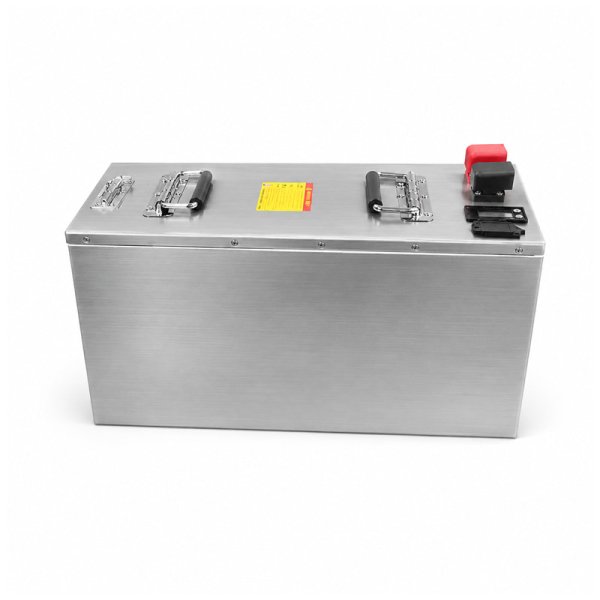
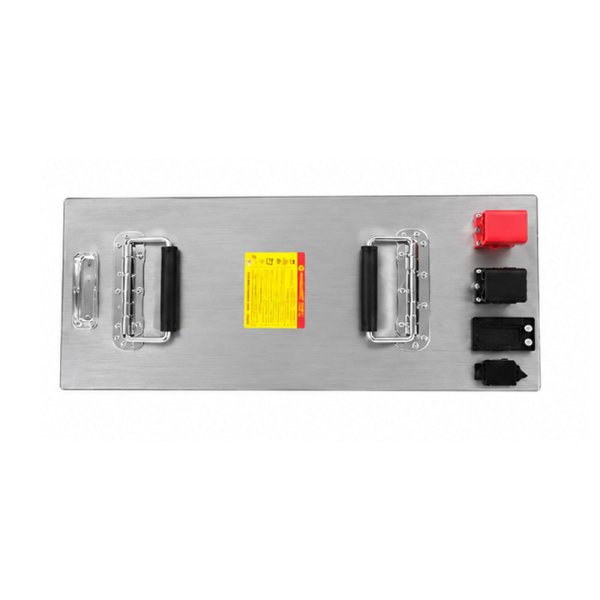
High-current connectors and cables should stay secure and free from overheating, damage, or excessive wear. A damaged connector can create resistance and heat, so connector condition belongs in forklift maintenance. Forklift maintenance should also cover the enclosure and mounting points after collisions, severe vibration, or unusual moisture exposure.
Temperature and working environment
Warehouses, cold rooms, outdoor yards, and hot production areas place different demands on a battery. Charging and operating limits should come from the specific supplier. For cold storage or high heat, temperature management belongs in both procurement and the forklift maintenance plan.
Truck-side systems
Changing battery chemistry does not remove truck service. Tires, forks, mast chains, hydraulics, steering, brakes, warning devices, and guards still need inspection to the manufacturer’s schedule. In the United States, OSHA requires powered industrial trucks to be examined at least daily and after each shift when used around the clock.
What Should Fleets Check Before Every Shift?
A useful forklift maintenance routine should be short and consistent, and forklift maintenance ownership should be clear across shifts. A lithium-forklift pre-shift check can include:
- battery or truck display for warnings and abnormal state-of-charge behavior;
- visible condition of cables, connectors, and accessible mounting points;
- evidence of impact, deformation, abnormal heat, odor, moisture, or contamination around the battery area;
- tires, forks, mast, chains, brakes, steering, hydraulics, lights, horn, and safety devices required by the truck procedure;
- charger and charging-cable condition where the same team manages charging equipment.
If a safety-related defect is found, the truck should not return to rotation. OSHA requires unsafe industrial trucks to be kept out of service until corrected, so forklift maintenance protects both availability and safety.
How Should Charging Fit Into Forklift Maintenance?
Charging is one of the biggest reasons lithium can simplify forklift maintenance, but the battery, charger, and duty cycle must be treated as one system.
Use a charger approved for the battery chemistry and pack limits; charger matching is part of forklift maintenance. Confirm voltage range, allowable current, connector, communication method, and facility power. A larger charger is not better if the battery or BMS cannot accept the current.

Many lithium systems support opportunity charging during breaks or shift changes. This can recover energy without a full battery swap, reduce handling labor, and make forklift maintenance less dependent on spare packs and battery rooms.
Do not create improvised charging rules. Do not deliberately run a pack to zero, charge a visibly damaged pack, or bypass a fault to make the next shift. Follow the validated state-of-charge and temperature limits supplied for the battery and charger.
How Can Lithium Reduce Forklift Maintenance Costs?
For a busy operation, lithium can remove recurring sources of maintenance downtime.
| Maintenance factor | Flooded lead-acid | LiFePO4 lithium |
|---|---|---|
| Routine watering | Required | Not required |
| Equalization routine | Common | No lead-acid equalization routine |
| Acid cleanup | Can be required | No sulfuric-acid watering process |
| Battery swaps | Common in some multi-shift fleets | Can often be reduced |
| BMS monitoring | System-dependent | Central to pack monitoring |
| Connector checks | Required | Required |
| Truck preventive maintenance | Required | Required |
This is why LiFePO4 is often worth evaluating first for high-utilization B2B fleets with limited maintenance labor. It does not make forklift maintenance disappear; it makes battery-related forklift maintenance cleaner and more predictable. Lead-acid can still suit light-use fleets with established infrastructure, but high-throughput operations gain more from reduced battery work and flexible charging.
Buyers can compare application-oriented options in this forklift battery range before narrowing the pack to a specific duty cycle.
What Should B2B Buyers Confirm Before Ordering?
Good forklift maintenance begins at procurement. If a battery is poorly matched to the application, the service team inherits the problem.

Before approving a lithium project, buyers should provide the forklift model, shift pattern, operating hours, load profile, travel and lift demand, ambient temperature, charging windows, facility power, and uptime target. Then confirm current capability, BMS protections, charger communication, connector, fit, installed weight, thermal limits, diagnostics, and warranty.
For a broader procurement framework, see the electric forklift battery buying guide.
Ask how BMS fault data is read and who supports commissioning, charger matching, sample validation, and troubleshooting. Strong B2B support should connect specifications to the customer’s real duty cycle.
For fleets moving from flooded lead-acid, LiFePO4 is worth validating first when maintenance labor, battery swaps, charging flexibility, and uptime are major cost drivers. A matched lithium system can simplify forklift maintenance without weakening inspection discipline.
Conclusion
A lithium forklift is low maintenance, not no maintenance, and forklift maintenance remains part of safe fleet operation. The strongest business case comes from removing repetitive lead-acid battery work while keeping disciplined inspections, charging controls, and truck preventive service.
For B2B operators, that is the practical meaning of maintenance-free power: fewer manual battery tasks, less battery handling, better BMS visibility, and more time focused on uptime. A well-matched LiFePO4 system does not replace forklift maintenance. It makes forklift maintenance simpler and more aligned with fleet operations.
Frequently Asked Questions About Forklift Maintenance
Q: Do lithium forklift batteries need maintenance?
A: They need much less routine battery service than flooded lead-acid batteries, but inspection remains necessary. Forklift maintenance should cover BMS alerts, connectors, damage, charging behavior, temperature, and normal truck safety checks.
Q: What is included in a forklift maintenance checklist?
A: A forklift maintenance checklist typically covers tires, forks, mast and chains, hydraulics, brakes, steering, warning devices, guards, and battery condition. Lithium fleets should also check BMS warnings, connectors, enclosure condition, and charger compatibility.
Q: What should a forklift maintenance schedule include?
A: In the United States, OSHA requires pre-use examination at least daily and after each shift for round-the-clock use. Planned forklift maintenance intervals should follow the truck manufacturer and duty cycle, with deeper service scheduled by operating hours and application conditions.
Q: Can lithium forklift batteries be opportunity charged?
A: Many lithium forklift systems are designed for opportunity charging during breaks or shift changes. The charger, current limit, temperature range, connector, and BMS communication must still match the battery system.
Q: Is LiFePO4 better than lead-acid for a forklift fleet?
A: LiFePO4 is often stronger for high-use B2B fleets because it eliminates watering, reduces routine battery service, supports flexible charging, and can reduce battery swapping. Lead-acid can still suit light-duty sites with existing infrastructure.