A forklift battery replacement program should be managed as a fleet transition, not as a bulk battery purchase. The business risk is rarely limited to whether a new pack powers a truck. The real risk is whether the replacement fits the tray, preserves required counterbalance conditions, works with the truck and charger, covers the assigned shift, and can be rolled out without disrupting warehouse throughput.
A disciplined forklift battery replacement program follows one sequence:
fleet audit → fit and interface freeze → duty-cycle specification → representative pilot → phased rollout → contingency coverage → TCO review.
This keeps procurement focused on uptime rather than catalogue comparisons.
For teams reviewing how battery performance affects warehouse productivity before starting a replacement project, the guide to forklift truck batteries and warehouse efficiency provides useful operational context.
When Is Fleet-Wide Forklift Battery Replacement Actually Needed?
Forklift battery replacement should start from operating evidence, not battery age alone. A battery may still accept charge while creating hidden losses through reduced runtime, inconsistent state of charge, extra battery swaps, delayed starts, or repeated maintenance interventions.
Fleet managers should look for several signals together:
- runtime no longer covers the assigned shift;
- battery-related truck unavailability is rising;
- operators change work patterns to preserve charge;
- maintenance or charging faults recur on the same assets;
- the spare-battery pool is growing because individual packs are unreliable.
The purpose is to separate isolated failures from a fleet-level pattern. Forklift battery replacement should be triggered by an operational pattern, not a single weak pack. A forklift battery replacement project becomes easier to justify when the baseline already shows how much availability, labor, and workflow disruption the existing system creates.
Procurement teams browsing forklift batteries for sale should treat listings as market references, not proof of compatibility. The replacement decision must begin with the installed fleet.
How Should Fleets Audit Trucks Before Replacement?
The fleet audit converts individual trucks into validated replacement groups. In a forklift battery replacement program, this step determines how many technical configurations the rollout actually needs. Model name alone is not enough because similar forklifts can differ in tray size, cable exit, connector position, retention hardware, minimum battery mass, or counterbalance assumptions.
The audit should record:
| Audit area | What to capture | Why it matters |
|---|---|---|
| Truck identity | model, serial range, application | prevents mixed configurations |
| Battery space | tray and compartment dimensions | controls mechanical fit |
| Weight | approved battery mass range | protects stability and payload assumptions |
| Interfaces | connector, cable route, interlocks | prevents commissioning delays |
| Access | lifting and service clearance | affects safe installation and maintenance |
| Duty | shifts, travel, loads, temperature | sets usable-energy and current targets |
Weight deserves particular attention. In some counterbalanced trucks, battery mass contributes to the vehicle’s stability calculation. A lighter lithium pack should not be assumed to be a drop-in replacement for a heavier lead-acid pack. Ballast, tray engineering, or truck-manufacturer approval may be required.
For fleets comparing conversion economics at this stage, the analysis of lithium forklift batteries and ROI can support the business case, but it should not replace truck-specific engineering checks.
A good audit produces a small number of validated truck families. That makes forklift battery replacement easier to phase and reduces the risk of forcing one configuration across mechanically different assets.
What Fit and Electrical Data Must Be Frozen?
Before the first fleet purchase order, each truck family needs a signed interface specification. That specification becomes the technical control point for forklift battery replacement. This is where forklift battery specs become acceptance criteria instead of brochure data.
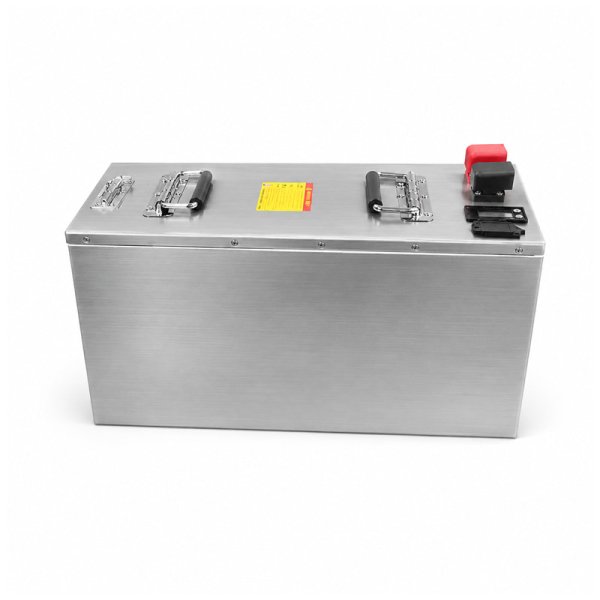
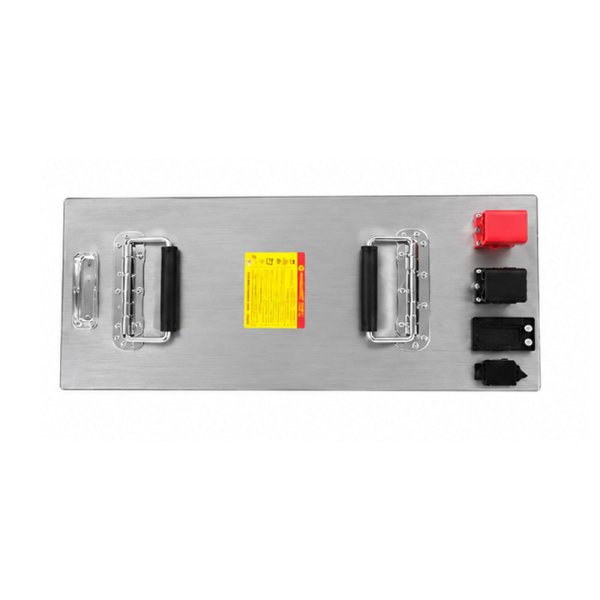
Mechanical requirements should include tray dimensions, mounting and retention points, battery mass limits, lifting access, connector position, cable routing, service clearance, and any truck-specific interlock. Electrical requirements should include the system interface, usable capacity target, continuous and peak current demand, connector keying, cable length, charging limits, protection behavior, and communication where applicable.

The objective is not to emphasize voltage as a sales feature. It is to confirm that truck, battery, charger, and control logic operate as one system.
For fleets with several motive-power applications, This power battery solution provides broader solution context, while the forklift battery replacement program itself should remain tied to documented truck-level requirements.
No configuration should move forward because it “looks compatible.” A physically fitting battery with the wrong connector pinout, cable orientation, communication behavior, or mass can create the same downtime as a battery that does not fit at all.
How Should Multi-Shift Duty Shape the Replacement Program?
A single-shift truck and a high-utilization multi-shift truck should not automatically receive the same forklift battery replacement specification. The battery system has to support the way the warehouse actually works.
Procurement should document daily operating hours, break windows, travel distance, lift intensity, ramp use, cold-room exposure, idle periods, and the time genuinely available for charging. For forklift battery replacement, these operating windows are as important as the battery’s nominal rating.
These inputs determine whether the program needs more usable energy per truck, opportunity charging, spare packs, different charger allocation, or a different rollout sequence.
A lithium-ion forklift battery vs lead-acid comparison is useful only when it includes workflow. Lead-acid operations may depend on battery rooms, swaps, watering, equalization, and spare inventory. Lithium may change charging behavior, battery handling, parking rules, and service procedures. The commercial question is how each system affects availability, labor, resilience, and forklift battery life in the actual duty cycle.
What Should the Pilot Prove Before Rollout?
The pilot is the evidence gate between specification and fleet commitment. It is where forklift battery replacement assumptions are tested against warehouse reality. Forklift battery replacement should not scale from a demonstration on the easiest truck in the warehouse.
Select pilot trucks that represent meaningful duty conditions and at least the main truck families. The pilot should verify:
- tray fit, retention, lifting access, and cable routing;
- approved battery-weight and counterbalance conditions;
- connector, interlock, communication, and charger compatibility;
- loaded lifting, travel, ramps, repeated starts, and peak demand;
- runtime across a representative shift;
- charging during real break or dwell windows;
- fault handling, operator recovery, and service diagnostics;
- performance in relevant temperature and environmental conditions.
Acceptance should compare pilot evidence with the baseline established before the project. Forklift battery replacement decisions should use this evidence to confirm whether the proposed configuration is ready for scale. Measure truck availability, interventions, charging opportunities, workflow changes, and unresolved faults.
Forklift battery replacement should move to the next phase only after the pilot has produced repeatable acceptance evidence. A successful sample is not the same as a scalable fleet configuration.
How Should Replacement Be Phased Without Warehouse Downtime?
Fleet-wide forklift battery replacement should normally be divided into controlled waves. Each wave should contain trucks with similar fit, interfaces, duty cycle, and operational criticality.
Start with a group large enough to reveal installation, software, charger, documentation, and support weaknesses but small enough that the warehouse can recover if something goes wrong. This keeps forklift battery replacement reversible while the process is still being proven. After each wave, review commissioning time, fault frequency, charger utilization, operator feedback, and truck availability.

Do not automatically convert the most critical trucks first. Medium-criticality assets can be used to stabilize the process before the program reaches trucks supporting time-sensitive loading, production feeding, or outbound dispatch.
The key principle is reversibility. The forklift battery replacement schedule should preserve enough proven legacy capacity to absorb late deliveries, failed acceptance tests, software issues, or field-service delays.
What Backup and Field-Service Plan Is Needed?
Removing legacy batteries too early creates avoidable risk. A forklift battery replacement plan should define contingency capacity before each rollout wave begins. During forklift battery replacement, define which existing batteries remain serviceable, which replacement-ready packs are available, and how the supplier will respond during commissioning.
The contingency plan should cover battery or charger failure, connector damage, communication faults, delayed shipments, failed acceptance tests, and repeat defects. For critical trucks, a verified spare or rapid-exchange arrangement may provide more protection than holding broad inventory.
Field support must also be written into the purchase. The agreement should define escalation contacts, diagnostic evidence, response targets, spare-part availability, onsite labor responsibility, and how firmware, BMS settings, or approved component changes are controlled.
Warranty language should define failure criteria, capacity-retention conditions, exclusions, diagnostic data, repair or replacement process, and expected turnaround. Forklift battery life is only commercially useful if a failed unit can be diagnosed and returned to service without excessive delay.
How Should Procurement Compare CAPEX With Lifecycle TCO?
The lowest purchase price can produce the highest fleet cost. Forklift battery replacement should therefore be evaluated as a lifecycle investment, not a unit-price contest. A forklift battery replacement business case should compare upfront battery, charger, tray, ballast, installation, commissioning, training, and infrastructure costs with the operating costs that change after deployment.
Relevant TCO variables include:
- energy use and charging infrastructure;
- maintenance and battery-changing labor;
- spare-battery inventory;
- truck downtime and lost productive hours;
- field-service travel and diagnostic labor;
- expected forklift battery life;
- replacement frequency and warranty handling.

Procurement should model at least three scenarios: continue the current system, replace selected fleet groups, and roll out the target configuration. Pilot data should be used wherever possible rather than generic supplier assumptions.
This is where forklift battery replacement becomes a management decision rather than a product comparison. The preferred program is the one that controls mismatch risk, protects uptime, preserves operating flexibility, and produces a defensible lifecycle return.
Conclusion
Forklift battery replacement succeeds when it is managed as a controlled fleet transition rather than a one-time equipment purchase. The program should begin with asset and duty-cycle evidence, freeze fit and interface requirements, validate representative pilot trucks, and scale through measured rollout waves.
That approach directly addresses the B2B risks that matter most: mismatch, counterbalance errors, one-time replacement exposure, unplanned downtime, weak field support, and unclear retrofit ROI. With controlled forklift battery specs, contingency coverage, service obligations, and pilot-based TCO assumptions, procurement can modernize the fleet without turning the warehouse into the test environment.
Frequently Asked Questions About Forklift Battery Replacement
Q: When should a warehouse start a forklift battery replacement program?
A: A warehouse should consider forklift battery replacement when runtime, reliability, maintenance burden, or battery-related downtime no longer supports the truck’s assigned shift and productivity target.
Q: Can a mixed forklift fleet replace lead-acid batteries with lithium in phases?
A: Yes. A phased forklift battery replacement reduces one-time conversion risk because each truck family can be audited, piloted, commissioned, and monitored before the next rollout wave.
Q: What tray and counterbalance data must be checked before replacement?
A: Confirm tray and compartment dimensions, retention points, approved battery mass, cable exits, lifting access, and any minimum battery-weight or counterbalance requirement specified for the truck.
Q: How many forklifts should be included in a pilot?
A: Use enough trucks to represent the main truck families and demanding duty cycles without exposing the warehouse to excessive operational risk. The pilot should test real workloads, not only easy conversions.
Q: What costs belong in a forklift battery replacement business case?
A: Use enough trucks to represent the main truck families and demanding duty cycles without exposing the warehouse to excessive operational risk. The pilot should test real workloads, not only easy conversions.