Marine builders, RV converters, fleet operators and off-grid integrators increasingly use higher-voltage DC systems. 24V lithium batteries can reduce current for the same power, simplify high-load wiring and provide substantial usable energy in limited space. Compared with a traditional lead-acid bank, a correctly specified 24v lithium battery can also support faster charging, deeper routine cycling and lower maintenance. Results still depend on sizing, charger compatibility, enclosure protection and Battery Management System design. This guide explains how to evaluate a 24v lithium battery for boats, recreational vehicles, solar storage, service vehicles and OEM projects without relying on exaggerated claims.
Why Can a 24V Lithium Battery Improve Electrical Efficiency?
Electrical power equals voltage multiplied by current. For the same load, a 24v lithium battery supplies approximately half the current of a comparable 12V system. A 2,000W inverter draws about 78A from a nominal 25.6V source before conversion losses, versus about 156A from a nominal 12.8V source. Lower current can reduce voltage drop, cable size and connector heating when the installation is engineered correctly. Because resistive heating rises with the square of current, a 24v lithium battery is practical for inverters, trolling motors and pumps. A 24v deep cycle configuration can therefore improve power delivery without increasing stored energy.

24V lithium batteries are not automatically better for every application. Small systems may remain simpler at 12V, while existing 12V accessories may require converters. The correct choice depends on peak power, cable length, equipment voltage and service requirements. For sustained high loads, a 24v lithium battery often provides a cleaner system architecture.
How Does a 24V Lithium Battery Compare with a Lead-Acid Bank?
The useful comparison is usable energy, not amp-hours alone. A 24v lithium battery based on LiFePO4 chemistry maintains a relatively stable discharge voltage and can be designed for deeper regular cycling. Lead-acid batteries remain dependable, but repeated deep discharge generally reduces service life. Always follow the permitted depth of discharge in the 24v lithium batteries data sheet.
Quality 24v lithium batteries eliminates routine watering and equalization associated with flooded lead-acid batteries. This reduces service work in difficult compartments. Sealed lead-acid products require less maintenance than flooded batteries, but they are commonly heavier for similar usable energy.
Cycle-life claims require context. Results vary with depth of discharge, temperature, current and the remaining-capacity threshold used at end of life. A supplier may publish thousands of cycles at 70% depth of discharge, while another tests at 80%. A credible 24v lithium battery supplier should state the conditions rather than promote an isolated number.
Charging speed is also a system characteristic. 24V lithium batteries may accept higher current than many lead-acid designs, but the charger, alternator, cable, fuse and BMS must support it. Faster charging is only safe when the complete system is coordinated.
Can 24V Lithium Batteries Power Trolling Motors and House Loads?
Yes, when the battery is sized for the combined continuous and peak loads. A 24v lithium battery can run a trolling motor while supporting navigation electronics, lighting, refrigeration, pumps and communications. The designer must confirm that the 24v lithium batteries discharge rating exceeds the expected demand with an appropriate margin.
Energy can be estimated by multiplying nominal voltage by amp-hours. A nominal 25.6V, 100Ah 24v lifepo4 battery stores about 2.56kWh before reserve limits and losses. At an average 500W load, theoretical runtime is slightly above five hours. Actual runtime is lower because of wiring, conversion efficiency, temperature, aging and the configured reserve.
A 24 volt boat battery must also match the environment. Water resistance comes from the enclosure, seals, connectors and installation, not 24v lithium batteries chemistry alone. Request the IP rating, vibration information, terminal protection and temperature limits. 24V lithium batteries in a dry locker have different requirements from 24V lithium batteries exposed to spray or engine-room heat.
The 24 volt boat battery should be restrained, correctly fused and protected against cable abrasion, short circuits and water ingress. Commercial installations should follow applicable marine electrical standards and local requirements.
Why Do OEM Builders Consider a Single 24 Volt Boat Battery?
Two 12V batteries in series can create a 24V bank, but one 24v lithium battery may reduce inter-battery cables, terminals and mounting points. Fewer connections can simplify assembly and reduce opportunities for loose hardware or uneven resistance. A single 24 volt boat battery can also make documentation, replacement and inventory management easier.
Series-connected batteries must be approved for series use, matched in model and state of charge, and maintained under the supplier’s instructions. Mixing age, chemistry or capacity is poor practice.
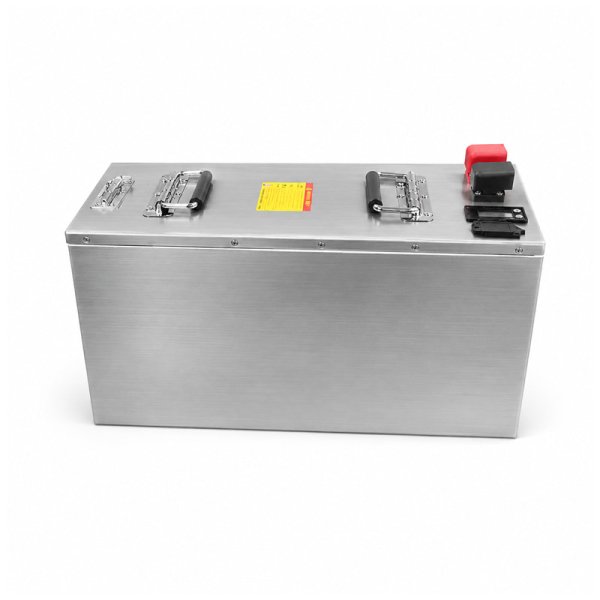
Complete 24V lithium batteries integrate matched cells, a BMS and pack-level protection in one enclosure. The manufacturer can validate the 24v lithium battery as a single unit rather than relying on separately sourced products. OEM buyers should still compare dimensions, connector orientation, mounting, communication and service access before choosing a 24 volt boat battery.
How Should an RV Battery Bank Be Sized?
Start with a load audit. Record each appliance, its wattage and daily operating time. Include inverter standby use, refrigeration, pumps, lights, ventilation, laptops and high-power kitchen devices. The daily watt-hour total is the basis for sizing an rv battery bank.
If a vehicle uses 2.2kWh per day and needs two days of autonomy, the usable target is 4.4kWh. A nominal 25.6V, 200Ah 24v lithium battery stores about 5.12kWh. Whether it is sufficient depends on permitted depth of discharge, cold-weather performance, inverter losses and reserve.
The 24 volt deep cycle battery architecture reduces current on the high-power side of the rv battery bank, especially when the inverter is far from the battery. Existing 12V accessories may require a properly sized 24V-to-12V converter. That converter should be included in the reliability plan because one failure may affect several vehicle systems.
Do not size 24v lithium batteries only for average energy. Check inverter surge, compressor startup and simultaneous loads. The BMS continuous and short-duration ratings must cover them. For rental vehicles, the rv battery bank should include clear low-state-of-charge warnings and a charging strategy that users cannot easily misuse.
Why Is a Lightweight Battery Valuable in Mobile Applications?
A lightweight battery can free payload for water, tools, cargo or additional equipment. This matters in RVs, service vehicles and boats where total mass and weight distribution affect handling. The 24V lithium batteries is often lighter than a lead-acid bank providing similar usable energy, although the exact difference depends on capacity, enclosure and protection.
Weight is not the only criterion. A lightweight battery still needs a durable enclosure, secure mounting and appropriate mechanical cell support. Reducing structural material simply to claim lower mass can harm durability. The better question is whether the 24V lithium batteries balances energy, protection and serviceability.
In an rv battery bank, reduced mass may simplify installation in a limited-load compartment. In a 24 volt boat battery application, it can support weight distribution, but the battery must remain firmly restrained in rough conditions. A lightweight 24v lithium battery creates value only when installed safely.
Can a 24V Lithium Battery Be Charged from Solar, Shore Power and an Alternator?
Yes, but each source must provide the correct voltage, current limit and control logic for the specific 24v lithium batteries. The 24v lithium battery data sheet takes priority over generic settings.
For solar charging, the MPPT controller must support a nominal 24V bank and a LiFePO4-compatible or programmable profile. Confirm voltage detection and current limits before connecting the 24v lifepo4 battery. The controller output must remain within 24v lithium batteries charge-current rating.
For shore power, use a charger designed for the nominal voltage and chemistry. A typical 24v lithium battery may charge in the upper-28V range, but exact settings differ. Never copy voltages from another 24v lithium battery without checking the manual.
A standard 12V alternator cannot directly charge a 24v lithium battery because its output voltage is too low. Use a 12V-to-24V DC-DC battery charger, suitable buck-boost charger or dedicated 24V alternator. The charger should regulate current so the 24v lithium batteries do not overload the alternator and should respond to a BMS charge-enable signal when available.
The 24 volt deep cycle battery system also needs correctly sized fuses, protected cables and a verified grounding plan. A basic voltage converter may not provide a proper charging algorithm, so choose equipment intended for battery charging.
What Safety Features Should a 24V Lithium Battery Include?
LiFePO4 offers strong thermal stability, but no lithium-ion battery is risk-free. A 24v lithium battery can still be damaged by overcharge, short circuit, overheating, impact, water ingress or incorrect installation. Safety depends on the cells, enclosure, BMS, fusing, wiring and charger coordination.
At minimum, 24v lithium batteries should monitor individual cell voltage, pack current and temperature. The BMS should protect against overcharge, over-discharge, overcurrent and short circuit. Depending on the application, 24v lithium batteries may also need contactors, pre-charge control, several temperature sensors, event logging or CAN/RS485 communication.

Low-temperature charging needs special attention. Many LiFePO4 cells should not be charged below about 0°C, and some finished batteries use a higher cutoff such as 5°C. Discharge may be allowed at lower temperatures according to the specification. A winter 24v lifepo4 battery therefore needs low-temperature charge protection or controlled heating. A sealed 24v lithium battery does not generate hydrogen during normal charging in the same way as a flooded lead-acid battery. Even so, installers must follow spacing, ventilation and enclosure instructions. 24v lithium batteries should never be described as fireproof.
What Determines the Service Life and Total Cost?
Service life depends on operating conditions. A 24v lithium battery kept within recommended temperature, voltage and current limits generally lasts longer than one exposed to sustained heat or repeated overcurrent. Shallower cycling also normally causes less wear than using the full available range every day.
Storage matters as well. Leaving a 24v lithium battery at very high state of charge for long periods, especially in heat, may accelerate aging. Follow the supplier’s storage level and inspection interval. Because the BMS consumes a small amount of power, an unattended 24v lithium battery can eventually become over-discharged.
Compare cycle ratings only on the same basis. Ask for depth of discharge, temperature, charge and discharge rate, rest periods and end-of-life capacity. “4,000 cycles” is incomplete without those conditions. A credible 24v lithium batteries supplier should provide enough detail for a lifetime-energy calculation.
A 24 volt deep cycle battery may cost more initially than a basic lead-acid bank, but the comparison should include replacement labor, downtime, maintenance, payload and charger upgrades. 24V lithium batteries offer the strongest financial case in frequently cycled systems where downtime is expensive. It may be less compelling in rarely used equipment nearing retirement.

How Should B2B Buyers Select a 24V Lithium Battery Supplier?
Provide a complete requirement: nominal voltage, energy, continuous and peak current, charge sources, temperature, enclosure location, communication and installation space. A supplier cannot correctly configure a 24v lithium battery from voltage and amp-hours alone.
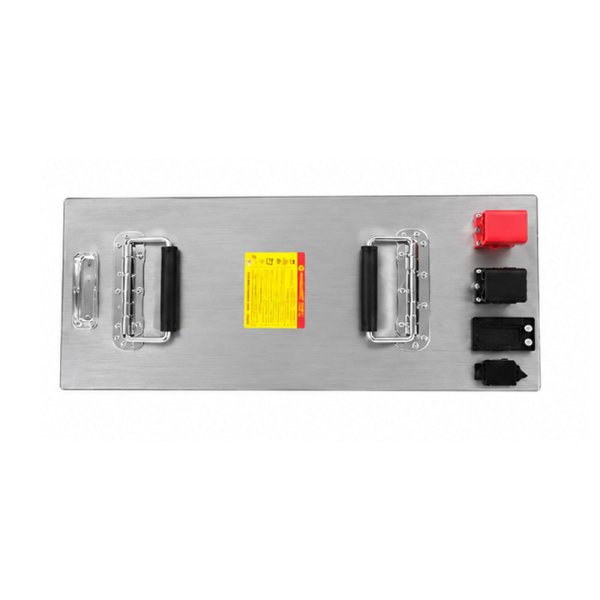
For a customized 24v lithium battery, request a dimensioned drawing, connector specification, cable direction, mounting method and BMS protection table. Marine projects should define water exposure, corrosion and vibration. RV projects should identify inverter size, alternator type, solar controller and the 12V loads supported by the rv battery bank.
Ask how each 24v lithium battery is validated. Useful evidence includes incoming cell checks, capacity tests, BMS functional tests, insulation checks, communication tests and pack-level charge-discharge records. Required certifications vary by market and transport route, so confirm the exact documents needed rather than accepting a generic list.
Explore Febatt’s 12V and 24V lithium battery solutions for standard and customized projects. The technical review should cover cell selection, BMS settings, enclosure, charging and production quantities before the 24v lithium battery is approved.
FAQ About 24V Lithium Batteries Systems
1.Can a 24V Deep Cycle Battery Jump-Start a Boat Engine?
Only when the 24v lithium battery is designed and approved for starting. A normal 24v deep cycle battery is optimized for sustained energy, while a starter battery supplies very high current briefly. Do not use a 24v lithium battery for cranking unless its data sheet confirms the required peak current or cold-cranking capability and the BMS supports the load.
An underspecified 24v lithium battery may disconnect, while a starter-rated 24v lithium battery must still match the engine. Buyers needing a starting product can review Febatt’s lithium jump starter battery options and confirm voltage, peak current and engine requirements.
2.What Are the Benefits of Replacing Two 12V Batteries with One 24V Lithium Battery?
One 24v lithium batteries can reduce inter-battery cables, simplify mounting and avoid mismatch between separate units. It may also provide one coordinated BMS and communication system. The charger, inverter, alternator charger and 12V loads must still be checked.
Compare watt-hours and current capability, not amp-hours alone. Two 12.8V, 100Ah batteries in series store approximately the same nominal energy as one 25.6V, 100Ah 24v lithium battery. The new 24v lithium battery must also meet surge and runtime requirements.
3.Can an Existing MPPT Controller Charge a 24V LiFePO4 Battery?
Yes, if it supports a nominal 24V bank, programmable LiFePO4 settings and the required current. Confirm setup before connecting the 24v lifepo4 battery. The correct voltage and current limits come from the 24v lithium batteries manual, and the 24v lithium battery must remain within them.
Lead-acid temperature compensation may need to be disabled, depending on the controller instructions. Low-temperature charge protection for 24v lithium batteries must remain active.
4.Can a 12V Alternator Charge a 24V Lithium Battery?
Not directly. A 12V alternator cannot reach the voltage required by a nominal 24V bank. Use a 12V-to-24V DC-DC charger or a dedicated 24V source. The charger should limit current, apply the correct profile and coordinate with the 24v lithium battery BMS.
This arrangement also protects the alternator from excessive demand. Size the charger, cables and fuses for the intended charging power.
5.How Does a 24V Marine Lithium Battery Perform in Cold or Wet Conditions?
A 24v lithium battery may discharge below freezing if its specification allows, but charging is commonly restricted near or below 0°C. Some products use a 5°C cutoff. A low-temperature BMS cutoff or heater protects the 24v lifepo4 battery and the 24v lithium batteries system during winter charging.
Wet performance depends on enclosure rating, seals, connectors and installation. Select a 24 volt boat battery using its documented IP rating and mounting instructions. Never assume every 24v lithium battery is waterproof.
6.How Long Will a 24V Lithium Battery Last?
There is no single honest number. A 24v lithium battery may provide thousands of cycles, but depth of discharge, temperature, current and end-of-life definition change the result. Compare only ratings tested under similar conditions.
Reducing heat, avoiding unnecessary full-depth cycling and using a compatible charger can extend life. A correctly sized 24v lithium battery normally experiences less stress than an undersized unit repeatedly reaching current or temperature limits.
7.Can Febatt Customize a 24V Lithium Battery for OEM Projects?
Yes. Customized 24v lithium batteries can be developed around capacity, current, enclosure dimensions, connector layout and communication. The project should begin with load data, charging method, environment and target-market requirements.
Starting applications require separate peak-current validation from a standard 24v deep cycle design. The final 24v lithium battery specification must be checked against the equipment rather than assuming one design fits every boat, RV or industrial vehicle.
Conclusion
A 24v lithium battery is a strong option when a system has meaningful power demand, long cables, frequent cycling or strict weight and space limits. It can simplify a 24v deep cycle architecture, support an efficient rv battery bank and replace a multi-battery lead-acid arrangement. A 24v lithium battery also works as a 24 volt boat battery when the enclosure, BMS, charging system and installation suit marine conditions.
Confirm nominal energy, reserve, continuous and peak current, low-temperature behavior, charger settings, IP protection and cycle-test conditions. When those details are matched correctly, 24v lithium batteries can provide reliable, maintainable power for marine, RV, solar and OEM applications.