An industrial lithium battery is not a simple lead-acid replacement. It is an integrated power system that affects uptime, charging, payload, safety, maintenance, data visibility, and total cost of ownership. Selecting the wrong pack can create controller faults, shortened life, or downtime. The right system requires application data, not generic voltage and amp-hour labels.
This guide explains how an industrial lithium battery is built, how LiFePO4 and NMC differ, how to calculate capacity and runtime, which safety evidence buyers should request, and how to evaluate a custom lithium battery manufacturer for commercial projects. It also addresses golf carts, forklifts, RVs, electric tricycles, and emerging technology in 2026.
What Is an Industrial Lithium Battery?
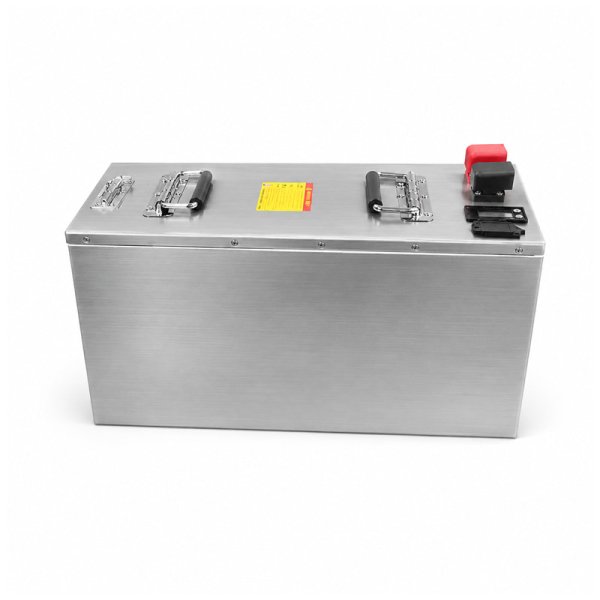
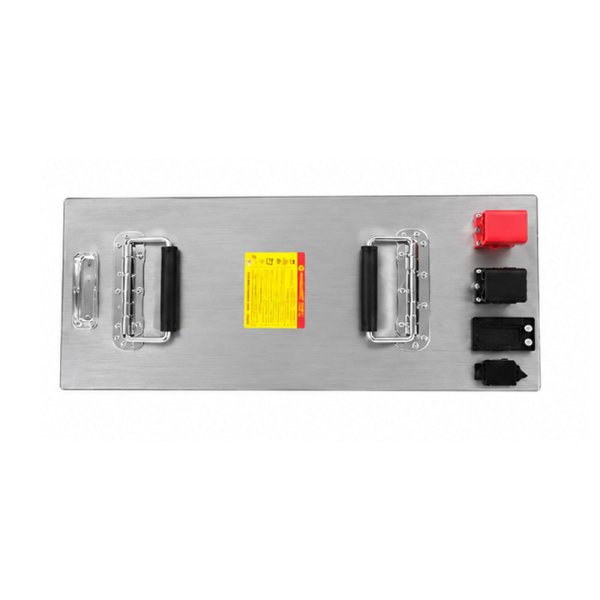
An industrial lithium battery is a rechargeable battery pack engineered for repeated use in commercial vehicles, material-handling equipment, mobile power systems, robots, or other demanding equipment. The finished pack includes mechanical containment, electrical protection, current interruption, temperature monitoring, communication, and application-specific connectors.
The design normally follows three levels. The cell converts chemical energy into electrical energy and may be prismatic, cylindrical, or pouch format. The module groups cells in series and parallel and may add compression, busbars, insulation, and temperature sensors. Some products use cell-to-pack construction.
The complete industrial lithium battery combines cells or modules with a BMS, fuse, contactors, current sensor, enclosure, connectors, and, when required, heating or cooling. The pack must be validated as a system because cell results alone do not prove vehicle-level performance.
A serious supplier should therefore discuss nominal voltage, maximum and minimum voltage, continuous current, peak current and duration, charge current, communication protocol, thermal limits, enclosure dimensions, mounting, ingress protection, and test evidence.

How Do LiFePO4 and NMC Compare?
The lifepo4 vs nmc decision is not a contest with one universal winner. It is a trade-off among energy density, thermal response, cycle-life potential, power demand, packaging, cost, and the vehicle’s operating environment.
| Review factor | LiFePO4 | NMC |
|---|---|---|
| Thermal response | Generally stronger thermal stability under comparable abuse | Can require tighter thermal and safety controls, especially for nickel-rich cells |
| Energy density | Usually lower | Usually higher |
| Cycle-life potential | Often strong; verify test conditions | Product- and duty-cycle-dependent |
| Packaging | Suitable where a dedicated battery bay is available | Useful when space and weight are tightly constrained |
| Selection basis | Pack-level evidence, current, temperature, warranty, and TCO | Pack-level evidence, current, temperature, warranty, and TCO |
LiFePO4 is common in industrial mobility because it generally offers strong thermal stability and long-cycle potential. NMC usually offers higher energy density, which can be valuable when space and weight are tightly constrained. However, performance varies by cell design and pack engineering. Buyers should not accept universal cycle counts, fixed thermal-runaway temperatures, or claims that one chemistry is fireproof.
For a multi-shift forklift, utility vehicle, or golf cart, an industrial lithium battery based on LiFePO4 may be attractive when predictable service life and thermal stability matter more than maximum energy density. For a compact vehicle where packaging dominates, NMC may remain appropriate when the BMS, thermal design, and validation match the duty cycle. This lifepo4 vs nmc review must be based on pack-level evidence.
How Do You Calculate Voltage, Capacity, and Runtime?
Battery sizing begins with the equipment, not a product catalog. A 48V label does not fully define compatibility because the controller and charger must tolerate the complete voltage window from full charge to low-voltage cutoff.
Nominal energy (Wh) = nominal voltage (V) × capacity (Ah)
Nominal energy (kWh) = nominal energy (Wh) ÷ 1,000
For example, a nominal 51.2V, 105Ah industrial lithium battery stores about 5.38kWh:
51.2V × 105Ah = 5,376Wh ≈ 5.38kWh
Usable energy depends on BMS limits, controller cutoff, reserve, temperature, current, and aging. Runtime should be estimated from measured duty-cycle energy.
A practical sizing process is:
- Measure energy during a representative route or shift.
- Include hydraulic, refrigeration, lighting, and communication loads.
- Measure peak current during acceleration, lifting, or climbing.
- Add reserve for temperature, aging, and route variation.
- Confirm BMS, contactor, cable, and connector limits.
- Validate the industrial lithium battery under maximum expected load.
A 48V forklift that consumes 14kWh per shift does not automatically need a 14kWh industrial lithium battery. The correct specification must include the reserve target, charging opportunities, allowable depth of discharge, and whether a second shift begins immediately.
Why Do Continuous and Peak Current Matter?
Capacity describes stored energy; current determines whether the pack can power the equipment. An industrial lithium battery must supply traction current without excessive voltage sag, overheating, or nuisance trips.
Continuous current covers normal operation. Peak current covers short events such as hard acceleration, forklift lifting, hill climbing, or hydraulic actuation. The supplier should state the permitted peak current and its duration, not merely advertise a maximum number.
Controller demand, motor power, cable size, fuse rating, contactor capability, connector temperature rise, and BMS limits must be reviewed together. A pack with enough kWh can still be unsuitable if its allowable current is too low.
How Long Does an Industrial Lithium Battery Last?
There is no credible universal answer in years or cycles. Industrial lithium battery life depends on two overlapping processes:
Cycle aging results from repeated charge and discharge. It is affected by depth of discharge, current, temperature, charging protocol, and the time spent at high or low state of charge.
Calendar aging occurs even when the battery is not cycling. It is strongly influenced by temperature, state of charge during storage, and cell chemistry.
Published cycle-life figures are meaningful only when the test conditions are disclosed. Procurement teams should request:
- Cell and pack model tested.
- Depth of discharge.
- Charge and discharge current.
- Rest periods.
- Remaining-capacity endpoint, such as 80%.
- Whether the result comes from cells, modules, or the complete pack.
- Warranty limits by years, cycles, throughput, and retained capacity.
A pack may remain useful after it no longer meets a demanding multi-shift requirement, but second-life use requires diagnostics, operating history, insulation and capacity tests, and a new risk assessment.
How Does Charging Affect Performance and Degradation?
Charging time depends on energy required and approved charger power. A rough calculation is:
Charging time ≈ energy to be replaced ÷ effective charging power
Actual charging can take longer because current may taper, temperature limits may reduce current, and balancing may extend the final stage.
Opportunity charging can improve utilization during planned breaks, but the cell, BMS, charger, connectors, cable, and thermal design must all be approved for the charge rate.
U.S. Department of Energy research identifies lithium plating, heat, electrode transport limits, and accelerated degradation as important fast-charging concerns. High charging power should therefore be treated as an engineered operating mode rather than a marketing promise.
The charger selected for an industrial lithium battery must match:
- Maximum pack voltage.
- Approved charge-current range.
- Charging temperature window.
- Communication requirements.
- Pre-charge and contactor sequence.
- Low-temperature charging restrictions.
- Required isolation and grounding.
- Facility electrical capacity.
Using a generic lead-acid charger or an unauthorized high-current charger can create imbalance, protection trips, or safety risk.
What Safety Systems Protect the Pack?
An industrial lithium battery should use layered protection. No single feature can guarantee safety.
Cell chemistry influences thermal response, but chemistry does not replace pack engineering. LFP battery safety can provide a useful foundation, yet LFP cells can still vent, overheat, or fail when damaged or abused.
The BMS monitors cell-group voltages, pack current, temperature, and state estimates. It can request current limits and open contactors when measured conditions exceed programmed thresholds. It cannot stop every internal short circuit or reverse an internal chemical reaction after thermal runaway has become self-sustaining.
Fuses provide independent protection against severe overcurrent. Contactors disconnect charging or load current. A service disconnect supports controlled maintenance. Insulation monitoring may be required in higher-voltage systems.
Thermal design may include conductive heat paths, air cooling, liquid cooling, heating, insulation, or spacing. The correct approach depends on power, climate, enclosure, and charging strategy.
Mechanical design must address mounting, vibration, shock, crush exposure, cable strain, connector protection, and service access. IP ratings describe protection against solids and water; they do not independently prove crash or crush resistance.
OSHA notes fire, explosion, and chemical-exposure hazards during handling, damage, failure, and emergency response. Fleets therefore need inspection, charging, storage, and emergency procedures in addition to a compliant industrial lithium battery.

Which Standards and Reports Should Buyers Request?
Standards must be matched to the application and exact product.
UN 38.3 addresses transport testing for lithium cells and batteries. It does not prove that a pack is suitable for a forklift, golf cart, RV, or road vehicle.
IEC 62619:2022 specifies safety requirements and tests for secondary lithium cells and batteries used in industrial applications. IEC states that a more specific application standard takes precedence where applicable.
IEC 62620 addresses marking, performance tests, and requirements for secondary lithium cells and batteries used in industrial applications.
UL identifies UL 2271 for light electric vehicle batteries, UL 2580 for electric vehicle batteries, and UL 1973 for stationary, vehicle auxiliary-power, and light-rail applications. The required standard depends on the destination market and equipment.
Buyers should ask for test reports that identify the exact model, voltage, capacity, enclosure, BMS, cells, and revision. A certificate for a related pack is not automatically evidence for the product being purchased.
How Should a Golf Cart Battery Be Selected?
A golf cart lithium battery should be selected from route and vehicle data rather than seat count alone. This industrial lithium battery must also fit the vehicle’s voltage window and current demand. The battery must support acceleration, hills, passenger load, accessories, and regenerative-braking voltage if the controller uses regeneration.
For fleet golf carts, check:
- Full voltage window and controller compatibility.
- Continuous and peak current.
- Charger profile.
- Battery tray, mounting, and center of gravity.
- State-of-charge display.
- CAN or other communication.
- Water, dust, heat, and vibration exposure.
- Route energy under full passenger load.
A lower-weight pack can improve efficiency, but a conversion may alter weight distribution. FEBATT golf cart lithium battery options should therefore be validated against the exact vehicle model and route before fleet deployment. A golf cart lithium battery is not interchangeable solely because its nominal voltage matches.
What Should a Forklift Battery Project Include?
A forklift lithium battery pack must match the truck’s voltage, counterweight requirements, battery-compartment dimensions, connectors, communication, and multi-shift energy demand. The industrial lithium battery specification must include the permitted peak current and duration.
Forklifts create current peaks through traction and hydraulic lifting. A pack should be tested during simultaneous travel and lift events, on ramps, and at the highest expected load. Warehouses should also review charger placement, traffic protection, ventilation guidance, fire response, and damaged-battery isolation.
Replacing a heavy lead-acid battery with a lighter industrial lithium battery may change counterbalance and stability. The conversion requires approval against the equipment manufacturer’s requirements. Adding unapproved ballast is not a substitute for engineering review.
FEBATT forklift lithium battery pack products can support different voltage and capacity platforms, and each forklift lithium battery pack should be validated on the target truck, but the buyer should submit truck model, battery compartment, connector, weight requirement, shift energy, and charger information before selection.
How Should an RV Battery Be Designed?
An rv deep cycle battery supplies hotel loads such as lighting, refrigeration, pumps, inverters, and communication equipment. This industrial lithium battery follows a different duty cycle from traction equipment. It is not the same duty cycle as traction equipment, but it still requires correct energy and current sizing.
The design should account for inverter surge current, solar, alternator or DC-DC charging, shore power, storage, low-temperature charging, and installation near living spaces. Enclosure, cable protection, fusing, and emergency access must suit the vehicle.
A 12V or 24V industrial lithium battery used in an RV should not be connected to a charging source until the charge profile is confirmed. A suitable rv deep cycle battery must be verified with every charging source. FEBATT RV battery packs can be linked internally to relevant mobile-power options, but system integration still depends on the inverter, charger, alternator, solar controller, and expected daily energy.
What Does an Electric Tricycle Project Require?
An electric tricycle battery pack must balance range, payload, climbing, weather exposure, packaging, and cost. Delivery vehicles often experience repeated acceleration, potholes, curb impacts, and long operating hours.
The specification should include loaded mass, motor and controller ratings, gradients, energy per kilometer, peak current, enclosure, connectors, and charging schedule.
A compact industrial lithium battery may improve usable payload, but insufficient current capability can reduce acceleration or cause BMS trips. A second electric tricycle battery pack may use a different enclosure or current rating even at the same voltage. FEBATT electric vehicle battery solutions provide a starting point for electric tricycles and other commercial mobility platforms; final configuration should be based on vehicle data.
What Technology Is Changing the Market in 2026?
Connected BMS platforms can consolidate state of charge, temperatures, alarms, and energy throughput across fleets. Their value depends on reliable data and actionable maintenance rules.
Cell-to-pack and structural integration can improve space utilization, but repairability, isolation, propagation control, and service procedures must be considered early.
Sodium-ion is moving beyond laboratory development. CATL announced that its Naxtra sodium-ion battery is planned for full-scale mass production by the end of 2026, and it has also announced commercial deployments. This does not mean sodium-ion is already the best choice for every industrial lithium battery application. Buyers should compare available products, pack-level energy density, cycle data, temperature performance, cost, standards, and supplier capacity.
How Do You Evaluate a Custom Lithium Battery Manufacturer?
A custom lithium battery manufacturer should be able to convert operating data into a controlled industrial lithium battery specification. A quotation based only on voltage and Ah is not enough.
A professional audit should cover:
- Duty-cycle analysis and acceptance criteria.
- Cell qualification and change control.
- BMS, protection, communication, and thermal design.
- Mechanical drawings, mounting, and connector control.
- Incoming, in-process, and end-of-line testing.
- Batch and serial-number traceability.
- Sample validation and pilot production.
- Warranty, failure analysis, transport documents, and compliance.
- Capacity, lead time, and supply continuity.
The custom lithium battery manufacturer should also define which claims apply to the exact industrial lithium battery model. Marketing descriptions must not replace a signed technical specification, drawings, test reports, and acceptance criteria.

Relevant Technical FAQ
1.How long does an industrial lithium battery take to charge?
An industrial lithium battery (like those used in electric forklifts, large-scale backups, or heavy machinery) typically takes 1 to 4 hours to fully charge. Because these batteries accept higher currents efficiently, charge times rely on the battery’s capacity and the output of your charger.
2.Can you retrofit existing lead-acid electric vehicles with an industrial lithium battery?
Yes, you can absolutely retrofit existing lead-acid electric vehicles (such as golf carts, forklifts, or low-speed utility vehicles) with an industrial lithium-ion battery. In fact, it is an increasingly popular upgrade due to zero maintenance, faster charging, and significant weight reduction.
3.What is the optimal operating temperature for industrial lithium batteries?
The optimal operating temperature for most industrial lithium batteries is between 20°C to 30°C (68°F to 86°F). This range offers the best balance of energy capacity, charge-discharge efficiency, and maximum cycle life.
4.Are industrial lithium batteries safe for indoor warehouse operations?
Industrial lithium batteries are safe for indoor warehouse operations—such as powering forklifts or automated systems—provided they are managed according to strict safety protocols. Because they are sealed, emit no hazardous gases, and utilize smart Battery Management Systems (BMS), they prevent common dangers associated with traditional batteries.
5.What is the total cost of ownership (TCO) savings when switching from lead-acid to lithium?
Switching from lead-acid to lithium (LiFePO₄) batteries consistently delivers 30% to 50% lower Total Cost of Ownership (TCO). While lithium batteries require a higher initial investment, the long-term lifecycle cost is significantly lower due to the elimination of replacement costs, reduced maintenance, and improved energy efficiency.
Conclusion
The best industrial lithium battery is the one validated for the equipment, duty cycle, environment, charging plan, and commercial objective. Buyers should begin with measured energy and current, confirm the complete voltage window, review safety architecture, and require model-specific test evidence.
LiFePO4 is widely used for golf carts, forklifts, RVs, electric tricycles, and other commercial platforms because it can offer a practical balance of thermal stability, service life, and cost. NMC remains relevant where higher energy density and compact packaging are essential. Neither chemistry removes the need for careful BMS, thermal, mechanical, charger, and vehicle integration.
A successful procurement project ends with a controlled specification, sample validation, production traceability, and clear acceptance criteria. When those elements are in place, an industrial lithium battery can improve fleet uptime, reduce routine maintenance, and deliver predictable long-term value.