A 48V 120Ah forklift battery stores about 5.76kWh of nominal energy. It can suit compatible light- to medium-duty material-handling equipment, but the label alone does not confirm shift coverage or installation fit. Buyers should compare measured duty-cycle energy, lift and travel demand, compartment dimensions, required counterweight, continuous and peak current, connector, charger and BMS communication.
For warehouses, factories, distribution centers, and industrial fleets, forklift uptime directly affects loading speed, pallet movement, shift planning, and operating cost. If a forklift battery charges too slowly, loses power under load, or requires frequent maintenance, the whole workflow can be affected. That is why choosing the right 48V 120Ah electric forklift battery is a practical B2B decision, not just a product specification.
A 48V 120Ah electric forklift battery provides a balanced power solution for many compatible electric forklift systems. It offers enough energy for light to medium-duty material handling, while remaining more practical than oversized battery packs for fleets that need controlled cost, manageable weight, and easier installation.
This guide explains the 48V 120Ah electric forklift battery from a buyer’s perspective. It covers runtime, lithium advantages, charging requirements, operating costs, industrial use cases, compatibility checks, and lifespan management. Buyers who need a broader overview of forklift battery selection can also read FEBATT’s Electric Forklift Battery Buying Guide for B2B Buyers for more general guidance.
What Is a 48V 120Ah Electric Forklift Battery?
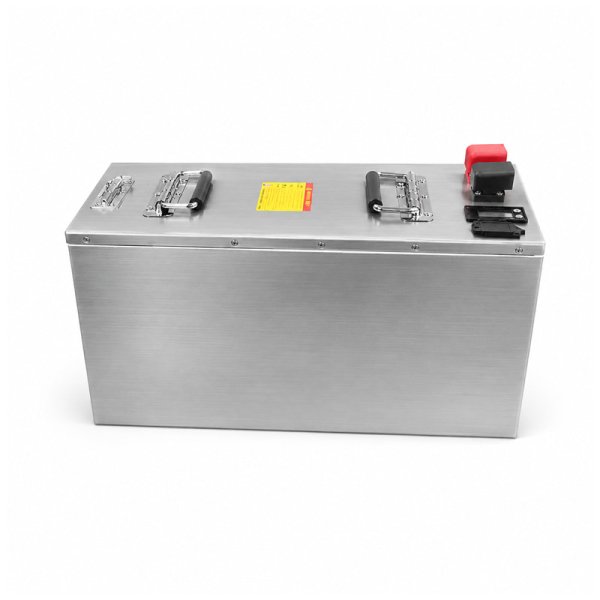
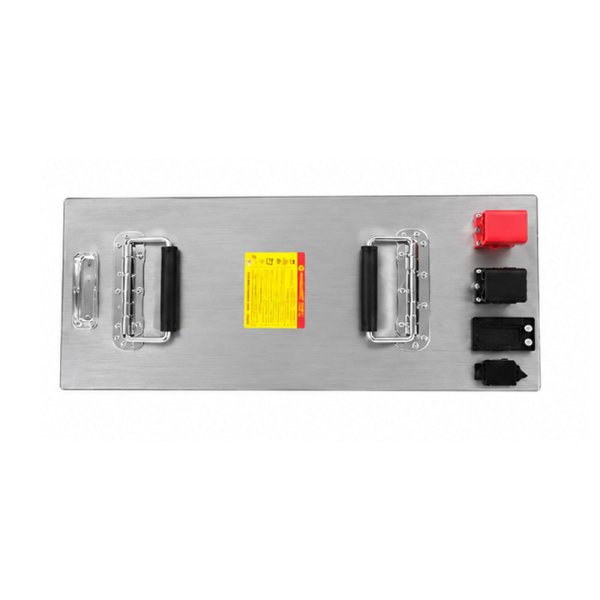
A 48V 120Ah electric forklift battery is a rechargeable battery pack designed to power compatible electric forklifts and material-handling equipment. The “48V” refers to system voltage, and “120Ah” refers to battery capacity in ampere-hours.
The nominal energy is approximately:
48V × 120Ah = 5.76kWh
This energy level makes a 48V 120Ah electric forklift battery suitable for many light to medium-duty forklift applications, including warehouse handling, pallet movement, stock picking, retail logistics, and manufacturing support. Actual runtime depends on forklift model, load weight, travel distance, lift frequency, floor conditions, operator behavior, charger efficiency, and battery chemistry.
For buyers comparing product options, FEBATT’s 48V 120Ah Forklift Battery can be reviewed as a lithium option for compatible electric forklift systems.

Why Is the 48V 120Ah Electric Forklift Battery Popular Among B2B Buyers?
B2B buyers usually evaluate a forklift battery by uptime, safety, maintenance, charging speed, compatibility, and total cost of ownership. A 48V 120Ah electric forklift battery is popular because it sits in a useful middle range: it is not too small for daily material handling, but it is also not unnecessarily large for moderate operations.
Key reasons buyers consider a 48V 120Ah electric forklift battery include:
- Practical energy capacity for many warehouse tasks.
- Stable power delivery under normal operating loads.
- Lower maintenance when lithium technology is used.
- Better charging flexibility compared with many lead-acid options.
- Suitable size for compatible 48V forklift systems.
- More predictable fleet scheduling.
For fleet managers, the value of a 48V 120Ah electric forklift battery is not only the energy stored inside the pack. The value is whether the forklift can keep working with fewer battery-related interruptions.
How Does a 48V 120Ah Electric Forklift Battery Improve Productivity?
This electric forklift battery improves productivity by helping forklifts stay available during working hours. In daily operations, productivity is affected by runtime, charging time, maintenance downtime, and power stability.
A lithium 48V 120Ah electric forklift battery can help by:
- Reducing mid-shift battery handling.
- Supporting consistent power output.
- Allowing opportunity charging when the charger and BMS support it.
- Reducing manual maintenance compared with lead-acid.
- Helping managers plan charging windows more easily.
The productivity benefit depends on the real duty cycle. A forklift that lifts heavy loads continuously will drain energy faster than one used for intermittent picking. For this reason, a 48V 120Ah electric forklift battery should always be selected based on actual workload, not only the nameplate capacity.

What Performance Advantages Does a 48V 120Ah Electric Forklift Battery Offer?
The performance of a 48V 120Ah electric forklift battery depends on cell quality, BMS design, discharge current, charger compatibility, thermal control, and installation quality. When properly matched to the forklift, it can offer several advantages.
| Performance factor | Benefit for B2B users |
|---|---|
| Stable voltage output | Helps maintain consistent lift and drive behavior |
| Lithium efficiency | Reduces energy waste during use and charging |
| Lower maintenance | Reduces labor compared with lead-acid watering and acid checks |
| Faster charging potential | Helps improve forklift rotation when charger is compatible |
| BMS protection | Supports safer operation and battery monitoring |
| Compact energy storage | Supports practical installation in compatible equipment |
A 48V 120Ah electric forklift battery should not be promoted as a universal solution for every forklift. It is valuable when the forklift voltage, current requirement, weight requirement, connector, charger, and battery compartment match the battery design.
How Does Battery Capacity Affect Forklift Runtime?
Battery capacity is one of the main factors affecting runtime, but it is not the only factor. A 48V 120Ah electric forklift battery has a nominal energy level of about 5.76kWh, but actual runtime depends on how much power the forklift draws during operation.
Runtime is affected by:
- Load weight.
- Lift height and lift frequency.
- Travel distance.
- Acceleration and braking patterns.
- Floor condition.
- Tire condition.
- Ambient temperature.
- Battery age and state of health.
- Charger and BMS settings.
A 48V 120Ah electric forklift battery may support several hours of operation in light or moderate use, but heavy continuous lifting can shorten runtime. For accurate selection, buyers should estimate average current draw or test runtime under real operating conditions.
Why Choose Lithium Over Traditional Lead-Acid Batteries?
A lithium 48V 120Ah electric forklift battery can offer operational advantages over lead-acid batteries, especially for fleets that value lower maintenance and better charging flexibility.
Lorem ipsum dolor sit amet, consectetur adipiscing elit. Ut elit tellus, luctus nec ullamcorper mattis, pulvinar dapibus leo.
| Factor | Lead-acid forklift battery | Lithium 48V 120Ah electric forklift battery |
|---|---|---|
| Maintenance | Requires watering and regular checks | Low maintenance |
| Charging | Usually slower | Faster when charger is compatible |
| Usable capacity | More limited | Higher usable capacity |
| Weight | Heavy | Often lighter |
| Energy efficiency | Lower | Higher |
| Downtime | More maintenance-related downtime | Lower maintenance downtime |
| Best fit | Budget replacement | Productivity-focused fleets |
Lead-acid batteries can still be useful where initial cost is the main concern. However, a lithium 48V 120Ah electric forklift battery can be more attractive for facilities that want lower maintenance, cleaner operation, faster turnaround, and better long-term efficiency.
How Does a 48V 120Ah Electric Forklift Battery Reduce Operating Costs?
A 48V 120Ah electric forklift battery can reduce operating costs in several ways, especially when lithium chemistry is used. The cost benefit does not come from one single factor. It comes from lower maintenance, improved charging efficiency, reduced downtime, and longer practical service life under suitable conditions.
Cost-related benefits can include:
- Less time spent on battery maintenance.
- Fewer acid-related safety concerns.
- Lower risk of performance drop caused by poor maintenance.
- Better use of charging breaks.
- Reduced need for battery swapping in suitable applications.
- More predictable energy management.
The upfront cost of a lithium 48V 120Ah electric forklift battery may be higher than some lead-acid alternatives, so buyers should calculate total cost of ownership. Maintenance labor, replacement frequency, downtime, charger setup, and energy efficiency should all be included.
What Industries Benefit Most from a 48V 120Ah Electric Forklift Battery?
A 48V 120Ah electric forklift battery can be useful in many industries where forklifts perform light to medium-duty handling tasks. The best fit depends on the forklift model and duty cycle.
Common industries include:
- Warehousing and distribution.
- Food and beverage logistics.
- Retail fulfillment.
- E-commerce warehouses.
- Cold storage support areas.
- Light industrial handling.
- Packaging and assembly operations.
In these industries, the 48V 120Ah electric forklift battery can help support smoother material flow when it is matched to the correct forklift. For very heavy-duty or continuous high-load operation, buyers may need a higher-capacity battery or a different voltage platform.

Is a 48V 120Ah Electric Forklift Battery Suitable for Heavy-Duty Applications?
A 48V 120Ah electric forklift battery can support some demanding applications, but it should not be treated as a heavy-duty solution for every forklift. The battery must match the forklift weight class, operating current, load requirement, shift length, and charging plan.
| Use case | Suitability of 48V 120Ah electric forklift battery |
|---|---|
| Walk-behind pallet truck | Often suitable if voltage and size match |
| Small stock picker | Often suitable |
| Light warehouse forklift | Suitable if current draw matches |
| Medium-duty forklift | Requires runtime verification |
| Multi-shift operation | Requires charger and duty-cycle calculation |
| Heavy continuous lifting | May require higher capacity |
For B2B buyers, the safest approach is to confirm forklift specifications first. A 48V 120Ah electric forklift battery should be selected only after voltage, dimensions, weight, connector, charger, BMS, and counterweight requirements are checked.
How Does a 48V 120Ah Electric Forklift Battery Compare to Other Capacity Options?
A 48V 120Ah electric forklift battery sits between smaller and larger capacity options. Compared with smaller packs, it usually offers longer runtime and more reserve. Compared with larger packs, it may offer lower cost, lower weight, and easier installation.
| Capacity option | Typical advantage | Possible limitation |
|---|---|---|
| Lower than 120Ah | Lower cost and lighter weight | Shorter runtime |
| 48V 120Ah | Balanced runtime and practicality | Not ideal for every heavy-duty case |
| Higher than 120Ah | Longer runtime and more reserve | Higher cost, more weight, larger size |
This balance is why many buyers consider a 48V 120Ah electric forklift battery for B2B operations. It can be a practical choice when the fleet needs stable power but does not need a very large battery pack.
How to Maximize the Lifespan of a 48V 120Ah Electric Forklift Battery?
The lifespan of a 48V 120Ah electric forklift battery depends on usage, charging habits, temperature, BMS protection, depth of discharge, and storage conditions. Buyers should avoid treating any battery as a maintenance-free component that can be ignored.
To extend battery life:
- Use the correct 48V lithium charger.
- Avoid using an incompatible lead-acid charger.
- Keep connectors clean and secure.
- Avoid unnecessary deep discharge.
- Store the battery at a suitable state of charge.
- Avoid extreme temperature exposure.
- Follow the manufacturer’s charging protocol.
- Inspect cables and terminals regularly.
- Monitor BMS warnings when available.
A well-managed 48V 120Ah electric forklift battery can deliver more stable long-term performance than a poorly managed pack, even if both use the same chemistry.
FAQ About 48V 120Ah Electric Forklift Battery
1.How long can a 48V 120Ah Electric Forklift Battery operate on a single charge?
Runtime depends on forklift model, current draw, load weight, travel distance, lift frequency, floor conditions, and battery health. A 48V 120Ah electric forklift battery may support several hours of light to medium-duty use, but heavy continuous lifting can reduce runtime. Real-world testing is the best way to confirm operating time.
2.Is a 48V 120Ah Electric Forklift Battery compatible with all electric forklifts?
No. A 48V 120Ah electric forklift battery is not compatible with all electric forklifts. Compatibility depends on voltage, battery compartment size, required battery weight, connector type, charger profile, BMS communication, controller limits, and counterweight requirements.
3.How many years can a lithium 48V 120Ah Electric Forklift Battery last?
Service life depends on cell quality, BMS design, charging habits, depth of discharge, operating temperature, and daily workload. A lithium 48V 120Ah electric forklift battery can often provide longer practical service life than lead-acid when used correctly, but exact lifespan should be based on product specifications and real operating conditions.
4.Is upgrading from lead-acid to a 48V 120Ah Electric Forklift Battery worthwhile?
Upgrading can be worthwhile if the facility wants lower maintenance, cleaner operation, faster charging potential, and more stable power delivery. However, before replacing lead-acid with a 48V 120Ah electric forklift battery, buyers must confirm charger compatibility, dimensions, connector type, counterweight needs, and forklift system requirements.
5.What charging equipment is required for a 48V 120Ah Electric Forklift Battery?
A compatible 48V lithium charger is required. The charger should match the battery chemistry, charging voltage, current limit, connector, and BMS requirements. A 48V 120Ah electric forklift battery should not be charged with an unsuitable charger, because incorrect charging can reduce performance, shorten service life, or create safety risks.
Conclusion
A 48V 120Ah electric forklift battery can be a practical lithium solution for warehouses, factories, distribution centers, retail logistics, and light to medium-duty material handling applications. It offers a balance of runtime, charging flexibility, maintenance reduction, and B2B operating value.
The best buying decision should be based on real forklift data. Before ordering a 48V 120Ah electric forklift battery, confirm voltage, compartment dimensions, battery weight, charger compatibility, connector type, current demand, BMS requirements, and duty cycle. For buyers replacing lead-acid or comparing multiple forklift battery options, FEBATT’s Electric Forklift Battery Buying Guide for B2B Buyers can provide additional selection guidance.
The right 48V 120Ah electric forklift battery is not simply the one with the lowest price. It is the one that fits the forklift system, supports the shift schedule, reduces unnecessary maintenance, and helps the fleet keep working with fewer battery-related interruptions.