For warehouses, retail distribution centers, small manufacturing sites, and compact material-handling fleets, battery selection directly affects uptime, safety, charging efficiency, and daily operating cost. A 24V 30Ah battery is not designed for every forklift. It is a compact power solution for light-duty equipment, pallet trucks, walkie stackers, small electric forklifts, and other machines that need reliable power in a limited installation space. That is why B2B buyers should not only compare price. They should understand how to choose 24V 30Ah forklift battery products according to real working conditions.
The wrong battery may fit the compartment but fail to support the workload. It may discharge too quickly, charge too slowly, overheat under peak current, or require replacement sooner than expected. The right battery should match the machine voltage, controller demand, connector type, charger profile, weight requirement, and shift schedule. This guide explains how to choose 24V 30Ah forklift battery solutions with a practical B2B mindset, including runtime planning, chemistry selection, technical specifications, installation checks, certifications, maintenance, and supplier evaluation.
What Is a 24V 30Ah Forklift Battery?
A 24V 30Ah forklift battery is a rechargeable battery pack with a nominal voltage of 24 volts and a capacity of 30 ampere-hours. Its nominal energy is about 0.72kWh, calculated from 24V × 30Ah. This energy level makes it suitable for compact material-handling equipment rather than large industrial forklifts working continuously under heavy loads.
In most B2B applications, buyers who choose 24V 30Ah forklift battery options are looking for a small, lightweight, and easy-to-install battery for short-distance handling, indoor movement, intermittent lifting, or light warehouse support. The battery may be used in compact forklifts, pallet jacks, small stackers, AGV support units, or custom electric platforms, depending on voltage and system compatibility.
A 24V 30Ah forklift battery should not be treated as a universal forklift battery. Its value comes from correct matching. If the equipment has low to moderate energy demand, the battery can support efficient operation. If the equipment requires high current for long shifts, a larger capacity or higher voltage platform may be required.
Why Is Correct Battery Selection Important for B2B Buyers?
For B2B buyers, the battery is not only a replacement part. It is a productivity component. A wrong battery selection can create downtime, unstable power output, poor charging performance, and higher long-term cost. This is especially true for fleets that operate several compact machines across warehouses, loading zones, workshops, or retail backrooms.
When procurement teams choose 24V 30Ah forklift battery products, they should evaluate total operating value instead of only initial cost. A lower-cost battery may become expensive if it has weak cycle life, limited BMS protection, poor cell consistency, or incompatible charging requirements. A better-matched battery may reduce maintenance, improve availability, and extend replacement intervals.
The goal is not to buy the biggest battery possible. The goal is to buy a battery that fits the equipment, supports the workload, and protects long-term fleet reliability. This is why technical matching should come before price comparison.
What Type of Equipment Can Use a 24V 30Ah Forklift Battery?
A 24V 30Ah forklift battery is usually suitable for compact and light-duty material-handling equipment. Typical applications include electric pallet trucks, walkie stackers, small electric forklifts, compact warehouse vehicles, light-duty AGV platforms, and customized industrial mobility equipment. The final decision depends on system voltage, current draw, battery compartment size, connector type, and operating cycle.
Equipment with short travel routes and frequent stopping may benefit from a compact lithium pack if the BMS supports the required discharge current. Indoor logistics tasks, stock movement, order picking support, retail storage handling, and short-distance pallet transfer are common use cases. However, heavy lifting, long continuous shifts, steep ramps, and high-current operation may require a different battery size.
Before buyers choose 24V 30Ah forklift battery products, they should confirm the machine manual, existing battery label, controller rating, and charger specifications. If the old battery is lead-acid, lithium replacement may be possible, but it must be checked carefully because lithium batteries can have different voltage curves, weight, charging profiles, and BMS behavior.
For buyers comparing forklift power solutions, FEBATT’s forklift battery category can provide a broader view of available battery options.

Which Battery Chemistry Is Better: Lead-Acid or Lithium?
The main choice is usually between lead-acid and lithium, especially LiFePO4. Lead-acid batteries have a lower upfront price and are familiar to many maintenance teams, but they usually require more maintenance, have lower usable capacity, slower charging, and shorter cycle life under deep-discharge operation.
LiFePO4 batteries are increasingly used in compact industrial equipment because they offer stable voltage output, better energy efficiency, lower maintenance, faster charging potential, and longer service life when properly managed. For companies that want to choose 24V 30Ah forklift battery solutions for daily use, LiFePO4 is often the more practical long-term option.
The best choice still depends on the application. If the equipment is rarely used and cost is the only concern, lead-acid may be acceptable. If the fleet needs stable performance, reduced maintenance, cleaner operation, and better lifecycle value, lithium is usually stronger.
| Factor | Lead-Acid Battery | LiFePO4 24V 30Ah Battery |
|---|---|---|
| Maintenance | Requires more checks | Lower maintenance |
| Charging | Usually slower | Faster when charger matches |
| Usable capacity | More limited | Higher usable capacity |
| Cycle life | Shorter | Longer under proper use |
| Weight | Heavier | Usually lighter |
| Best fit | Low-budget replacement | B2B uptime and efficiency |
How Do You Estimate Runtime Correctly?
Runtime depends on current draw, load weight, travel distance, lift frequency, floor condition, operator behavior, temperature, and battery age. A 24V 30Ah battery has about 0.72kWh of nominal energy, but the usable runtime can vary significantly from one machine to another.
To choose 24V 30Ah forklift battery solutions correctly, buyers should estimate the average current demand during actual operation. A lightly used pallet truck may work much longer than a compact forklift that repeatedly lifts heavy loads. Continuous high-current use will shorten runtime quickly, while intermittent movement with charging breaks may make the same battery practical.
A simple procurement mistake is assuming that ampere-hours alone define runtime. They do not. Runtime must be evaluated against real duty cycle. For accurate selection, test the battery under normal operating conditions or request guidance from the supplier using data such as machine model, load weight, average route distance, lifting frequency, and required working hours.
What Technical Specifications Should Buyers Evaluate?
Voltage and capacity are only the beginning. B2B buyers should review discharge current, peak current, charging current, BMS protections, cell chemistry, temperature range, cycle life, dimensions, weight, connector type, communication protocol, and charger compatibility.
A battery may be labeled 24V 30Ah but still perform very differently depending on cell quality and BMS design. For example, two batteries with the same voltage and capacity may have different continuous discharge limits. One may support the equipment safely, while another may trigger protection during acceleration or lifting.
Before buyers choose 24V 30Ah forklift battery models, they should request a full specification sheet rather than relying only on a product title. Important specifications include:
| Specification | Why It Matters |
|---|---|
| Nominal voltage | Must match the equipment system |
| Capacity | Affects energy reserve and runtime |
| Continuous discharge current | Supports normal operating load |
| Peak discharge current | Supports acceleration or lifting demand |
| Charging voltage and current | Must match the charger |
| BMS protection | Helps prevent unsafe operation |
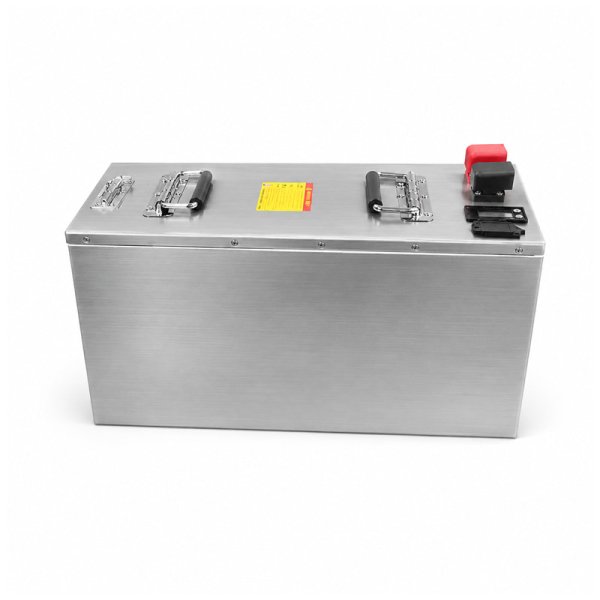
| Dimensions | Must fit the battery compartment |
| Weight | Affects balance and handling |
| Cycle life | Impacts long-term replacement cost |
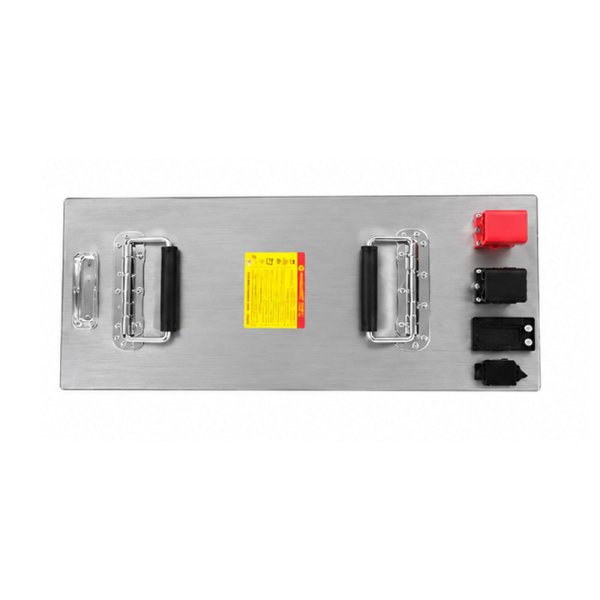
| Connector type | Must match the equipment wiring |
How Important Are Battery Size and Weight?
Size and weight are critical for compact forklifts and pallet trucks. Even if electrical specifications are correct, the battery must fit the battery tray, mounting position, cable route, and connector location. A battery that is too tall, too wide, or poorly positioned can create installation problems.
Weight also affects equipment balance. Lead-acid batteries are often heavier, while lithium batteries are usually lighter. A lighter battery can improve handling and reduce mechanical stress, but some equipment may depend on battery weight as part of its balance design. This is especially important for forklifts, where counterweight and stability matter.
When buyers choose 24V 30Ah forklift battery products, they should compare the new battery dimensions and weight with the original battery. If the new battery is much lighter, the supplier should confirm whether additional balancing measures are required. Safe installation should never be sacrificed for convenience.
What Role Does the BMS Play?
The BMS, or Battery Management System, is one of the most important parts of a lithium forklift battery. It monitors cell voltage, pack voltage, temperature, charging current, discharge current, and protection limits. A good BMS helps prevent overcharge, over-discharge, short circuit, overheating, and cell imbalance.
For B2B buyers, BMS quality directly affects safety and reliability. A weak BMS can cause nuisance shutdowns, uneven cell aging, poor charging behavior, or unexpected protection during operation. A well-designed BMS helps the battery work more consistently and supports longer service life.
When companies choose 24V 30Ah forklift battery packs for fleet use, they should ask whether the BMS supports the required current, whether it has temperature monitoring, whether it provides cell balancing, and whether communication functions are needed for the equipment. For simple pallet trucks, basic protection may be enough. For smarter vehicles, communication may be required.
What Are the Charging Requirements?
Charging requirements should be confirmed before purchase. A 24V lithium battery normally requires a charger designed for lithium chemistry and matched to the correct charging voltage and current. Using an unsuitable lead-acid charger may cause incomplete charging, poor performance, or protection faults.
Charging time depends on charger output. A higher-current compatible charger can reduce charging time, but charging current must remain within the battery manufacturer’s recommended range. Faster charging is useful only when the battery, BMS, charger, and cables are designed to handle it safely.
To choose 24V 30Ah forklift battery products correctly, buyers should ask the supplier for charger recommendations. They should also confirm connector type, charging port position, charging voltage, maximum charging current, and whether opportunity charging is supported. For fleet operations, charger planning is as important as battery selection.
What Are the Installation Requirements?
Installation should be planned before ordering. Buyers should check compartment dimensions, mounting method, cable length, connector compatibility, polarity, charger access, and mechanical protection. The battery should be fixed securely to prevent vibration, impact, or cable movement during operation.

If replacing lead-acid with lithium, the equipment may need charger replacement or voltage indicator adjustment. Lithium batteries often maintain a more stable voltage during discharge, so old lead-acid battery indicators may not show accurate state of charge. This does not always prevent use, but buyers should understand it before installation.
A good supplier should provide installation guidance and confirm whether the battery can be used as a direct replacement. Buyers who choose 24V 30Ah forklift battery solutions for multiple machines should standardize connectors, chargers, and installation procedures to reduce maintenance errors.
For a dedicated product reference, buyers can review FEBATT’s 24V 30Ah forklift battery here.
What Certifications Should B2B Buyers Look For?
Certifications and documentation are important for safe purchasing, shipping, and industrial use. Buyers should look for relevant documents such as UN38.3 for lithium battery transport, MSDS, CE, RoHS, and other applicable quality or safety documents depending on the target market and project requirements.
Certifications do not replace technical evaluation, but they help reduce procurement risk. They also show that the supplier understands battery transport, safety documentation, and compliance requirements. This matters for importers, distributors, OEM projects, and fleet buyers purchasing in volume.
Before buyers choose 24V 30Ah forklift battery products for commercial projects, they should ask for available certification files, product datasheets, warranty terms, charger recommendations, and packaging information. Documentation quality is often a strong signal of supplier professionalism.

How Can Buyers Reduce Total Cost of Ownership?
The cheapest battery is not always the lowest-cost battery. Total cost of ownership includes purchase price, cycle life, maintenance labor, charging efficiency, downtime, replacement frequency, safety risk, and compatibility cost. A battery that costs less upfront may become more expensive if it fails early or creates operational interruptions.
Lithium batteries may have a higher initial price than lead-acid, but they can reduce maintenance and support longer service life under proper use. For fleets that use equipment daily, these benefits can matter more than initial price differences.
When buyers choose 24V 30Ah forklift battery solutions, they should compare expected cycle life, daily usage hours, charging time, downtime cost, and replacement interval. A lifecycle calculation gives a more realistic view than price alone.
How Can You Extend Battery Life?
Battery life depends on charging habits, discharge depth, temperature, storage conditions, and current demand. Even a high-quality battery can degrade faster if it is deeply discharged too often, charged with the wrong charger, exposed to high temperatures, or installed with loose connections.
To extend the life of a 24V 30Ah forklift battery, follow these practices:
- Use a compatible lithium charger.
- Avoid frequent deep discharge when possible.
- Keep connectors clean and secure.
- Store the battery in a dry and moderate-temperature environment.
- Avoid physical impact and strong vibration.
- Check cables and terminals regularly.
- Follow supplier charging and storage instructions.
- Do not exceed recommended current limits.
Good maintenance does not need to be complicated. It needs to be consistent. For B2B fleets, simple operating discipline can improve reliability and reduce replacement pressure.
What Buying Questions Should Procurement Teams Ask?
Before placing an order, procurement teams should ask practical questions.
These questions help avoid mismatch and reduce project risk.
- What machine model will use the battery?
- Is the system voltage confirmed as 24V?
- What is the required runtime per shift?
- What is the average and peak discharge current?
- What are the battery compartment dimensions?
- What connector type is required?
- Is the current charger compatible with lithium?
- What certifications and documents are available?
- What is the expected cycle life under normal use?
- What warranty and technical support are provided?
- Is customization available for connector, case, size, or communication?
These questions make it easier to choose 24V 30Ah forklift battery products based on evidence rather than assumptions.
Quick Checklist: How to Choose 24V 30Ah Forklift Battery
Use this checklist before purchase:
| Checkpoint | What to Confirm |
|---|---|
| Equipment type | Pallet truck, compact forklift, stacker, AGV, or custom vehicle |
| Voltage | Must match 24V system |
| Capacity | Must support required runtime |
| Current | Must support lifting and travel demand |
| Size | Must fit battery compartment |
| Weight | Must support stability and balance |
| Chemistry | Lead-acid or LiFePO4 |
| Charger | Must match battery chemistry and voltage |
| BMS | Must include proper protection |
| Connector | Must match machine wiring |
| Certifications | Must support transport and market requirements |
| Supplier support | Must provide datasheet, guidance, and after-sales support |
This checklist helps buyers choose 24V 30Ah forklift battery solutions with fewer mistakes and better long-term results.
FAQ About 24V 30Ah Forklift Battery Selection
1.Is a 24V 30Ah battery enough for daily forklift operations?
It depends on the equipment and duty cycle. A 24V 30Ah battery is generally suitable for compact and light-duty equipment, not standard heavy-duty forklifts. It only provides roughly 0.72 kWh of energy (24V × 30Ah). It may support short-distance handling, intermittent lifting, or pallet truck operation, but heavy continuous work may require higher capacity.
2.Can I replace lead-acid with lithium in my existing forklift?
Yes, replacement may be possible if voltage, dimensions, connector, charger, controller, and weight requirements are compatible. However, it should not be assumed to be plug-and-play. Buyers should confirm compatibility before ordering.
3.How long does charging typically take?
Charging a 24V 30Ah battery typically takes 2 to 8 hours. Charging time depends on charger current, battery state of charge, BMS charging limit, and charger design. A compatible lithium charger can often charge faster than traditional lead-acid charging, but charging must stay within the manufacturer’s recommended limits.
4.What is the average lifespan in real-world usage?
Real lifespan depends on cell quality, BMS design, depth of discharge, operating temperature, charging habits, and daily workload. A LiFePO4 24V 30Ah forklift battery can often provide longer service life than lead-acid when used correctly, but exact lifespan should be confirmed with product specifications.
5.Do all forklifts support 24V systems?
No. Forklift voltage requirements vary by machine size and power demand. Many larger forklifts use higher-voltage systems such as 48V, 72V, or 80V. Buyers must confirm the required system voltage before purchasing a 24V battery.
Conclusion
To choose 24V 30Ah forklift battery products correctly, buyers should focus on fit, not guesswork. The battery must match the machine voltage, discharge current, charger, connector, size, weight, and duty cycle. A good battery choice supports uptime, reduces maintenance, and helps compact equipment operate more predictably.
For light-duty forklifts, pallet trucks, small stackers, and compact warehouse equipment, a 24V 30Ah forklift battery can be a practical solution. For heavy-duty lifting or long continuous shifts, buyers should evaluate a higher-capacity battery or a different voltage platform.
The best procurement decision is the one that balances technical compatibility, safety, lifecycle cost, and supplier support. When these factors are checked carefully, B2B buyers can choose 24V 30Ah forklift battery solutions with confidence and reduce the risk of costly mismatch.