For a commercial fleet or OEM platform, electric motorcycle battery voltage should be selected from the vehicle duty cycle, not from a simple “higher is better” assumption. A 48V, 60V, or 72V pack must support the required route energy, payload, gradients, continuous current, peak acceleration current, thermal conditions, and available installation envelope. The wrong platform can increase voltage sag, heat, BMS trips, warranty pressure, or unnecessary pack cost. The procurement decision should therefore confirm motor and controller limits, BMS settings, pack dimensions, connectors, communication requirements, and expected production volume before capacity is finalized.
What Does Electric Motorcycle Battery Voltage Mean?
Electric motorcycle battery voltage refers to the electrical potential of the battery system. In simple terms, voltage affects how much power can be delivered to the motor when combined with current.
Battery power is usually related to this basic formula:
Power = Voltage × Current
This means a battery system with higher electric motorcycle battery voltage can deliver more power with lower current than a system with lower electric motorcycle battery voltage, if the motor and controller are designed for it. Lower current can help reduce heat and electrical stress in some parts of the system, but only when the full system is properly matched.
For electric motorcycles, electric motorcycle battery voltage is not just a battery label. It affects the whole power system, including:
- Motor
- Controller
- Charger
- BMS
- Wiring
- Connectors
- Fuse and protection design
- Display system
- Vehicle performance
- Safety settings
That is why electric motorcycle battery voltage should be selected as part of a complete vehicle power solution, not as an isolated specification. Voltage is only one part of pack selection. For a broader view of chemistry, BMS, lifecycle, charging, and OEM integration, use our electric motorcycle battery guide.
B2B Procurement Snapshot
Before comparing nominal voltage, freeze the operating inputs that determine whether a pack will work under load: total vehicle mass, route distance, repeated gradients, continuous and peak controller current, end-of-shift energy reserve, BMS protection limits, ambient temperature, and pack-space constraints. These inputs turn a catalog comparison into an engineering specification and help buyers compare suppliers on the same basis.
| Procurement input | Why it matters | Supplier confirmation |
|---|---|---|
| Payload and route | Sets usable energy and reserve | kg, km/shift, stops, reserve target |
| Gradient and acceleration | Drives peak power demand | continuous current, peak current, peak duration |
| BMS and communication | Prevents nuisance trips and supports diagnostics | current/temperature limits, CAN/RS485 if required |
| Pack fit | Controls integration and serviceability | dimensions, mass, mounting, connectors |
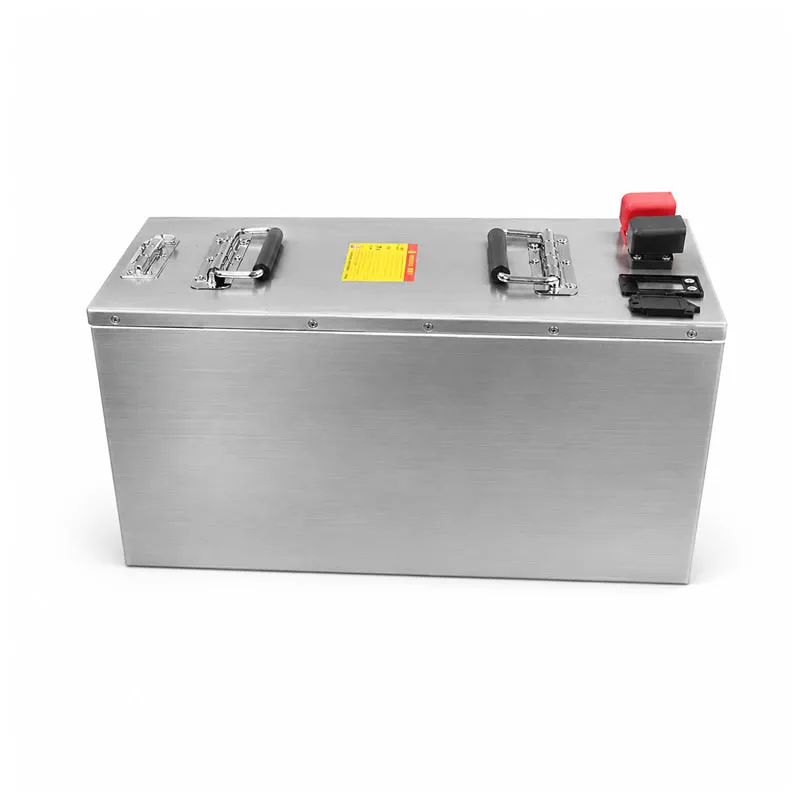
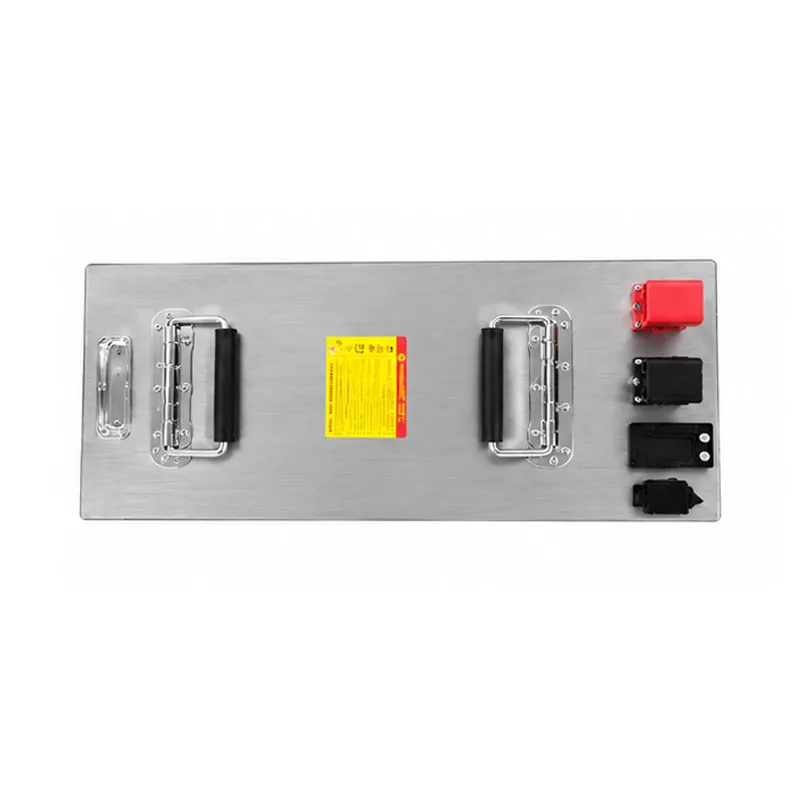
For product and architecture references, review the electric motorcycle battery category, the Electric Motorcycle Battery Guide, the 72V 30Ah LiFePO4 battery and the 64V 60Ah LFP pack.
How Do 48V, 60V, and 72V Batteries Compare?
The main difference between 48V, 60V, and 72V electric motorcycle batteries is the power level and application positioning they support.
| Battery Voltage | Typical Use | Main Advantage | Main Limitation |
|---|---|---|---|
| 48V | Light commuting, low-speed electric motorcycles | Lower cost and easier system matching | Limited power for high-speed or heavy-load use |
| 60V | Daily riding, delivery, mid-range electric motorcycles | Balanced power, range, and cost | Not as strong as 72V for high-performance use |
| 72V | High-power electric motorcycles, heavier loads, stronger acceleration | Better power output and performance potential | Higher cost and stricter component matching |
A 48V battery is usually more suitable for lower-speed vehicles and lighter use. A 60V battery is often a practical middle choice for daily riding and commercial use. A 72V battery is more suitable for performance-focused electric motorcycles or applications that require stronger motor output.
For B2B buyers, the right choice depends less on “which electric motorcycle battery voltage is highest” and more on “which electric motorcycle battery voltage matches the vehicle and market.”
When Is a 48V Electric Motorcycle Battery Better?
A 48V electric motorcycle battery is often used for light-duty electric motorcycles, lower-speed urban models, and short-distance commuting applications. It can be a good choice when the project focuses on cost control, simple structure, and moderate performance.

A 48V system may be suitable for:
- Light electric motorcycles
- Short-distance city commuting
- Lower-speed vehicles
- Entry-level models
- Cost-sensitive markets
- Swappable battery projects
- Vehicles with limited battery space
- Low to medium power demand
The main advantage of 48V is system simplicity. Motors, controllers, chargers, and accessories for 48V systems are widely available. This can make sourcing easier and reduce development complexity.
A 48V battery can also be lighter and more compact when the required range is not too high. For riders who only need daily short-distance travel, a 48V electric motorcycle battery may provide enough performance without increasing unnecessary cost.
However, 48V also has limitations. It may not provide enough power for high-speed riding, steep climbing, heavy cargo, or long-distance commercial operation. If the vehicle needs strong acceleration or higher continuous power, a 48V battery may feel weak unless the system is carefully designed.
For B2B buyers, 48V is usually better for affordable, light-duty, and short-range electric motorcycle platforms.
When Is a 60V Electric Motorcycle Battery Better?
A 60V electric motorcycle battery is often a balanced choice between 48V and 72V. It can provide stronger power than 48V while keeping cost and component complexity lower than many high-power 72V systems.

A 60V system may be suitable for:
- Daily commuting motorcycles
- Urban delivery motorcycles
- Medium-speed electric motorcycles
- Moderate cargo loads
- Longer daily riding distance
- Mid-range product positioning
- Fleet use in city environments
- Buyers who need a balance of cost and power
For many electric motorcycle projects, 60V can offer a practical balance. It can support better acceleration and climbing than 48V, while still being easier to manage than a higher-voltage system.
A 60V electric motorcycle battery can be especially useful for delivery riders and urban commercial use. These applications usually need stable daily performance, reasonable range, and better power under load. Compared with 48V, 60V gives more room for power output. Compared with 72V, it can help control cost and system complexity. For fleet procurement, electric motorcycle battery voltage should still be validated against peak current and route load.
However, 60V may not be the best option for high-performance motorcycles. If the project requires higher top speed, aggressive acceleration, or heavy-load climbing, 72V may be more suitable.
For B2B buyers, 60V is often a strong middle-ground option for practical electric motorcycle models.
When Is a 72V Electric Motorcycle Battery Better?
A 72V electric motorcycle battery is usually selected for higher-power motorcycles and applications that require stronger performance. It is more suitable when the vehicle needs better acceleration, higher speed, stronger climbing ability, or heavier load capacity.

A 72V system may be suitable for:
- High-power electric motorcycles
- Faster urban or suburban riding
- Heavier vehicles
- Cargo motorcycles
- Steeper road conditions
- Longer-distance riding
- Premium product positioning
- Commercial projects with higher performance requirements
The main advantage of 72V is performance potential. When matched with the right motor and controller, a 72V battery can support stronger power delivery and better high-speed performance.
For commercial electric motorcycles, 72V can help when the vehicle frequently carries cargo or operates in hilly areas. For premium electric motorcycle models, 72V can provide a stronger riding experience and better market positioning.
However, 72V systems also require more careful design. The motor, controller, charger, BMS, wiring, connectors, and protection system must all be compatible. A 72V battery can also cost more than a system with lower electric motorcycle battery voltage, especially if higher current output, larger capacity, or stronger casing design is required.
For B2B buyers, 72V is better for performance-focused projects, but it should not be chosen only because it sounds more powerful.
Does Higher Electric Motorcycle Battery Voltage Mean Longer Range?
Not always. Higher electric motorcycle battery voltage does not automatically mean longer range. Riding range depends mainly on total battery energy, which is usually measured in watt-hours.
Battery energy can be calculated as:
Watt-hours = Voltage × Amp-hours
For example:
- 48V 40Ah = 1,920Wh
- 60V 40Ah = 2,400Wh
- 72V 40Ah = 2,880Wh
If the Ah capacity is the same, a battery with higher electric motorcycle battery voltage stores more total energy. But in real projects, battery size, weight, cost, and cell configuration may change. A 48V battery with higher Ah capacity may have similar or even greater energy than a 60V or 72V battery with lower Ah capacity.
Range is also affected by:
- Motor efficiency
- Vehicle weight
- Rider weight
- Cargo load
- Riding speed
- Road slope
- Tire condition
- Temperature
- Wind resistance
- Stop-and-go riding
- Battery discharge depth
- Controller settings
This is why buyers should not judge range by electric motorcycle battery voltage alone. A better approach is to compare watt-hours, vehicle power consumption, and real application conditions.
For example, a 72V electric motorcycle may consume more energy if it is designed for higher speed and stronger acceleration. Even with a higher voltage battery, aggressive riding can reduce range.
Does Higher Voltage Mean More Speed and Power?
Higher electric motorcycle battery voltage can support higher speed and stronger power, but only if the motor and controller are designed for that voltage.
A 72V battery connected to a system designed only for 48V can damage components and create safety risks. Battery voltage must always match the motor, controller, charger, and BMS.
In a correctly matched system, higher voltage can help support:
- Higher motor speed potential
- Stronger acceleration
- Better climbing ability
- Lower current for the same power level
- Better performance under load
- More stable high-power output
However, higher electric motorcycle battery voltage also brings higher requirements. The controller must handle the selected electric motorcycle battery voltage. The BMS must protect the battery correctly. The wiring and connectors must be rated for the system. The charger must match the battery chemistry and electric motorcycle battery voltage.
For B2B buyers, voltage selection should be based on the full power system design, not only on the desired top speed.
Which Voltage Is Better for City Commuting?
For city commuting, 48V or 60V is often enough, depending on the vehicle size and speed requirement.
A 48V electric motorcycle battery can work well for short-distance commuting, lower-speed riding, and lightweight vehicles. It is suitable for markets where buyers care about affordability, simple maintenance, and daily convenience.
A 60V battery may be better if the motorcycle needs stronger acceleration, better climbing ability, or longer daily range. It can also provide a more comfortable power reserve for riders who carry passengers or ride on mixed road conditions.
A 72V system may be unnecessary for basic commuting unless the vehicle is larger, faster, or positioned as a premium model.
For most city commuting projects:
- Choose 48V for light-duty and cost-sensitive models.
- Choose 60V for stronger daily performance.
- Choose 72V only if higher speed or premium performance is required.
Which Voltage Is Better for Delivery Motorcycles?
For delivery motorcycles, 60V or 72V is usually more suitable than 48V.

Delivery vehicles often face heavier daily use than personal commuter motorcycles. They may carry cargo, operate for long hours, stop and start frequently, and require stable power throughout the day.
A 60V electric motorcycle battery can be a good choice for urban delivery where the vehicle needs better range, moderate load support, and reliable daily operation. It offers stronger performance than 48V while keeping the system relatively practical.
A 72V battery may be better for heavier delivery motorcycles, hilly routes, higher-speed roads, or long-distance commercial use. It provides stronger power potential and better load performance when properly matched.
For delivery applications, buyers should also check:
- Battery cycle life
- Charging time
- Daily working hours
- Cargo weight
- Motor power
- Controller current
- BMS protection
- Waterproof design
- Vibration resistance
- Charger compatibility
For B2B fleet buyers, electric motorcycle battery voltage should be selected together with total energy capacity and long-term operating cost.
Which Voltage Is Better for High-Performance Electric Motorcycles?
For high-performance electric motorcycles, 72V is usually the better choice. It provides more power potential and is better suited for high-speed riding, stronger acceleration, and heavier motor systems.
However, high performance is not created by voltage alone. A high-performance electric motorcycle also requires:
- High-power motor
- Compatible controller
- High-discharge battery cells
- Strong BMS
- Reliable wiring
- Proper connectors
- Thermal management
- Strong battery casing
- Safe charger matching
A 72V battery with weak cells or poor BMS design may perform worse than a well-designed 60V battery. That is why battery quality and pack engineering are just as important as electric motorcycle battery voltage.
For premium or high-speed electric motorcycle projects, 72V can be a strong choice, but it should be designed as a complete power system.
How Should You Match Battery Voltage With Motor and Controller?
Battery voltage must match the motor and controller. This is one of the most important rules in electric motorcycle battery selection.
Before choosing the battery, buyers should confirm:
- Motor rated voltage
- Motor rated power
- Motor peak power
- Controller voltage range
- Controller current limit
- Charger voltage
- Battery BMS rating
- Wiring and connector rating
- Display and accessory compatibility
A mismatch can cause serious problems. If the voltage is too high, the controller or motor may be damaged. If the voltage is too low, the vehicle may feel weak or fail to reach expected performance.
For replacement projects, buyers should not simply choose a higher-voltage battery to “upgrade” the motorcycle. The controller, charger, and motor must also support the new voltage.
For OEM or ODM projects, the battery supplier should work with the vehicle engineering team to confirm the correct electric motorcycle battery voltage platform before production.
How Does Voltage Affect Battery Cost?
In general, higher voltage systems can cost more because they may require more cells in series, stronger BMS design, higher-rated components, better connectors, and more careful testing.
A 48V battery system is usually more cost-friendly for entry-level electric motorcycles. A 60V system may increase cost slightly but can provide better performance. A 72V system may require a higher budget, especially for high-power applications.
Cost is affected by:
- Cell type
- Cell quantity
- Capacity
- BMS rating
- Continuous discharge current
- Peak discharge current
- Casing design
- Waterproof requirements
- Connector type
- Communication function
- Testing standard
- Certification requirements
- Customization level
B2B buyers should not compare only battery price. They should compare the total solution cost, including performance, safety, warranty risk, after-sales pressure, and product positioning.
A lower-voltage battery may be cheaper, but it may not satisfy market needs. A higher-voltage battery may cost more, but it may support better product value if the target market requires stronger performance.
How Does Voltage Affect Safety?
Voltage affects safety because it changes the requirements for the electrical system. Higher voltage systems need more careful insulation, connection, BMS protection, charger matching, and quality control.
A 48V system is generally easier to design and manage. A 60V system still remains practical for many electric motorcycle applications. A 72V system requires stricter engineering control because it usually supports higher power output and may involve higher electrical stress.
Safety depends on more than voltage. Buyers should also consider:
- Cell quality
- BMS protection
- Overcharge protection
- Over-discharge protection
- Overcurrent protection
- Short-circuit protection
- Overtemperature protection
- Cell balancing
- Insulation design
- Connector quality
- Casing strength
- Waterproof sealing
- Vibration resistance
- Charger compatibility
A properly designed 72V battery can be safe and reliable. A poorly designed 48V battery can still be risky. The real safety difference depends on engineering quality, not voltage alone.
How Should B2B Buyers Choose the Right Electric Motorcycle Battery Voltage?
B2B buyers should choose electric motorcycle battery voltage based on vehicle positioning, market demand, performance target, and system compatibility.
Before deciding, ask these questions:
- What type of electric motorcycle is being powered?
- What speed range is required?
- What riding range is expected?
- What is the motor power?
- What controller will be used?
- What is the expected cargo load?
- Will the vehicle be used for commuting, delivery, or performance riding?
- What battery space is available?
- What charger will be used?
- What safety functions are required?
- What is the target product price?
- Is OEM or ODM customization needed?
A simple selection rule can be:
- Choose 48V for light-duty, short-range, cost-sensitive models.
- Choose 60V for balanced daily riding and commercial use.
- Choose 72V for high-power, heavy-load, or premium performance models.
For large B2B projects, it is better to confirm the full vehicle system before finalizing the battery voltage. This helps avoid compatibility problems and reduces after-sales risk.
What Are Common Mistakes When Choosing Electric Motorcycle Battery Voltage?
Many battery problems come from choosing voltage without checking system compatibility.
Common mistakes include:
- Choosing higher voltage without checking the controller
- Comparing only voltage and ignoring watt-hours
- Ignoring discharge current
- Using the wrong charger
- Ignoring BMS protection
- Choosing a battery that does not fit the vehicle
- Ignoring connector compatibility
- Ignoring waterproof and vibration requirements
- Selecting only by low price
- Not considering real riding conditions
Another common mistake is assuming that 72V is always better than 60V or 48V. In reality, a 72V battery is only better when the vehicle is designed for it and the user actually needs higher performance.
For many practical projects, a well-designed 60V battery may offer better value than an oversized 72V system. For entry-level models, a 48V battery may be the most reasonable choice.
How Can Custom Battery Solutions Help Match Different Voltage Platforms?
Custom battery solutions are useful because different electric motorcycle projects often require different voltage, capacity, size, discharge current, connector, and BMS settings.
A professional battery supplier can customize:
- 48V, 60V, 72V, or other voltage platforms
- Battery capacity
- Battery dimensions
- Casing structure
- Continuous discharge current
- Peak discharge current
- BMS protection functions
- Communication protocol
- Connector type
- Cable length
- Charging interface
- Waterproof design
- Label and branding
For OEM projects, customization can help the battery fit the vehicle frame, controller, motor, and charger. For distributors, customized voltage and capacity options can help serve different market segments. For fleet operators, custom BMS and charger matching can improve daily operation and maintenance management.
The right electric motorcycle battery voltage should support the product strategy, not limit it.
Which Electric Motorcycle Battery Voltage Is Better: 48V, 60V, or 72V?
There is no single best voltage for every electric motorcycle. The better choice depends on the vehicle and application.
A 48V battery is better for light-duty commuting, lower-speed models, and cost-sensitive projects. It is practical, simple, and suitable for short-distance daily use.
A 60V battery is better for balanced daily performance, urban delivery, and mid-range electric motorcycle projects. It provides stronger power than 48V while keeping the system more practical than many high-power 72V designs.
A 72V battery is better for high-power motorcycles, heavier loads, stronger acceleration, and premium performance models. It offers better power potential but requires stricter matching with the motor, controller, charger, BMS, and electrical components.
For B2B buyers, the best electric motorcycle battery voltage is the one that matches the vehicle system, performance target, market positioning, and long-term reliability requirements.
Febatt provides customized electric motorcycle battery solutions, including 48V, 60V, 72V, and other lithium battery pack options. Battery voltage, capacity, BMS, casing, connector, charger, and communication functions can be customized for OEM, ODM, distributor, and fleet projects.
Request an OEM battery specification and quotation using voltage, capacity, peak current, pack space and estimated quantity.
FAQ About Electric Motorcycle Battery Voltage
Is 72V better than 60V for an electric motorcycle?
72V is better when the motorcycle needs higher power, stronger acceleration, higher speed, or better heavy-load performance. However, 72V is not always better. It must match the motor, controller, charger, BMS, and vehicle design.
Is 60V better than 48V for an electric motorcycle?
60V usually provides stronger power and better performance than 48V. It can be a good choice for daily riding, delivery use, and mid-range electric motorcycles. However, 48V may still be better for light-duty and cost-sensitive models.
Does higher electric motorcycle battery voltage increase range?
Not always. Range depends mainly on total watt-hours, not voltage alone. A higher-voltage battery may store more energy if the Ah capacity is the same, but real range also depends on riding speed, motor efficiency, vehicle weight, load, road conditions, and controller settings.
Can I replace a 48V battery with a 60V or 72V battery?
Not directly in most cases. The motor, controller, charger, BMS, wiring, and connectors must support the new voltage. Replacing only the battery with a higher-voltage pack can damage the vehicle or create safety risks.
What voltage is best for delivery electric motorcycles?
60V or 72V is usually more suitable for delivery electric motorcycles. A 60V battery is good for urban delivery and balanced cost. A 72V battery is better for heavier loads, hilly routes, or higher-performance commercial use.
What voltage is best for city commuting?
48V or 60V is usually suitable for city commuting. A 48V battery is better for light, short-distance use. A 60V battery is better if the rider needs stronger acceleration, better climbing ability, or longer daily range.
What should B2B buyers check before choosing battery voltage?
B2B buyers should check motor voltage, controller voltage range, charger compatibility, battery capacity, discharge current, BMS protection, battery size, connector type, waterproof design, vibration resistance, cost target, and application scenario.