Golf courses, resorts, campuses, retirement communities, industrial parks, and airports depend on electric carts for daily transport. An unreliable 36v lithium battery can delay staff, interrupt guest service, increase maintenance, and leave vehicles unavailable during peak hours. Choosing a 36v lithium battery is therefore a fleet-management decision, not merely a component purchase.
A properly matched 36v lithium battery provides stable output, faster charging, high usable energy, and less routine maintenance than a flooded lead-acid bank. LiFePO4 chemistry combines thermal stability, predictable performance, and long cycle life. Correct sizing, a compatible charger, a suitable BMS, and installation checks are still essential.
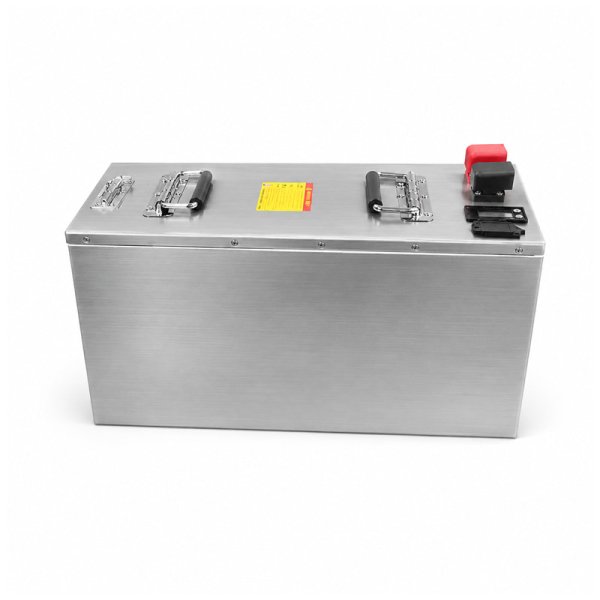
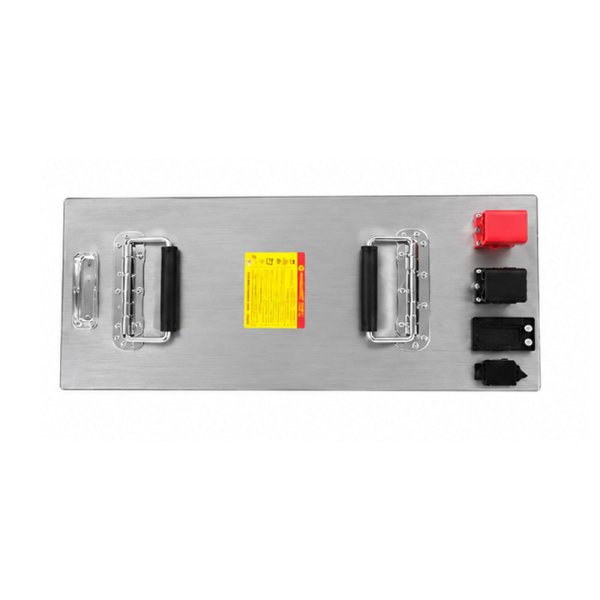
FEBATT’s 36v lithium battery for golf carts stores 5.76kWh of energy and is designed for commercial mobility applications. Its published specifications include a 4,500–5,000-cycle design life, smart BMS protection, and an operating range of -30°C to 60°C. Actual runtime and service life still depend on load, depth of discharge, charging practice, temperature, terrain, and vehicle condition.
This guide explains how a 36v lithium battery differs from lead-acid technology, how to interpret a 36v lifepo4 voltage chart, how to build a safe 36 volt battery bank, and how to choose the best lithium battery for a commercial fleet.
What Makes a 36v Lithium Battery Better in a Lead Acid vs Lithium Comparison?
The lead acid vs lithium comparison should begin with usable energy, not only rated amp-hours. Lead-acid voltage declines during discharge, while repeated deep discharge can accelerate sulfation. A 36v lithium battery maintains a flatter profile and can normally use more stored energy within its manufacturer limits.
Acceleration, slopes, passengers, cargo, and soft ground increase current demand. An aging lead-acid bank may lose speed as charge falls, while this lithium battery generally holds voltage more consistently through most of the cycle.
A conventional 36V system may use six 6V batteries. One integrated 36v lithium battery can reduce system weight, although the exact reduction depends on both designs. Lower weight can reduce stress on tires, suspension, and braking components.
Maintenance is another factor in the lead acid vs lithium comparison. Flooded lead-acid batteries require water checks, corrosion control, terminal cleaning, ventilation, and careful charging. A sealed 36v lithium battery does not require electrolyte watering. Its BMS monitors cells and can respond to overcharge, over-discharge, short-circuit, temperature, or overcurrent conditions when those protections are included in the selected 36v lithium battery.
The lifepo4 vs lead acid calculation should include labor, downtime, replacement frequency, energy loss, and availability. A 36v lithium battery usually costs more initially, so fleets should compare cost per operating year rather than invoice price alone.
How Does a 36v Lithium Battery Improve Fleet Efficiency?
Fleet efficiency depends on vehicle availability. A 36v lithium battery can shorten charging time when paired with an approved charger, but charge current must remain within 36v lithium battery and BMS limits. A larger charger does not automatically make it safer or faster.
A 36v lithium battery can usually accept partial charging during breaks or shift changes without the sulfation concern linked to repeatedly undercharging flooded lead-acid batteries. Charging schedules can follow vehicle use instead of waiting for deep discharge.
When CAN, RS485, Bluetooth, or a display is available, a 36v lithium battery can provide useful SOC and alarm data. This helps dispatchers assign carts and identify abnormal temperature, imbalance, or overcurrent events.
For OEM, distributor, or fleet projects, FEBATT’s custom 36v lithium battery solutions can match capacity, current, communication, enclosure, connector, charger, and installation needs. The best lithium battery is matched to the controller, motor, route, terrain, duty cycle, and charging window.
How Should You Read a 36v LiFePO4 Voltage Chart?

A 36v lifepo4 voltage chart is useful, but it should not be treated as a universal fuel gauge. A typical 36v lithium battery pack uses twelve 3.2V cells in series, producing a nominal pack voltage of 38.4V. Depending on its cell limits and charger settings, a fully charged 36v lithium battery may reach approximately 43.2V to 43.8V while charging. Resting voltage will normally settle after the charger is removed from it.
LiFePO4 batteries are commonly based on 3.2V nominal cells. However, the correct upper charging voltage must always come from the cell or pack manufacturer rather than from a generic voltage table.
The following 36v lifepo4 voltage chart is an illustrative resting-voltage reference, not a substitute for the 36v lithium battery manufacturer’s manual or BMS state-of-charge reading:
| Estimated State of Charge | Approximate Resting Voltage |
|---|---|
| 100% | 40.8–41.4V after resting |
| 90% | 40.2–40.8V |
| 70% | 39.6–40.2V |
| 50% | 39.0–39.6V |
| 30% | 38.4–39.0V |
| 10% | 37.2–38.4V |
| Near BMS low-voltage protection | Model-specific |
The ranges are broad because a 36v lithium battery has a flat middle discharge plateau. Temperature, current, cell balance, meter accuracy, and resting time affect the reading. Loaded voltage will be lower than resting voltage.
Use the 36v lifepo4 voltage chart with BMS data and current measurement. Coulomb counting is usually more useful than voltage alone through the flat plateau. If one 36v lithium battery declines unusually quickly, inspect connections, cable resistance, controller demand, cell balance, temperature, and capacity.
How Much Can a Fleet Save in the LiFePO4 vs Lead-Acid Comparison?
The lifepo4 vs lead acid comparison cannot be reduced to purchase price. A complete total-cost-of-ownership model should include the 36v lithium battery, charger, installation, labor, electricity, maintenance, lost vehicle availability, and replacement events. A 36v lithium battery may require a higher initial budget, but it can reduce several recurring costs.

A 36v lithium battery eliminates routine watering and reduces corrosion-related service. FEBATT publishes a 4,500–5,000-cycle design life for its 36V 160Ah model, but cycle life should not be converted into guaranteed calendar years. Depth of discharge, cycle frequency, temperature, charging current, and storage conditions all affect aging.
Stable voltage can preserve performance later in the shift, while faster charging may reduce the need for spare carts. These benefits have value even when they do not appear on the invoice.
To compare lifepo4 vs lead acid fairly, calculate cost per operating day. Record the current lead-acid maintenance hours, annual replacement cost, charger losses, downtime, and route failures. Then model the expected performance of a 36v lithium battery using conservative assumptions. This produces a more credible business case than claiming a fixed payback period for every fleet.
How Do You Build a Safe 36 Volt Battery Bank?
A 36 volt battery bank can be created with an integrated 36v lithium battery or with approved modules connected in series or parallel. For commercial golf carts, one integrated 36v lithium battery is often easier to manage because the cells, BMS, enclosure, and communication system are designed as one unit. Separate modules should be connected only when the manufacturer explicitly approves the configuration.

Series connections increase voltage. Parallel connections increase amp-hour capacity and available energy while keeping voltage approximately the same. Never assume that three independent 12V lithium batteries can automatically form a safe 36 volt battery bank. The BMS in each unit must support series operation, and the maximum permitted series count must be confirmed.
Before assembling a 36 volt battery bank, match chemistry, model, capacity, age, SOC, firmware, and BMS settings. Use correctly sized cables, equal-length parallel conductors where required, rated fuses, secure connectors, and a disconnect. Protection must handle controller peak current, not only average current. Manufacturer installation guidance also warns against combining unsupported series and parallel configurations.
Do not mix an old 36v lithium battery with a new unit in parallel. Differences in state of charge and internal resistance can cause unequal current sharing. The best lithium battery configuration for most fleets is a 36v lithium battery engineered and tested for the intended voltage, controller, charger, and peak load rather than a field-assembled combination of unrelated products.
Can a Solar System Charge a 36v Lithium Battery?
A solar system can charge a 36v lithium battery when the panels, MPPT controller, charger profile, voltage limits, and low-temperature protection are compatible. A controller intended only for flooded lead-acid charging may use equalization or voltage settings that are unsuitable for LiFePO4. The selected controller must provide the charging voltage and current specified by the 36v lithium battery manufacturer.
Size solar production from actual daily energy use, not only 36v lithium battery capacity. Account for sunlight, conversion losses, weather, and required recharge time.
Solar charging can be useful for carts parked outdoors during daylight hours, but it should not be marketed as unlimited free charging. A 36v lithium battery still needs proper charge control, wiring protection, isolation, and monitoring. In cold climates, the BMS or charging system must prevent charging below its approved minimum temperature.
Why Does Voltage Change Under Heavy Loads?
A 36v lithium battery can show temporary voltage sag when the motor demands high current. Common causes include acceleration, steep grades, heavy passengers, cargo, low tire pressure, rough terrain, or an oversized controller. The voltage usually recovers when the load decreases.
Some voltage sag is normal because every 36v lithium battery and cable has internal resistance. Excessive sag may indicate loose terminals, undersized cables, damaged connectors, high cell resistance, low temperature, low state of charge, or a 36v lithium battery that is too small for the peak current requirement.
Do not diagnose health from one loaded reading. Compare resting voltage, current, temperature, BMS alarms, and recovery. If the 36v lifepo4 voltage chart appears inconsistent, take a rested measurement and compare it with the BMS record.
Why Is LiFePO4 Commonly Chosen Over NCM?
NCM batteries can provide higher energy density, which is valuable where minimum size and weight are dominant requirements. Golf carts, however, usually have more installation space than motorcycles or passenger electric vehicles. Fleet operators often prioritize cycle life, thermal stability, predictable output, and simplified maintenance.
For these reasons, a LiFePO4 36v lithium ion battery is widely selected for golf carts, utility vehicles, and commercial mobility. That does not mean every 36v lithium battery is automatically the best lithium battery. Cell consistency, mechanical design, BMS quality, connector rating, waterproofing, charger matching, and supplier testing remain critical. LiFePO4 is recognized for strong thermal and chemical stability, but the safety of the completed pack still depends on its electrical and mechanical design.
Fleet buyers should request nominal energy, continuous and peak current, charge limits, temperature definitions, ingress rating, communication, cycle-test conditions, transport documents, and warranty terms. FEBATT’s 36v lithium battery page lists UN38.3, MSDS, CE, and RoHS documentation support for its 36V 160Ah model.
How Does State of Charge Affect Daily Mileage?
Daily mileage depends on vehicle weight, tire resistance, gradients, stops, acceleration, accessories, and weather. Two identical carts can travel different distances with the same lithium battery capacity.
A 36v lithium battery provides more predictable performance when it is correctly sized and the SOC display is calibrated. Fleet managers should record energy use by route rather than relying only on advertised range. Long routes, hilly routes, or carts carrying equipment should receive a larger reserve.
Regularly reaching BMS low-voltage protection is not a good operating strategy. Although the lifepo4 vs lead acid comparison favors LiFePO4 for usable depth of discharge, leaving a reasonable reserve reduces the risk of route interruption and can lower 36v lithium battery stress. Charge scheduling should keep it within an operating window suitable for the fleet’s workload.
How Do You Choose the Best 36v Lithium Battery and Charger?
Start with vehicle compatibility. Confirm the cart’s nominal system voltage, controller voltage range, peak current, continuous current, regenerative braking behavior, accessory voltage, available installation space, cable layout, connector type, and charger interface. A 36v lithium ion battery should not be ordered by voltage and amp-hours alone.
Next, calculate required energy. Multiply the 36v lithium battery nominal voltage by amp-hours to estimate watt-hours. A 36V 160Ah rating equals 5.76kWh when calculated using 36V, while a 38.4V nominal-cell calculation would produce 6.144kWh. Use the manufacturer’s published energy value for product comparison because naming conventions differ across 36V-class systems. FEBATT publishes 5.76kWh for its current 36V 160Ah product.
The charger must be designed or configured for the selected 36v lithium battery. It should use the approved constant-current and constant-voltage targets, respect the maximum charge current, and communicate with the BMS when required. Disable lead-acid equalization. Confirm whether float charging is permitted, limited, or unnecessary for the 36v lithium battery. LiFePO4 chargers normally use chemistry-specific voltage and current parameters rather than the equalization settings associated with flooded lead-acid batteries.
For B2B purchasing, the supplier should review the vehicle and duty cycle. Request drawings, electrical specifications, BMS logic, charger data, certificates, test procedures, warranty limits, and technical support. The best lithium battery is a verified 36v lithium battery system, not the lowest quotation.
FAQ About a 36V Lithium Battery
1.Can I directly replace a lead-acid bank with a FEBATT 36v lithium battery?
A compatible FEBATT 36v lithium battery can replace a lead-acid bank, but installation still requires checks. Confirm controller voltage, charger profile, cable and fuse ratings, regenerative braking, accessory voltage, mounting space, connector, and peak current. Some carts need a LiFePO4 charger or DC-DC converter. Follow the 36v lithium battery manual and use a qualified technician. Vehicle and charging-system compatibility should always be confirmed before conversion.
2.How long can a 36v lithium battery last in a commercial fleet?
Service life depends on depth of discharge, charge rate, temperature, storage SOC, cell balance, and calendar aging. FEBATT publishes a 4,500–5,000-cycle design life for its 36V 160Ah model. Do not convert that figure into a guaranteed number of years. Check the cycle-test conditions, capacity-retention threshold, operating profile, and warranty separately.
3.Does a 36v lithium battery require a special charger?
Yes. Use a charger approved for the 36v lithium ion battery voltage, chemistry, maximum current, BMS, and communication requirements. Lead-acid chargers may use equalization or unsuitable voltage settings. A “36V” label alone does not prove compatibility; confirm the required charge voltage in the 36v lithium battery datasheet.
4.How does cold weather affect a 36v lithium battery?
Cold increases internal resistance and can reduce available power and capacity. The exact loss depends on temperature, current, cell design, and test method. Charging below the approved minimum can damage LiFePO4 cells.
FEBATT lists a -30°C to 60°C operating range, but buyers should confirm whether this covers discharge, charge, storage, or a heated configuration. Other LiFePO4 manufacturers specify different limits; for example, some systems permit discharge below freezing but restrict charging to temperatures above 5°C. Always follow the limits for the selected 36v lithium battery.
5.What BMS protections should a 36v lithium battery include?
A commercial 36v lithium battery should monitor cell voltage and temperature and protect against overcharge, over-discharge, overcurrent, and short circuits. FEBATT publishes overcharge, over-discharge, short-circuit, and temperature-related protection. Buyers should also confirm peak-current duration, low-temperature charge cutoff, communication, and recovery behavior.
6.Can multiple batteries be connected to make a 36 volt battery bank?
Only when the 36v lithium ion battery manufacturer approves the exact connection. A 36 volt battery bank may use approved series modules or complete 36v lithium battery units connected in parallel for additional capacity.
Do not series-connect batteries designed only for parallel use, and do not mix different models, ages, capacities, or SOC levels. For most commercial carts, one integrated 36v lithium battery simplifies installation, monitoring, and service.
7.Is a 36v lithium battery safer than lead-acid?
Both systems require correct design and handling. A sealed 36v lithium battery removes routine watering and reduces normal exposure to corrosive electrolyte. LiFePO4 has strong thermal stability, but incorrect charging, short circuits, water ingress, impact, or excessive current can still cause damage.
Safety depends on cells, BMS, enclosure, cables, fuses, charger, installation quality, and adherence to manufacturer limits. A battery should never be described as completely risk-free.
Conclusion
For commercial golf carts, a 36v lithium battery can improve uptime, simplify maintenance, and deliver more consistent power than an aging lead-acid bank. The strongest benefits appear when this lithium battery is matched to the controller, motor, route, charging window, climate, and peak-current demand.
The lead acid vs lithium decision should be based on total cost of ownership rather than purchase price alone. The lifepo4 vs lead acid comparison should include maintenance labor, usable energy, replacement frequency, charger compatibility, and vehicle downtime. A 36v lifepo4 voltage chart can support maintenance, but BMS data and current measurement are more reliable than voltage alone through the flat discharge plateau.
A safe 36 volt battery bank requires manufacturer-approved connections, matched modules, correct protection, and professional installation. The best lithium battery is therefore not the 36v lithium battery with the most aggressive claim. It is the 36v lithium battery supported by verified specifications, realistic cycle-test conditions, a compatible charger, a dependable BMS, and technical support for the complete vehicle system.
For golf courses, resorts, campuses, distributors, and OEM projects, FEBATT can provide a 36v lithium battery and application-matched 36v lithium battery engineering support for capacity, current, communication, enclosure, charger, and bulk-supply requirements.