Electric three-wheelers are widely used for passenger transport, cargo delivery, market logistics, community mobility, and short-distance commercial operation. For these vehicles, the battery is not just a power source. It directly affects driving range, load capacity, charging time, maintenance cost, vehicle uptime, and long-term operating value.
For OEM buyers, distributors, fleet operators, and replacement battery suppliers, choosing the right Three-Wheeler Battery is an important business decision. Lead-acid batteries are still used in many entry-level three-wheelers because they cost less upfront and are easy to source. Lithium batteries, especially LiFePO4 batteries, are becoming more popular because they are lighter, charge faster, last longer, and require much lower routine maintenance.
In this comprehensive guide, the two battery chemistries are examined across the criteria that matter most to B2B buyers: performance, durability, cost, safety, and real-world suitability for cargo and commercial use. The aim is simple. Clarify the trade-offs. Remove the guesswork. Identify which Three-Wheeler Battery is better aligned with operational demands.
What Is a Lithium Three-Wheeler Battery?
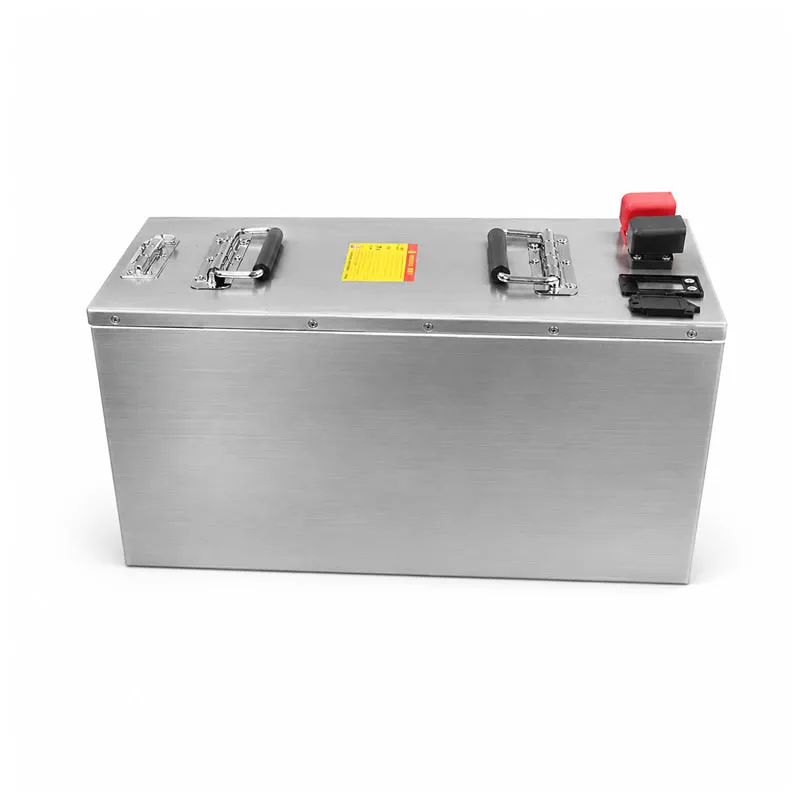
A lithium Three-Wheeler Battery is a rechargeable battery pack designed to power electric three-wheelers. It usually uses lithium-ion or lithium iron phosphate chemistry. In many commercial vehicle applications, LiFePO4 is a common choice because it offers strong safety, long cycle life, and stable performance.
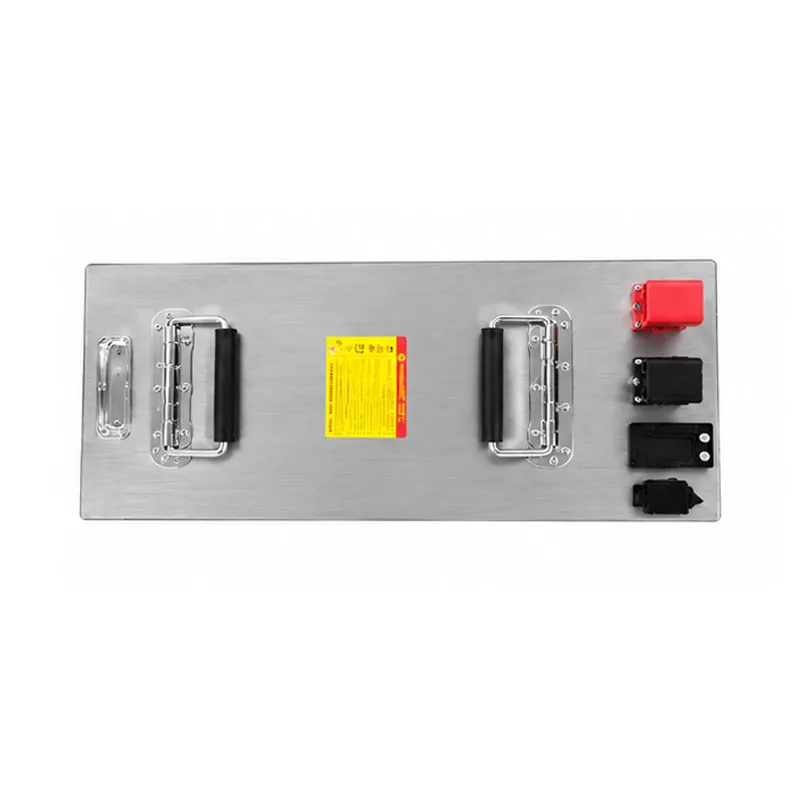
A complete lithium battery pack usually includes battery cells, a Battery Management System, protective casing, connectors, cables, charging interface, and internal protection structure. The BMS is especially important because it helps protect the battery from overcharge, over-discharge, overcurrent, short circuit, overheating, and cell imbalance.
Lithium batteries are usually lighter than lead-acid batteries with similar usable energy. This weight reduction can help improve range, acceleration, hill climbing, and payload flexibility. For cargo and passenger three-wheelers that operate every day, these advantages can create real commercial value.
A lithium Three-Wheeler Battery is also easier to customize. Buyers can request different voltage platforms, capacity levels, battery sizes, connector types, BMS settings, casing designs, waterproof structures, and communication functions according to the vehicle system.
For buyers comparing electric mobility battery options, FEBATT’s power battery products for electric vehicles can be used as a reference for related applications.
What Is a Lead-Acid Three-Wheeler Battery?
A lead-acid Three-Wheeler Battery is a traditional rechargeable battery used in many low-speed electric vehicles. Lead-acid technology is mature, widely available, and usually cheaper at the first purchase stage.
Lead-acid batteries are often selected for entry-level three-wheelers, short-distance transport, and price-sensitive markets. They can work in simple vehicle systems and are familiar to many repair shops and users.
However, lead-acid batteries have several limitations. They are heavier, have lower usable capacity, charge more slowly, and usually have shorter cycle life than lithium batteries. They are also more sensitive to deep discharge. If a lead-acid battery is frequently discharged too deeply, its lifespan can drop quickly.
For low-budget vehicles with light daily use, lead-acid can still be acceptable. But for commercial three-wheelers that operate for long hours, carry heavy loads, or need fast turnaround, lead-acid batteries often create higher long-term cost.
Lithium vs Lead-Acid Three-Wheeler Battery: Key Differences

Before choosing a Three-Wheeler Battery, buyers should compare the two technologies from both purchase cost and operating cost.
| Comparison Factor | Lead-Acid Three-Wheeler Battery | Lithium Three-Wheeler Battery |
|---|---|---|
| Upfront Cost | Lower | Higher |
| Weight | Heavier | Lighter |
| Usable Capacity | More limited under deep discharge | Higher usable energy |
| Charging Speed | Slower | Faster when designed properly |
| Cycle Life | Usually shorter | Usually longer |
| Maintenance | More routine checks required | Much lower routine maintenance |
| Load Performance | More voltage sag under heavy load | More stable output |
| Long-Term Cost | Can be higher for frequent use | Often better for commercial use |
| Best Use | Low-cost, light-duty vehicles | Cargo, fleet, passenger, and daily-use vehicles |
The main difference is simple: lead-acid batteries are cheaper to buy, while lithium batteries are often better to own over time. For B2B buyers, total cost of ownership is usually more important than the first quotation.
Which Battery Provides Better Driving Range?
A lithium Three-Wheeler Battery usually provides better real-world range than a lead-acid battery. This is not only because of chemistry. It is also because lithium batteries are lighter and can use more of their rated capacity without severe performance loss.
Lead-acid batteries may have a lower practical usable capacity because deep discharge can shorten their life. As the battery discharges, voltage drop can also become more obvious. This can make the vehicle feel weaker before the battery is fully empty.
Lithium batteries usually maintain a more stable voltage curve. This means the three-wheeler can keep more consistent power during operation. For passenger vehicles, this supports a better driving experience. For cargo three-wheelers, it helps keep routes more predictable.
Range is also affected by motor power, controller efficiency, payload, road slope, tire pressure, driving speed, stop-and-go traffic, temperature, and battery age. Buyers should not judge range only by amp-hours. Watt-hours, usable capacity, battery weight, and discharge performance are more practical indicators.
For more detailed selection logic, this electric three-wheeler battery guide can support further reading.
Which Battery Charges Faster?
Lithium batteries usually charge faster than lead-acid batteries when the battery, charger, BMS, and thermal design are matched correctly.
For commercial three-wheelers, charging speed directly affects uptime. If a vehicle must wait many hours for charging, it cannot complete more trips or delivery routes. This is especially important for passenger transport, last-mile delivery, and multi-shift fleet operation.
Lead-acid batteries usually require longer charging time and are less suitable for aggressive fast charging. They may also need careful full-charge management to avoid premature capacity loss.
A lithium Three-Wheeler Battery can support faster charging, but the charging system must be designed properly. The charger should match the battery voltage, chemistry, current limit, connector, and BMS requirements. Poor charger matching can reduce battery life or create safety risks.
For fleets, the best charging strategy is not always the fastest possible charge. It should balance charging speed, battery life, daily route planning, and safety.
Which Battery Lasts Longer?
A lithium Three-Wheeler Battery usually lasts longer than a lead-acid battery under frequent use. This is one of the biggest reasons commercial buyers choose lithium.
Cycle life is important because electric three-wheelers are charged and discharged repeatedly. A battery used for daily cargo delivery or passenger transport may complete many cycles each week. If the battery has a short cycle life, replacement cost and downtime increase quickly.
Lead-acid batteries often degrade faster under deep discharge, high temperature, poor charging habits, and heavy-load operation. Lithium batteries, especially LiFePO4 batteries, usually provide longer cycle life and more stable capacity retention when properly managed.
However, lifespan still depends on product quality. Cell grade, BMS design, charger matching, operating temperature, depth of discharge, vibration resistance, and supplier testing all affect battery life. Buyers should ask how cycle life was tested instead of only accepting a cycle number in a catalog.
Which Battery Is More Cost-Effective?
Lead-acid batteries have a lower upfront cost, but lithium batteries are often more cost-effective for long-term commercial use.
A lead-acid Three-Wheeler Battery may look attractive because the purchase price is lower. But if it needs more frequent replacement, charges slowly, reduces vehicle range, adds weight, and requires more maintenance, the total cost can become higher over time.
A lithium Three-Wheeler Battery usually costs more at the beginning, but it can reduce operating cost through longer cycle life, faster charging, lighter weight, lower maintenance, and better vehicle utilization.
For low-use vehicles, lead-acid may still be practical. For delivery vehicles, passenger fleets, cargo three-wheelers, and daily-use commercial vehicles, lithium usually offers stronger long-term value.
B2B buyers should compare:
- Battery purchase price
- Expected replacement cycle
- Daily charging time
- Maintenance labor
- Vehicle downtime
- Usable range
- Payload impact
- Warranty and after-sales support
- Long-term cost per cycle
The better battery is not always the cheapest one. It is the battery that fits the real workload and lowers total operating cost.
Which Battery Requires Less Maintenance?
Lithium batteries require much lower routine maintenance than lead-acid batteries. This is important for fleets because maintenance time can become a hidden cost.
Lead-acid batteries may require regular inspection, water refilling in flooded types, terminal cleaning, corrosion control, ventilation, and careful charging management. Poor maintenance can shorten battery life quickly.
A lithium Three-Wheeler Battery does not require water refilling or acid maintenance. With a reliable BMS, it can manage key protection functions automatically. Users still need proper charging, connector checks, safe storage, and correct installation, but the routine workload is much lower than lead-acid.
For fleet operators, lower maintenance means fewer service interruptions, less technician workload, and easier vehicle management. This is one reason lithium is becoming more suitable for commercial three-wheeler projects.
Which Battery Performs Better Under Heavy Loads?
Lithium batteries usually perform better under heavy loads. This matters because many three-wheelers carry passengers, parcels, food deliveries, tools, agricultural goods, or other cargo.

Heavy loads increase current demand. The battery must support acceleration, climbing, and stop-and-go operation without excessive voltage sag. Lead-acid batteries can struggle under these conditions, especially as they age or discharge.
A lithium Three-Wheeler Battery usually provides more stable output under load. This helps the vehicle maintain better torque, smoother acceleration, and more reliable hill-climbing performance.
For cargo three-wheelers, this advantage is especially important. A battery that performs well when empty may not perform well when fully loaded. Buyers should evaluate discharge current, peak current, voltage stability, and BMS current rating before choosing a battery.
Which Battery Performs Better in Different Weather Conditions?
Both lithium and lead-acid batteries are affected by temperature. Hot weather can speed up aging, while cold weather can reduce usable capacity and charging performance.
Lithium batteries usually provide more stable performance across demanding conditions when supported by proper BMS protection and thermal design. LiFePO4 batteries are also known for strong thermal stability, which makes them suitable for many commercial mobility applications.
However, a lithium Three-Wheeler Battery still needs correct temperature protection. Low-temperature charging protection may be required in cold regions. In hot regions, battery casing, ventilation, cell quality, and thermal management become more important.
Lead-acid batteries can lose performance in cold conditions and may degrade faster under sustained heat. They are also heavier, which can make energy consumption worse in difficult operating conditions.
For buyers serving different markets, the battery should be selected according to climate, not only voltage and capacity.
Which Battery Is Safer to Use?
Battery safety depends on design quality, cell quality, BMS protection, charger matching, installation, and user behavior.
Lithium batteries, especially LiFePO4 batteries, are widely used in commercial electric vehicles because of their safety and stability. A well-designed lithium Three-Wheeler Battery should include protection against overcharge, over-discharge, overcurrent, short circuit, overheating, low-temperature charging, cell imbalance, and abnormal voltage.
Lead-acid batteries are mature and widely used, but they also have safety concerns. Depending on type and usage, they may involve acid leakage, gas release during charging, corrosion, heavy weight, and maintenance risks.
Lithium is not automatically safe just because it is modern. A low-quality lithium battery with weak BMS protection can still create problems. Buyers should evaluate supplier capability, testing process, certifications, charger compatibility, and pack structure before placing large orders.
Which Battery Is Better for Cargo Three-Wheelers?
A lithium Three-Wheeler Battery is usually better for cargo three-wheelers because cargo vehicles need stable power, higher usable range, and strong load performance.
Cargo three-wheelers often operate in stop-and-go traffic, carry heavy goods, and run for long hours. A heavy lead-acid battery reduces payload flexibility and increases energy consumption. A lighter lithium battery can help improve vehicle efficiency and leave more available weight for cargo.
Faster charging is another advantage. Cargo vehicles often need quick turnaround between routes. A battery that charges faster and lasts longer can support more daily operation time.
Lead-acid may still be used in lower-cost cargo vehicles, but for long-term business use, lithium usually provides better productivity and lower downtime.
Which Battery Is Better for Commercial Fleets?
For most commercial fleets, lithium is the stronger choice. Fleet buyers care about uptime, consistency, maintenance cost, replacement frequency, and operating efficiency. A lithium Three-Wheeler Battery performs well in these areas.

Lithium batteries can help fleets achieve:
- Longer service life
- More stable driving range
- Lower routine maintenance
- Faster charging turnaround
- Lower vehicle weight
- Better performance under load
- Reduced downtime
- Better long-term cost control
Lead-acid batteries may still fit lower-intensity fleets with limited budgets. But for high-frequency operation, the long-term value of lithium is usually stronger.
Fleet buyers should not only compare battery price. They should compare how many trips the vehicle can complete, how often the battery must be replaced, how much maintenance is needed, and how much downtime the fleet can tolerate.
What Should Buyers Check Before Choosing a Three-Wheeler Battery?
Before choosing a Three-Wheeler Battery, buyers should evaluate the complete vehicle system and business scenario.
Important points include:
- Vehicle voltage platform
- Motor power
- Controller current
- Required driving range
- Average payload
- Road and route conditions
- Daily operating hours
- Charging time available
- Charger compatibility
- Battery compartment size
- Connector type
- BMS protection functions
- Waterproof and vibration requirements
- Target climate
- Certification and shipping documents
- Warranty and supplier support
For OEM and fleet projects, the battery should be matched to the actual vehicle design. A battery that looks good on a specification sheet may fail in real use if the discharge current, charger, size, or BMS settings are not correct.
FAQ About Three-Wheeler Battery
1.Is a lithium Three-Wheeler Battery worth the higher upfront cost?
For many commercial applications, yes. A lithium Three-Wheeler Battery is often worth the higher upfront cost when the vehicle is used daily, carries heavy loads, needs faster charging, or requires longer service life. For very low-use or highly price-sensitive vehicles, lead-acid may still be acceptable.
2.How much longer does a lithium battery last than lead-acid?
A lithium battery usually lasts longer than a lead-acid battery, especially under frequent cycling. The exact lifespan depends on battery chemistry, cell quality, depth of discharge, charging habits, temperature, and BMS protection. Buyers should compare test conditions, not only advertised cycle numbers.
3.Which battery is better for heavy-duty three-wheelers?
Lithium, especially LiFePO4, is usually better for heavy-duty three-wheelers because it offers lighter weight, more stable discharge, longer cycle life, and better load performance. The battery should still be matched with the motor, controller, charger, and payload requirements.
4.How fast can a lithium Three-Wheeler Battery be charged?
Charging time depends on battery capacity, charger current, BMS limits, cell chemistry, temperature, and safety design. Some lithium batteries can charge much faster than lead-acid batteries, but fast charging should only be used when the battery and charger are designed for it.
5.Which battery is best for commercial three-wheelers?
For most commercial three-wheelers, lithium is usually the better choice because it supports longer range, faster charging, lower maintenance, and better long-term value. Lead-acid may still work for low-cost, short-distance, or light-duty vehicles.
6.Can lead-acid batteries be replaced with lithium batteries in three-wheelers?
Yes, but the replacement must be checked carefully. Buyers should confirm voltage, controller compatibility, charger compatibility, battery size, connector type, BMS current rating, mounting method, and waterproof requirements before replacing lead-acid with lithium.
Conclusion
Choosing the right Three-Wheeler Battery should be based on real operating needs, not only upfront cost. Lead-acid batteries still have a place in price-sensitive and light-duty applications. They are familiar, affordable, and widely available.
However, for cargo vehicles, passenger transport, delivery fleets, and high-use commercial three-wheelers, lithium batteries usually provide better long-term value. A lithium Three-Wheeler Battery can offer longer range, faster charging, lower maintenance, lighter weight, better heavy-load performance, and reduced downtime.
For B2B buyers, the best battery is the one that matches the vehicle system, route demand, payload, climate, charger, safety requirements, and total cost target. When these factors are evaluated correctly, the battery becomes more than a component. It becomes a key part of vehicle reliability and business performance.