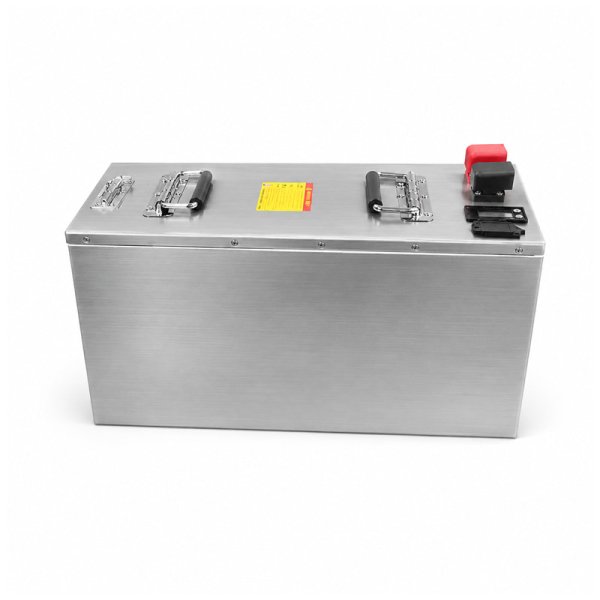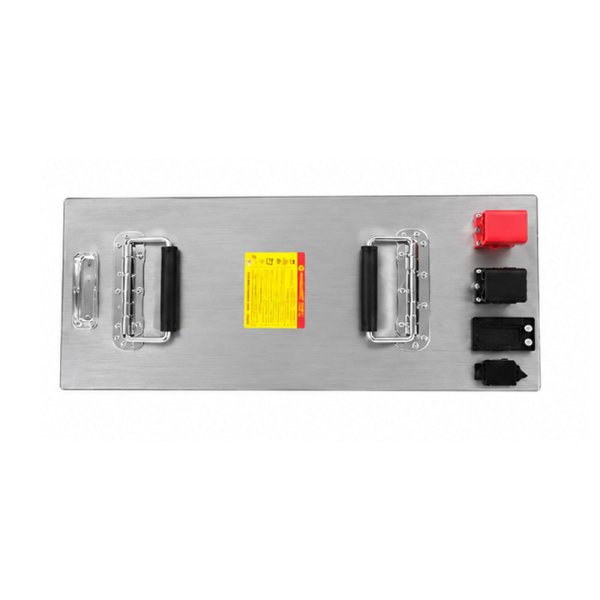
A sit down forklift battery replacement should begin with the truck’s real work, not with a catalog capacity. Counterbalance forklifts that look similar on paper can create very different battery demand when payload, attachments, travel distance, ramps, outdoor exposure, and stop-start frequency change.
For fleet engineers, warehouse operations, procurement teams, maintenance supervisors, and forklift integrators, the goal is to turn those operating conditions into one controlled specification. A reliable sit down forklift battery program should define duty cycle, counterbalance requirements, tray geometry, electrical interfaces, charging windows, environmental exposure, and pilot acceptance before batch purchasing begins.
Which Sit-Down Forklift Duty Profiles Create the Highest Battery Demand?
The hardest duty usually appears when several stressors overlap. A sit down forklift battery works hardest on long shuttle routes, frequent acceleration and braking, repeated lifting, sustained ramps, high attachment use, or shifts with little idle time. Average hourly energy can hide these peaks, so buyers should segment the fleet by operating pattern before asking suppliers to quote.
A short indoor pallet route may have modest traction demand even with heavy loads. A truck moving between production and an outdoor yard can combine longer travel, rougher surfaces, weather exposure, gradients, and more acceleration events. The sit down forklift battery specification must cover the hardest recurring profile, not the easiest truck in the fleet.
Record loaded and unloaded travel, route length, lift frequency, grade exposure, average and maximum payload, attachment use, queue time, idle time, scheduled breaks, and operating temperature. These measurements create a defensible baseline for comparing suppliers and deciding whether one sit down forklift battery configuration can serve several truck groups.

Once truck-level requirements are defined, this forklift battery replacement planning guide can support rollout sequencing without turning this subtype assessment into a general replacement article.
How Do Payload and Attachments Change Energy and Peak-Current Requirements?
For a sit down forklift battery, payload changes energy use and power demand. Heavy loads increase traction work during acceleration and grades, while repeated lifting raises hydraulic demand. Clamps, rotators, fork positioners, side shifters, and extended masts can also change truck mass, load-center behavior, and the frequency of high-current events.
A lithium battery for sit down forklift service should therefore be sized from measured work rather than nominal capacity alone. Capture routine and exceptional payloads, attachment type and mass, lift height, starts per hour, ramp exposure, and repeated hydraulic functions.
A sit down forklift battery can hold enough nominal energy and still be mismatched if the BMS, busbars, connectors, or cables cannot support repeated current peaks. Peak-current logging helps distinguish occasional spikes from recurring thermal load and gives suppliers a clearer design target.
If a warehouse operates several forklift types, the complete forklift battery category can help buyers separate sit-down requirements from other motive-power applications before standardizing an RFQ.
Why Must Battery Mass Be Checked Against Counterbalance Requirements?
How Should Fleets Audit the Existing Battery Tray and Retention System?
The tray is where replacement projects become physical. Measure internal length, width, height, lip locations, cable exits, connector clearance, lifting access, service space, and the geometry of rollers, locks, covers, and restraint points. Photograph the installed area and record anything that can interfere with installation or removal.
| Item | What procurement should freeze | Why it matters |
|---|---|---|
| Pack envelope | Max L × W × H, clearances, extraction path | Avoids installation and service conflicts |
| Battery mass | Approved minimum, target and maximum mass | Maintains counterbalance assumptions |
| Retention | Stops, locks, rails and hold-downs | Controls movement during braking and ramps |
| Cable exit | Connector position, bend radius, service access | Avoids cable strain and field changes |
A sit down forklift battery should not be approved from nominal tray size alone. Small conflicts can prevent full seating, compromise cable bend radius, block service access, or stop original retention hardware from engaging. Outdoor trucks also need attention to drain paths, splash zones, and contamination around the tray.
For mixed fleets, create a fitment record by truck model and serial range. The objective is to eliminate fit and retention ambiguity before a pilot unit is built and to keep later replacement packs consistent with the approved sit down forklift battery configuration.
What Connector, Cable, and Communication Data Must Be Confirmed?
Electrical compatibility deserves the same discipline as mechanical fit. For each sit down forklift battery, record connector manufacturer and model, keying, polarity, cable gauge, cable length, terminal orientation, fuse arrangement, service disconnect, and truck-side routing that limits bend radius.
The pack may also need communication with the truck, display, telematics gateway, or fleet-management system. CAN, RS485, wake lines, interlocks, state-of-charge outputs, and fault signaling should be confirmed from actual truck documentation rather than assumed from another model.
When several truck brands share a warehouse, use a compatibility matrix by model and serial range. Freeze pin assignments, cable lengths, connector variants, and communication requirements before the production BOM is released. This turns the sit down forklift battery program into a controlled configuration exercise instead of a field-adaptation project.
How Does Indoor and Outdoor Travel Change Thermal and Enclosure Requirements?
Mixed indoor/outdoor duty exposes the same truck to changing temperature, water, dust, sunlight, surface shock, and condensation. A sit down forklift battery used only in a dry warehouse does not face the same enclosure burden as one crossing wet yards, cold docks, or dusty production areas.
Start with the actual route. Note temperature limits, rain, washdown, standing water, dust, dock transitions, vibration, and movement between conditioned and unconditioned spaces. Rapid transitions can create condensation even without direct water exposure.
The sit down forklift battery design should address sealing, venting strategy, corrosion protection, thermal sensing, low-temperature charging controls where needed, and heat rejection during sustained work. One design should be standardized across several trucks only when their environmental envelope is genuinely comparable.
How Does Shift Length Determine Usable Energy Rather Than Nominal Capacity?
Nominal capacity is not the same as energy available to the operation. Sit down forklift battery runtime depends on the usable state-of-charge window, actual current profile, temperature, aging allowance, auxiliary loads, and the reserve required before a truck is pulled from service.
Build the energy target from representative shifts. Measure starting and ending state of charge, operating hours, idle periods, travel intensity, lift activity, payload mix, and unusual peaks. Then define required usable energy with a practical reserve for route variability and expected capacity fade.
For a lithium battery for sit down forklift fleet, this avoids two opposite errors: oversizing every pack for the longest imaginable day, or sizing to an average day with no margin during seasonal peaks. A sit down forklift battery should be large enough for the defined duty without adding unnecessary mass, cost, or charging time.
State the target sit down forklift battery runtime in operational terms, such as completing a defined shift profile with an agreed reserve. That gives procurement a measurable acceptance criterion instead of a universal promise of operating hours that may not match the fleet.
When Does Opportunity Charging Fit Sit-Down Forklift Operations?
Opportunity charging is useful only when natural pauses are frequent and reliable enough to return meaningful energy without disrupting work. Lunch breaks, shift handovers, loading queues, sanitation windows, and scheduled inspections can provide usable windows when parking behavior and site layout support them.
A sit down forklift battery intended for opportunity charging must be evaluated as a system: charge acceptance, thermal behavior, available time, charger location, operator compliance, and the number of trucks competing for each charging point. Fast-charge capability has little operational value if trucks rarely stop where charging is available.
For fleets testing full-charge, opportunity-charge, or staggered strategies, this forklift battery charging guide for multi-shift fleets provides additional planning context without replacing site-specific measurements.

If the charging window is dependable, the sit down forklift battery may not need to carry all shift energy from the morning start. If it is inconsistent, procurement should size the sit down forklift battery around the conservative operating case rather than ideal behavior.
How Should Fleets Validate the Specification Before Batch Procurement?
A controlled sit down forklift battery pilot should reproduce the hardest representative work, not the easiest truck in the fleet. Select units that capture intended payload, attachment, route, environment, shift length, and charging pattern. One truck may be insufficient when indoor and outdoor duties are materially different.
Define sit down forklift battery pass/fail criteria before the pilot starts. At minimum, verify fit and retention, counterbalance compliance, connector and communication behavior, peak-current margin, temperature, shift completion, charging recovery, fault frequency, maintenance access, and operator feedback.

Log evidence rather than relying on impressions. After the pilot, freeze the approved sit down forklift battery BOM, enclosure drawing, harness, firmware, communication map, ballast arrangement, labeling, inspection criteria, and applicable truck serial ranges. Batch orders can then be released against a validated reference.
Conclusion
A sit down forklift battery replacement should begin with the truck as a counterbalanced working asset, not with a battery catalog. Payload, attachments, current peaks, battery mass, tray retention, environmental exposure, usable energy, and charging windows all influence whether the proposed pack will work reliably.
The strongest procurement path is sequential: document truck configuration, measure duty cycle, lock counterbalance and tray requirements, define electrical and environmental interfaces, validate charging assumptions, run a controlled pilot, and freeze the approved configuration before batch purchase. That turns sit down forklift battery sourcing from a component swap into an auditable fleet-engineering decision.
Frequently Asked Questions About Sit Down Forklift Battery
Q: Can a lighter lithium battery replace lead-acid in a sit-down forklift?
A: Only after the truck’s approved sit down forklift battery weight and counterbalance requirements are verified. A lighter pack may require engineered ballast or a heavier enclosure to preserve stability, retention, and operating condition.
Q: How do attachments affect forklift battery demand?
A: Clamps, rotators, side shifters, and other attachments add mass and hydraulic work. They can increase energy use and recurring current peaks, so representative attachment duty should be measured before the battery is sized or approved.
Q: Should indoor and outdoor trucks use the same battery pack?
A: Only when temperature, water, dust, vibration, route, and service conditions are comparable. Mixed indoor/outdoor trucks may require different sealing, corrosion protection, thermal controls, or enclosure configurations.
Q: What battery data must be recorded before requesting a quote?
A: Record truck model, battery mass and tray size, payload, attachments, route, shift profile, peak current, connectors, cable data, environment, charging windows, communication needs, and the required pilot acceptance criteria.
Q: How many trucks should be included in the pilot?
A: Use enough trucks to represent materially different duty profiles. One unit can validate a uniform fleet, but mixed attachments, outdoor routes, or different shift patterns may require several pilot trucks before batch approval.