For many warehouses, the lead acid forklift battery remains familiar because the technology is mature, the purchase price is relatively low, and service procedures are widely understood. Yet the battery is not only a hardware purchase. It creates an operating routine around charging, watering for flooded designs, equalization where specified, battery handling, ventilation, inspection, and eventual replacement. Those requirements become more visible as utilization increases.
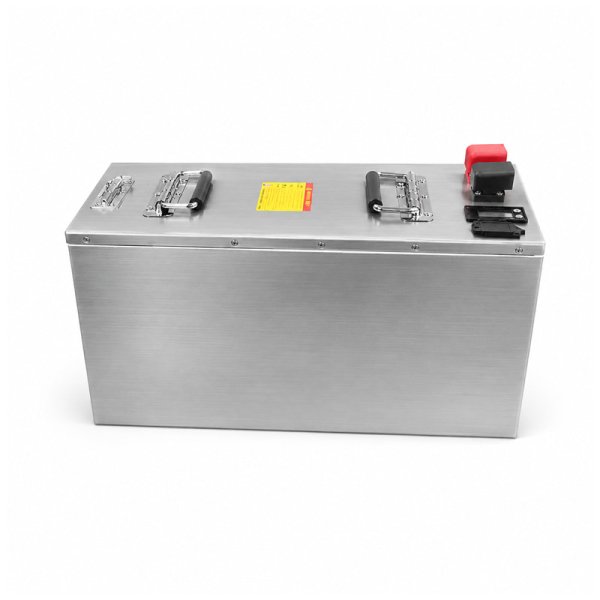
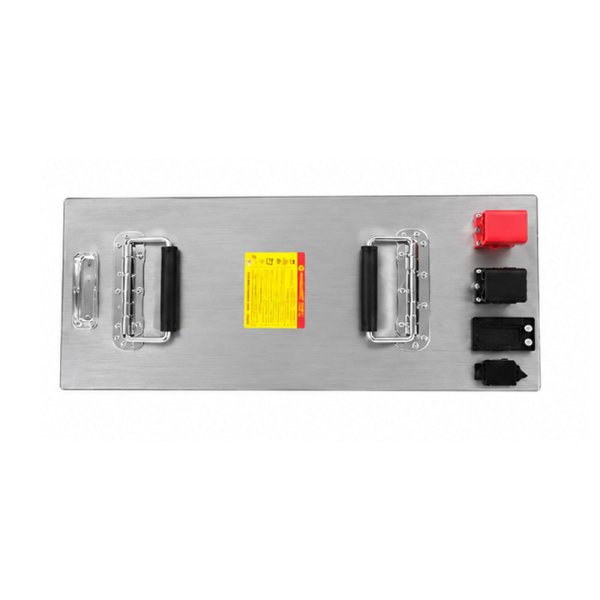
Lithium changes that operating model. A properly engineered LiFePO4 forklift battery can reduce routine battery maintenance, support opportunity charging, provide a more stable discharge profile, and reduce dependence on battery swapping. For multi-shift warehouses, those advantages can translate into more productive forklift hours and a simpler energy workflow. That is why a lead acid forklift battery comparison should focus on total operating value rather than purchase price alone.
Procurement teams beginning a fleet transition can use power battery solutions to frame voltage, capacity, current, BMS, charging, dimensions, and integration requirements. The correct battery still depends on the actual truck, duty cycle, and operating environment.
How Does a Lead Acid Forklift Battery Work in Daily Fleet Operations?
A traditional lead acid forklift battery stores energy through reversible reactions involving lead-based plates and sulfuric acid electrolyte. During discharge, the electrochemical reaction supplies current to the traction motor, hydraulic functions, and onboard electrical systems. During charging, electrical energy reverses part of that reaction and restores the battery for the next operating period.
This chemistry is proven, but it has practical consequences. Flooded traction batteries can generate gas during charging, lose water over time, and require attention to electrolyte level and charging quality. Battery performance is also affected by temperature, depth of discharge, charge completion, age, and the condition of terminals and intercell connections. In practice, each lead acid forklift battery adds recurring service work.
The battery is also physically heavy. In many electric forklifts, battery mass contributes to the vehicle counterweight and stability design. This means a lithium conversion cannot be treated as a simple weight-reduction exercise. The replacement must satisfy the forklift manufacturer’s battery weight range, compartment geometry, center-of-gravity requirements, and electrical limits.
For a broader chemistry and lifecycle comparison, the lithium versus lead acid commercial fleet guide provides additional context. The key point is that the lead acid forklift battery should be evaluated as part of the truck and facility system, not as an isolated commodity.
Why Do Lead Acid Forklift Batteries Require Regular Maintenance?
Maintenance is one of the clearest differences in the lead acid vs lithium forklift battery decision. In flooded systems, charging can consume water through electrolysis. If electrolyte level falls too far, plate exposure can damage the battery. Watering frequency is not universal: it depends on utilization, charger behavior, battery design, temperature, and the manufacturer’s service procedure.
Equalization is similarly application-specific. Where the battery manufacturer specifies it, a controlled equalization charge can help address cell imbalance and electrolyte stratification. The important procurement issue is not whether equalization happens on a fixed weekly schedule, but that lead-acid performance depends more heavily on disciplined maintenance and correct charging practices.
That routine creates labor. Technicians may need to inspect electrolyte, clean terminals, manage corrosion, review charger behavior, and document battery condition. Across a large fleet, small recurring tasks can become a meaningful operating cost. A poorly maintained lead acid forklift battery can also lose usable capacity earlier, making route or shift completion less predictable. For fleet planning, each lead acid forklift battery should have a documented maintenance procedure.

Fleet managers reviewing replacement options can compare application-matched products in FEBATT’s forklift battery range. Lithium does not remove the need for inspection, but it eliminates routine watering and significantly reduces the maintenance burden associated with flooded electrolyte systems.
What Safety and Facility Requirements Come with Lead Acid Charging?
A lead acid forklift battery contains sulfuric acid electrolyte, so facilities must manage chemical exposure, spill response, corrosion, and safe battery handling. Flooded batteries can also generate hydrogen and oxygen during charging. The exact ventilation and charging-area requirements depend on battery type, fleet size, facility layout, charger design, and applicable workplace rules. A lead acid forklift battery therefore also shapes charging-area procedures.
Depending on the operation, lead-acid charging areas may require dedicated floor space, spill-control equipment, washing or cleanup procedures, suitable ventilation, emergency equipment, battery racks, lifting or extraction equipment, and storage for spare batteries. Requirements vary by facility, but these items belong in a total-cost review because they consume capital, space, and labor.

Lithium forklift systems avoid sulfuric-acid watering and the routine gas-management profile of flooded lead acid. They still require appropriate electrical protection, charger compatibility, thermal management, mechanical integration, and safe operating procedures. The advantage is therefore a simpler maintenance and charging environment, not an absence of engineering controls.
How Do Battery Weight and Voltage Behavior Affect Forklift Productivity?
Battery mass can influence both vehicle stability and energy use. A lead acid forklift battery is often substantially heavier than a lithium pack with comparable usable energy, but the difference cannot automatically be converted into extra payload. Forklift stability depends on the truck design, rated capacity, counterweight system, mast, load center, tires, and approved battery weight range. The lead acid forklift battery must remain within the truck’s approved battery-mass range.
Voltage behavior also matters. Under heavy acceleration, lifting, or ramp travel, the truck demands high current. As a lead-acid battery discharges or ages, internal resistance and electrochemical limitations can create more noticeable voltage drop under load. The forklift may feel weaker before the battery is fully depleted, particularly when the battery is cold, partly discharged, or in poor condition.
A properly sized LiFePO4 system can maintain a flatter operating voltage over much of the usable discharge window. This can make power delivery more predictable, but lithium performance still depends on cell selection, BMS current capability, busbars, connectors, cables, temperature, and controller compatibility. The correct comparison is pack-level performance under the real forklift duty cycle.
Why Is Lithium Often Better for High-Utilization Forklift Fleets?
For high-utilization warehouses, lithium usually offers the stronger operating proposition because it addresses several recurring lead-acid constraints at the same time. Lower routine maintenance reduces technician workload. Opportunity charging can reduce long charging windows. Stable high-current performance can improve consistency during lifting and travel. Longer cycling potential can reduce the frequency of battery replacement when the battery is operated within its validated limits.
The advantage becomes especially important in multi-shift facilities. A lead acid forklift battery may require a longer charge-and-cool workflow, so fleets can rely on spare batteries and battery exchanges to keep trucks running. Battery swapping consumes labor, requires handling equipment, and can create waiting time when charging-room operations are busy.
Lithium systems can often remain installed in the forklift and receive partial charges during breaks or planned idle periods when the battery and charger are designed for that strategy. This does not mean every lithium battery should be charged at the highest possible rate. Charging current, cell temperature, available site power, shift schedule, and lifecycle targets should be considered together. Replacing a lead acid forklift battery therefore changes both battery hardware and workflow.
For intensive material handling, the result can be a simpler operating model: fewer battery exchanges, less electrolyte-related maintenance, more flexible charging, and more consistent energy availability. That is the main reason lithium is increasingly preferred when an aging lead acid forklift battery fleet reaches its next replacement cycle.
How Should 48V, 64V, and 72V Lithium Options Be Compared with Lead Acid?
Voltage and amp-hour labels are only a starting point. A 48V 30Ah, 48V 60Ah, 64V 105Ah, or 72V 105Ah lithium battery may suit very different equipment classes and duty cycles. A higher voltage or larger amp-hour rating is not automatically better. The replacement must match the forklift’s approved electrical platform, energy demand, current requirement, battery space, and required installed mass.
For buyers comparing compact 48V configurations, FEBATT’s 48V 30Ah versus 60Ah forklift battery guide explains how capacity affects runtime, load demand, and application fit. This type of comparison is more useful than selecting a commercial battery from amp-hours alone.
When comparing a forklift lead acid battery with lithium, procurement teams should review the complete operating voltage range, continuous and peak current, charger profile, connector type, fuse and cable ratings, CAN or other communication needs, dimensions, mounting, environmental conditions, and counterweight implications. A nominal voltage match does not by itself confirm compatibility. Every lead acid forklift battery replacement must start with system requirements, not labels.
The practical benefit of lithium is that capacity, BMS, communication, and enclosure can be engineered around the platform. That makes lithium especially attractive for OEM, retrofit, and fleet-standardization projects where the battery must serve a defined workload rather than simply duplicate the old lead-acid bank.
How Can Lithium Reduce Charging-Room and Energy Costs?
A lead acid forklift battery fleet can require significant charging infrastructure, particularly when spare batteries are rotated through multi-shift service. Dedicated battery areas occupy floor space and may require ventilation, handling equipment, spare-battery storage, cleanup provisions, and procedural management. The footprint should be included in fleet economics.
Charging efficiency is another factor. No battery system is perfectly efficient. Lead-acid charging can lose energy through heat, gas evolution, and electrochemical side reactions, with results depending on battery condition, temperature, charger design, and charge procedure. Lithium systems generally convert a higher proportion of incoming electricity into usable stored energy under suitable operating conditions. The lead acid forklift battery also influences charging-room energy demand.
At fleet scale, even modest efficiency differences can matter because charging occurs every working day. Electricity savings should not be estimated from a generic percentage, however. Warehouse managers should compare measured or documented charger input, delivered energy, route consumption, and local electricity prices for the actual equipment.
When the project involves several forklift models or a broader motive-power transition, FEBATT power battery solutions can help structure the system-level requirements. A lithium retrofit is most valuable when battery, charger, vehicle, and facility planning are treated as one project.
What Is the Correct Process for Replacing a Lead Acid Forklift Battery with Lithium?
A lithium retrofit should be treated as an engineering change. The first step is to audit the existing truck: record battery nominal and operating voltage, compartment dimensions, connector type, existing battery mass, charger, controller limits, duty cycle, and required runtime. Confirm whether the forklift manufacturer specifies a minimum or maximum battery weight for stability. Before removing a lead acid forklift battery, confirm all stability requirements.
- Audit the existing battery and forklift electrical platform.
- Measure real shift energy use, lifting frequency, idle time, and charging windows.
- Select a lithium pack with compatible voltage, usable energy, and current capability.
- Confirm compartment fit, mounting, cable routing, and required battery mass.
- Use a charger approved for the lithium chemistry and pack configuration.
- Validate BMS protection, communication, and controller interaction.
- Commission the retrofit under representative loads before fleet-wide deployment.
A lead acid forklift battery replacement should also include connector, fuse, and cable review. An undersized current path can create voltage loss and heat even when the battery itself is correctly specified. Likewise, the BMS must support normal continuous current and legitimate short-duration peaks without nuisance tripping.
Pilot testing is especially valuable for larger fleets. A controlled trial can verify runtime, charging behavior, temperature, stability, operator workflow, and diagnostic communication before the configuration is standardized across multiple trucks.
How Should Warehouse Managers Compare Total Cost of Ownership?
A lead acid forklift battery usually wins on initial purchase price. Lithium often becomes more attractive when recurring operating costs are included. The most useful TCO model compares cost per productive forklift-hour or cost over the planned fleet ownership period rather than battery invoice price alone. The lead acid forklift battery should therefore be costed as a complete operating system.
Include battery and charger acquisition, expected replacement events, maintenance labor, battery-swapping labor, charging downtime, electricity consumption, spare-battery requirements, charging-area infrastructure, end-of-life handling, and any measurable productivity impact. Use the facility’s own labor rates, electricity prices, utilization, and maintenance history.

A simple payback estimate can divide the additional initial lithium investment by expected annual operating savings, but this is only a screening tool. It should not be presented as an exact or guaranteed payback period. High-utilization, multi-shift fleets usually have more opportunities to recover the lithium premium because maintenance and downtime carry greater economic value.
For a wider economic framework, revisit the lithium versus lead acid commercial fleet guide. The strongest business case for lithium appears when the warehouse can quantify how lower routine maintenance, charging flexibility, and fewer battery-handling events affect actual operations.
What Should B2B Buyers Ask Before Choosing a Lithium Forklift Battery?
A reliable lithium project begins with better input data. Buyers should provide the forklift make and model, approved voltage range, current demand, battery compartment dimensions, required battery mass, shift duration, payload pattern, charger constraints, ambient temperature, connector details, and communication requirements.
They should also ask the supplier how pack-level current ratings are defined, how BMS protection is configured, what charger is approved, how the enclosure is mounted, what diagnostic information is available, and how the pack is validated for the target application. These questions are more valuable than comparing nominal capacity alone. A lead acid forklift battery replacement quotation should also define integration responsibilities.
FEBATT’s forklift battery product range can serve as a starting point for configuration comparison. For an OEM or fleet retrofit, the final lithium system should be confirmed against the actual truck rather than selected solely because its nominal voltage appears to match the original lead acid forklift battery.
Conclusion
The lead acid forklift battery remains a proven option where utilization is moderate, maintenance practices are well controlled, and existing charging infrastructure is already established. Its lower purchase price can still make sense in selected operations.
For high-utilization warehouses, however, lithium usually provides the stronger long-term operating model. It removes routine watering, can reduce battery swapping, supports more flexible charging, provides more stable power delivery, and offers stronger cycling potential when the system is properly engineered. These benefits can simplify facility operations while reducing several recurring cost categories at the same time.
The decision should therefore move beyond lead acid vs lithium forklift battery purchase price. Warehouse managers should compare productive forklift hours, maintenance labor, charging workflow, infrastructure, energy consumption, replacement planning, and vehicle compatibility. When those factors are measured honestly, lithium often becomes the better choice for demanding commercial forklift fleets.
The best retrofit is not the battery with the highest capacity or the lowest quotation. It is the lithium system whose voltage, current capability, BMS, charger, dimensions, required mass, mounting, and service strategy are validated for the forklift and its real duty cycle.
Relevant Technical FAQ
1.How long does a lead acid forklift battery typically last?
There is no universal number of years or cycles. Service life depends on battery construction, depth of discharge, charge completion, temperature, maintenance quality, operating hours, and the end-of-life capacity criterion. B2B buyers should compare manufacturer data under conditions that resemble their own duty cycle.
2.Is a lead acid forklift battery cheaper than lithium over the long term?
Lead acid normally costs less to purchase. In high-utilization fleets, lithium can provide lower lifecycle cost when reduced maintenance, battery swapping, charging downtime, replacement frequency, and infrastructure offset the higher initial investment. The answer should be calculated from site-specific operating data.
3.Why can a forklift lead acid battery lose runtime in cold temperatures?
Low temperature slows electrochemical reaction rates and can increase internal resistance, reducing available capacity and power under load. The effect depends on battery condition, state of charge, current demand, and actual temperature.
4.Can I replace lead acid forklift batteries with 48V, 64V, or 72V lithium batteries?
Yes, when the lithium system is compatible with the specific forklift. Verify the complete operating-voltage window, controller, motor, charger, DC-DC equipment, BMS current capability, connectors, cables, compartment dimensions, and required battery mass. Nominal voltage alone is not enough.
5.What happens if a flooded lead acid forklift battery is not watered correctly?
If electrolyte level falls far enough to expose the plates, battery performance can deteriorate and permanent damage may occur. Watering frequency and procedure should follow the battery manufacturer’s instructions. Overfilling can also create problems, so maintenance should be controlled rather than performed by guesswork.
6.Does lithium eliminate forklift battery maintenance?
No. Lithium removes routine watering and much of the electrolyte-related maintenance associated with flooded batteries, but fleet technicians should still inspect connectors, cables, mounting, enclosure condition, charger operation, and BMS fault records. The correct description is lower routine maintenance, not zero maintenance.