A 48V 60Ah battery stores about 2.88kWh—twice the nominal energy of a 48V 30Ah pack at about 1.44kWh. That does not mean every 48V machine can accept either pack or that runtime will always double. Compartment size, weight, BMS current, connector, charger and duty cycle still control real fit and performance.
Battery capacity directly affects forklift runtime, charging frequency, fleet availability, and operating cost. For B2B buyers, the 48V 30Ah vs 60Ah forklift battery decision should not be based only on price. It should be based on actual workload, equipment type, lifting frequency, travel distance, charger access, and required shift coverage.
Both batteries use the same 48V voltage platform, but their energy capacity is different. A 48V 30Ah forklift battery has a nominal energy of about 1.44kWh, while a 48V 60Ah forklift battery has a nominal energy of about 2.88kWh. This means the 60Ah option stores twice the nominal energy of the 30Ah option under the same voltage system.
This guide explains the 48V 30Ah vs 60Ah forklift battery comparison from a B2B perspective. It covers capacity, runtime, charging, productivity, application fit, supplier selection, and final buying advice for warehouses, factories, logistics facilities, and compact material-handling equipment.
48V 30Ah vs 60Ah Forklift Battery: Quick Decision
Battery capacity shows how much electrical energy a battery can store and deliver over time. It is usually measured in ampere-hours, or Ah. In forklift applications, capacity affects how long the equipment can work before the battery needs charging.
Voltage and capacity are related but different. Voltage defines the system platform. Capacity defines the energy reserve. In a 48V 30Ah vs 60Ah forklift battery comparison, the voltage remains the same, but the 60Ah battery has twice the amp-hour capacity of the 30Ah battery.
The basic energy calculation is:
48V × 30Ah = 1,440Wh, or about 1.44kWh
48V × 60Ah = 2,880Wh, or about 2.88kWh
This difference matters in daily operations. More energy reserve usually means longer runtime, fewer charging interruptions, and better tolerance for heavier duty cycles. However, a larger battery may also bring higher cost, longer charging time, and greater weight. That is why the 48V 30Ah vs 60Ah forklift battery choice should match the real operating profile.

What Is a 48V 30Ah Forklift Battery?
A 48V 30Ah forklift battery is a compact lithium battery option designed for lighter material-handling applications. It is usually suitable for short-duty operation, compact warehouse equipment, pallet handling, light stock movement, or intermittent use.
The main advantage of the 30Ah option is efficiency. It stores less energy than a 60Ah pack, so it is usually lighter, easier to handle, faster to charge with the same charger current, and more cost-effective for light-duty users. For businesses that do not need long continuous runtime, this battery can reduce unnecessary battery cost.
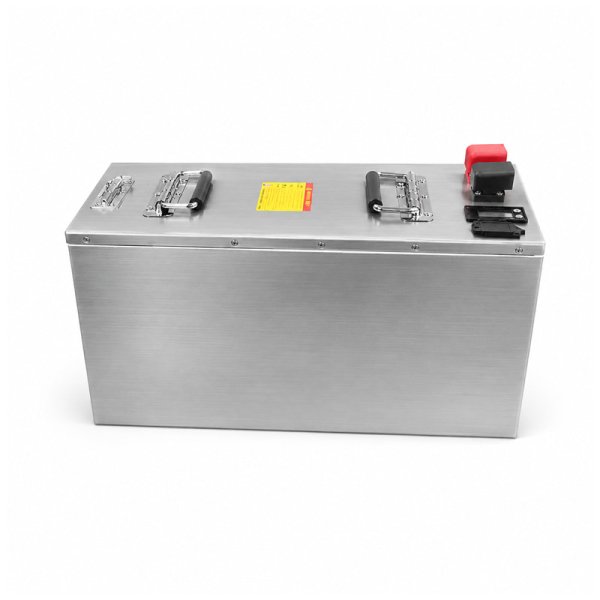
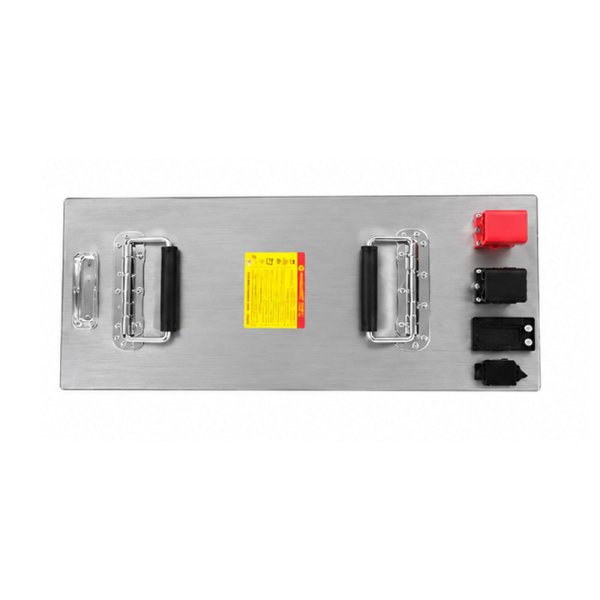
For compact equipment or short-duty operations, FEBATT’s 48V 30Ah Forklift Battery can be reviewed as a lightweight lithium option. In the 48V 30Ah vs 60Ah forklift battery comparison, the 30Ah model is best for buyers who need controlled cost, compact size, and moderate runtime rather than maximum energy reserve.
What Is a 48V 60Ah Forklift Battery?
A 48V 60Ah forklift battery provides twice the nominal energy of a 48V 30Ah pack. At the same 48V system voltage, the 60Ah option offers about 2.88kWh of nominal energy. This gives it a stronger runtime reserve for longer operation, heavier workloads, or more frequent lifting and travel cycles.
For longer runtime requirements, FEBATT’s 48V 60Ah Forklift Battery offers more energy reserve for compatible forklift systems. In the 48V 30Ah vs 60Ah forklift battery decision, the 60Ah model is usually better for operations where downtime is more expensive than the higher initial battery cost.
The 60Ah option is not automatically the best choice for every user. It may be unnecessary if the equipment only works in short bursts. But for facilities with longer routes, more frequent lifting, or limited charging windows, the larger capacity can provide a more practical operating margin.
How Much Runtime Can You Expect from 48V 30Ah and 60Ah Batteries?
Runtime depends on current draw, load weight, travel distance, lifting frequency, floor condition, ambient temperature, operator behavior, battery age, and charger setup. Because every forklift and duty cycle is different, exact runtime should be confirmed through current-draw calculation or real equipment testing.
However, the energy comparison is clear. In a 48V 30Ah vs 60Ah forklift battery comparison, the 60Ah battery stores twice the nominal energy of the 30Ah battery. If both batteries are used under the same operating conditions, the 60Ah option generally provides longer runtime.
| Battery option | Nominal energy | Practical meaning |
|---|---|---|
| 48V 30Ah forklift battery | About 1.44kWh | Better for short-duty or intermittent use |
| 48V 60Ah forklift battery | About 2.88kWh | Better for longer runtime and higher utilization |
For B2B buyers, the important question is not only “How long can the battery run?” The better question is: “Can the battery support the required work cycle without causing charging delays?” That is the real value of the 48V 30Ah vs 60Ah forklift battery comparison.
Which Battery Capacity Is Better for Your Operation?
The better battery is the one that matches the job. A 48V 30Ah battery is usually better for light-duty workflows, compact equipment, short travel distances, and lower daily utilization. It is also useful when the buyer wants a lower-cost, lighter, and faster-charging option.
A 48V 60Ah battery is usually better for longer working periods, heavier handling, higher utilization, and operations where charging interruptions create workflow problems. It gives the equipment more reserve capacity and reduces the need for frequent charging.
The 48V 30Ah vs 60Ah forklift battery decision should be based on these practical questions:
- How many hours does the equipment operate per shift?
- How often does the forklift lift loads?
- What is the average load weight?
- How far does the forklift travel each cycle?
- Is charging available during breaks?
- Is the battery compartment large enough?
- Does the charger match the lithium battery requirements?
- What downtime cost does the operation face?
If the operation is short and predictable, 30Ah may be enough. If the operation needs longer runtime and more reserve, 60Ah is usually the safer choice.
How Do 48V 30Ah and 60Ah Batteries Compare?
The 48V 30Ah vs 60Ah forklift battery comparison is a trade-off between compact efficiency and longer endurance.
| Factor | 48V 30Ah Forklift Battery | 48V 60Ah Forklift Battery |
|---|---|---|
| Nominal energy | About 1.44kWh | About 2.88kWh |
| Energy reserve | Lower | Higher |
| Runtime | Shorter | Longer |
| Charging time with same charger | Faster | Longer |
| Weight | Usually lighter | Usually heavier |
| Initial cost | Lower | Higher |
| Best fit | Short-duty, compact equipment | Longer shifts, higher use |
| Main advantage | Compact and economical | More runtime reserve |
A 48V 30Ah battery makes sense when the equipment has controlled work cycles and regular access to charging. A 48V 60Ah battery makes sense when the operation needs more headroom and fewer charging interruptions. Neither option is universally better. The right 48V 30Ah vs 60Ah forklift battery choice depends on workload and equipment compatibility.
How Does Battery Capacity Affect Forklift Productivity?
Battery capacity affects productivity because it affects equipment availability. A forklift that stops too often for charging cannot support smooth material flow. In warehouses, production lines, and logistics centers, even small delays can affect loading, picking, packing, and delivery schedules.
A 48V 60Ah battery can improve productivity when longer runtime is needed. It can reduce charging frequency and give operators more flexibility during busy periods. A 48V 30Ah battery can also support productivity when the workload is light, because it charges faster and avoids the cost of unused capacity.
In the 48V 30Ah vs 60Ah forklift battery comparison, productivity depends on right-sizing. A battery that is too small creates downtime. A battery that is too large may increase cost without improving actual workflow. The best choice is the capacity that supports the shift without excessive idle time or unnecessary investment.
How Long Will Each Battery Charge With the Same Charger?
Charging time depends on battery capacity, charger output current, battery chemistry, BMS limits, starting state of charge, temperature, and charging profile. With the same charger current, a 48V 30Ah battery usually charges faster than a 48V 60Ah battery because it stores less energy.
For example, if both batteries use a compatible lithium charger with the same output current, the 60Ah battery will generally need more time to reach full charge because it has twice the nominal capacity. However, the 60Ah battery may need charging less often during the workday.
In the 48V 30Ah vs 60Ah forklift battery decision, the 30Ah option offers faster turnaround, while the 60Ah option offers longer operating time between charging events. Buyers should evaluate the full charging plan, not only the charging speed.
Key charging checks include:
- Charger voltage compatibility.
- Charger current rating.
- Lithium charging profile.
- Connector type.
- BMS charging limit.
- Charging location.
- Available charging window.
- Safety requirements in the facility.

Which Industries Benefit Most from a 48V 30Ah Battery?
As for 48V 30Ah vs 60Ah forklift battery, 48V 30Ah forklift battery is best suited for lighter and more controlled applications. It can be useful in operations where equipment is used intermittently or where the daily workload does not require a large energy reserve.
Typical suitable scenarios include:
- Small warehouses.
- Retail stockrooms.
- Spare parts handling.
- Light maintenance facilities.
- Short-distance material movement.
- Compact pallet handling.
- Intermittent picking or staging work.
Within the 48V 30Ah vs 60Ah forklift battery discussion, the 30Ah option should be viewed as a right-sized solution for light-duty use. It is not intended to replace larger industrial packs in every situation. Its value comes from compact size, lower cost, and sufficient power for controlled workflows.
For buyers focused on the smaller capacity option, the 48V 30Ah Forklift Battery Buying Guide can provide additional selection details.
Which Industries Benefit Most from a 48V 60Ah Battery?
A 48V 60Ah forklift battery is more suitable for operations that need longer runtime, more frequent lifting, or higher equipment availability. It can support more demanding material-handling tasks than a 30Ah option when the forklift system is compatible.
Typical suitable scenarios include:
- Medium-sized warehouses.
- Distribution facilities.
- Manufacturing support.
- Logistics handling.
- Packaging and assembly areas.
- Higher-frequency pallet movement.
- Facilities with limited charging breaks.
In the 48V 30Ah vs 60Ah forklift battery comparison, the 60Ah option is the stronger choice when downtime is the main concern. It gives operators more energy reserve and helps reduce charging interruptions during active periods.
How Can B2B Buyers Select a Reliable Forklift Battery Supplier?
Battery capacity is only one part of the purchase decision. Supplier reliability is also important. A good supplier should help buyers check voltage, capacity, BMS protection, battery dimensions, connector type, charger matching, and application suitability.
B2B buyers should evaluate:
- Cell quality and battery consistency.
- BMS protection functions.
- Lithium battery production experience.
- Ability to support customization.
- Product documentation.
- Export and packaging reliability.
- Warranty policy.
- Technical support response.
- Charger and connector matching.
- Application knowledge for forklift systems.
When choosing a 48V 30Ah vs 60Ah forklift battery, the supplier should explain why one capacity is more suitable for the buyer’s operating profile. A professional supplier should not simply recommend the larger option. The correct recommendation should be based on workload, runtime needs, charging access, and equipment compatibility.

FAQ About 48V 30Ah vs 60Ah forklift battery
1.Is a 48V 30Ah battery enough for daily warehouse operations?
A 48V 30Ah battery can be enough for light-duty or intermittent warehouse work, especially when the equipment has short travel routes and regular charging access. For longer shifts, frequent lifting, or higher utilization, the 60Ah option usually provides better reserve. The 48V 30Ah vs 60Ah forklift battery decision should be based on real workload, not only battery size.
2.How long does a 48V 60Ah forklift battery last on a full charge?
A 48V 60Ah forklift battery usually lasts longer than a 48V 30Ah battery under the same operating conditions because it stores twice the nominal energy. Exact runtime depends on forklift current draw, load weight, lift frequency, travel distance, temperature, and battery health. Real equipment testing is recommended before bulk purchasing.
3.Can a 48V 30Ah battery be upgraded later?
Yes, a 48V 30Ah battery can often be upgraded to a higher-capacity battery if the equipment supports the larger pack. Before upgrading, buyers must check battery compartment size, weight allowance, connector type, charger compatibility, BMS requirements, and controller limits.
4.Are 48V 60Ah batteries worth the higher investment?
Yes, a 48V 60Ah forklift battery can be worth the higher investment when the operation needs longer runtime, fewer charging interruptions, and better support for repeated material-handling tasks. It eliminates acid corrosion, delivers fade-free power, and outlasts lead-acid batteries by up to 10 years. But the final decision should depend on forklift compatibility, workload intensity, charging access, and total cost of ownership.
5.Does a higher Ah rating affect charging time?
Yes. A higher Ah rating usually increases charging time when the same charger current is used. In a 48V 30Ah vs 60Ah forklift battery comparison, the 60Ah pack stores twice the nominal energy, so it generally takes longer to fully charge. However, it may also reduce charging frequency during the workday.
Conclusion
The 48V 30Ah vs 60Ah forklift battery comparison is ultimately about matching capacity to the real duty cycle. A 48V 30Ah forklift battery is better for compact equipment, short-duty operation, light loads, lower cost, and faster charging. A 48V 60Ah forklift battery is better for longer runtime, more frequent use, higher workload, and fewer charging interruptions.
Before purchasing, buyers should confirm voltage, battery dimensions, weight, connector type, charger compatibility, BMS protection, current demand, and daily operating hours. A larger capacity is not always better. A smaller capacity is not always insufficient. The right 48V 30Ah vs 60Ah forklift battery is the one that supports the required workday without unnecessary cost or downtime.
For B2B buyers, a disciplined 48V 30Ah vs 60Ah forklift battery selection process helps improve uptime, control charging schedules, reduce mismatch risk, and support a more reliable material-handling operation.