Why Is It Important to Know How to Test Golf Cart Batteries?
Testing is important because battery condition directly affects route range, speed under load, vehicle availability, and maintenance cost. For golf courses, resorts, campuses, rental fleets, and utility operators, knowing how to test golf cart batteries helps identify weak units before they create route failures or unplanned downtime.
For fleet maintenance, testing should be a repeatable SOP rather than a one-time consumer troubleshooting checklist. Use the same preparation, measurement conditions, and recording method across comparable carts.

What Are the Key Signs That Your Golf Cart Batteries Need Testing?
Reduced range, unusually slow charging, repeated voltage drop under load, abnormal heat, corrosion, leakage, swelling, and inconsistent performance between similar carts are all valid reasons to begin testing. In a fleet SOP, how to test golf cart batteries should connect each symptom to a repeatable measurement.
For fleet use, how to test golf cart batteries should also define the test condition: after full charge, after a defined rest period, or during a controlled load. Comparing readings taken under different conditions can lead to poor decisions.
What Tools Do You Need to Test Golf Cart Batteries?
- Digital multimeter for pack and individual-battery voltage.
- Hydrometer for flooded lead-acid batteries only.
- Battery load tester or controlled vehicle-load measurement.
- Battery charger to establish a known starting SOC.
- PPE appropriate to the battery chemistry and site procedure.
For lithium golf-cart packs, a BMS diagnostic interface or data logger may also be needed because hydrometer testing does not apply. Standardizing how to test golf cart batteries makes technician results easier to compare between vehicles.
How to Check the Voltage of Golf Cart Batteries?
Voltage testing remains the most basic step in how to test golf cart batteries. Measure the complete pack and, where the architecture allows, compare each battery or module under the same conditions.
Do not use fixed values such as 8.4-9.0V for a 6V battery or 16.8-18.0V for a 12V battery as general full-charge references for common lead-acid golf-cart batteries. Use the battery manufacturer’s voltage-versus-SOC table and compare units in the same string instead.
A single battery reading materially lower than the others can indicate low SOC, imbalance, a weak unit, or a charging issue, but voltage alone should not trigger fleet replacement. This is why how to test golf cart batteries should combine voltage with condition and load data.
How to Test the Specific Gravity of Golf Cart Batteries?
For flooded lead-acid packs, a hydrometer can help compare cell condition. Wear suitable eye and skin protection, confirm electrolyte level, then measure each cell according to the battery manufacturer’s instructions. In practice, how to test golf cart batteries with a hydrometer means comparing cells under the same temperature and SOC conditions.
A fully charged flooded lead-acid cell commonly has specific gravity around 1.265, but exact targets depend on battery design and temperature. The more useful fleet signal is a cell that differs materially from the others.
Do not use this method on AGM, gel, or lithium systems. Chemistry determines how to test golf cart batteries safely.
How to Perform a Load Test on Golf Cart Batteries?
A load test checks how the pack behaves when current is demanded. Start from a known SOC and either use the manufacturer’s approved load-test procedure or record pack voltage, current, and temperature during a controlled vehicle acceleration or route. In fleet maintenance, how to test golf cart batteries under load should follow one repeatable procedure across similar carts.
Do not apply a generic 9.6V automotive starting-battery pass/fail threshold to deep-cycle golf-cart batteries. Fleet technicians should use the exact battery manufacturer’s load-test limits and the actual pack architecture.
How Can You Identify a Faulty Golf Cart Battery?
A battery that repeatedly shows lower voltage, excessive voltage sag, rapid discharge, abnormal temperature, corrosion, swelling, leakage, or a weak cell deserves further investigation. In practice, how to test golf cart batteries should combine these symptoms with measured voltage and load behavior.
Before replacing the pack, also inspect cables, terminals, controller faults, tire pressure, brake drag, charging behavior, and vehicle loading. A good procedure for how to test golf cart batteries should separate battery faults from vehicle faults. A complete process for how to test golf cart batteries should rule out non-battery causes before replacement.
How Should Lithium Golf Cart Batteries Be Tested?
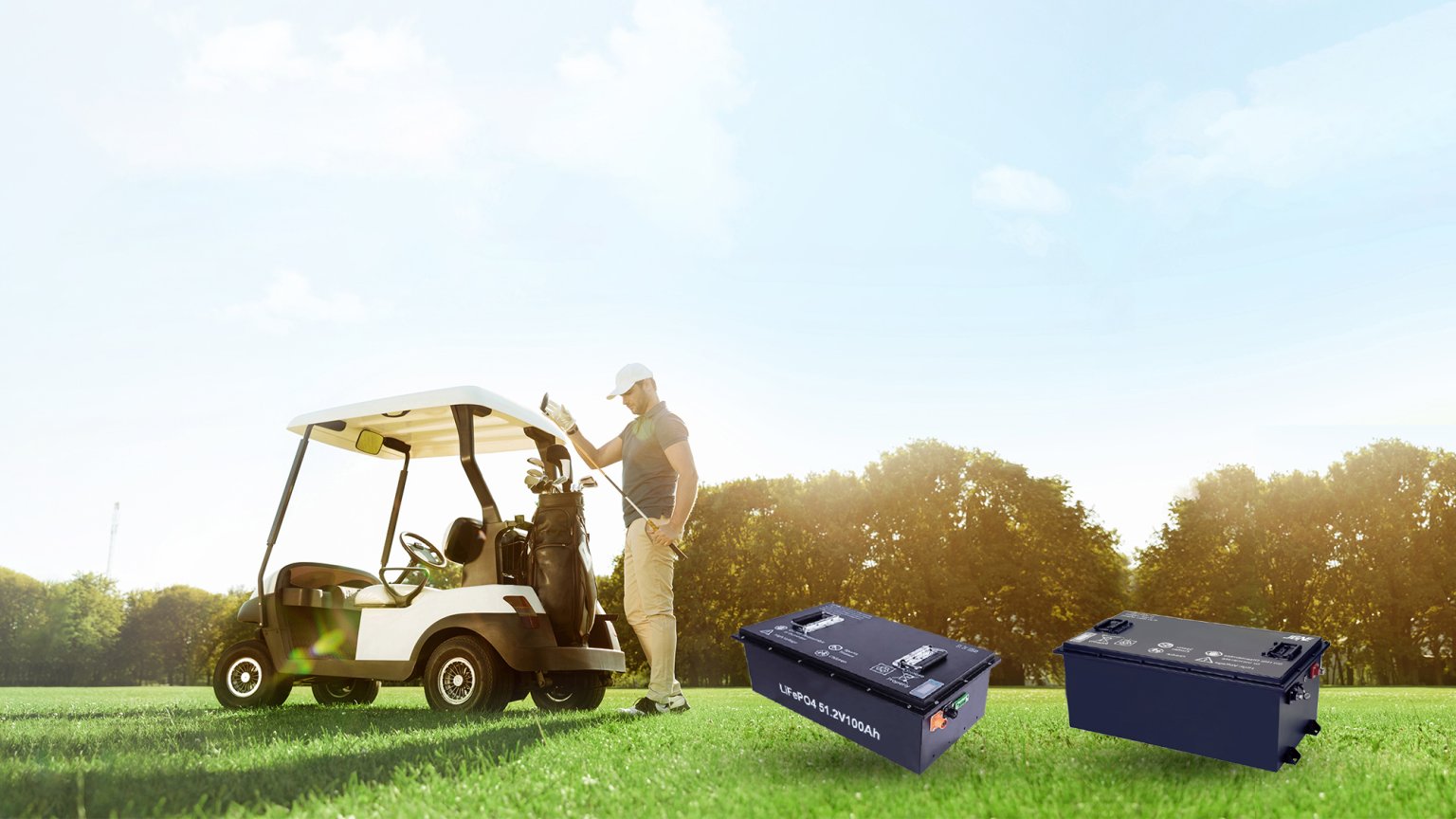
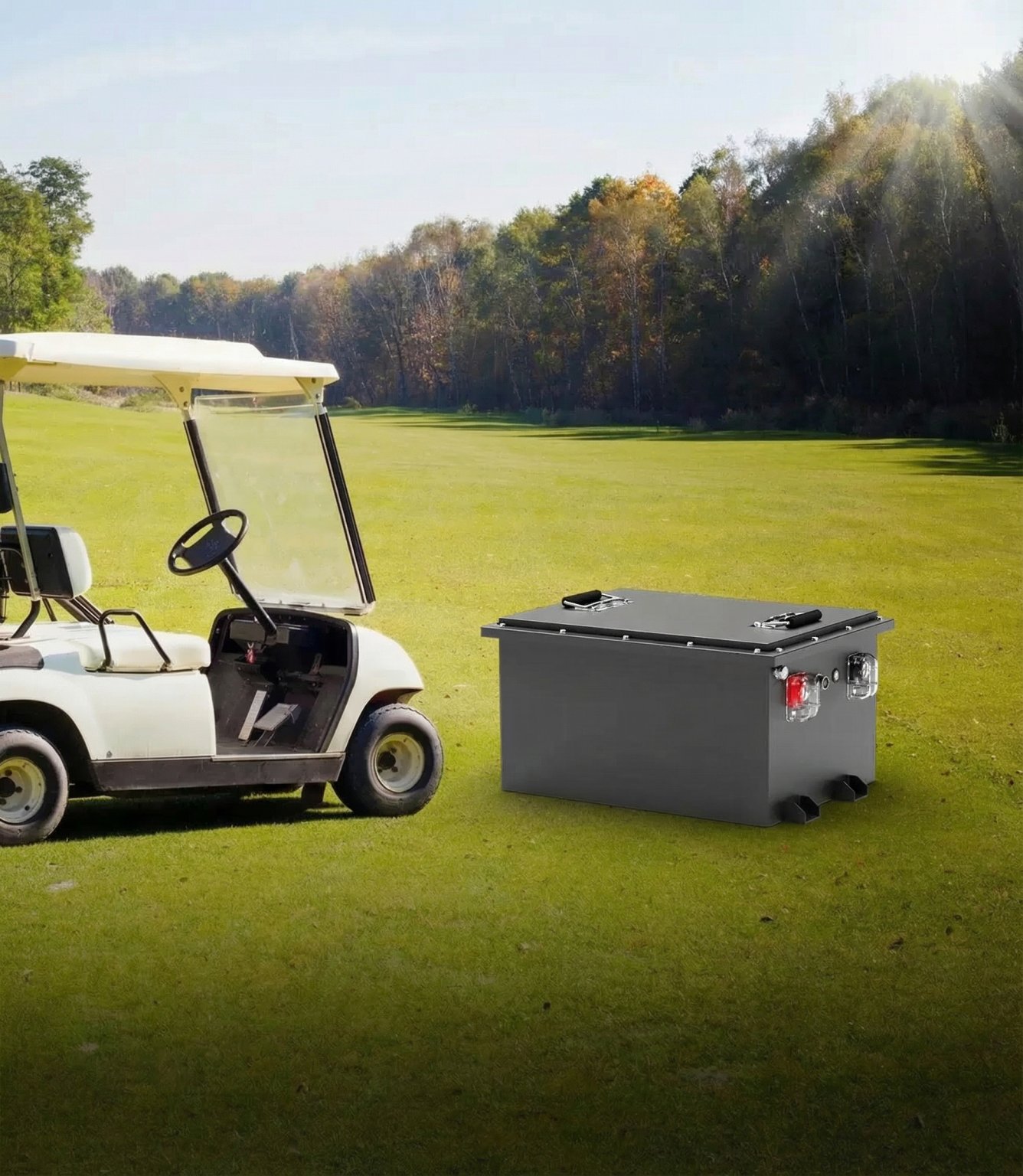
For lithium systems, focus on pack voltage, SOC accuracy, cell-voltage spread where accessible, BMS faults, current history, temperature, usable energy, and route performance. Do not open a sealed pack for routine field testing. The practical method for how to test golf cart batteries with lithium chemistry therefore relies more on BMS and route data than electrolyte checks.
IEC 62619 includes industrial lithium-battery safety requirements for motive applications such as golf carts. Field testing should stay within the battery manufacturer’s approved service procedure.
What Is the Lifespan of Golf Cart Batteries?
Avoid treating a 4-6 year lifespan as a universal rule. Actual service life varies widely by chemistry, depth of discharge, maintenance, temperature, load, and annual use, so lifespan should not be used as a pass/fail test result.
If the fleet’s question is when a battery should leave service, use FEBATT’s separate golf cart battery replacement guide. This article stays focused on how to test golf cart batteries and interpret the measurements.
A repeatable method for how to test golf cart batteries combines visual inspection, controlled test conditions, voltage comparison, chemistry-appropriate measurements, load behavior, and route validation. For fleets, record the results over time so maintenance teams can identify weak packs earlier and avoid unnecessary replacement. Documenting how to test golf cart batteries also supports trend-based maintenance instead of one-time judgment. A documented SOP for how to test golf cart batteries also makes results comparable across technicians and vehicles.