When a Milwaukee M18 battery suddenly stops responding, it can interrupt work and create unnecessary downtime. A pack that will not charge, flashes an unusual indicator, or loses power unexpectedly is not always permanently damaged. In some cases, the battery or charger has entered a protective state because of temperature, over-discharge, overload, poor contact, or another condition that the battery-management electronics are designed to detect.
The first goal is therefore not to force the Milwaukee M18 battery back into operation. It is to identify whether the problem is a temporary charging or protection issue, a connection problem, or a sign that the pack should be removed from service. That distinction is important for individual tool users and even more important for B2B operators, where repeated battery-related downtime can indicate a wider system-selection problem.
Milwaukee states that its M18 REDLITHIUM battery system uses integrated electronics, discharge protection, temperature management, and individual cell monitoring, while compatible chargers communicate with the battery to monitor voltage, temperature, and charging status. For that reason, troubleshooting should begin with the battery, charger, contacts, and operating conditions rather than with attempts to bypass the protection system.
Why Does a Milwaukee M18 Battery Enter Protection Mode?
A Milwaukee M18 battery is designed with built-in protection features that help prevent damage during demanding use. Common triggers can include excessive load, overheating, deep discharge, or charging conditions outside the pack’s normal operating range.
Over-discharge is one possible cause. If pack voltage falls too low, protective electronics may prevent normal operation or charging until the system determines that safe conditions have been restored. Heavy use can also raise battery temperature, causing temporary shutdown or delayed charging. In addition, poor contact between the Milwaukee M18 battery and charger or tool can create symptoms that look like a failed pack.
Cell imbalance or aging may also reduce usable capacity over time. A Milwaukee M18 battery that repeatedly shuts down, runs for a much shorter period than before, or cannot complete a normal charge should be treated differently from a pack that has only experienced a one-time interruption.
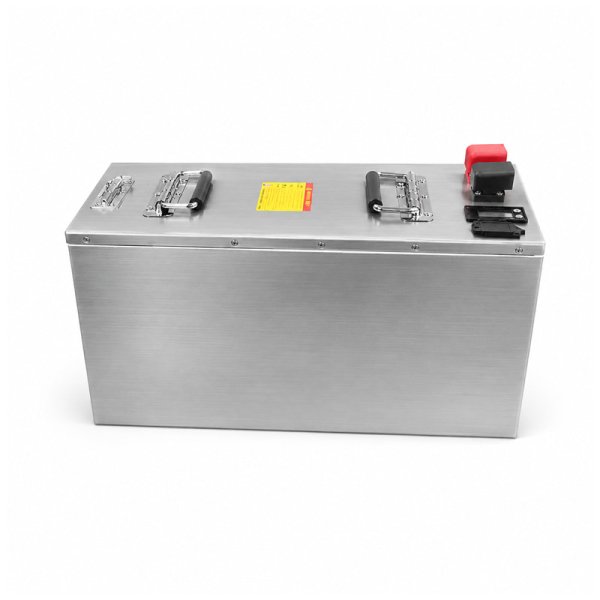
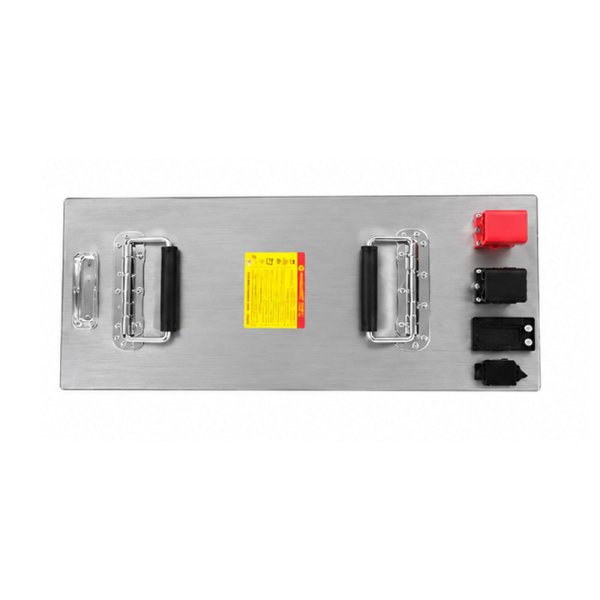
For B2B lithium battery buyers, this is an important lesson: protection events are not only “battery problems.” In electric motorcycles, electric tricycles, golf carts, forklifts, and other low-speed power-driven vehicles, protection behavior is linked to pack sizing, discharge current, thermal conditions, BMS settings, charger matching, installation space, duty cycle, and communication with the vehicle.
For project-level matching, see application-specific power battery solutions. If you are comparing available pack categories and configurations, review commercial lithium battery options by application.
What Are the Warning Signs of a Faulty Milwaukee M18 Battery?
Before attempting any reset, identify the symptoms. A Milwaukee M18 battery may fail to begin charging even when placed on a charger that normally works. The fuel gauge or charger indicator may behave abnormally, or the pack may appear completely unresponsive. Another common symptom is sudden power loss during tool use.
A Milwaukee M18 battery that becomes unusually hot, shows visible housing damage, smells abnormal, leaks, or has damaged terminals should not be treated as a routine reset case. Stop using the pack and follow the manufacturer’s safety or service guidance.
If there is no physical damage, check the simple causes first: confirm that the charger is compatible and functioning, inspect the contacts for contamination or damage, allow an overheated or very cold Milwaukee M18 battery to return to a suitable temperature, and then retry normal charging.
These same diagnostic principles scale into B2B fleet operations, but the variables become more complex. A fleet battery that repeatedly triggers low-voltage, over-current, or temperature protection can point to insufficient pack capacity, excessive peak current, unsuitable thermal design, charging mismatch, or an application profile that was not captured during battery selection.
How Can You Perform a Simple Reset on a Milwaukee M18 Battery?
For a simple Milwaukee M18 battery reset, start with the normal charger rather than opening the pack or applying external voltage. Remove the battery from the tool, inspect the pack and contacts, and place the Milwaukee M18 battery on a compatible Milwaukee charger according to the manufacturer’s instructions.
If the pack does not respond immediately, remove and reseat the Milwaukee M18 battery to make sure the terminals are fully engaged. If the battery was hot from heavy use or very cold from storage, allow it to return to an appropriate temperature before trying again. A charger that communicates normally with another compatible M18 pack can also help you distinguish a charger problem from a Milwaukee M18 battery problem.
This process is often described as a “reset,” but it is more accurate to think of it as restoring normal battery-charger communication and allowing the protection system to reevaluate operating conditions. There is no universal button sequence that safely resets every Milwaukee M18 battery fault.
Can a Deeply Discharged Milwaukee M18 Battery Be Revived?
A deeply discharged Milwaukee M18 battery may appear completely dead because its voltage has dropped below the level at which the charger will begin a normal charge. Some online repair discussions describe externally “boosting” a deeply discharged pack until the charger can detect it again.
Safety note: That approach should not be treated as a routine Milwaukee M18 battery reset. Applying external voltage, bypassing protection electronics, or connecting lithium-ion packs in an improvised way can create short-circuit, overheating, cell-damage, or fire risks. This article therefore does not provide instructions for forcing voltage into a Milwaukee M18 battery.
Is It Safe to Open and Repair a Milwaukee M18 Battery?
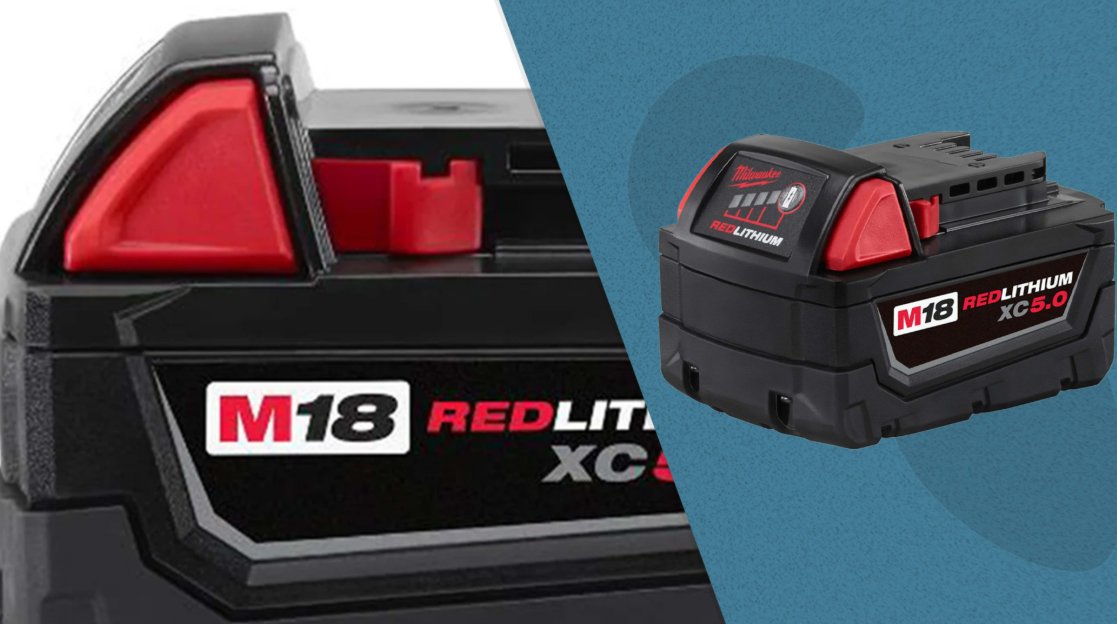
Opening a Milwaukee M18 battery is not recommended for most users. The pack contains lithium-ion cells, electrical connections, sensing components, and protection electronics. Mishandling the internal assembly can cause a short circuit, overheating, cell damage, or other hazards.
Do not open a Milwaukee M18 battery simply to “reset” it. If the housing is cracked, terminals are damaged, the pack has been exposed to severe impact or water, or the battery behaves abnormally after normal troubleshooting, remove it from use and follow appropriate service, storage, and disposal guidance.
The same rule is even more important for higher-energy motive battery systems. Vehicle and industrial packs should be designed around the application from the beginning, rather than corrected later through field modifications.
A project-level power battery solution covers requirement analysis, voltage and capacity matching, discharge current, installation conditions, BMS integration, and application-specific battery configuration.
What Are Better Alternatives If the Battery Cannot Be Reset?
If a Milwaukee M18 battery cannot be restored through normal charging and basic troubleshooting, the practical next step is to confirm whether the pack, charger, or tool is the failed component. For tool applications, use a compatible replacement that meets the tool manufacturer’s requirements rather than adapting an unrelated battery chemistry or voltage.
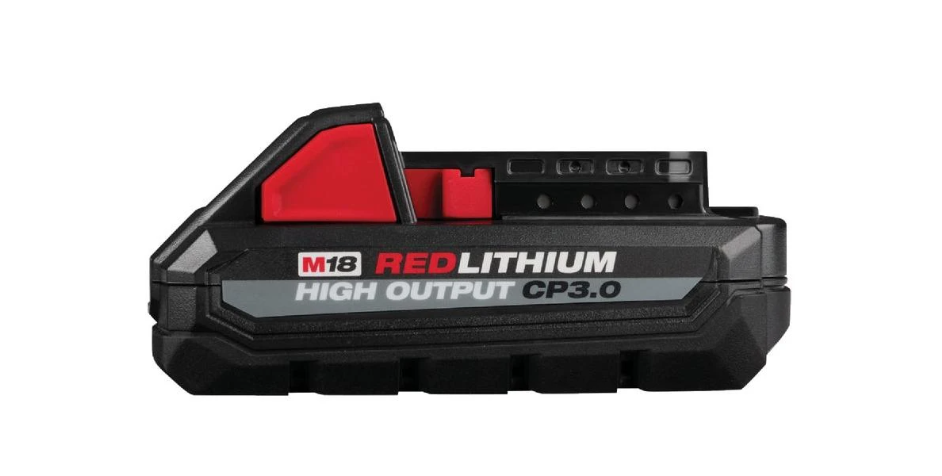
The original choice also depends on workload. A compact pack can be convenient for lighter work, while a higher-capacity compatible pack can reduce battery changes during demanding use. The key is system compatibility, not simply choosing the largest available battery.
For commercial vehicle and industrial projects, the replacement decision is different. A 48V, 60V, 72V, or other low-voltage traction system must be matched to the vehicle controller, current demand, usable installation space, target runtime, charging strategy, connector, BMS logic, and operating environment.
Buyers comparing lithium batteries for electric motorcycles, electric tricycles, golf carts, forklifts, and similar equipment can review power battery configurations by application.
How Can You Extend the Lifespan of a Milwaukee M18 Battery?
Proper maintenance can help reduce avoidable battery stress. Avoid unnecessary deep discharge, keep the pack dry, and do not leave it for long periods in very hot environments. Use the battery and charger as intended by the manufacturer, and keep the contacts clean and free from conductive debris.
Milwaukee guidance also recommends storing lithium-ion batteries at room temperature away from moisture and notes that long-term storage at high temperature can cause permanent capacity loss. If a battery has been stored for an extended period, follow the manufacturer’s normal charging guidance before returning it to service.
Why Does Battery Performance Decline Over Time?
Like other lithium-ion batteries, a Milwaukee M18 battery gradually loses usable capacity as it accumulates charge cycles and ages. High temperatures, repeated heavy loads, prolonged storage at unfavorable conditions, and deep discharge can accelerate performance loss.
As capacity declines, a Milwaukee M18 battery may still charge normally but provide less runtime. Increased internal resistance can also make voltage drop more noticeable under load. That is why a battery that seems acceptable during light use can behave poorly in a high-demand tool.
This concept directly applies to B2B power batteries, but fleet buyers have an additional problem: one weak battery can affect vehicle availability, route completion, charging schedules, or daily throughput. The cost is not only the replacement pack; it is also downtime, service labor, missed operating hours, and inconsistent fleet performance.
What Can B2B Buyers Learn From Milwaukee M18 Battery Troubleshooting?
A Milwaukee M18 battery is a compact tool battery, while a traction battery for an electric motorcycle, electric tricycle, forklift, golf cart, or other low-speed vehicle is a larger application-specific energy system. They should not be treated as interchangeable products. However, the troubleshooting logic reveals several principles that matter to B2B buyers.
First, protection settings must match the real load. If a vehicle needs high peak current for acceleration, climbing, lifting, or starting under load, a battery with insufficient current capability may trigger protection even when its nominal voltage and capacity look correct on paper.
Second, charging must be matched to the pack. Charger voltage, charging current, communication, and thermal conditions influence battery availability and lifetime. A project that requires frequent daily charging needs a different charging strategy from a lightly used vehicle.
Third, installation affects reliability. Enclosure size, mounting, vibration, connector choice, cable layout, ingress exposure, and heat dissipation can all influence field performance.
Fourth, BMS behavior should support the application rather than merely shut the battery down. For commercial projects, buyers may need battery status, fault reporting, CAN or RS485 communication, state-of-charge visibility, and protection thresholds matched to the controller and operating profile.
If you are sourcing batteries for a commercial vehicle or equipment project, FEBATT’s system-level approach is designed around these project requirements instead of treating the battery as a standalone component.
Review battery system engineering and integration options for custom voltage and capacity, BMS matching, charger configuration, communication, enclosure, and application matching.
Which B2B Battery Problems Should Be Solved Before Mass Production?
Repeated field failures are expensive because they are often symptoms of decisions made before production. B2B buyers should define at least the following before selecting a pack: nominal and maximum voltage, continuous and peak discharge current, usable capacity, target runtime or range, charging window, operating temperature, installation dimensions, connector and cable requirements, communication protocol, water or dust exposure, vibration, and expected daily duty cycle.
For an electric motorcycle, insufficient peak output may cause acceleration problems or protection trips. For an electric tricycle, payload and frequent stop-start operation can change current demand substantially. For a forklift, long working hours and high-current events increase the importance of power capability, charging strategy, and thermal stability. For golf carts and other fleet vehicles, consistent runtime and low downtime can matter more than the highest possible energy figure.
FEBATT’s power battery portfolio provides examples of lithium battery configurations for these kinds of light electric and industrial applications.
See application-specific lithium battery configurations for relevant application examples.
The more important B2B question is not “Can this battery be reset?” but “Why did the protection event happen, and can the battery system prevent the same downtime across a fleet?” That is where application matching, BMS integration, charger selection, communication, testing, and repeatable production become more valuable than a one-time repair.
How Do Professionals Keep Their Batteries Performing Like New?
Experienced users reduce avoidable battery problems by using compatible chargers, keeping contacts clean, avoiding unnecessary exposure to extreme temperatures, and recognizing abnormal behavior early. A Milwaukee M18 battery that repeatedly overheats, loses runtime, or fails to charge should be investigated rather than repeatedly forced back into service.
Professional maintenance also means separating normal aging from abnormal failure. If one Milwaukee M18 battery performs poorly while other packs and the charger work normally, the battery itself becomes the likely cause. If multiple packs show the same charging problem, the charger, power source, or operating conditions may deserve closer attention.
For commercial fleets, the same thinking should be formalized through battery data, maintenance records, fault codes, and operating history. The objective is to reduce repeated downtime, not merely restore one battery after a failure.
What Should You Do When Your Battery Stops Working Unexpectedly?
When a Milwaukee M18 battery suddenly stops working, begin with safe, basic checks: remove the pack from service, inspect for visible damage, confirm charger compatibility, check the contacts, allow the battery to return to a suitable temperature, and retry normal charging. If the Milwaukee M18 battery still does not respond, avoid improvised external charging or opening the pack and use the manufacturer’s service or replacement route.
In many cases, a temporary protection or connection issue can be resolved without replacing the Milwaukee M18 battery. In other cases, repeated failures or significant capacity loss are signs that the pack has reached the point where replacement is the safer and more productive option.
For B2B buyers, the same principle should be applied at system level. If your organization is evaluating lithium batteries for electric motorcycles, electric tricycles, golf carts, forklifts, or other low-speed power-driven vehicles, start with the application requirements rather than a generic battery specification.
Compare power battery configurations for light electric and industrial vehicle projects.
For projects that require custom voltage or capacity, BMS matching, charger configuration, communication, enclosure design, or battery-system integration, use a project-level solution approach before moving into repeatable production.
For engineering and customization, review custom power battery solution capabilities.
A reliable battery system should reduce the number of “reset” situations your operators face in the first place. That is the real difference between troubleshooting a single Milwaukee M18 battery and engineering a lithium power system for repeatable commercial operation.
Relevant Technical FAQ
1.Can resetting restore a worn-out Milwaukee M18 battery?
No reset can reverse normal cell aging. If the pack has permanently lost capacity or has an internal fault, replacement or authorized service is more appropriate than repeated reset attempts.
2.How do I know if my Milwaukee M18 battery is damaged?
Signs of a damaged Milwaukee M18 battery include physical swelling, unusual heat, abnormal smell, repeated shutdowns, inability to hold a charge, or failure after normal troubleshooting. These conditions usually require replacement rather than resetting.
3. Can a lithium battery that enters protection mode still be used?
It depends on the cause. Temporary protection caused by temperature or charging conditions may recover after normal operation is restored. However, repeated protection events may indicate battery aging, incorrect usage conditions, or a mismatch between battery performance and application requirements.
4. What factors should businesses consider when selecting a lithium power battery?
B2B buyers should consider voltage, capacity, continuous and peak discharge current, BMS functions, charger compatibility, communication requirements, installation space, and operating environment. A properly matched battery system helps reduce downtime and improve vehicle reliability.
5. Can FEBATT provide customized lithium battery solutions for vehicles and equipment?
Yes. FEBATT provides lithium power battery solutions for applications such as electric motorcycles, electric tricycles, golf carts, forklifts, RVs, and other low-speed power-driven vehicles, including battery configuration, BMS integration, communication, and application matching.