Choosing a golf cart batteries supplier for a commercial fleet requires more than comparing voltage, Ah capacity, and unit price. Golf courses, resorts, campuses, rental fleets, and utility operators need a supplier that can match the battery to real duty cycles, payload, gradients, battery space, controller demand, climate, and required service life.
A capable golf cart batteries supplier should review electrical, mechanical, and operational data before recommending a pack. BMS settings, continuous and peak current, enclosure design, communication, production consistency, documentation, and sample validation all affect whether a battery performs reliably after deployment.
In this guide, B2B buyers will learn how to evaluate a golf cart batteries supplier before sample approval or volume procurement, with particular attention to fleet uptime, technical compatibility, quality control, warranty support, and total cost of ownership.

What Should a Golf Cart Batteries Supplier Confirm Before Quoting?
A professional golf cart batteries supplier should not quote only from nominal voltage and Ah capacity. Before recommending a pack, the supplier should understand the actual vehicle platform and fleet duty cycle.
Buyers should provide vehicle voltage, motor rated and peak power, controller current limits, daily distance, passenger or cargo load, gradients, operating speed, battery compartment dimensions, connector details, communication requirements, operating temperature, charging windows, annual utilization, and expected order quantity.
Before narrowing the RFQ, buyers can review FEBATT’s golf cart battery systems for commercial fleets to compare the voltage and capacity range used across current fleet-oriented products.
A golf cart batteries supplier that requests these inputs is more likely to identify whether the project is energy-limited, power-limited, space-limited, or thermally constrained.
For fleet procurement, this early engineering review can prevent range shortages, BMS shutdowns, poor mechanical fit, excessive pack mass, and unnecessary oversizing.
How Should a Golf Cart Batteries Supplier Match Chemistry to Fleet Duty Cycle?
A golf cart batteries supplier should explain chemistry selection in the context of fleet use rather than simply claim one chemistry is always best.
For golf courses and resorts with frequent daily cycling, LiFePO4 can be attractive because of its cycle potential, thermal stability, and reduced routine maintenance compared with flooded lead-acid systems. In other projects, packaging space, mass, existing vehicle architecture, and cost targets may influence the final decision.
The supplier should therefore compare usable energy, current capability, pack mass, cycle-test conditions, temperature range, maintenance burden, and lifecycle cost.
A qualified golf cart batteries supplier should also explain the test conditions behind any cycle-life claim, including depth of discharge, charge and discharge rate, temperature, and end-of-life capacity criterion.
What BMS and Electrical Data Should the Supplier Provide?
The BMS is central to pack reliability, so a golf cart batteries supplier should provide more than a generic protection list.
Buyers should confirm continuous discharge current, peak current and duration, charge current, overvoltage and undervoltage thresholds, overcurrent protection, short-circuit protection, charge and discharge temperature limits, balancing strategy, SOC estimation, sleep and wake behavior, and any communication protocol.
For connected fleets, CAN or RS485 data may support SOC display, fault diagnostics, maintenance records, or vehicle integration.
A golf cart batteries supplier should also verify that BMS limits are compatible with the motor controller, vehicle voltage range, regenerative behavior where applicable, and the intended operating temperature.
How Should a Supplier Verify Pack Size and Mechanical Fit?
Electrical compatibility does not guarantee mechanical compatibility.
A golf cart batteries supplier should confirm battery tray dimensions, available height, mounting points, restraint method, cable routing, connector access, service clearance, pack mass, center of gravity, and enclosure orientation before finalizing a custom design.
For outdoor or resort fleets, buyers should also discuss water and dust exposure, drainage, corrosion resistance, vibration, road shock, and enclosure protection requirements.
Replacing a heavy lead-acid set with a lighter lithium pack can change vehicle balance. A responsible golf cart batteries supplier should therefore consider vehicle stability, restraint, and weight distribution rather than treat lower mass as an automatic advantage.
What Production Controls Should B2B Buyers Audit?
Production consistency matters as much as prototype performance.
Before volume orders, buyers should ask the golf cart batteries supplier how cells are received, inspected, matched, welded, insulated, assembled, programmed, tested, aged, labeled, and traced.
Useful controls include cell-lot traceability, incoming inspection, voltage and resistance matching, weld parameter control, insulation checks, BMS software version control, pack-level capacity testing, final functional tests, and serial-number traceability.
For OEM and fleet projects, the golf cart batteries supplier should also define engineering change control. Approved cells, BMS software, connectors, busbars, cables, enclosure drawings, and labels should not change without review.
What Certifications and Documents Should a Supplier Provide?
A golf cart batteries supplier should be able to provide documentation relevant to the exact battery model and destination market.
For international transport, buyers commonly need UN 38.3 documentation and shipment-related information. Depending on the product and market, other compliance or test documents may also apply.
For the underlying transport-test framework, refer to the UNECE Manual of Tests and Criteria, Section 38.3 when reviewing lithium battery transport documentation.
Procurement teams should verify that the documents correspond to the purchased model rather than a different battery with similar voltage or capacity.
A professional golf cart batteries supplier should also maintain controlled technical drawings, electrical specifications, labels, manuals, and revision records for OEM projects.

How Should Buyers Validate Samples Before a Fleet Order?
Sample validation is one of the most important steps when selecting a golf cart batteries supplier.
Pilot batteries should be installed in representative vehicles and tested on the real duty cycle. The test should include normal passenger or cargo load, the steepest regular gradients, repeated acceleration, expected daily distance, available charging windows, and representative ambient temperature.
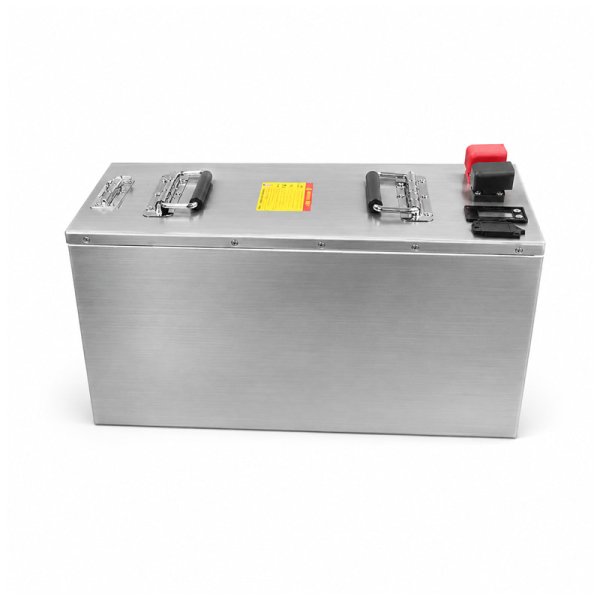
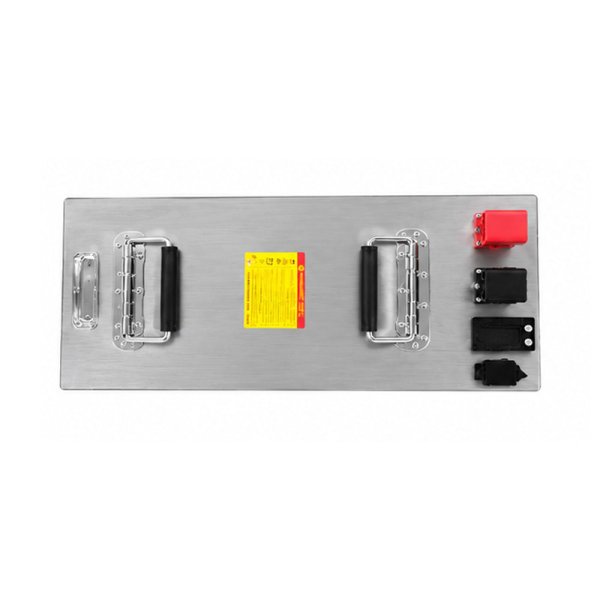
For one concrete fleet-oriented pack example, review the 24V 160Ah LFP Golf Cart Battery and compare its current capability, BMS, temperature range, and documentation against the pilot acceptance criteria.
Record route energy consumption, minimum SOC, voltage sag, peak current, battery temperature, BMS events, charging behavior, route reserve, and vehicle availability.
If a golf cart batteries supplier cannot support structured sample validation or provide engineering feedback from the test results, the risk of problems after volume deployment increases.
How Should Buyers Compare Warranty and After-Sales Support?
Warranty length alone does not define support quality.
A golf cart batteries supplier should clearly state warranty scope, exclusions, required operating conditions, fault-reporting process, response responsibilities, and replacement or repair procedure.
For fleet projects, technical support should also include access to BMS fault data where applicable, root-cause analysis, software or parameter review, and engineering communication during recurring issues.
Buyers should ask how the golf cart batteries supplier handles batch-level problems, field failures, spare units, and engineering changes after production begins.
How Should Fleet Buyers Compare Total Cost Instead of Unit Price?
Unit price is easy to compare, but it is not the full procurement cost.
When comparing a golf cart batteries supplier, fleet buyers should consider battery price, expected useful life, maintenance, downtime, replacement labor, spare inventory, warranty handling, service support, and the cost of vehicle unavailability.
A lower-priced pack can become more expensive if it produces inconsistent route range, frequent protection events, premature degradation, or repeated service intervention.
A stronger golf cart batteries supplier should therefore be evaluated on lifecycle value and fleet reliability, not only initial purchase price.

How Should a Supplier Discuss Battery Lifespan?
A professional golf cart batteries supplier should not present battery lifespan as one fixed number without test conditions. Cycle life depends on chemistry, depth of discharge, temperature, current, charge strategy, and the capacity level used to define end of life.
For fleet buyers, a more useful supplier discussion includes the tested cycle condition, expected usable energy, operating temperature, annual utilization, warranty terms, and how performance is expected to change over time.
For deeper analysis of degradation, SoH, replacement timing, and fleet TCO, see FEBATT’s golf cart battery lifespan guide. For general lithium aging mechanisms, Battery University BU-808 provides additional technical background.
Battery lifespan should therefore support the procurement decision, not dominate it. Buyers who need a detailed explanation of service life, degradation, replacement timing, and fleet SoH should refer to FEBATT’s dedicated golf cart battery lifespan guide.
What Questions Should Buyers Ask Before Approving a Supplier?
- Can you confirm pack voltage against the controller’s full operating range?
- Can you provide continuous and peak current limits with duration?
- Can you show BMS protection thresholds and communication options?
- Can you confirm battery tray fit, mounting, connector position, and pack mass?
- Can you provide cell and finished-pack traceability?
- Can you explain incoming inspection and end-of-line testing?
- Can you provide model-specific transport and compliance documentation?
- Can you support pilot testing on representative fleet vehicles?
- How are warranty claims, recurring field faults, and engineering changes handled?
- Can you maintain approved components and software versions for repeat orders?
Frequently Asked Questions About Golf Cart Batteries Supplier
What should I check first when choosing a golf cart batteries supplier?
Start with technical fit. A golf cart batteries supplier should review voltage, controller demand, route, payload, gradients, battery space, temperature, communication, and annual fleet use before quoting.
Should a golf cart batteries supplier provide BMS data?
Yes. Buyers should receive relevant current limits, protection thresholds, temperature limits, SOC behavior, communication options, and software-control information for the final pack.
How can I verify a golf cart batteries supplier before a bulk order?
Use sample packs in representative vehicles, test real routes and payloads, review production controls, verify documentation, and define acceptance criteria before approving volume production.
Does the lowest battery price mean the lowest fleet cost?
No. A lower-priced pack can cost more through downtime, early replacement, inconsistent range, service labor, or warranty handling. Compare lifecycle cost, not only purchase price.
What production records should a golf cart batteries supplier keep?
Useful records include cell-lot traceability, incoming inspection, BMS software version, production test results, serial numbers, approved drawings, and engineering change history.
How should buyers compare battery lifespan claims from suppliers?
Ask for cycle-test conditions, depth of discharge, temperature, current, and end-of-life capacity. Lifespan claims are only comparable when the test basis is similar.
Conclusion
Selecting a golf cart batteries supplier for a commercial fleet requires more than comparing voltage, capacity, or unit price. Buyers should assess application engineering, BMS integration, mechanical fit, production consistency, traceability, documentation, sample validation, warranty support, and lifecycle cost.
The right golf cart batteries supplier should understand how payload, gradients, route length, climate, current demand, and operating schedule affect the battery specification before production begins.
For OEM, golf course, resort, campus, rental, or utility fleet projects, provide FEBATT with vehicle voltage, motor/controller data, route, payload, terrain, battery compartment dimensions, operating temperature, communication requirements, and expected quantity for a battery specification review.