An electric stacker battery must do more than keep a truck running until the next break. It must sustain successive loaded lifts without excessive voltage sag or nuisance shutdowns. For fleets and OEMs, the right electric stacker battery follows measured lifting demand, equipment fit, and charging opportunities—not amp-hours alone.
The purchasing priority: measure the busiest repeatable shift, confirm compatibility with the stacker manufacturer, and test the proposed pack under load before approving fleet-wide orders.
Which Warehouse Stacker Tasks Need Different Battery Specifications?
Two stackers operating in the same building may impose remarkably different demands on an electric stacker battery. Classify each by handling assignment, not lifting capacity alone.
| Stacker configuration | Typical warehouse assignment | Battery specification priority |
|---|---|---|
| Walkie straddle stacker | Intermittent pallet placement and stock replenishment | Reliable hydraulic starts, compact installation, sufficient between-break reserve |
| Walkie reach or counterbalanced stacker | Deeper rack access and elevated pallet placement | Loaded-lift power, approved pack mass, stability and enclosure fit |
| Rider/platform stacker | Repeated transfers between storage and dispatch zones | Combined travel-and-lift demand, daily energy, accessible opportunity charging |
| Semi-electric stacker | Electrically powered lifting with manual travel | Hydraulic duty cycle, idle draw, enclosure and control-system compatibility |
Mixed fleets should not automatically share one electric stacker battery SKU. Standardization works only when the OEM approves compatibility across models.
By contrast, horizontal pallet transport makes traction and acceleration the dominant concerns. This rider pallet jack battery guide addresses that distinct workload.

How Do Repeated Loaded Lifts Change Battery Demand?
Every loaded lift imposes a concentrated demand on the hydraulic pump motor. Successive lifts expose an electric stacker battery to current peaks with little recovery time. Motor starting, mast movement, and simultaneous travel compound demand.
Consider three actual operating patterns:
- High-turnover replenishment: frequent short lifts can produce more current events per hour than an occasional high-rack placement.
- Narrow-aisle storage: longer loaded lifts extend motor operation and increase energy drawn per pallet.
- Two-shift dispatch: the last hour may combine a reduced state of charge with the busiest picking queue.
For electric stacker battery sizing, lift height matters but cannot replace duty-cycle data. Raising an 800 kg payload by 2 m requires approximately 4.4 Wh of theoretical gravitational work; actual battery consumption is higher because the mast, hydraulics, motor, and electrical system introduce additional loads and losses. Both energy per lift and instantaneous power require assessment.

For an electric stacker battery, collect pallet-weight distribution, loaded lifts per hour, maximum lift height, lift duration, travel intervals, ambient temperature, and lowest expected state of charge. Busy-shift logs are more useful than a nameplate estimate.
Which Electrical Ratings Actually Determine Lift Reliability?
How Should Voltage Match the Existing Stacker?
Start with the truck’s approved electrical architecture. Some commercial stackers use 24 V systems, but configurations vary by manufacturer and model. Raymond lists a 24 V/60 Ah lithium-ion pack for one straddle stacker; do not generalize that rating.
The electric stacker battery must remain within the traction controller, pump motor, contactor, and charger voltage windows throughout its discharge range. A nominally matching label does not establish retrofit compatibility.
How Should Buyers Calculate Usable Battery Capacity?
Electric stacker battery capacity must cover energy used between charging windows plus reserve. Calculate demand from measured kilowatt-hours, then apply agreed operating and usable-energy allowances.
Illustrative sizing: if the busiest work interval uses 2.7 kWh, procurement adds a 15% operating margin, and only 80% of the pack’s nominal energy is allocated for that interval:
Required nominal energy = 2.7 × 1.15 ÷ 0.80 ≈ 3.9 kWh.
This is not a recommended electric stacker battery size. Confirm state-of-charge limits, aging, temperature, and charge windows before selecting amp-hours.
Why Must Peak Discharge Current Be Verified?
An electric stacker battery can have ample nominal capacity yet trip when the pump starts with a heavy pallet. Specify continuous discharge current, peak current and its permitted duration, and the voltage maintained during the event. Ask for the relevant waveform, not an unqualified “high-current” claim.
Test the heaviest approved lift at minimum planned state of charge, including travel-plus-lift where permitted. BMS cutoffs, cell resistance, fuses, connectors, cable losses, and controller undervoltage thresholds must be considered together.

How Can Fleet Buyers Avoid Compartment and Stability Problems?
A smaller electric stacker battery is not necessarily compatible. Its tray, brackets, terminals, and cables must clear the mast and allow servicing.
Record these fit constraints before the design is finalized:
- Usable envelope: compartment length, width, height, tolerances, service clearance, and cable-bend radius.
- Retention: approved mountings, restraint points, lifting provisions, connector location, and protection from abrasion.
- Installed mass: OEM-approved battery weight limits and any contribution to truck stability or load rating.
- Environment: dust, moisture, vibration, ambient temperature, and cleaning practices.
Mass is critical in lead-acid conversions. Lighter lithium packs must not be assumed to preserve vehicle stability. For applicable US powered industrial trucks, OSHA 29 CFR 1910.178(a)(4) requires manufacturer approval for modifications affecting capacity or safe operation.
For an electric stacker battery retrofit, obtain written OEM approval of the installation, including ballast or mounts.
Which BMS Functions Matter During Repetitive Lifting?
During rapid stacking, an electric stacker battery management system (BMS) must distinguish normal current peaks from hazards. An electric stacker battery should have documented limits for overcurrent, undervoltage, cell temperature, and state of charge, with protection timing coordinated against normal hydraulic starts.
For an OEM program, verify:
- Fault discrimination: whether the BMS records the reason and duration of a lift-related trip.
- Communication: whether the truck actually requires CAN, RS485, discrete signals, or another defined interface, including message maps and fail-safe behavior.
- Operator visibility: credible state-of-charge display, warnings, and fault retrieval for maintenance teams.
- Recovery behavior: what happens after a temporary current limit, thermal derating, or low-voltage event.
An electric stacker battery must not bypass safety interlocks. Investigate hydraulic, connector, and controller faults before blaming the pack.
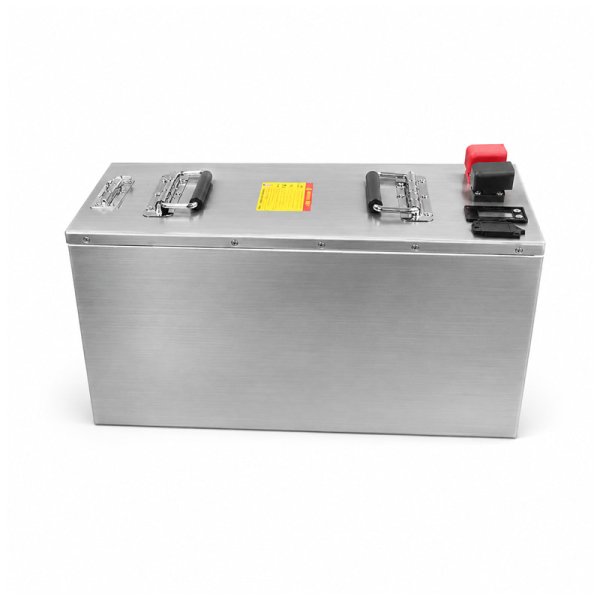
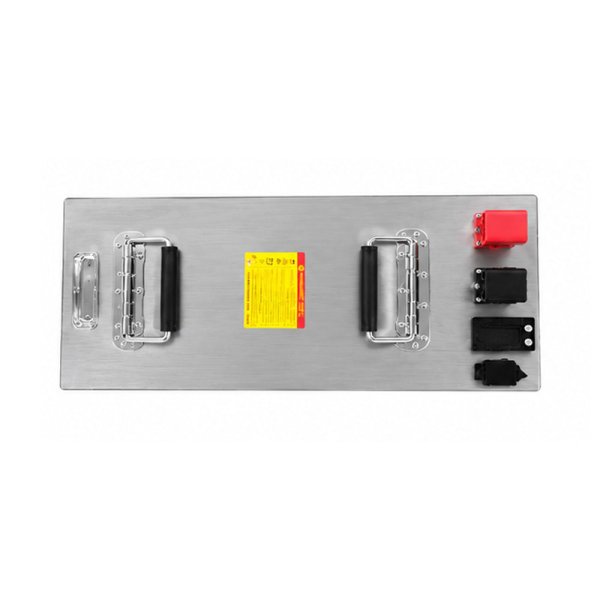
This application-matched power battery solutions include OEM pack customization and BMS-interface matching; the final configuration still requires stacker-specific validation.
How Should Charging Plans Reflect Warehouse Shift Patterns?
Charging is a fleet-scheduling decision. An electric stacker battery supporting one afternoon replenishment shift faces different demands from the same vehicle used for near-continuous overnight dispatch.
Map breaks, handovers, inspection stops, and distances to charging points. Then check whether energy replenished during those windows exceeds subsequent demand. A nominally fast charger cannot compensate for inaccessible charging stations or insufficient plug-in time.
For a lithium electric stacker battery, confirm CC/CV charging profile, output, current, temperature limits, connector, and handshake. Never assume an existing lead-acid charger suits an electric stacker battery without documented approval.
This multi-shift forklift charging guide explains the broader energy-balance approach. Apply it here to the stacker’s measured lifting schedule rather than copying another fleet’s charging frequency.
What Should OEMs Test Before Approving Fleet Deployment?
An electric stacker battery datasheet cannot replace an on-truck trial. The electric stacker battery should complete an agreed test protocol using representative pallets, approved lift heights, and real operational interruptions.
| Acceptance test | Evidence procurement should receive |
|---|---|
| Repeated full-load lifts | Lift count and speed, current peaks, voltage minima, and absence of unintended shutdowns |
| Low-state-of-charge operation | Stable behavior at the planned reserve threshold without unsafe bypasses |
| Consecutive duty cycles | Temperature traces, derating events, and BMS fault logs |
| Vehicle integration | Installation photographs, controller/BMS communications, connector and retention checks |
| Charging and recovery | Charger handshake, charge limits, restart behavior, and time-to-service |
Define pass/fail thresholds with the stacker OEM before testing. One successful lift at full charge proves very little about an electric stacker battery intended for repeated duty.
Pilot multiple trucks on busy shifts; compare downtime and energy, then freeze the configuration. Any changes in cells, BMS firmware, harnesses, or enclosure should trigger documented change control.
What Should B2B Buyers Include in a Stacker Battery RFQ?
A useful electric stacker battery RFQ describes the work to be performed and the evidence needed for acceptance—not simply “24 V lithium, best price.” Send the following as one equipment-specific package:
- Fleet: OEM, model, serial range, production year, truck quantity, and proposed order volume.
- Workload: pallet weights, lifts per hour, lift heights, combined travel/lifting behavior, shifts, and ambient conditions.
- Existing system: OEM-approved voltage range, original pack details, controller demand, charger data, and fault history.
- Mechanical interface: compartment drawings, approved battery weight range, mounting, connectors, and photographs.
- Qualification: required BMS signals, peak-current profile, safety documentation, sample tests, warranty, production consistency, and delivery milestones.
Ask electric stacker battery suppliers to document exclusions and assumptions. A lower quotation has limited value if the electric stacker battery later requires unplanned wiring, charging infrastructure, or repeated requalification.
Frequently Asked Questions About Electric Stacker Batteries
Q: What voltage does an electric stacker battery use?
A: Many electric stackers use 24 V systems, but requirements are model-specific. Verify the OEM’s approved voltage range, controller limits, and charger before specifying an electric stacker battery.
Q: Can an electric pallet jack battery be used in a stacker?
A: Not automatically. A pallet jack pack may not meet a stacker’s hydraulic peak current, compartment fit, or required mass. Use it only after the truck OEM approves the electric stacker battery integration.
Q: Why does an electric stacker battery shut down during lifting?
A: A shutdown may result from a brief current surge, voltage sag, BMS protection, loose connections, or a hydraulic fault. Check event logs and test the electric stacker battery under load.
Q: Does lifting height affect stacker battery capacity?
A: Yes. Taller lifts generally require more energy for the same load, but lift frequency, mast mass, hydraulic losses, and shift duration also matter when sizing an electric stacker battery.
Q: Can a 24V lead-acid stacker use a lithium battery?
A: Potentially, after OEM review. The electric stacker battery must match voltage windows, installation, required weight, charger, controls, and protection logic—not just the original battery dimensions.
Q: What information should OEMs provide for a custom stacker battery?
A: Provide stacker model, load and lift-cycle records, electrical limits, compartment drawings, approved mass, charger details, interface protocol, target quantity, and electric stacker battery test criteria.
Keep your stackers lifting through the busiest shift. Share your stacker model, lifting-duty records, compartment drawing, and charging schedule with FEBATT to discuss a custom electric stacker battery specification and OEM sample-validation plan.