If you are trying to figure out whether a battery is a deep cycle battery, the answer is usually in the details rather than one single number. Some clues are obvious, like the label or the application, while others show up in construction, weight, and discharge behavior. Once you know what to look for, deep cycle batteries are much easier to identify.
What should the label tell you about deep cycle batteries?
The label is the first place to look because manufacturers often make the intended use very clear. Many deep cycle batteries are marked with words like “deep cycle,” “marine,” “RV,” “solar,” “golf cart,” or “house battery.” Those terms are not just marketing language. They usually signal that the battery is built for repeated discharge and recharge rather than short bursts of starting power.
Still, the label can be a little misleading if you only look at the front of the case. Some batteries are sold as “dual-purpose,” which means they can work in both starting and cycling roles. Others may simply say “battery” without telling you much at all. That is why it helps to read the fine print, not just the bold text.
Here are the common label clues that point toward deep cycle batteries:
- Deep cycle
- Marine/RV
- Solar storage
- Golf cart
- House battery
- Cycle service
- AGM deep cycle
- Flooded deep cycle
If the battery label emphasizes cold cranking amps and engine starting, it is usually not a pure deep cycle battery. If it emphasizes amp-hours, reserve capacity, or cycle life, that is a stronger sign. Deep cycle batteries are generally designed to deliver energy over time, so the manufacturer often highlights runtime and durability rather than just startup force.
The label can also tell you what the battery is not. A battery made for cranking only may be labeled as “starter,” “starting,” or “SLI,” which stands for starting, lighting, and ignition. Those batteries are usually not designed to be discharged deeply over and over again. If you see SLI and no mention of cycling, you are probably looking at a normal starter battery instead of one of the deep cycle batteries built for heavier discharge work.
If the label is unclear, do not stop there. Many batteries deep cycle batteries are recognized by more than one clue, and the label is only the first one.
How does the construction of deep cycle batteries differ from starter batteries?
Construction tells a much bigger story than the label alone. Deep cycle batteries are built to survive repeated discharge cycles, which means their internal design has to be stronger in some ways and less focused on instant current in others. Starter batteries, by contrast, are built to give a fast surge and then recover quickly.
One of the biggest differences is plate design. Deep cycle batteries usually have thicker plates, which helps them handle deeper discharge without breaking down as quickly. Starter batteries often have thinner plates with more surface area, which helps them produce a large burst of current. That design works well for starting engines, but it is not ideal when the battery is drained down again and again.
In practical terms, deep cycle batteries are made to tolerate the kind of stress that would shorten the life of a starter battery. The repeated expansion and contraction that happen during charge and discharge can wear out weak internal structures. A deep cycle battery is built with that wear in mind.
You can often spot construction differences in features like:
- Thicker internal plates
- Heavier overall weight
- Stronger separators
- More robust casing
- Better vibration resistance
- Lower emphasis on peak cranking power
This does not mean all deep cycle batteries look huge or heavy. Some modern batteries are compact and still qualify as deep cycle batteries because of the way they are engineered. But in many cases, a deep cycle battery feels denser and more substantial than a starter battery of similar size.
Weight can be a useful clue too. A battery that is noticeably heavier often contains more lead or more active material, both of which can support cycle life. Of course, weight alone is not enough to identify deep cycle batteries, but it does help when you compare two batteries with similar dimensions.
If you ever compare a starter battery and a deep cycle battery side by side, the difference in design usually becomes easier to see. The starter battery is optimized for a quick job. The deep cycle battery is optimized for a hard life. That is why construction matters so much when you are trying to tell them apart.
How do voltage, amp-hours, and reserve capacity help identify deep cycle batteries?
Battery specs are one of the most reliable ways to tell what kind of battery you are looking at. Voltage alone does not tell the whole story because many battery types share the same voltage. A 12V battery may be a starter battery, a deep cycle battery, or a dual-purpose model. You need to look at the full spec sheet.
Amp-hours, or Ah, are especially helpful. Deep cycle batteries usually have a stronger focus on Ah because this number tells you how much energy the battery can supply over time. If a battery is marketed around capacity instead of just engine-starting force, that is usually a sign that it belongs in the deep cycle category.
Reserve capacity is another important clue. This tells you how long the battery can deliver a steady load before the voltage drops too low. Deep cycle batteries often have decent or high reserve capacity because they are expected to keep powering equipment for longer periods.
Cold cranking amps, or CCA, can also be revealing. Starter batteries usually put a lot of emphasis on CCA because they need to start engines in difficult conditions. Deep cycle batteries may have lower CCA relative to their size because that is not their main purpose. Some deep cycle batteries do have respectable CCA, especially dual-purpose versions, but the number often does not dominate the spec sheet.
A few patterns are worth watching for:
- High Ah and reserve capacity often point toward deep cycle batteries
- Very high CCA with less emphasis on runtime usually suggests a starter battery
- Balanced ratings may indicate a dual-purpose battery
- Cycle life ratings are a strong sign of deep cycle batteries
- Deep discharge information often appears in the product details
If you are comparing products online, read the specifications carefully. Manufacturers of deep cycle batteries often mention how many cycles the battery can handle at a certain depth of discharge. That number is especially useful because it connects directly to real-life performance. A battery that can survive hundreds or thousands of cycles is built very differently from one that is only expected to start an engine.
The easiest way to think about the specs is this: if the battery story is mostly about starting, it is probably not one of the deep cycle batteries you want for long-duration use. If the story is mostly about capacity, runtime, and repeated discharge, you are probably in the right place.
What do size, weight, and terminal layout reveal?
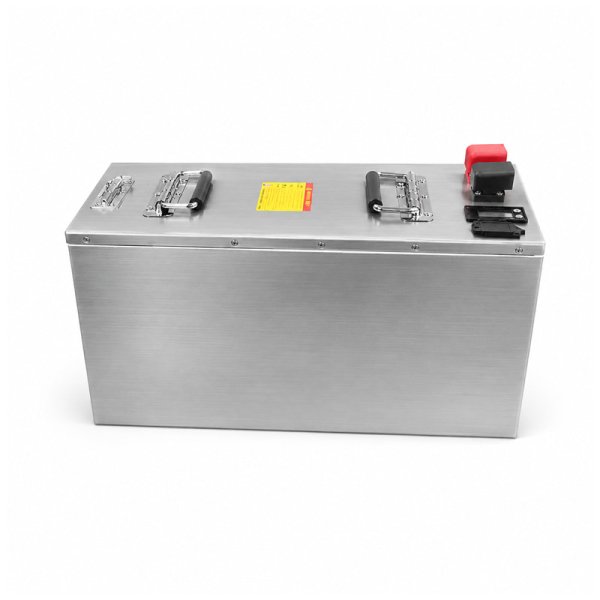
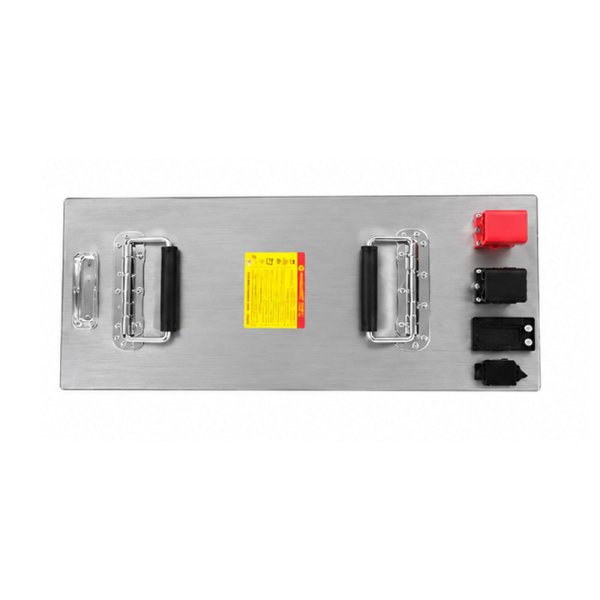
Physical clues are often underestimated, but they can be very useful when the label is unclear. Deep cycle batteries often look similar to other batteries from the outside, yet there are still clues in the case design, weight, and terminal style.
Weight is one of the easiest things to notice. Deep cycle batteries often weigh more than starter batteries because they contain more active material and thicker internal components. That extra mass supports longer cycle life. If two batteries have the same outer dimensions but one is noticeably heavier, the heavier one may be a better candidate for deep cycle use.
Terminal layout can also offer hints. Batteries designed for marine, RV, or solar systems may use different terminal styles or combinations of top and threaded posts. That is not proof by itself, but it can help identify deep cycle batteries that are intended for accessory systems rather than engine cranking.
Case shape and mounting style also matter. Deep cycle batteries used in golf carts or specialized systems may have unique dimensions that are not common in vehicle starter batteries. In marine and RV applications, the battery may be designed for secure mounting, vibration resistance, and access to terminals in tighter spaces.
A few physical clues to consider:
- Heavier than a similar-sized starter battery
- Terminal style suited for accessories or marine use
- Case design built for vibration resistance
- Bigger reserve capacity often paired with larger physical size
- Less emphasis on compact starting-battery packaging
Some deep cycle batteries are built in familiar group sizes, so you cannot rely on shape alone. A 12V battery that fits a standard tray may still be a deep cycle battery if the internals and specs are right. That is why size and weight are clues, not final proof.
If you are looking at batteries deep cycle batteries in a store or warehouse, it helps to compare them with a starter battery of the same case size. You will often notice that the deep cycle battery feels more solid and has different spec priorities. That difference is subtle at first, but once you notice it, it becomes a strong visual cue.

How does the battery’s intended use point to deep cycle batteries?
The battery’s intended use may be the clearest clue of all. Manufacturers design deep cycle batteries for jobs that require steady power over time and repeated charging. If the application is marine, RV, solar, golf cart, wheelchair, or backup power, you are very likely looking at deep cycle batteries or a related variant.
The application often tells you more than the battery itself. A battery in a boat used to run a trolling motor is likely a deep cycle battery because the motor needs sustained output. A battery in a camper that powers lights, fans, and appliances when the engine is off is another classic deep cycle use. A battery in a solar storage bank is almost always a deep cycle battery or a battery built for deep cycling.
Common applications include:
- Marine trolling motors
- RV house systems
- Solar energy storage
- Golf carts
- Mobility devices
- Off-grid power systems
- Backup lighting or security systems
By contrast, if the battery is clearly meant for starting a car or truck, it is probably not a deep cycle battery. Starter batteries are designed for high current output over a short time, not long runtime. That is why the intended use can reveal the battery type even before you inspect the technical details.
There are also hybrid or dual-purpose batteries that blur the line. These batteries may be used for both starting and cycling, especially in boats or recreational vehicles. They are not always pure deep cycle batteries, but they are often closer to that category than a standard starter battery. If you see marketing terms like “dual-purpose marine battery,” it usually means the battery is trying to balance both roles.
The rule is simple: if the battery is expected to power equipment while the engine is off, it is much more likely to be one of the deep cycle batteries. If the battery is expected mainly to start an engine and then stay in the background, it is probably not.
Can a load test tell you if a battery is a deep cycle battery?
A load test can help reveal how a battery behaves, but it does not always tell you the battery’s original design by itself. Still, it can provide strong clues. Deep cycle batteries usually behave differently under load than starter batteries because they are built for a different pattern of use.
When you apply a load, a starter battery is expected to deliver a sharp burst of current with minimal voltage drop. A deep cycle battery, on the other hand, is more focused on sustaining output over time. If you test the battery in the wrong way, you may get misleading results. A deep cycle battery may seem less dramatic in a cranking test even though it is excellent for runtime.
That is why a load test should be interpreted carefully. The test tells you how the battery responds under stress, but the result depends on what kind of stress you apply. A cranking-style load test may favor starter batteries. A longer discharge test may better reflect the strength of deep cycle batteries.
Things to watch during testing:
- Voltage drop under load
- Recovery after the load is removed
- How long the battery can sustain output
- Whether the battery remains stable through repeated cycles
- Whether the test matches the battery’s intended role
A deep cycle battery should generally hold up well in repeated discharge and recharge cycles. If the battery fails quickly in a cycle test, it may be worn out, undersized, or simply not a true deep cycle model. But if it performs well in a longer discharge scenario, that is a strong sign.
It is also important not to confuse a healthy starter battery with a deep cycle battery just because it passes a quick test. A starter battery can look impressive in a short burst and still be a poor choice for cycling. That is why identifying deep cycle batteries is not just about performance in one moment. It is about what the battery is designed to do again and again.
What does discharge depth tell you about batteries?
Depth of discharge is one of the most important ideas when identifying deep cycle batteries. It describes how much of the battery’s stored energy is used before recharging. Starter batteries are not meant to be drained deeply very often. Deep cycle batteries are built to handle deeper discharge much more comfortably.
This is why cycle life matters so much. A battery that can be discharged to 50% or more and then recharged many times is behaving like a deep cycle battery. A normal starter battery usually loses life fast if you keep draining it that far. In many cases, deep cycling a starter battery will damage it even if the battery seems fine at first.
You can often recognize deep cycle batteries by the way the manufacturer describes discharge limits. Product information may mention:
- Depth of discharge percentages
- Cycle count at 50% discharge
- Recovery after repeated use
- Designed daily cycling
- Long service life under moderate discharge
A battery that is meant for starting usually does not talk much about those things. Instead, it talks about CCA and cranking performance. That difference in language is a very useful clue. If the manufacturer is concerned about how many cycles the battery can survive, you are likely looking at deep cycle batteries.
It is also worth noting that not all deep cycle batteries are meant to be drained extremely low. Many perform best when you avoid very deep discharge and recharge them properly. In other words, the phrase “deep cycle” does not mean “can be abused endlessly.” It means “built to tolerate a cycling pattern that would hurt a starter battery.”
This distinction matters if you use the battery in a real system. A solar battery bank, for example, may cycle every day. A marine battery may cycle regularly during trips. A deep cycle battery is designed for that rhythm. The more often the battery is expected to discharge and recharge, the more important this feature becomes.
If you want a quick rule, it is this: the deeper and more frequent the discharge, the more likely the battery should be one of the deep cycle batteries.
How do charging requirements differ for deep cycle batteries?
Charging behavior is another strong clue. Deep cycle batteries usually need to be charged with more care than a simple starter battery because they are used differently and often cycled more heavily. That does not mean charging is hard, but it does mean the battery type matters.
Many deep cycle batteries prefer multi-stage charging, where the charger moves through bulk, absorption, and float stages. This approach helps the battery recover properly without overcharging or leaving it undercharged. Starter batteries in ordinary vehicles rely on the alternator and usually do not need the same kind of detailed care unless they are used in a special system.
If a battery manufacturer provides guidance about charger type, float voltage, or absorption time, that is often a sign you are dealing with deep cycle batteries. The battery needs a charging profile that supports its cycle life. If it is repeatedly left partially charged, the performance can decline much faster than expected.
Good charging clues include:
- Recommended charger settings
- Mention of multi-stage charging
- Float and absorption specifications
- Warnings against undercharging
- Cycle-life preservation tips
A normal starter battery tends to be less complicated in everyday use because it is quickly recharged by the vehicle. A deep cycle battery may be used in systems with solar panels, shore power chargers, smart converters, or controlled charging equipment. Those systems are built around the idea that the battery will be cycled often, so the charging needs more attention.
It is also useful to watch how the battery behaves after charging. Deep cycle batteries often take longer to recharge fully because they are larger in capacity and may have a more gradual charging profile. If the battery is intended for long-duration use, that is normal. A battery that charges too fast or seems to “finish” instantly may not actually have much capacity to begin with.
This is one reason people who shop for deep cycle batteries often care about charger compatibility. The wrong charger can shorten life, while the right charger helps the battery deliver the performance it was designed for.
What are the common mistakes people make when identifying deep cycle batteries?
One of the biggest mistakes is assuming that any large battery is a deep cycle battery. Size helps, but it is not proof. A large starter battery can still be optimized for cranking rather than cycling. The label, specs, and intended use all matter more than size alone.
Another common mistake is trusting only one number. Some buyers look at amp-hours and assume that means the battery is deep cycle. Others look at CCA and assume the battery must be a starter battery. In reality, many deep cycle batteries still have decent cranking performance, and some starter batteries can list respectable capacity numbers. You need the full picture.
People also get confused by marketing terms. Words like “marine,” “RV,” or “dual-purpose” do not always mean the battery is a pure deep cycle battery. They can suggest that direction, but the details still matter. Dual-purpose batteries are especially tricky because they sit between categories.
A few mistakes to avoid:
- Judging by size alone
- Ignoring the label
- Focusing only on CCA
- Overlooking amp-hours and reserve capacity
- Using a starter battery in a cycling application
- Assuming all “marine” batteries are identical
- Forgetting to check charging requirements
Another error is looking at one battery in isolation. It is often better to compare it with other batteries in the same class. If one battery emphasizes cycle life, reserve capacity, and discharge depth while another emphasizes cold cranking amps, the difference becomes obvious fast.
Misuse is another problem. A battery might be a deep cycle battery on paper, but if it is used like a starter battery only, or treated without proper charging, it may still disappoint. Identification is important, but real-world behavior matters too. A deep cycle battery should be matched to a load that actually needs cycling. Otherwise, you may not see its value.
If you are shopping for replacement batteries, compare the product page, the spec sheet, and the intended use. That combination gives you a much better answer than a headline or a sales pitch ever will.
How do you choose the right battery once you know it is deep cycle?
Once you confirm that you need deep cycle batteries, the next step is choosing the right one for the job. Not all deep cycle batteries are built the same, and the best choice depends on how often the battery will cycle, how much load it will carry, and how it will be charged.
Start with the application:
- RV or camper house power
- Solar storage
- Marine use
- Golf cart
- Backup power
- Mobility or specialty equipment
Then think about the battery chemistry. Flooded lead-acid, AGM, gel, and lithium all have different strengths. A flooded deep cycle battery may be cost-effective and proven. An AGM deep cycle battery may be sealed, more vibration-resistant, and easier to maintain. Lithium options can offer lighter weight and longer cycle life, but they also come with different charging requirements and higher upfront cost.
The next step is capacity. You want enough amp-hours and reserve capacity for your actual usage, not just a number that looks impressive. If the battery will power lights, fans, or a fridge overnight, the capacity needs to reflect that. If it is for a solar bank, you may need several batteries deep cycle batteries working together to meet the daily load.
A few practical buying tips:
- Match the battery to the duty cycle
- Confirm charger compatibility
- Check cycle-life ratings
- Compare usable capacity, not just headline numbers
- Consider weight and mounting space
- Choose a reputable build quality
If you are comparing brands, look beyond the basic label. A company like Febatt may offer options that suit different applications, but the same rule still applies: the battery has to fit the use case, the charging system, and the expected discharge pattern.
The right battery should not feel like a compromise every day. It should fit the job so well that you stop thinking about it. That is usually the sign you chose the correct type.

What is the simplest way to recognize deep cycle batteries in real life?
The simplest way is to combine three things: label, specs, and purpose. If a battery is labeled for cycling use, shows strong amp-hour and reserve capacity numbers, and is meant for applications that discharge it repeatedly, it is probably one of the deep cycle batteries. If it is focused mainly on cold cranking amps and engine starting, it probably is not.
That may sound basic, but it works well in practice. A deep cycle battery is not just a bigger battery or a newer battery. It is a battery designed for repeated use in a different pattern. Once you understand that pattern, the clues become much easier to read.
If you are still unsure, ask these questions:
- Does the battery need to start an engine, or power loads for hours?
- Does the label mention deep cycle, marine, RV, solar, or house use?
- Are the specs focused on Ah, reserve capacity, and cycle life?
- Is the construction heavier and more durable than a starter battery?
- Is the charging system designed for repeated discharge and recovery?
If the answer to most of those questions points toward sustained energy use, you are probably looking at deep cycle batteries. If the answer points toward quick starting power, you are probably not.
That is the real difference in everyday use. Deep cycle batteries are built for endurance, while starter batteries are built for short bursts. Once you know what role the battery plays, identification becomes much simpler, and choosing the right one stops feeling like guesswork.