A battery for AGV fleets is not simply an energy source. A stranded warehouse robot may block a shared aisle; a stalled factory tugger may delay material delivery. For OEM buyers, the objective is dependable throughput without overspending.
LiFePO4 (LFP) lithium packs offer a strong starting point through low maintenance and cycle durability. Yet the right battery for AGV operations depends on shifts, temperature and installation space.
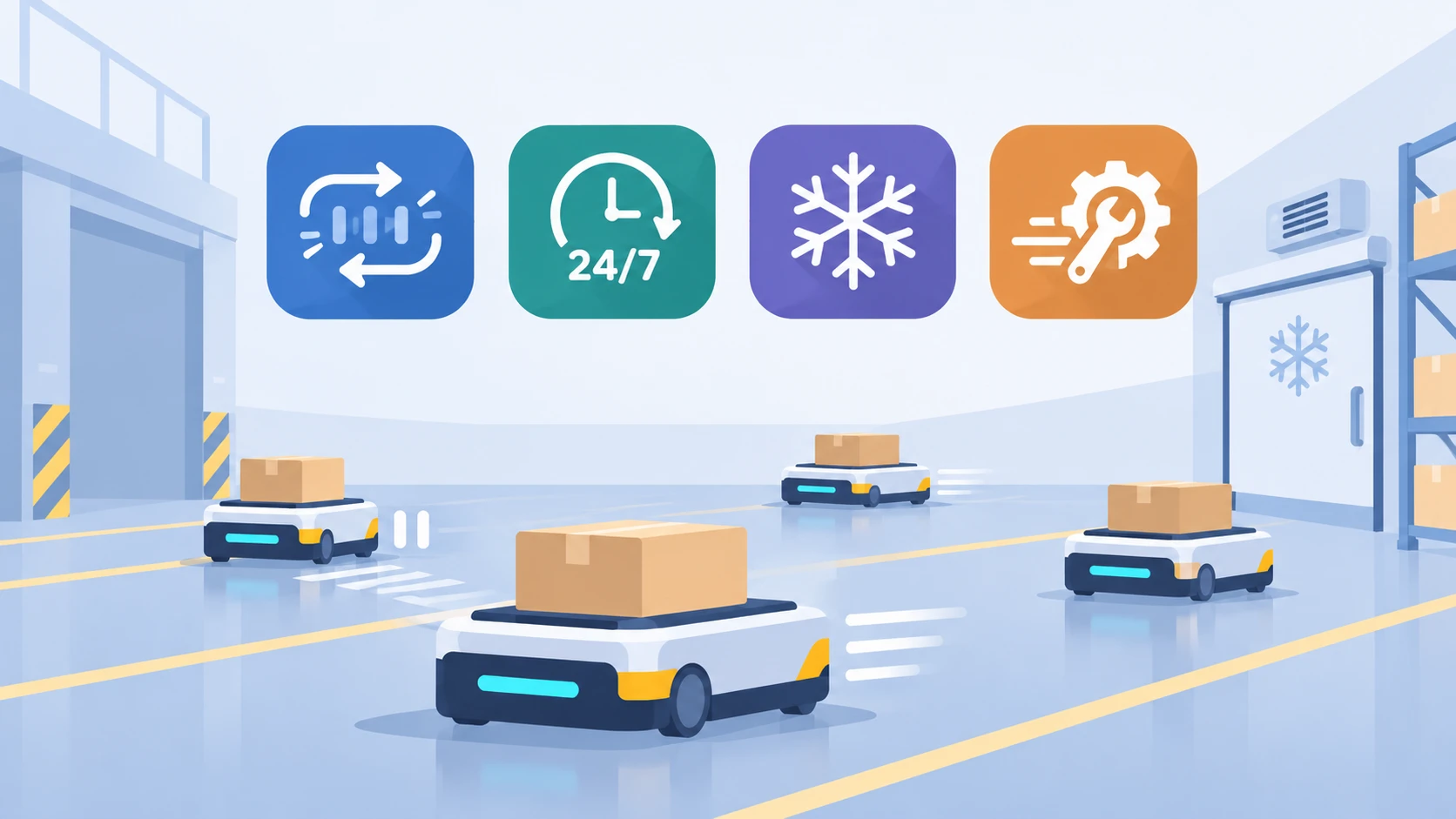
Which Battery for AGV Applications Fits the Operating Environment?
Batteries used in warehouse-picking AGVs face different operating demands as a heavy-load port transporter. Compare technologies against each fleet’s operational bottleneck.
| Fleet application | Practical chemistry shortlist | Purchasing priority |
|---|---|---|
| Standard indoor picking | LFP | Cycle durability, uptime and supply continuity |
| Compact shuttle with tight space | LFP or NMC | Usable energy within the mounting envelope |
| High-frequency 24-hour transport | LFP or qualified LTO | Duty-cycle endurance versus upfront cost |
| Cold-storage routes | Engineered low-temperature LFP or validated alternatives | Charging limits and usable energy at site temperature |
For compact robots, This industrial robot chemistry comparison explains the energy-density and longevity trade-off. Judge each pack against real routes, not generic chemistry rankings.
Why Is Lithium Often the Better Battery for AGV Fleets?
Lithium packs can eliminate flooded lead-acid watering and simplify industrial integration. LFP cycle durability can postpone warehouse fleet replacements. Results still depend on pack-level operating limits.
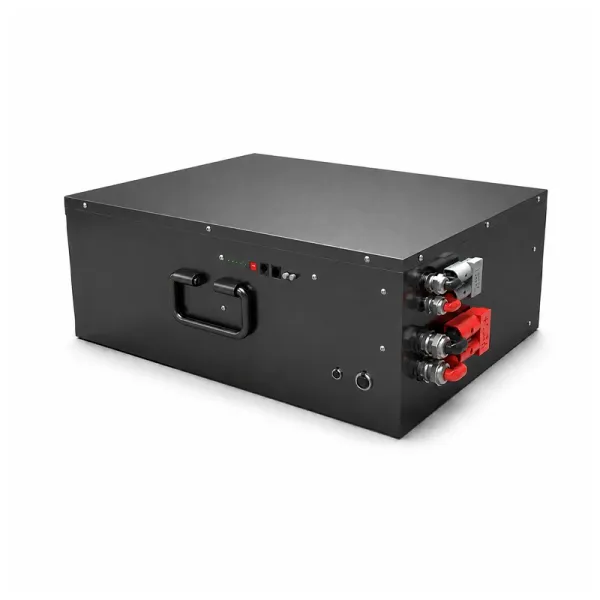
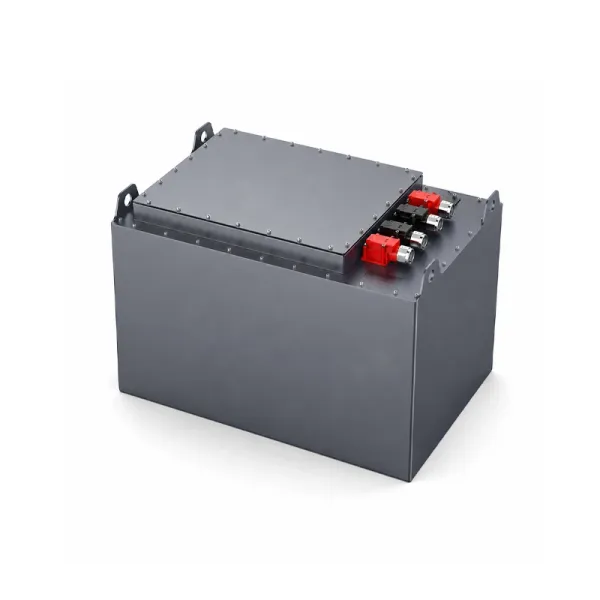
For a real product reference, FEBATT lists its 48V-class 50Ah AGV LiFePO4 battery with 50 A continuous discharge at 23°C and a manufacturer-stated life of at least 2,000 cycles to 80% capacity retention. Those figures apply to this model, not all LFP packs.
NMC remains relevant when packaging space dominates the decision. LTO may justify its premium in exceptionally intensive service: Toshiba reports more than 20,000 cycles for specified SCiB cells, subject to test conditions. Cell results cannot guarantee fleet life.
How Should Buyers Compare a Battery for AGV in Cold Storage?
Cold-room operators face two risks: reduced usable energy and restricted charging at low temperatures. A battery for AGV cold-store routes needs validated discharge data, permitted charge temperatures and a practical heating strategy. Do not extrapolate from room-temperature data.
Sodium-ion technology merits monitoring, but supplier maturity matters. The IEA’s 2026 battery assessment reports that advanced sodium-ion cells can retain around 90% of nominal capacity at −40°C; that is not a promise for a commercially available AGV pack. For current projects, a validated low-temperature lithium pack may be easier to qualify.
How Should Buyers Calculate the Five-Year Cost of an AGV Battery?
A cheap pack becomes expensive if failures delay orders. Compare five-year total cost of ownership (TCO): purchase price + charging infrastructure + energy + planned maintenance + replacements + battery-related downtime. Apply the same duty cycle to each option.
Illustrative planning example, not a measured FEBATT result: 40 AGVs each losing 15 minutes to battery-related interruption per week create 10 AGV-hours of lost availability weekly (40 × 0.25). Whether this creates a real loss depends on fleet redundancy. Therefore, buyers need availability data alongside prices.
When comparing a battery for AGV fleets, demand equivalent warranty terms, test conditions and supported service-life assumptions. LFP does not always minimize TCO, but can protect availability and reduce maintenance.

What Proof Should OEMs Request Before Approving an AGV Battery?
Before signing a volume order, require application-matched evidence for the proposed battery for AGV service:
- A logged route test covering peak loads, shift length and reserve energy.
- Cell and pack test reports with temperature, depth of discharge and end-of-life criteria.
- A documented safety and traceability package. IEC 62619:2022explicitly includes industrial AGV lithium batteries within its scope.
- Sample approval, repeat-order controls and a realistic failure-response agreement.

Reliable deployment also depends on integration discipline. The South Korean AMR project case describes prototype validation before production readiness—useful context for OEMs moving from a sample to a fleet order.
How Can FEBATT Support an AGV Lithium Battery Project?
FEBATT’s OEM power battery solutions cover application analysis, pack matching, BMS integration and volume-supply support. Share fleet size, mission profiles, space constraints, temperature limits and expected annual use. FEBATT can then help determine whether an LFP battery for AGV operations meets the business case and which tests should precede rollout.
The correct battery for AGV fleets is the one that delivers predictable availability at a defensible lifecycle cost—not simply the highest capacity or the lowest initial quote.
Frequently Asked Questions About Batteries for AGV
Q: What Is the Best Battery for AGV Warehouse Fleets?
A: For many standard indoor warehouses, LFP is a practical first option. The best battery for AGV work still depends on route intensity, operating hours, installation space and the cost of losing a vehicle during a shift.
Q: Why Choose LiFePO4 Instead of Lead-Acid for AGVs?
A: LiFePO4 removes the watering tasks associated with flooded lead-acid batteries and can support durable multi-shift operation. Buyers should compare verified cycle tests, packaging, charging arrangements and total ownership cost rather than assuming every lithium pack performs identically.
Q: How Much Does a Battery for AGV Cost Over Five Years?
A: Calculate acquisition, energy, maintenance, replacements and battery-caused lost operating hours. An industrial lithium pack may cost more initially but less over its service life.
Q: Can a Battery for AGV Work in a Freezer Warehouse?
A: Yes, when the battery system is specifically engineered and validated for that temperature. Verify charge restrictions, available discharge energy and pack-level thermal management; normal-temperature specifications are insufficient for freezer deployment.
Q: What Should an OEM Check Before Buying a Battery for AGV?
A: Request mission-profile test results, cold and hot operating limits, safety documentation, supplier traceability, sample acceptance criteria and production consistency controls. A pilot on representative routes is more useful than an attractive catalog figure alone.