An AGV stopping in a warehouse aisle can block pallet movement, disrupt shift handovers, and delay automated dispatch. For OEMs and fleet operators, AGV battery systems must deliver dependable energy while exchanging trustworthy status signals with vehicle controls. The question is not simply how many cells fit inside a housing, but whether the entire system behaves predictably during each mission and restart.
Effective AGV battery systems combine lithium cells, a battery management system (BMS), mechanical protection, connectors, and validated software interfaces. A mismatch in one element can sideline an otherwise functional vehicle.
What Must AGV Battery Systems Deliver Across Warehouse Shifts?
Busy facilities expose AGV battery systems to repeated acceleration, loaded lifting, traffic delays, and limited service windows. Buyers should document route energy, start-up peaks, operating temperatures, and required vehicle availability before choosing a pack.
The following checks connect operating pain points to acceptance evidence:
| Operating condition | Fleet risk | Acceptance evidence |
|---|---|---|
| Loaded starts | Unexpected protective shutdown | Peak-load test log |
| Variable routes | Missed dispatch windows | Representative mission records |
| Temperature changes | Reduced available power | BMS limit-response log |
Why Are LiFePO4 Batteries a Practical Fleet Choice?
For high-use warehouses, lithium iron phosphate (LiFePO4) removes routine watering and acid handling associated with flooded lead-acid batteries. Approved partial charging can also fit existing idle periods. Those advantages matter most when vehicles must operate across multiple shifts; they do not eliminate the need for thermal safeguards or accurate fleet controls.

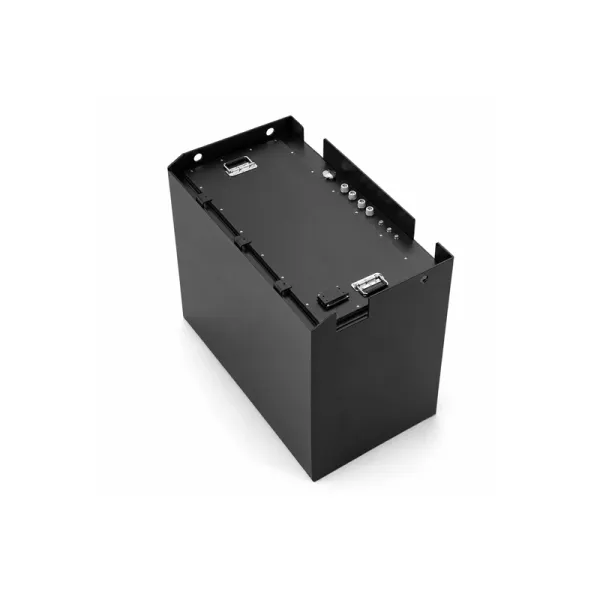
As a published product reference, there is a 48V-class 50Ah LiFePO4 battery for AGVs with 50A continuous charge and discharge ratings at 23°C and CAN/RS485 interfaces in its product summary. These are model-specific specifications, not guaranteed running hours. Lithium-based AGV battery systems still require application testing before fleet-wide approval.
How Should the BMS and Vehicle Controller Share Decisions?
In AGV battery systems, the BMS monitors battery conditions and applies current restrictions or protection. The vehicle controller decides mission timing, return-to-base behavior, and operational stops; a compatible charger follows its approved control logic. Actual control authority depends on the design.
OEMs should verify SOC, pack temperature, allowable current, fault codes, communication heartbeat, and timeout behavior. CAN and RS485 are possible interfaces, but matching a connector does not establish matching messages. This LiFePO4 BMS guide explains the component-level safeguards; AGV battery systems also need tested vehicle responses to those signals.

What Should Happen When an AGV Reports a Battery Fault?
Consider a loaded AGV reporting undervoltage midway through a pallet transfer. In well-integrated AGV battery systems, that warning must reach the vehicle controller in time to support an approved response. When communication fails, the design should enter a documented safe state, not assume the battery remains healthy.
For AGV battery systems, buyers can agree on the following fault acceptance checks:
| Fault event | Required system response | Buyer evidence |
|---|---|---|
| Low-SOC warning | Return, derate, or safe stop as specified | Dispatch and BMS logs |
| Thermal limit | Restrict output or stop safely | Temperature fault test |
| Communication timeout | Defined fail-safe behavior | Timeout simulation |
| Fault recovery | Authorized restart sequence | Reset and restart record |
What Does a Real AGV Integration Project Reveal?
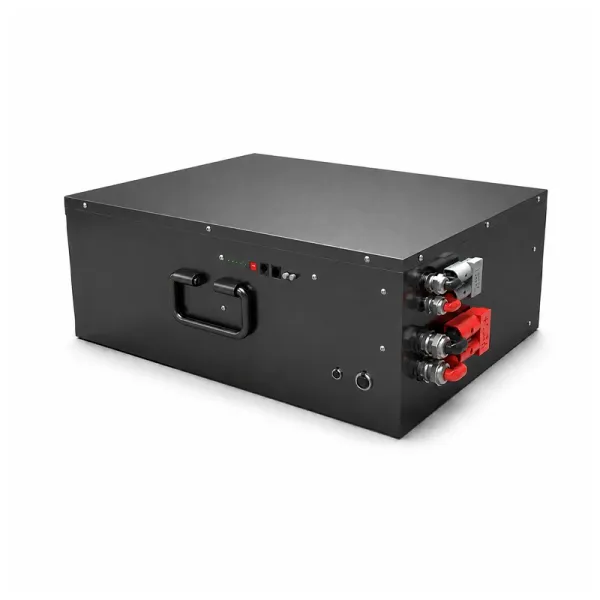
FEBATT reports a South Korean AMR development project with a 60–70Ah LiFePO4 capacity target, RS485 communication, a 1C charging requirement, and a 160 × 500 × 220 mm installation envelope. These are reported project requirements, not measured uptime claims or specifications for every AGV.
The South Korean warehouse AMR integration case demonstrates why enclosure clearance, battery communications, and charging terminals need to be reviewed together. For AGV battery systems, approving an individual pack without a complete robot test leaves avoidable integration risk.
How Can Buyers Qualify AGV Battery Systems Before Bulk Orders?
An RFQ for AGV battery systems should describe fleet size, mission patterns, available installation space, temperature range, peak loads, communication interfaces, maintenance access, and target availability. Require a representative-vehicle acceptance test, not only a cell datasheet.
For each acceptance test, define the AGV model, payload, initial state of charge, operating temperature, fault condition, and expected vehicle response. Record battery voltage, current, BMS messages, controller actions, and recovery results using synchronized logs. Representative tests should include loaded starts, low-energy warnings, communication timeouts, protective power limits, and authorized restarts. Approve production only when the complete AGV battery system meets written pass/fail criteria agreed by the OEM and battery supplier.
Buyers should request approved drawings; a BMS message map and fault-state table; charge and discharge limits; traceable sample-test records; and documented software revision control. IEC 62619:2022 explicitly includes AGVs within the scope of industrial lithium battery safety requirements. Ask which tests apply to the final pack configuration rather than accepting an unqualified certification claim.

This power battery solutions for industrial OEM projects cover application analysis, customization, and BMS integration. Before repeat purchases, confirm that AGV battery systems deliver stable mission performance and repeatable fault recovery across representative fleet vehicles.
What Do OEM Buyers Ask About AGV Battery Systems?
Q: What are AGV battery systems made of?
A: AGV battery systems include lithium cells, a BMS, protective enclosure, wiring, connectors, and communication interfaces. For commercial fleets, the vehicle controller and charger must also follow an approved operating protocol. A pack that fits physically may still fail integration tests.
Q: Why do warehouse AGVs use lithium batteries?
A: LiFePO4 is widely chosen because it reduces flooded lead-acid maintenance and can support approved partial charging during shift gaps. The operational benefit depends on duty cycle, thermal limits, equipment compatibility, and the quality of integration—not chemistry alone.
Q: How does an AGV BMS communicate with the controller?
A: An AGV battery BMS may exchange SOC, temperature, current limits, and fault information over CAN or RS485. Buyers must validate message definitions, timing, and timeout behavior. AGV battery systems require application-level communication tests before acceptance.
Q: Can an existing AGV fleet switch to lithium batteries?
A: Often, but AGV battery systems must match the vehicle’s load requirements, enclosure, connectors, controls, and approved charging equipment. A voltage match is insufficient. Test representative retrofitted vehicles and document faults before committing to a large order.
Q: What evidence should an AGV battery supplier provide?
A: Request mechanical drawings, communication documentation, applicable safety-test evidence, sample acceptance results, and traceability records. For AGV battery systems, buyers should also agree on firmware changes, spare-part compatibility, warranty conditions, and technical support for field failures.
Planning a new AGV platform or preparing a bulk battery order? Share your vehicle model, duty-cycle data, voltage and current requirements, installation drawings, BMS communication protocol, charging method, and expected order quantity with FEBATT. Our team can discuss a suitable LiFePO4 battery configuration and project-specific sample-validation requirements before production approval.