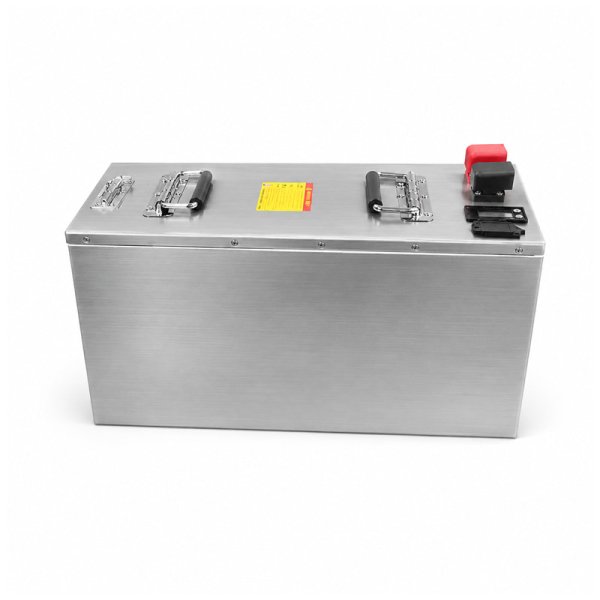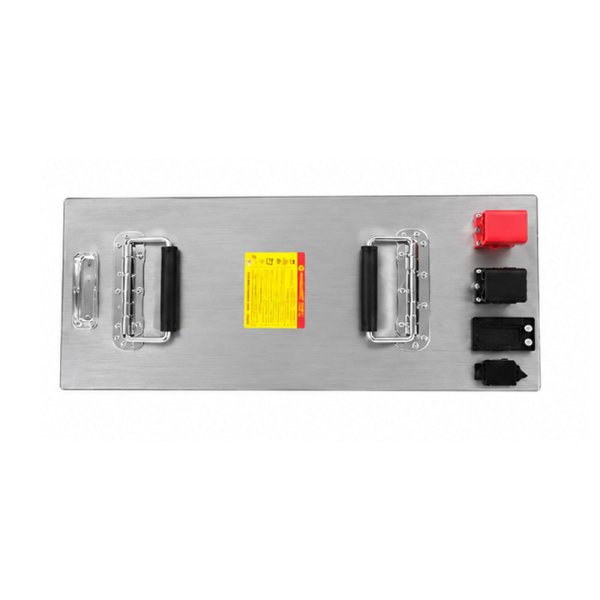
For commercial fleets, battery selection is an operating-cost decision, not simply a purchase-price comparison. The battery affects vehicle availability, payload, maintenance labor, replacement planning, charging strategy, spare-pack inventory, and whether equipment can complete a route or shift without interruption.
That is why the advantages of lithium batteries should be measured in business outcomes. Lead-acid remains familiar and inexpensive upfront, but a well-engineered LiFePO4 system can provide a wider usable energy window, longer cycle-life potential, lower routine maintenance, lower mass, better operating efficiency, and BMS-based visibility. For electric tricycles, golf carts, forklifts, commercial electric motorcycles, RV auxiliary systems, and other power-driven platforms, those differences can change the lifetime cost of the fleet.
For most high-utilization applications, the strongest case for lithium is not a single specification. It is the combination of service life, usable energy, uptime, maintenance requirements, and system data. These advantages of lithium batteries become especially important when every hour of downtime or every unplanned battery replacement has a measurable cost.
Why Should Fleets Compare Total Operating Cost Instead of Purchase Price?
Lead-acid usually has the lower initial purchase price. That can still make sense for lightly used equipment, seasonal assets, or projects where the capital budget is the primary constraint. But the commercial fleet battery cost does not stop at the invoice.
A useful lithium battery total cost of ownership model should also include battery replacement cost, technician labor, planned and unplanned downtime, maintenance, spare-battery inventory, charging losses, handling, infrastructure, and end-of-life logistics. For flooded lead-acid systems, watering, electrolyte inspection, corrosion control, and ventilation management can also add recurring labor.

Pacific Northwest National Laboratory (PNNL) has noted in its energy-storage cost work that lead-acid systems can start with lower capital cost while full life-cycle cost can become comparable to lithium-ion once replacement and performance are considered. A commercial vehicle fleet is not the same as a stationary storage project, but the cost principle is directly relevant: a cheaper battery can become expensive when it is replaced more often or reduces asset availability.
For fleet managers, the advantages of lithium batteries therefore begin with a better purchasing question: what does each productive operating year cost, rather than what does the battery cost on day one?
How Do Lithium Batteries Reduce Replacement Frequency?
Battery replacement is disruptive in a commercial operation. It requires a new pack, labor, downtime, inventory planning, and sometimes charger or vehicle checks before the asset returns to service. The more frequently a fleet cycles batteries, the more important replacement frequency becomes.
A PNNL technology comparison uses representative reference values of about 2,000-3,000 cycles for LFP, 300-1,000 cycles for NMC, and roughly 400 cycles for lead-acid under its stated comparison assumptions. Actual commercial pack life varies with depth of discharge, temperature, current, charge strategy, cell quality, pack design, and end-of-life criteria, so these figures should not be treated as universal product guarantees.

The practical point is that LiFePO4 cycle life can make lithium more suitable for equipment that uses a substantial share of battery energy every day. In an electric tricycle, forklift, golf cart, or commercial motorcycle fleet, avoiding repeated battery replacements can be worth more than minimizing the first purchase price.
For procurement teams, the advantages of lithium batteries are easiest to quantify when expected cycle life is converted into replacement intervals, labor hours, and vehicle downtime rather than treated as an isolated cell specification.
This is one of the most important advantages of lithium batteries for high-utilization operations: replacement planning can become less frequent, more predictable, and easier to incorporate into fleet budgeting.
When a fleet is evaluating a new platform or a lead-acid replacement project, commercial power battery solutions can help frame voltage, capacity, discharge current, BMS communication, charger matching, installation space, and operating environment before the pack is specified. These advantages of lithium batteries are easier to realize when the battery is engineered around the actual duty cycle.
How Does Usable Capacity Affect Daily Fleet Productivity?
Nominal capacity and usable capacity are not the same thing. In the same PNNL comparison, representative depth-of-discharge assumptions are about 85% for lithium-ion and about 50% for lead-acid. The exact safe operating window must always come from the battery manufacturer and the application design.
Buyers comparing pack formats can review the commercial power battery range to see how voltage, capacity, enclosure shape, and application category change across electric motorcycles, tricycles, golf carts, forklifts, and other commercial platforms.
A wider usable energy window can give a fleet more productive energy from the same nominal kWh. That can reduce the need to oversize a battery simply to protect cycle life, and it can reduce the number of spare packs needed to cover daily operations.

This matters in stop-start duty cycles. A lead-acid system may need to be operated conservatively to preserve life, while a correctly sized lithium system can often make a larger share of stored energy available under BMS control. The advantages of lithium batteries therefore show up not only in rated capacity but in how much energy the fleet can actually schedule and use.
Can Lower Battery Mass Improve Fleet Economics?
Battery mass matters whenever the battery moves with the vehicle. Lithium-ion technology generally offers much higher specific energy than lead-acid, which can make a lighter or more compact battery system possible for the same usable-energy target. The actual pack-level difference depends on enclosure, current capability, protection hardware, mounting structure, and thermal design.
For electric cargo tricycles, lower battery mass can create more vehicle mass margin if the chassis and gross vehicle weight rating allow it. For golf carts and utility vehicles, it reduces non-productive mass that must be accelerated and supported. For commercial electric motorcycles, compact packaging can also improve installation flexibility and handling.
The real advantages of lithium batteries are not captured by claims such as “one-third the weight” for every application. The useful engineering advantage is higher battery energy density, which can improve packaging freedom, payload margin, and vehicle design efficiency.
How Does Battery Efficiency Change Operating Cost?
Every battery loses some energy during charging and discharging. In the PNNL technology comparison, lithium-ion efficiency is listed above 93%, compared with above 80% for lead-acid. Actual battery-and-charger efficiency depends on the equipment, current, temperature, SOC window, and charge profile.
For one vehicle, the difference may look small. Across a fleet that cycles every day, losses accumulate. Higher efficiency means a larger share of purchased electricity becomes usable vehicle energy rather than conversion loss and heat.
This is another of the advantages of lithium batteries that becomes more meaningful at fleet scale. Lower energy loss can support more predictable operating cost and reduce unnecessary thermal load, although high-current systems still require appropriate thermal design.
How Do Lithium Batteries Reduce Routine Maintenance?
Maintenance requirements differ by lead-acid type. Flooded lead-acid batteries may require watering, electrolyte checks, cleaning, ventilation management, and corrosion control. AGM or gel systems reduce some of those tasks but still need inspection and correct charging.
LiFePO4 packs normally eliminate watering and use a BMS to monitor cell voltage, pack current, temperature, state of charge, and fault conditions. This does not make a commercial lithium pack maintenance-free in an absolute sense. Connectors, cables, mounting points, seals, charger performance, and software still require scheduled attention.
The advantage is that commercial battery maintenance can shift from repeated electrochemical service toward condition monitoring and planned inspection. As fleet size grows, lower battery maintenance cost can translate into fewer technician hours and simpler operating procedures. These advantages of lithium batteries are often overlooked when buyers compare only purchase prices.
At fleet scale, the advantages of lithium batteries also include more standardized maintenance planning because operators can rely on BMS records and scheduled inspections instead of frequent manual battery service.
Can BMS Fleet Monitoring Reduce Downtime?
A BMS is not only a protection device. In a properly integrated commercial lithium system, it can provide operating data that helps fleet managers understand how batteries are being used and why problems are occurring.
Useful BMS fleet monitoring can include state of charge, voltage, current, temperature, fault history, cycle data, and communication with the vehicle or charger. Depending on the system architecture, fleets may also be able to compare trends across multiple battery assets.
This visibility can reveal repeated overcurrent events, abnormal temperature rise, low-voltage events, charger mismatch, or a pack that is drifting away from the fleet norm. One of the advantages of lithium batteries is therefore a data advantage: maintenance can become more proactive instead of waiting until a vehicle cannot complete a shift.
Does Lithium Always Charge Faster Than Lead-Acid?
Lithium can support higher charge rates than many lead-acid systems, but “faster charging” should not be treated as a universal promise. The permitted rate depends on cell chemistry, cell model, temperature, BMS limits, wiring, charger capability, and pack thermal design.
The fleet value is charging flexibility. A battery designed for opportunity charging may recover useful energy during scheduled breaks and reduce long idle periods. This can be valuable for forklifts and other high-utilization equipment where charging strategy directly affects asset availability.
However, the battery, BMS, charger, wiring, and vehicle controller must be validated as one system. Using an incompatible charger or operating outside the validated charging profile can reduce life or trigger protection. The advantages of lithium batteries are strongest when faster energy recovery is supported by correct system integration.
What Are the Safety Differences Between Lithium and Lead-Acid?
Neither chemistry should be described as automatically safe or unsafe. Lead-acid batteries can produce hydrogen during overcharge, and flooded systems contain corrosive electrolyte. Lithium-ion batteries require control of cell voltage, current, temperature, mechanical protection, and fault propagation.
For commercial fleets, LiFePO4 is often selected because its phosphate cathode chemistry provides strong thermal stability compared with many nickel-rich lithium chemistries. Safety still depends on cell quality, BMS logic, enclosure design, connectors, fusing, charger matching, manufacturing consistency, and validation.
A professional supplier should be able to explain protection thresholds, temperature sensing, current limits, fault response, mechanical protection, and pack testing. Smart electronic monitoring is one of the advantages of lithium batteries, but a BMS cannot compensate for poor cell selection or weak pack engineering.

When Does Lead-Acid Still Make Commercial Sense?
Lead-acid can still be practical when utilization is low, the purchase budget is tightly constrained, battery mass is not important, existing charging infrastructure is already optimized for lead-acid, and the operator accepts the maintenance requirements.
For rarely used equipment, a longer lithium service life may not create enough economic benefit to justify the higher upfront investment. In some markets, lead-acid service and recycling networks may also be especially mature.
The decision changes as utilization rises. Once replacements, downtime, maintenance, payload, usable energy, and charging flexibility affect revenue or throughput, the advantages of lithium batteries become more important than the initial price difference.
Which Commercial Applications Benefit Most from Lithium?
Electric tricycles can benefit when daily route distance, cargo payload, and stop-start operation make usable energy and battery mass important. A correctly sized LiFePO4 pack can support frequent cycling while reducing routine battery service.
Golf-cart and utility fleets often value predictable runtime, reduced maintenance compared with flooded lead-acid systems, lower battery mass, and simpler day-to-day fleet management. Forklifts and warehouse equipment can benefit when downtime has a direct cost and BMS data can support more disciplined maintenance and charging decisions.
Commercial electric motorcycles can benefit from compact packaging, higher usable energy, lower mass, and stable power delivery. RV auxiliary systems can benefit from usable capacity and lower routine maintenance when the battery, charger, BMS, wiring, and loads are correctly integrated.
Across these applications, the advantages of lithium batteries are strongest where the battery is a productive asset rather than an occasional backup device.
How Should Fleet Buyers Calculate Lithium Battery ROI?
A useful lithium battery ROI model should not begin with a generic claim such as “lithium lasts five times longer.” It should use actual operating data from the fleet and convert the expected technical benefits into measurable cost or productivity changes.
The calculation should include initial battery and integration cost, battery replacement cost over the target service period, maintenance labor, downtime per battery-related event, spare-pack inventory, charging energy, charger or infrastructure changes, handling, end-of-life logistics, and the value of additional payload or vehicle availability where applicable.
Then compare those costs per productive year, operating hour, route, shift, or delivered kWh. This turns a purchase-price debate into a business metric. The advantages of lithium batteries are easiest to justify when the TCO model shows that higher upfront cost is offset by fewer replacements, lower maintenance, less downtime, or more productive use of the vehicle.
For fleets considering a lead-acid to lithium upgrade, the lithium battery ROI should also include any one-time integration work. A lower long-term operating cost is valuable only if the conversion is technically correct and the vehicle continues to meet its performance and safety requirements.
For projects that require custom voltage, capacity, BMS communication, enclosure, or charger integration, an application-matched battery solution process is more relevant than selecting a pack only from nominal voltage and Ah.
What Should Buyers Verify Before Switching from Lead-Acid to Lithium?
lead-acid to lithium upgrade is not automatically a drop-in replacement. Before approval, the buyer should verify system voltage and allowed voltage range, continuous and peak current, usable-energy target, battery compartment dimensions, mounting, vehicle weight limits, charger profile, BMS communication, connectors, fusing, thermal conditions, and validation requirements.
The supplier should also confirm how the pack will be tested at end of line, how faults will be diagnosed, and what data will be available during operation. This is important because the advantages of lithium batteries only create business value when the pack is matched to the actual vehicle, route, load, charging pattern, and service plan.
When those integration checks are completed before production, the advantages of lithium batteries are more likely to translate into repeatable fleet performance rather than one-off improvements seen only during sampling.
A strong supplier should be able to discuss application requirements before quoting rather than simply offering a battery with the same nominal voltage and Ah as the old lead-acid pack.
Conclusion
For commercial fleets, lead-acid’s strongest advantage remains its lower upfront purchase price. But the operating-cost decision is broader than one number. Replacement frequency, usable capacity, efficiency, mass, maintenance, downtime, charging flexibility, and data visibility all affect lifetime value.
Longer cycle-life potential, greater usable energy, higher battery energy density, lower routine maintenance, BMS fleet monitoring, and more flexible charging are the main advantages of lithium batteries for high-use vehicles and equipment.
That does not mean every lithium project automatically saves money. Chemistry, pack sizing, charger matching, BMS strategy, installation, operating temperature, and supplier quality still determine the result. Buyers should compare lithium battery total cost of ownership with the real lead-acid battery operating cost for the same duty cycle.
For electric tricycles, golf carts, forklifts, commercial electric motorcycles, RV systems, and other frequently used power-driven platforms, the best question is not “Which battery is cheaper?” It is “Which battery keeps the fleet productive at the lowest total cost?” When downtime has a real business cost, the advantages of lithium batteries often make a correctly engineered LiFePO4 system the more practical long-term choice.
Frequently Asked Question About Advantages of Lithium Batteries
1.Are lithium batteries better than lead-acid batteries?
For high-use fleets, often yes. Lithium can offer longer cycle-life potential, more usable energy, lower maintenance, less mass, and BMS data. Lead-acid can still fit low-use, budget-led projects.
2.Why are lithium batteries more expensive than lead-acid?
Lithium packs add higher-cost cells, a BMS, protection hardware, and integration work. Buyers should compare the higher upfront price with replacements, maintenance, downtime, and usable energy.
3.Do lithium batteries last longer than lead-acid batteries?
Usually, under comparable validated conditions. PNNL reference values place LFP cycle life above conventional lead-acid, but actual life still depends on DoD, temperature, current, charging, and cell quality.
4.Can lithium batteries replace lead-acid batteries directly?
Not always. Voltage range, charger profile, current demand, mounting, connectors, BMS communication, protection, and vehicle controls must be checked before a lead-acid to lithium upgrade.
5.Are lithium batteries worth the higher upfront cost?
They can be when utilization is high and battery downtime, replacement labor, maintenance, payload, and charging flexibility have measurable value. A fleet TCO model should confirm the lithium battery ROI.