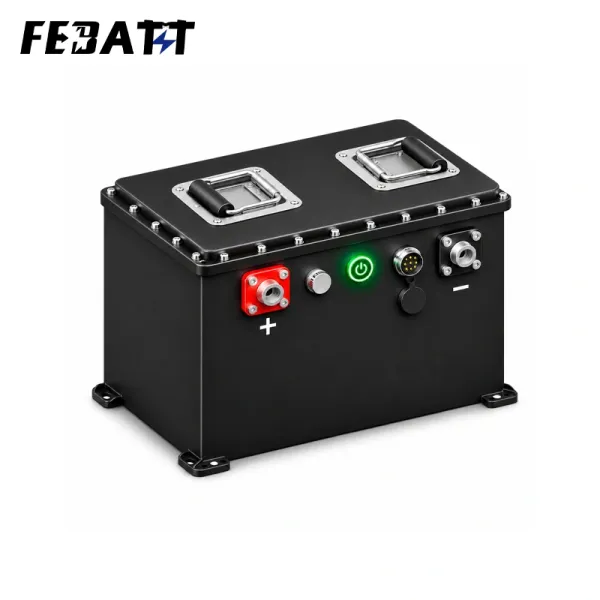
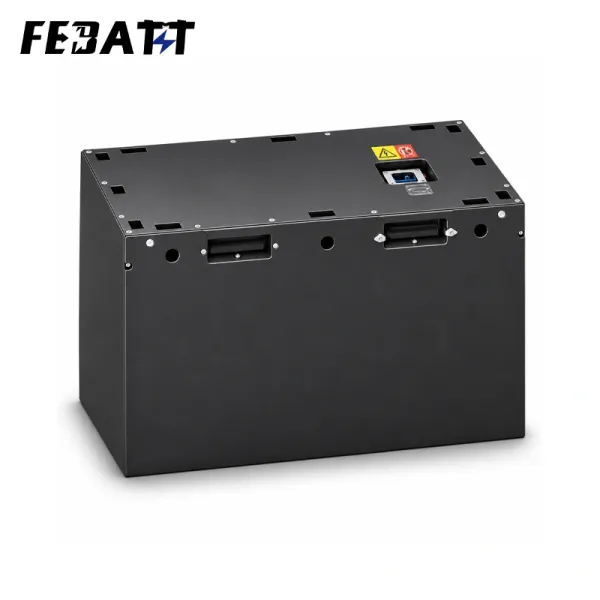
An electric patrol vehicle battery must keep low-speed electric security vehicles available throughout a working shift, not simply deliver the range advertised for an unloaded vehicle. At industrial parks, campuses, airports and resorts, frequent stops, night inspections and security equipment can consume energy even while vehicles are stationary.
For fleet operators and OEMs, selecting a patrol vehicle battery means balancing runtime, operational reliability and replacement costs. A correctly specified LiFePO4 system can help reduce maintenance and keep more vehicles available for scheduled and emergency patrols.
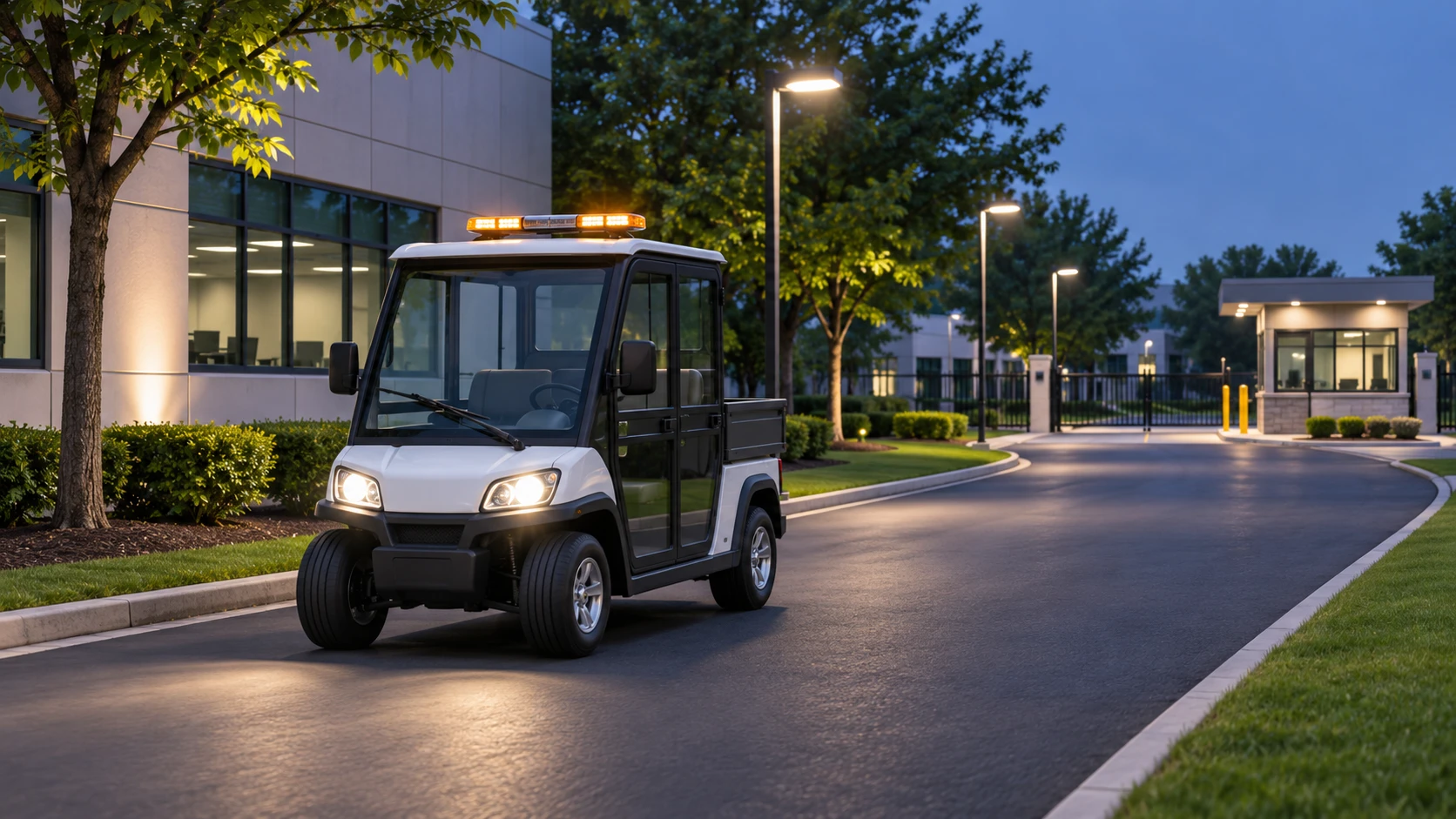
Why Does a Patrol Vehicle Battery Run Out Before a Shift Ends?
Unlike vehicles used primarily for passenger transport, security fleets combine driving with extended stationary observation. Manufacturers of commercial electric security vehicles offer equipment such as work lights, beacons and communications mounts. These accessories can draw power throughout a shift when connected to the traction battery through a DC-DC converter.
A battery sized only for driving range may leave insufficient energy for the final round.
| Patrol application | Typical operating challenge | Battery requirement |
|---|---|---|
| Industrial parks | Frequent starts, equipment inspections | Stable traction output |
| Campus security | Stop-start routes, night observation | Low standby consumption |
| Airport service areas | Long shifts, urgent callouts | Reserve energy and quick turnaround |
| Resorts | Outdoor routes, lighting and communication | Weather resistance and predictable runtime |
Fleet buyers should record the energy used during movement and stationary operation separately before specifying a patrol vehicle battery.
How Much Energy Should a Patrol Vehicle Battery Provide?
Measure actual routes, auxiliary loads and shift duration rather than relying on nominal range. The commercial battery sizing principles provide a starting point, but patrol operations require additional attention to stationary loads and emergency reserves.
An Eight-Hour Shift Example
The following assumptions illustrate how to calculate a patrol vehicle battery requirement. They are not measured fleet results.
| Energy input | Illustrative calculation |
|---|---|
| Driving energy | 50 km × 75 Wh/km = 3.75 kWh |
| Security equipment | 150 W × 8 h ÷ 90% converter efficiency = 1.33 kWh |
| Total shift energy | 5.08 kWh |
| Usable SOC window | 80%, including a reserve |
| Target end-of-life capacity | 80% of original capacity |
| Required nominal energy | 5.08 ÷ (0.80 × 0.80) = 7.94 kWh |

Auxiliary equipment accounts for approximately 26% of this example’s energy demand. The selected pack should therefore provide approximately 7.94 kWh or more under these assumptions, subject to temperature, power and installation constraints.
Avoid counting auxiliary consumption twice if it is already included in measured driving energy.
Why Is LiFePO4 Better Suited to Commercial Patrol Fleets?
A LiFePO4 patrol vehicle battery can offer greater usable energy, lower weight and fewer routine maintenance tasks than a comparable flooded lead-acid system. LiFePO4 is particularly attractive where vehicles are cycled daily and availability matters more than initial battery price.
- Longer service potential: Fewer replacement events can reduce vehicle downtime and procurement workload.
- More consistent power: A relatively flat discharge voltage helps support traction and auxiliary systems as charge declines.
- Lower maintenance: No electrolyte watering is required, although connections, enclosures and battery health still need inspection.
- Flexible turnaround: Compatible lithium chargers can support shorter charging windows when approved by the battery manufacturer.

One published lithium battery configuration for security patrol vehicles specifies 7.2 kWh and at least 1,200 cycles to 80% capacity retention. It illustrates an available configuration, not a guaranteed fit for the calculated 7.94 kWh requirement.
Under those assumptions, fleet buyers would need to evaluate a higher-capacity or customized battery configuration to maintain the required operating reserve. Final selection should be based on measured energy consumption, vehicle compatibility and actual operating conditions.
A commercial lithium-ion cell cycling study also demonstrates that operating conditions significantly influence degradation. Buyers should compare cycle ratings under equivalent test conditions instead of assuming every lithium patrol vehicle battery delivers the same lifespan.
How Can Fleets Prevent Unexpected Battery Downtime?
When a patrol vehicle battery can no longer finish its assigned shift, investigate the charger, connections, auxiliary consumption and remaining battery capacity before replacing the pack. General battery replacement criteria can support this assessment.
When upgrading a low-speed electric vehicle battery, verify controller compatibility, charging profiles, mounting, BMS protections and the auxiliary power supply. Specify low-temperature charging protection for outdoor fleets and request diagnostic access for maintenance teams.
A patrol vehicle battery should never be operated through abnormal heat, swelling or smoke. Follow the manufacturer’s emergency procedures immediately rather than waiting for a runtime failure.
How Should Buyers Validate a Patrol Vehicle Battery Before Bulk Orders?
Three-Day Pilot Test
Test a sample over three representative working days using normal payloads, security accessories and actual routes. Include the busiest expected shift and record:
- Starting and ending state of charge (SOC).
- Traction and stationary energy consumption.
- Peak current, battery temperature and BMS alarms.
- Charging time and readiness for the following shift.
Approve the patrol vehicle battery only against agreed runtime, minimum reserve and safety criteria. Include seasonal operating conditions in additional qualification tests when relevant.
Procurement and Warranty Requirements
Before ordering a patrol vehicle battery pack, provide route data, shift schedules, auxiliary equipment power, installation dimensions, electrical interfaces and annual demand. Request capacity retention terms, cycle-test conditions, traceability and service support in writing.
Compare each patrol vehicle battery by cost per completed shift: divide battery, electricity, labor, replacement and downtime costs by completed shifts over the same evaluation period. Through customized motive power battery solutions, OEMs and fleet buyers can align the pack, BMS and charging configuration with their operating requirements.
A well-matched patrol vehicle battery protects fleet availability without paying for unnecessary capacity. Start with the actual duty cycle and validate the lithium configuration before committing to volume production.
Frequently Asked Questions About Patrol Vehicle Batteries
Q: What type of patrol vehicle battery is best for commercial fleets?
A: LiFePO4 is often preferable for daily security operations because of its usable energy, cycle life and low routine maintenance. Confirm environmental and power requirements before selection.
Q: How long does a patrol vehicle battery last per charge?
A: Runtime depends on route energy, payload, auxiliary loads and usable capacity. A representative full-shift test is more reliable than a generic mileage claim.
Q: Can a patrol vehicle battery run security cameras and warning lights?
A: Yes, when a compatible DC-DC converter and power distribution system are installed. Include stationary equipment consumption and conversion losses in capacity calculations.
Q: Can fleets replace lead-acid batteries with lithium batteries?
A: Yes, subject to controller, charger, mounting and electrical compatibility. Validate the replacement under actual security duty cycles before upgrading the entire fleet.
Q: Can a patrol vehicle battery be customized for OEM orders?
A: Yes. Specify energy capacity, peak current, enclosure dimensions, BMS communication, temperature limits and auxiliary power requirements. Approve a representative sample before bulk procurement.