Forklift battery safety becomes a business continuity issue when a truck strikes a rack, a battery shifts inside its compartment, or a damaged connector interrupts a shift. In a busy distribution center, the consequences extend beyond the affected vehicle: loading schedules, neighboring equipment and employee safety may all be compromised.
For fleet operators, upgrading to lithium iron phosphate (LiFePO4) batteries can improve operational reliability while eliminating routine watering associated with flooded lead-acid batteries. However, forklift battery safety depends on how the pack is designed, installed and managed throughout its service life.
What Mechanical Risks Threaten Forklift Battery Safety?

Mechanical damage is an important concern for forklift battery safety. Repeated vibration, sudden impacts and poor battery retention can affect the enclosure, electrical connections and internal components. In busy warehouses, these risks vary depending on how forklifts are operated and the conditions they encounter.
| Operating scenario | Battery exposure | Fleet protection priority |
|---|---|---|
| Narrow-aisle picking | Rack contact and repeated turning | Secure pack retention and protected connectors |
| Dock loading | Floor transitions and vibration | Mounting integrity and cable strain relief |
| Heavy pallet transport | Abrupt stops and potential impact | Enclosure strength and load restraint |
| Multi-shift operation | Frequent handling and connector wear | Inspection triggers and fault escalation |
UL Solutions identifies physical abuse as a potential cause of internal short circuits in lithium-ion batteries. This makes mechanical protection an essential part of battery design, alongside electrical monitoring and BMS protection.
How Does Lithium Improve Forklift Battery Safety?
Less routine battery handling
Flooded lead-acid systems require electrolyte maintenance and may need battery exchanges during intensive operation. A properly sized lithium system can reduce these interventions when charging opportunities meet the fleet’s energy demand. Fewer battery removal events mean fewer opportunities for mishandling, cable damage or incorrect installation.
More controlled power delivery
A suitable lithium forklift battery integrates a battery management system (BMS) to supervise operating conditions and enforce configured protection limits. LiFePO4 chemistry also offers favorable thermal stability relative to many other lithium-ion chemistries, although it cannot eliminate fire risk.

For forklift battery safety, these advantages are most valuable when the pack, charger and vehicle controller are engineered as a system. Moving from lead-acid to lithium should improve operational control, not introduce an unverified retrofit.
How Should Battery Enclosures Protect Warehouse Fleets?
A battery that fits the compartment is not necessarily suitable for the truck. Forklift battery safety requires adequate retention, clearances, protected terminals and mounting arrangements that withstand the vehicle’s duty cycle.
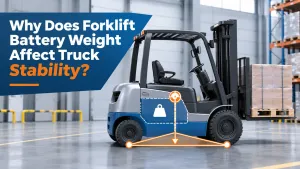
In counterbalance forklifts, battery mass can contribute to vehicle stability. A lighter replacement must meet the truck manufacturer’s permitted weight range and installation requirements. Unapproved ballast or structural modifications may compromise handling.
For fleets evaluating lithium forklift battery options, specify the compartment geometry, mounting points, environmental exposure and expected impact locations. Review the installation with the vehicle OEM before approving a prototype.
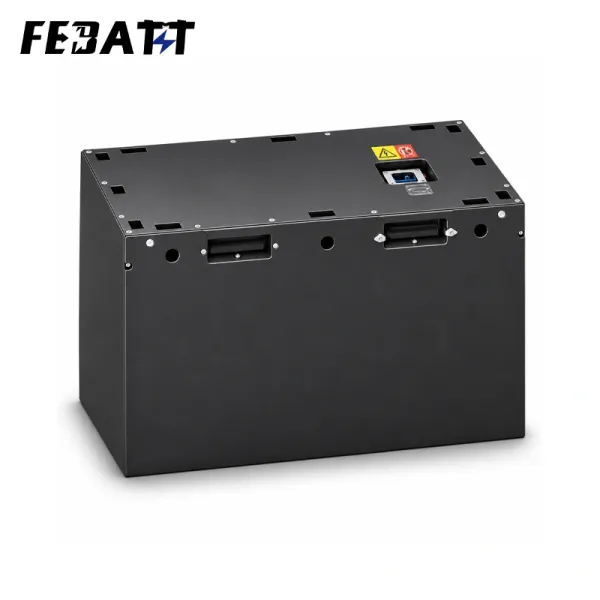
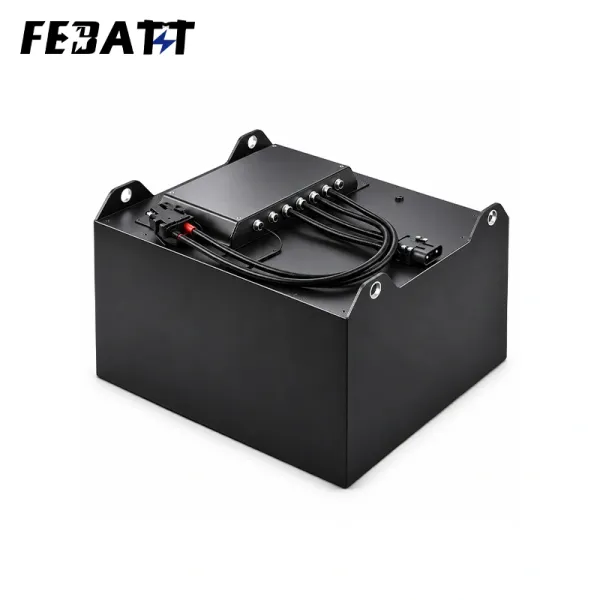
For example, the 64V 105Ah industrial forklift battery features a metal housing and compact profile. These are useful starting points for forklift battery safety, but mounting and impact resistance still require vehicle-specific verification.
Forklift battery safety also requires protecting cables from abrasion and connectors from unintended contact during loading, maintenance and battery removal.
What Should Buyers Validate Before Fleet Deployment?
A supplier’s generic specification sheet cannot establish forklift battery safety in every vehicle configuration. Buyers should agree on the intended application, acceptance criteria and evidence before placing a volume order.
IEC 62619:2022 covers safety requirements and testing for industrial lithium batteries, including forklift applications. Confirm the scope of applicable reports and any additional vehicle or market requirements.
| Validation stage | Fleet acceptance focus |
|---|---|
| Design review | Compartment fit, pack mass and mounting restraints |
| Mechanical verification | Application-relevant vibration, shock and enclosure integrity |
| System integration | BMS warnings, controller response and safe shutdown behavior |
| Pilot operation | Inspection findings after representative warehouse duty |
Use documented industrial battery testing procedures to assess supplier evidence. The complete battery system must also be validated in its intended installation, not assumed from a cell-level report.

How Should Fleets Respond After a Battery Impact?
A truck may appear operational after a collision even when the pack has sustained hidden damage. Normal dashboard readings do not establish forklift battery safety.
After a significant impact, remove the affected truck from service under the site’s emergency procedure. Do not charge or reuse a suspected damaged pack until authorized personnel have assessed it. If smoke, unusual heat or venting appears, evacuate the affected area and follow the emergency response plan rather than attempting to move the battery.
Record the incident, vehicle ID and available fault history. A qualified assessment should determine whether the battery requires repair, replacement or controlled return to service. A documented return-to-service decision prevents shift pressure from overriding technical judgment.
How Can Custom Lithium Solutions Improve Fleet Reliability?
Fleet buyers should evaluate mechanical protection alongside uptime. FEBATT’s power battery solutions address industrial duty cycles through durable pack designs, high-current capability and communication options such as CAN, subject to project requirements.
Specify the truck model, shift intensity, mechanical exposure and controller interface at the quotation stage. This allows the supplier to address forklift battery safety before production rather than relying on corrective work after delivery.
A validated lithium system offers a stronger foundation for multi-shift productivity, predictable maintenance and controlled fleet expansion.
Frequently Asked Questions About Forklift Battery Safety
Q: Can a forklift battery suffer internal damage without visible deformation?
A: Yes. An impact may damage cells, connections or insulation without obvious external marks. Forklift battery safety requires qualified assessment after significant impacts.
Q: Can a BMS detect mechanical damage inside a forklift battery?
A: Not always. It can flag abnormal operating readings, but hidden structural damage may remain undetected. Physical assessment is essential.
Q: What mechanical tests should OEMs require for forklift battery safety?
A: Request application-specific vibration, shock and mounting verification, with documented criteria appropriate to the battery and truck configuration.
Q: Should forklift battery safety be revalidated after enclosure changes?
A: Yes. Changes to mounting, materials or internal layout require engineering review and additional validation where necessary.
Q: What are the safety requirements for a forklift battery charging station?
A: Provide a designated area, compatible chargers, appropriate fire protection and safeguards against vehicle impacts. Follow applicable OSHA requirements and local codes. For forklift battery safety, never charge a suspected damaged pack before professional assessment. Review additional charging station requirements for hot warehouses.