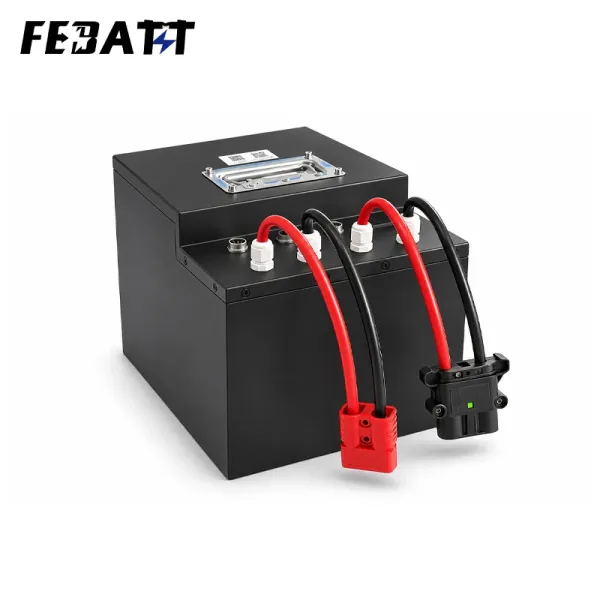
For OEMs managing lithium-powered equipment, battery performance is no longer just a matter of voltage, capacity, or cycle life. Different operating conditions, workload fluctuations, and maintenance practices can produce significant variations across otherwise identical battery packs.
Traditional monitoring methods often provide isolated readings without showing how batteries perform across an entire fleet.
Developed by AI Skylightor, ATVC is an intelligent safety and operations management system that connects equipment telemetry, data analysis, visualization, and authorized operational workflows.
For equipment manufacturers and fleet operators, ATVC battery monitoring provides a way to examine connected battery information in a broader operational context.
Rather than replacing existing Battery Management Systems (BMS), ATVC battery monitoring helps OEMs interpret available battery data, compare operating conditions, and make more informed maintenance and asset management decisions.
Why Do OEM Fleets Need Better Battery Monitoring?
A lithium battery that performs reliably in one vehicle may experience different operating demands when installed in another, even when both use identical battery specifications.
For example, an AGV operating continuously in a distribution center experiences different load patterns from an AGV assigned to intermittent material transfers. Similar differences occur among electric forklifts, warehouse vehicles, and service robots.
These variations complicate fleet-level battery management.
OEMs frequently encounter three operational challenges:
- Fragmented battery information: Battery data remains distributed across individual BMS units, equipment controllers, and service records.
- Inconsistent operating conditions: Equipment with similar battery configurations may experience different discharge patterns, temperatures, and utilization levels.
- Limited fleet-level comparisons: Maintenance teams can inspect individual batteries but struggle to identify broader operating trends.
Conventional battery monitoring may reveal current conditions without explaining how those conditions compare across equipment or change over time.
ATVC battery monitoring addresses this information gap by bringing compatible equipment data into a connected analytical environment.

For OEMs, the objective is not simply to collect more readings. It is to understand whether battery performance differences result from workload, environmental exposure, operating practices, or developing equipment issues.
This distinction becomes increasingly important when manufacturers support multiple equipment models, customer locations, and operating schedules.
What Battery Data Can AI Skylightor ATVC Monitor?
Effective battery monitoring begins with reliable operational information.
Depending on the available BMS interfaces and equipment configuration, ATVC battery monitoring can incorporate several categories of battery and equipment data.
| Data Category | Relevance to OEM Operations |
|---|---|
| Voltage and current | Evaluate electrical operating conditions and load-related variations |
| State of Charge (SOC) | Understand available charge and battery utilization patterns |
| State of Health (SOH) | Support long-term battery condition assessment |
| Temperature | Examine thermal operating conditions across different environments |
| Cycle count | Provide context for accumulated battery usage |
| Fault records | Identify recurring issues and support technical investigation |
| Equipment identification | Associate battery information with specific vehicles or assets |
These parameters become more useful when evaluated together rather than independently.
For instance, two AGVs may report similar SOC values but experience substantially different current demands during operation. Their temperature trends and accumulated cycle counts may also differ.
ATVC battery monitoring allows authorized users to examine such differences using connected historical and operational information.
However, individual parameters require careful interpretation.
A declining SOH estimate does not automatically indicate imminent battery failure. Likewise, a temporary temperature increase does not necessarily mean a battery is defective.
OEMs must consider measurement accuracy, operating conditions, BMS estimation methods, and historical trends before drawing conclusions.
The value of ATVC battery monitoring lies in connecting relevant observations so technical teams can investigate battery behavior with better context.
This approach is particularly useful for manufacturers evaluating batteries across multiple equipment platforms.
How Can ATVC Turn Battery Data Into Fleet Insights?
Collecting battery information is only the first stage of effective fleet management.
The more important challenge is converting individual readings into information that supports operational decisions.
ATVC battery monitoring helps bridge the gap between equipment-level telemetry and fleet-level analysis.

Comparing Battery Performance Across Equipment
Consider a fleet of warehouse vehicles equipped with lithium batteries of similar nominal specifications.
Although the batteries share a common design, their actual operating conditions may vary according to payload, route frequency, working hours, and ambient temperature.
ATVC battery monitoring can help operators compare available operational indicators across these vehicles.
Instead of examining isolated readings, technical teams can investigate differences in utilization, temperature behavior, and accumulated operating history.
Such comparisons may help identify equipment requiring further inspection or operational adjustments.
Importantly, comparisons should account for differences in equipment duty cycles. A heavily utilized vehicle should not automatically be classified as underperforming simply because its battery experiences more demanding conditions.
Identifying Patterns Through Historical Data
A single battery reading represents conditions at a particular moment. Historical data provides additional context.
By reviewing trends over time, ATVC battery monitoring can support investigations into recurring operational abnormalities, changes in battery behavior, and differences between equipment groups.
For example, an OEM may notice that batteries used in one warehouse zone consistently operate at higher temperatures than comparable units elsewhere.
Further investigation could examine workload intensity, ventilation conditions, or equipment configuration.
These observations do not establish a fault diagnosis by themselves. They help determine where additional technical assessment may be necessary.
Supporting Maintenance Prioritization
When maintenance resources are limited, not every battery can receive the same level of attention.
ATVC battery monitoring can support maintenance planning by organizing relevant operating information and helping teams identify assets that warrant closer examination.
Maintenance priorities may consider repeated abnormal operating patterns, changes in historical battery behavior, equipment utilization and operational importance, and previous service events and unresolved issues.
The final maintenance decision should remain consistent with manufacturer specifications, equipment protection requirements, and qualified technical assessment.
Through this process, ATVC battery monitoring supports more structured fleet management without treating every data variation as an equipment failure.
What Should OEMs Verify Before Integrating ATVC?
For B2B equipment manufacturers, selecting a connected monitoring solution requires more than reviewing dashboard functions.
Before implementing ATVC battery monitoring, OEMs should verify whether their existing battery and equipment systems can provide the information required for meaningful analysis.
- BMS Data Accessibility — Determine which battery parameters are available through supported communication interfaces. Not every BMS exposes identical information, and some data fields may require additional configuration or integration work.
- Data Quality and Consistency — Check whether measurements use consistent units, timestamps, identifiers, and reporting intervals. Incomplete or inconsistent records can undermine fleet comparisons even when the underlying batteries operate normally.
- Battery and Equipment Identification — Confirm that battery records can be associated with the correct equipment. This becomes particularly important when battery packs are replaced, transferred between vehicles, or serviced independently.
- Operational Compatibility — Evaluate how ATVC battery monitoring will interact with existing equipment management and maintenance processes. Requirements may differ between AGV fleets, electric forklifts, marine equipment, and other industrial applications.
- Verification and Access Control — Define how analytical findings will be validated, who can access equipment information, and which operational actions require authorization.
ATVC battery monitoring should complement equipment-level protection rather than bypass existing BMS safety mechanisms.

For OEM procurement teams, these checks provide a practical starting point for discussing system compatibility, implementation scope, and long-term support requirements.
Example: ATVC Battery Monitoring for an AGV Fleet
The following scenario is illustrative and does not represent a documented customer deployment.
Consider a warehouse automation company operating 48 lithium-powered AGVs across three shifts.
The fleet includes vehicles assigned to continuous material transport and others performing intermittent warehouse tasks.
Although the AGVs use comparable battery configurations, their operating demands differ considerably.
The operator wants to understand these differences without relying exclusively on individual vehicle inspections.
Establishing a Connected Data View
The company evaluates ATVC battery monitoring as a method of consolidating available BMS information and relevant equipment operating records.
Subject to interface compatibility, each AGV can be associated with its battery telemetry and historical operating data.
This allows maintenance personnel to review battery conditions across the fleet rather than collecting information separately from every vehicle.
Comparing Operational Conditions
During a hypothetical review, technicians identify several AGVs exhibiting higher battery temperature trends during comparable operating periods.
The team examines available current, utilization, and operating history information to determine whether these differences are associated with heavier workloads or conditions requiring inspection.
ATVC battery monitoring supports this comparison by presenting relevant data in a connected operational context.
However, the findings still require technical validation before maintenance actions are selected.
Evaluating Maintenance Outcomes
After the necessary inspections, the operator records the findings and reviews subsequent battery operating data.
The company can assess the usefulness of its monitoring process through measurable indicators, including frequency of unplanned battery-related downtime, time required to investigate recurring issues, number of repeat service incidents, and availability and completeness of battery operating records.
These indicators provide a basis for evaluating the implementation. They are not guaranteed performance improvements.
For an OEM supplying equipment to multiple warehouse customers, ATVC battery monitoring could also support more consistent technical investigations and better-informed after-sales service discussions.
The broader benefit is the ability to connect battery operating information with practical equipment management decisions.
Frequently Asked Questions About ATVC Battery Monitoring
Q: Can ATVC battery monitoring replace an existing BMS?
A: No. ATVC battery monitoring is intended to complement compatible BMS capabilities, not replace essential battery-level protection. A BMS remains responsible for its configured monitoring and protective functions, while ATVC can support broader data analysis, visualization, and operational coordination.
Q: Can ATVC battery monitoring support different lithium battery applications?
A: ATVC battery monitoring may be applied to compatible equipment across AGV/AMR fleets, warehouse vehicles, service robots, marine applications, and other connected assets. Actual integration depends on available interfaces, data accessibility, equipment configuration, and project requirements.
Q: What should OEMs prepare before deploying ATVC battery monitoring?
A: OEMs should prepare relevant BMS communication specifications, available telemetry fields, equipment identification methods, operating requirements, and maintenance objectives. Historical data and representative operating records can help establish a useful baseline for evaluation.
As lithium-powered equipment becomes more interconnected, OEMs need a clearer understanding of how batteries perform under real operating conditions.
ATVC battery monitoring provides a framework for connecting compatible battery data with fleet-level visibility, technical investigation, and maintenance planning.
By combining equipment telemetry with analytical and operational workflows, AI Skylightor ATVC helps manufacturers and fleet operators move beyond isolated battery readings toward more informed asset management.
To explore the broader system capabilities and integration approach, visit the official AI Skylightor ATVC system page.