An AGV can pass an unloaded trial yet stall during a peak-hour shift. Its specification may never have reflected the actual route. Before approving an AGV LiFePO4 battery, OEM buyers should verify five things: deliverable energy, repeated peak-power capability, temperature-dependent limits, vehicle interfaces, and traceable safety evidence. Its datasheet matters only when claims can be tested against the fleet’s operating envelope. The objective is a specification that survives daily service.
Which AGV LiFePO4 Battery Specifications Matter to Fleet Uptime?
Start with the work the vehicle performs. A low-profile pallet mover, a lift-equipped material carrier, and a cross-dock tug can share the same nominal voltage yet impose radically different loads. For each AGV LiFePO4 battery, capture loaded and unloaded routes, payload distribution, gradients, stops per hour, lift cycles, accessory consumption, shift length, and available recovery windows.

The supplier’s first response should be a model-specific datasheet with its revision number, not a marketing sheet for a battery family. The chosen pack must suit a defined vehicle platform, not an abstract capacity target. The distinctions are examined in this automated guided vehicle battery comparison; the buyer’s next task is to demand evidence for the exact proposed configuration.
| Fleet scenario | Datasheet evidence to request | Risk if omitted |
|---|---|---|
| Repetitive starts with heavy payloads | Current-versus-time curve, voltage sag, test temperature | Unexpected traction faults |
| Lift-equipped warehouse AGV | Simultaneous drive-and-lift load, minimum terminal voltage | Failed lift or controller reset |
| Cold-room transfer route | Discharge derating and charging interlocks at expected temperatures | Lost working time |
| Multi-shift logistics fleet | Delivered watt-hours at stated cutoff and test rate | Unplanned mid-shift withdrawal |
A reliable quotation must map operating conditions to declared test conditions. Any field marked “typical” should identify the test basis and permissible tolerance. Without that bridge, seemingly equivalent bids are not equivalent.
How Can Buyers Check Electrical Compatibility Without Overweighting Voltage?
“48V-class” is a system label, not an interchangeability certificate. Depending on cell configuration, nominal pack voltage may be 48.0V or 51.2V, while actual limits extend above and below either figure. For an AGV LiFePO4 battery, the consequential questions are whether the full voltage window, connector pinout, contactor behavior, and BMS messages suit the AGV controller and dock equipment.
Request the AGV LiFePO4 battery minimum and maximum operating voltages, cutoff thresholds under load, charge-voltage ceiling, polarity drawings, and CAN or RS485 message definitions where applicable. Then obtain a written compatibility decision from the vehicle engineering team. A nominal-voltage match cannot establish software compatibility, safe recovery after protection trips, or suitable packaging. Electrical fit is one approval gate, not the whole procurement decision.
What Evidence Proves an AGV LiFePO4 Battery Can Handle Repeated Peaks?
A “150A peak” claim is uninterpretable without duration, repetition interval, starting state of charge (SOC), initial temperature, and terminal-voltage criterion. An AGV LiFePO4 battery that survives one short acceleration event may still limit power after successive turns, lifts, and inclines. Peak current also differs from continuous current; neither number alone characterizes the actual duty cycle.
Ask for a test trace showing current, voltage, cell or pack temperature, SOC, and BMS status through repeated events. The AGV LiFePO4 battery test should replicate the project’s highest combined traction and hydraulic demand, including the sequence of loads, rather than an isolated laboratory pulse. Confirm that current was measured at the pack terminals and that protection remained inactive.
Example—engineering screening, not a supplier rating: Suppose an AGV draws 85A for 12 seconds during a loaded lift, followed by 40A for 90 seconds while moving. If that pattern repeats every four minutes, a one-off 100A certificate is insufficient. The buyer needs a test trace spanning multiple cycles at realistic temperature and low-but-permitted SOC. Voltage sag and heat accumulation, not a headline ampere figure, may determine fleet viability.

For the AGV LiFePO4 battery, agree on pass/fail criteria before the sample arrives: no unintended reset, no protection trip, and no voltage falling below the controller’s specified operating threshold. That makes the AGV LiFePO4 battery test reproducible and the vendor comparison defensible.
How Much Usable Energy Will the AGV LiFePO4 Battery Deliver Per Shift?
Rated ampere-hours describe capacity under specified conditions. Fleet planners need usable watt-hours within the vehicle’s approved SOC and temperature limits. For an AGV LiFePO4 battery, require the discharge rate, ambient temperature, starting SOC, cutoff voltage, and measured energy delivered at the terminals. Distinguish cell-level values from complete-pack results; enclosure electronics and protective limits change the practical boundary.

Consider an illustrative vehicle averaging 600W during three hours of productive movement. Its measured duty requires 1.8kWh before reserve. If an OEM adds a 20% planning margin and elects to use only 80% of rated energy, the preliminary requirement becomes 1.8 × 1.20 ÷ 0.80 = 2.7kWh nominal. These percentages are buyer assumptions, not universal LiFePO4 guarantees. Verify them with the actual route, auxiliary loads, charging policy, and supplier test results.
A credible AGV LiFePO4 battery energy report should include a capacity test near the lowest permitted operating temperature. Request temperature-dependent discharge limits and explicit rules for charging below the supplier’s allowable threshold. “Operates at −10°C” may describe discharge only; it does not automatically authorize low-temperature charging.
Compare usable energy per shift and reserve, not price per nominal kilowatt-hour. If two AGV LiFePO4 battery options offer identical nameplate energy but different allowable SOC windows, their effective fleet availability may diverge substantially.
Which Safety and Lifetime Claims Need Model-Specific Evidence?
Safety wording should resolve into identifiable documents. IEC 62619:2022 explicitly includes automated guided vehicles among industrial motive applications; however, a supplier citing it still needs to show the relevant cell or battery model, report scope, laboratory, and edition. For an AGV LiFePO4 battery, buyers should establish whether evidence covers the complete offered pack or only constituent cells. See the IEC’s published scope for the standard’s application boundary.
UN 38.3 addresses transport tests, not proven endurance in an operating AGV. The U.S. PHMSA lithium battery guidance explains the transport test-summary requirement. Ask for a summary identifying the battery type shipped, and do not mistake transport compliance for vehicle-level functional validation. A sound AGV LiFePO4 battery supplier review separates these evidence streams.
Likewise, “4,000 cycles” has limited procurement meaning without test temperature, charge/discharge rate, depth of discharge, end-of-life retention threshold, and the warranty’s operating exclusions. Request the model’s cycle-test protocol and representative results; distinguish laboratory projections from contractual service-life guarantees. Field reliability also depends on controller integration, preventive maintenance, and fleet duty severity.
Finally, insist on document traceability: model identifier, revision, serial-number linkage where offered, firmware designation, and change-notification process. The pack approved at prototype stage must remain identifiable in subsequent production batches.
What Should Buyers Do When AGV LiFePO4 Battery Datasheets Conflict?
Suppose a quotation lists 100Ah, the supplied drawing shows a different part code, and the test report cites a third configuration. Do not choose the most favorable figure. Put the AGV LiFePO4 battery comparison on hold and open a clarification register covering each discrepancy, the responsible owner, the replacement document, and the date of closure.
The strongest response is a controlled specification package: signed datasheet, dimensional drawing, electrical interface definition, BMS revision, acceptance-test method, and a clear statement of deviations from the buyer’s RFQ. A useful distinction is “declared,” “demonstrated,” and “approved.” A claimed AGV LiFePO4 battery rating is declared; a model-specific report demonstrates it; a successful vehicle trial against agreed criteria supports approval.
This is operational risk control. In a documented South Korean AMR customization project, installation constraints, communications, charging-station matching, and sample validation shaped the progression toward production. The operational lesson is that an AGV LiFePO4 battery should not enter bulk procurement with unresolved interface or test-document discrepancies. Retain the approved AGV LiFePO4 battery document set as the baseline for future batches.
What Evidence Belongs in an AGV LiFePO4 Battery RFQ?
An RFQ should ask suppliers to return comparable proof, not just a unit price. For an AGV LiFePO4 battery, issue a requirement matrix with a column for the requested value, supplier declaration, evidence file, acceptance criterion, and deviation status. Separate inviolable vehicle limits from preferences negotiable on cost or lead time.
Minimum evidence package for each shortlisted AGV LiFePO4 battery:
- Fleet duty file: route profile, payload, starts and lifts, ambient conditions, shift demand, planned reserve.
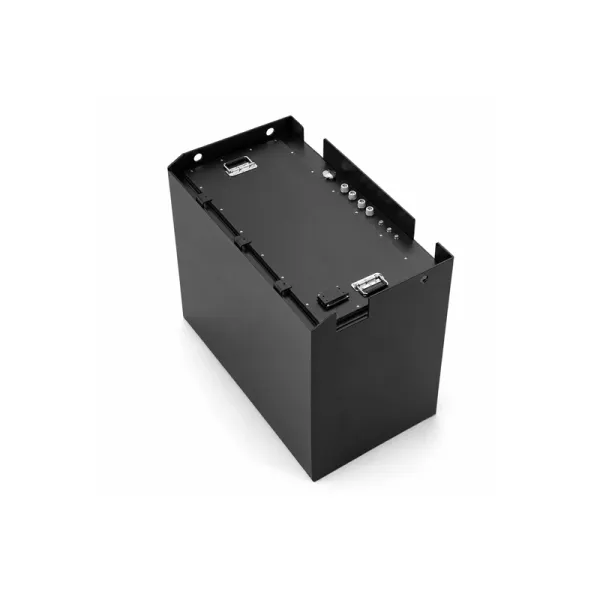
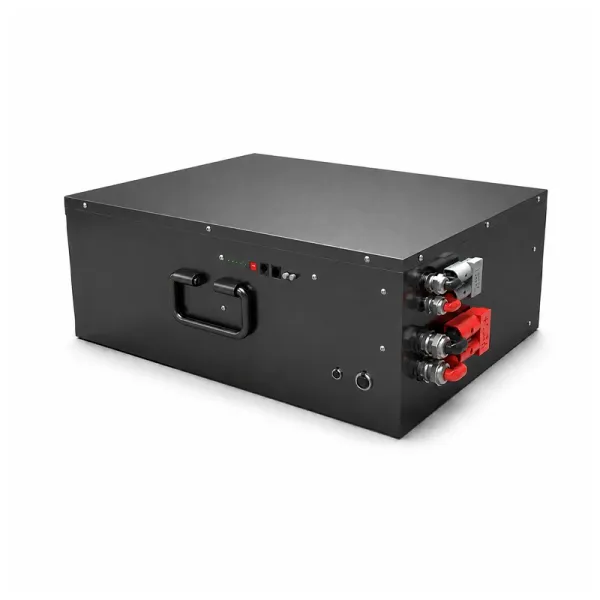
- Pack identity: manufacturer part number, cell configuration, dimensions, mass, connectors, mounting, drawing revision.
- Electrical proof: usable-energy report, continuous-current test, repeatable peak-current trace, voltage limits.
- Integration proof: BMS interface and fault-state definitions, controller acceptance, charger compatibility where applicable.
- Safety and service proof: applicable model-specific reports, UN 38.3 transport summary, cycle-test conditions, warranty terms.
- Commercial control: sample and pilot quantities, annual forecast, lead time, change approval, traceability and field-failure process.
Before selecting an AGV LiFePO4 battery, assign engineering to validate performance, quality to authenticate evidence, operations to verify route coverage, and procurement to reconcile pricing against the same specification. An AGV LiFePO4 battery vehicle trial should close the gaps before purchase-order release.
For broader industrial programs, the power battery solution for B2B applications provides a starting point for discussing customized pack configurations. The AGV LiFePO4 battery RFQ itself should remain specific to the AGV model, site conditions, and production acceptance plan.
Frequently Asked Questions About AGV LiFePO4 Batteries
Q: What should an AGV LiFePO4 battery datasheet include?
A: An AGV LiFePO4 battery datasheet should identify the exact model, usable energy, continuous and timed peak current, voltage window, temperature limits, dimensions, interfaces, test conditions, revision, and applicable safety evidence.
Q: Are all 48V AGV LiFePO4 batteries interchangeable?
A: No. An AGV LiFePO4 battery marketed as 48V may differ in operating-voltage window, current capability, size, pinout, BMS messaging, and protection behavior. Confirm vehicle compatibility through drawings and controlled tests.
Q: How can buyers verify AGV battery peak discharge current?
A: Request an AGV LiFePO4 battery test trace stating peak amperes, duration, rest interval, temperature, starting SOC, voltage sag, and protection status. Repeat the vehicle’s real lift and acceleration sequence before approval.
Q: Does a high cycle-life rating guarantee AGV fleet reliability?
A: No. An AGV LiFePO4 battery cycle claim depends on test depth of discharge, temperature, current, and end-of-life definition. Fleet uptime also requires matched power demand, control interfaces, service, and route conditions.
Before approving an AGV LiFePO4 battery for pilot or volume production, send the vehicle duty profile, mechanical drawing, current peaks, ambient limits, interface specification, and target volumes. Request a model-specific datasheet, validation plan, and deviation register with the quotation. A supplier’s willingness to document what the AGV LiFePO4 battery can reliably deliver is more valuable than a specification that merely looks impressive.