A hotel delivery robot may travel only the final corridor to a guest room, but operators measure success by orders completed throughout the day. A battery for delivery robots must support propulsion, cameras, LiDAR, wireless communication and navigation computing—while the wheels are stationary.
Elevator delays, heavier orders and lunchtime peaks reveal why advertised capacity is incomplete. Can each unit finish its tasks and return to service without disruption?
Why Can Delivery Robots Stop Before Their Batteries Are Empty?
Rated capacity in amp-hours (Ah) describes charge capacity, while nominal energy in watt-hours (Wh) estimates stored energy. Neither figure alone captures a delivery robot’s full duty cycle. A robot consumes power while waiting, turning, accelerating, carrying a load or negotiating a floor transition. Heavy departures may briefly draw far more current than steady travel.
That surge can cause voltage sag or trigger protection if the pack cannot deliver the required current. Even a battery for delivery robots displaying charge may force a mission abort. Buyers should request discharge-current records, fault logs and return-to-dock behavior from realistic, fully loaded routes—not just unloaded runtime figures.

Where Does Working Time Disappear During a Busy Shift?
A useful battery for delivery robots is one that fits the operating schedule. Three everyday events reduce productive time:
| Operating moment | Fleet consequence | What the battery must support |
|---|---|---|
| Waiting at elevators | Navigation stays active without travel | Low standby drain and dependable SOC reporting |
| Meal-service rush | Frequent starts with heavier payloads | Verified short-duration peak output |
| Return to docking station | Robot becomes unavailable to take orders | Reliable charging handshakes and enough reserve energy |
Track completed deliveries per shift alongside unscheduled stops, charging minutes and missions rejected because of low energy. These metrics beat a single maximum-runtime claim.
Why Is a Lithium Battery a Better Fit for Commercial Delivery Fleets?
A well-designed lithium battery for delivery robots can offer compact packaging, intelligent protection and manageable recurring charging. LiFePO4 is particularly attractive where frequent cycling, thermal stability and long-term service matter. Unlike flooded lead-acid batteries, it does not require watering, and its usable energy can be easier to accommodate in a compact mobile platform.
Chemistry is not a substitute for engineering. Pack cooling, enclosure protection, discharge capability and charger compatibility still need verification. Where size or weight is especially restrictive, another lithium-ion chemistry may be appropriate. FEBATT explains chemistry-level considerations in its guide to LiFePO4 batteries for mobile robots; this article instead focuses on daily delivery availability.
How Can Fleets Schedule Charging Without Missing Orders?
Nightly charging suits robots that work one defined shift. Hotels with around-the-clock delivery demand may need opportunity charging during quieter periods. Available service time is the scheduled service window minus charging, faults, and other periods when robots cannot accept tasks. Track fleet availability as the percentage of scheduled time that each robot is ready to accept jobs.

A battery for delivery robots should be evaluated together with docking availability, charging power, temperature limits and control-system instructions. Fast charging only helps if the battery and charger explicitly support it. This motive-power battery solution describes the broader approach to protected charging and compatible fleet power systems.
What Battery Data Should a Robot Dispatch System Receive?
For a battery for delivery robots, a meaningful state-of-charge estimate helps the dispatch system decide whether to accept another job or return to the dock. Pack voltage, current, temperatures, fault codes and charge permissions also support smarter scheduling and fewer unexpected cancellations.

An OEM should confirm the exact CAN or RS485 messages, update intervals and fault responses needed by its controller. “Smart BMS” claims still require an interface specification and integration test.
What Should OEMs Validate Before Fleet Deployment?
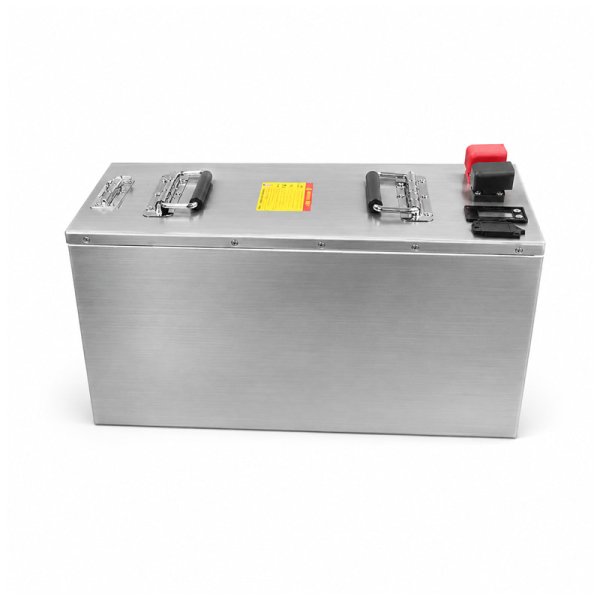
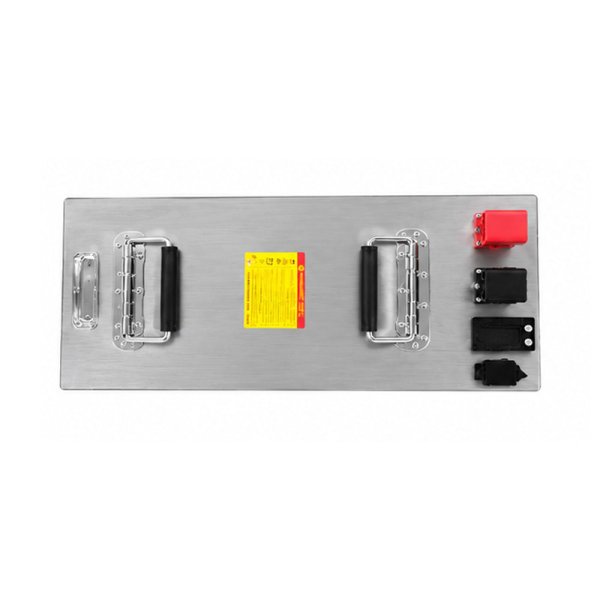
FEBATT lists a 25.6V 60Ah service robot battery with 1,536Wh calculated nominal energy, 70A peak current, CAN/RS485 communication and a stated cycle life of at least 2,000 cycles. Those are published product specifications, not independently measured delivery runtime or a guarantee of continuous operation.
Before purchasing a battery for delivery robots at scale, ask suppliers to demonstrate:
- A fully loaded shift test with starting, stopping, waiting, docking and reserve-energy conditions.
- BMS compatibility, fault recovery, mechanical fit and charging behavior on the actual robot.
- Cycle-life test conditions, acceptance limits, traceability and replacement support for repeat orders.
Qualify for expected fleet life, not the cheapest quotation. This battery cycle-life evaluation guide explains why test depth and operating conditions matter when comparing supplier claims.
Frequently Asked Questions About Battery for Delivery Robots
Q: How long can a delivery robot battery run on one charge?
A: Runtime depends on payload, route length, elevator waiting, computing load and usable energy. Request results from a representative duty cycle, including the reserve needed to return to a charger; a supplier’s nominal Wh rating alone cannot establish operating hours.
Q: Which lithium chemistry works best for hotel delivery robots?
A: LiFePO4 often suits frequent-duty fleets seeking thermal stability and long cycle life. Higher-energy-density lithium-ion options may fit severe space or weight limits. Evaluate the assembled pack and its protective system, not chemistry alone.
Q: Can delivery robots recharge automatically between tasks?
A: Yes, if the robot, docking station, charger and BMS are designed to coordinate. Opportunity charging can recover energy in quiet periods, but its usefulness depends on verified charging limits and enough time between assignments.
Q: Why might a delivery robot shut down with charge remaining?
A: Peak motor current, voltage drop, temperature limits or inaccurate SOC estimation may trigger a protective stop. Review battery and controller event logs before replacing a pack or changing dispatch rules.
Q: What should an OEM request from a delivery robot battery supplier?
A: Request a pack specification, controller-interface details, peak-current validation, charging limits, safety and transport documentation, and application-cycle testing. Include sample approval, quality consistency and lead-time expectations in the purchasing agreement.
How Can FEBATT Support Delivery Robot Fleet Deployment?
A reliable delivery fleet needs lithium battery performance matched to actual jobs—not maximum advertised capacity. Share your robot’s payload, daily task pattern, charging windows and controller requirements with FEBATT to assess an OEM pack.