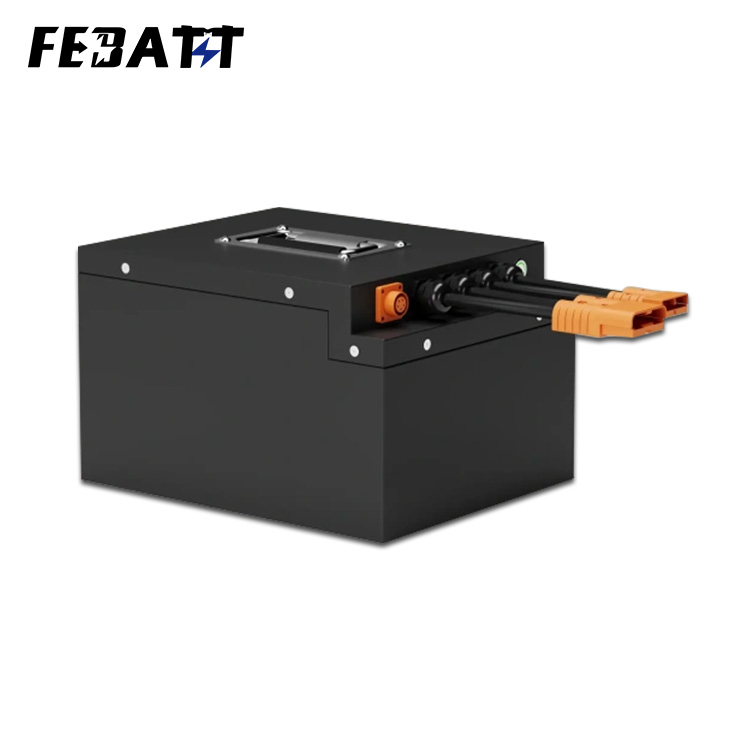
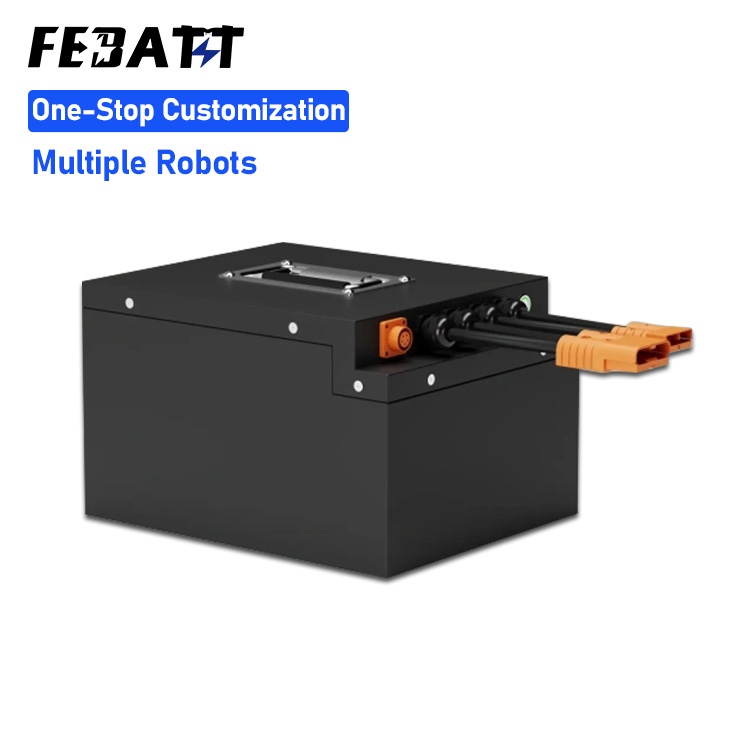
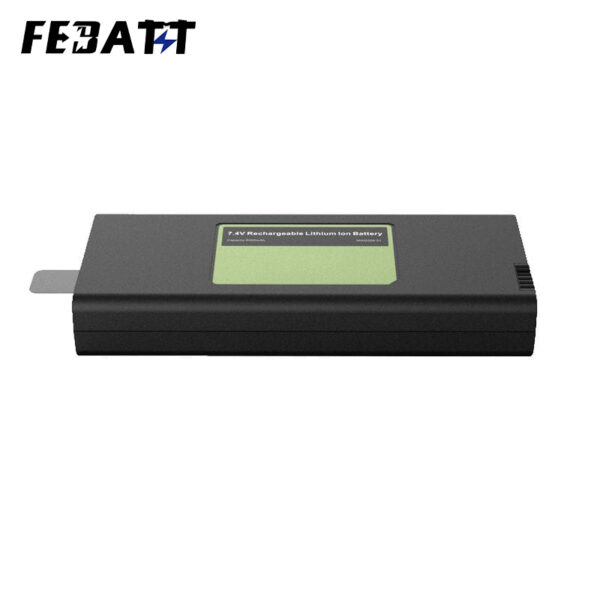
25.6V 60Ah Service Robot Battery: Powering Next – Gen Hospitality & Service Automation
Introduction
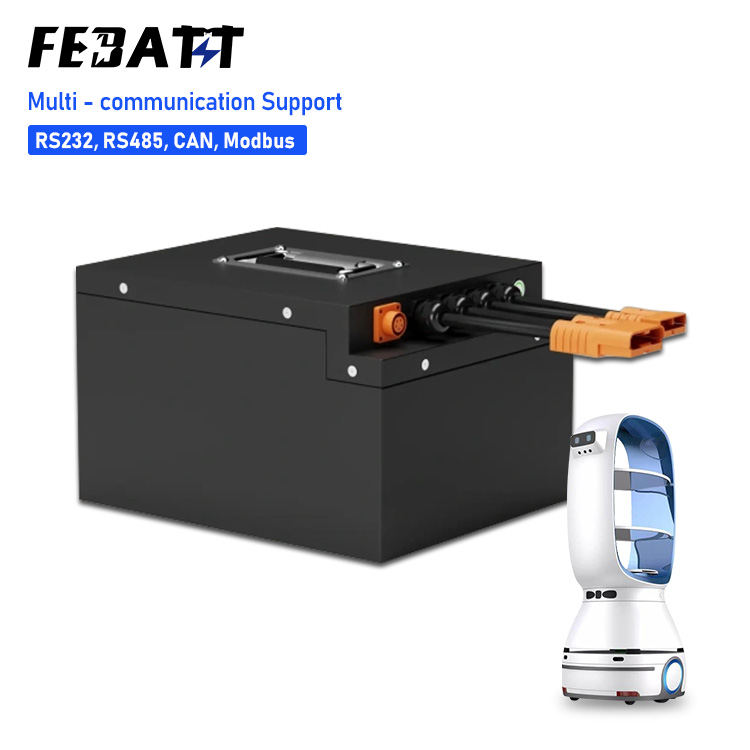
Tailored for the dynamic world of service robotics, the 25.6V 60Ah Service Robot Battery stands as a high – performance LiFePO₄ – based power solution. Engineered to be the driving force behind hotel service robots, restaurant delivery bots, and a wide array of service automation systems, this battery is a core component for seamless 24/7 operations in the hospitality sector. Whether in the elegant ambiance of hotel lobbies or the bustling chaos of restaurant kitchens, it combines a remarkable cycle life of over 2000 cycles, advanced CAN communication for smart integration, and IP54 protection to withstand diverse environmental challenges.
Battery Model
Nominal Voltage
Nominal Capacity
Battery Type
Application Scenarios
Features and Advantages
Dimensions (mm)
Weight
BL006B – RBA – 3S1P
10.8V
2600mAh
Lithium Battery Pack
Sweeping Robots
High – precision, low – power battery management, multiple safety protections for stable operation and long lifespan
134.0×38.0x20.5
customizable
BA001B – LS – 4S4P
14.8V
10400mAh
Lithium Battery Pack
Underwater Operation Robots
BMS, deep – water waterproof (30m/2 hours), using power batteries
159.16×72.4×68.9
1030g
JYHY24V100AH
24V
100AH
Lithium Battery Pack
Industrial Machinery, AGV Logistics Vehicles, RGV, Patrol Robots, etc.
Can support 100A discharge current, 300A instantaneous discharge current, with short – circuit, over – charge, over – discharge, over – current, temperature protection and RS485/CAN communication functions
350x150x280
20KG
Li – ion 21.6V / 2.9Ah
21.6V
2.9Ah
Lithium – ion Battery
Educational and Medical Assistance Robots
Lightweight, compact, high energy density, fast charging capability
customizable
customizable
LiFePO₄ 25.6V / 10Ah
25.6V
10Ah
Lithium Iron Phosphate Battery
Gait Training Robots
Long cycle life, enhanced thermal stability, high safety
customizable
customizable
48v lfp robot battery tp 6068
48V
30Ah
Lithium Iron Phosphate Battery
Robots (multiple batteries can be paralleled to expand the working range)
Standard discharge current 30A, maximum 60A, peak 100A, 1440Wh power
customizable
customizable
Why It’s a Game – Changer for Service Robots
1. Endurance for Round – the – Clock Hospitality
The 25.6V 60Ah Service Robot Battery ensures:
“2000 + Cycles: Powers hotel room – service robots for 3+ years of daily use—slashes lifecycle costs by 70%.”
“60Ah Capacity: Runs restaurant delivery bots to serve 150+ tables per charge—no mid – shift downtime.”
2. CAN – Driven Smart Fleet Management
With CAN communication:
“Real – Time Health Alerts: Monitors voltage, capacity, and faults—prevents lobby robot outages.”
“Seamless System Integration: Syncs with hotel management platforms—automates charging schedules.”
“Busy Restaurant Back – of – House: IP54 protection handles food prep spills, dust buildup.”
FAQ
Q1: What applications are lithium batteries for service robots designed for?
A: Lithium batteries for service robots are commonly used in hotel service robots, restaurant delivery robots, reception and guidance robots, retail service robots, and other mobile service automation platforms. Battery selection should be based on the robot’s voltage, required runtime, continuous and peak load, available installation space, charging method, and communication requirements.
Q2: How do I choose the right lithium battery for a service robot?
A: Start with the robot’s nominal voltage, required capacity, continuous and peak current, target runtime, battery compartment dimensions, weight limit, charging current, connector type, and communication interface. Output power and capacity should be matched to the robot’s real duty cycle rather than selected from voltage or ampere-hours alone.
Q3: Can FEBATT customize lithium battery packs for service robot manufacturers?
A: Yes. FEBATT can develop custom lithium battery packs for service robot projects, including voltage, capacity, dimensions, housing, connector type, BMS settings, charging parameters, and communication interfaces. This is useful when a robot has a proprietary battery compartment, non-standard power requirements, or specific integration requirements.
Q4: What is the typical cycle life of a service robot lithium battery?
A: Cycle life varies with cell chemistry, depth of discharge, charge and discharge rate, operating temperature, and duty cycle. As a published reference, one FEBATT 25.6V 60Ah service robot battery is rated for 2,000+ cycles. The cycle-life rating for each service robot battery should be confirmed from the specifications of the selected model and its test conditions.
Q5: How does the BMS protect a lithium battery for service robots?
A: The Battery Management System (BMS) monitors key battery conditions such as voltage, current, and temperature and can provide protection against overcharge, over-discharge, overcurrent, short circuit, and abnormal temperature conditions. Depending on the configuration, the BMS may also provide state-of-charge information, fault data, cell balancing, and communication with the robot controller.
Q6: Can service robot batteries support continuous and peak power demands?
A: Yes, when the battery is engineered for the robot’s load profile. Service robots can experience short power peaks during startup, acceleration, lifting, turning, or operation of actuators and accessories. The battery cells, BMS, wiring, and connectors must therefore be selected to support both the required continuous current and short-duration peak current without excessive voltage drop or unintended protection shutdown.
Q7: What communication interfaces are available for service robot batteries?
A: Service robot lithium batteries can be configured with communication interfaces such as CAN or RS485, depending on the project. These interfaces allow the robot controller to access battery information such as state of charge, voltage, current, temperature, and fault status. FEBATT’s published service robot battery configurations include CAN and RS485 examples, but the required protocol and message format should be confirmed during integration.
Q8: How does operating temperature affect a service robot lithium battery?
A: Temperature affects available capacity, charging behavior, internal resistance, and battery aging. FEBATT’s published service robot references include selected configurations with operating ranges down to -20°C and up to 60°C, while another 25.6V 60Ah service robot battery is specified at -15°C to 60°C. Actual charge and discharge temperature limits are model-specific and should be confirmed for the robot’s operating environment.
Q9: How do charging current and charging strategy affect service robot uptime?
A: Charging strategy should be matched to the battery design and the robot’s operating schedule. Charge current, charger voltage, allowable charging window, duty cycle, and whether the robot charges between tasks all affect practical uptime. For reference, FEBATT’s published 48V 45Ah service robot battery configuration specifies a 21A (0.5C) charge current. This is an example rather than a universal charging rate for all service robot batteries.
Q10: What lithium battery chemistry is suitable for service robots?
A: LiFePO4 and other rechargeable lithium-ion chemistries can both be used in service robots. LiFePO4 is often selected when long cycle life and thermal stability are priorities, while other lithium-ion chemistries can be useful when energy density, compact size, or lower weight is more important. The best chemistry depends on the robot’s runtime target, space and weight limits, load profile, charging strategy, and operating environment.