A custom marine lithium battery becomes necessary when a standard pack cannot safely meet a vessel’s operating profile, installation constraints, control interfaces, or approval requirements. For commercial fleets, the decision is less about selecting an unusual voltage than preventing cancelled voyages, complicated retrofits, and incompatible replacement units.
A successful custom marine lithium battery project starts with measurable vessel requirements—not a manufacturer’s catalogue. The following framework helps shipyards, OEMs, and fleet engineers determine whether customization is justified and what evidence to demand before placing a production order.
When Is a Custom Marine Lithium Battery Necessary?
A custom marine lithium battery is justified when adapting the boat to a catalogue pack would introduce greater integration risk or lifecycle cost than adapting the battery to the boat. Standardized solutions remain sensible when dimensions, loads, and controls already match.
| Fleet application | Where a standard pack may fall short | Customization priority |
|---|---|---|
| Harbor workboats and pilot vessels | High propulsion peaks, variable shifts, restricted machinery spaces | Peak-load capability and secure mounting |
| Passenger ferries and water taxis | Predictable departures, tight turnaround windows, multiple identical vessels | Repeatable usable energy and fleet-level diagnostics |
| Survey and research craft | Sensitive electronics, extended low-speed missions, variable auxiliary loads | Clean interface coordination and dependable reserve |
| Existing vessel retrofits | Fixed access hatches, uneven compartments, legacy control wiring | Form factor, connectors, and integration documentation |
For a workboat operator, a custom marine lithium battery may eliminate mechanical redesign while preserving access for inspection. The operational context matters: a harbor tug, survey craft, and passenger launch rarely share the same energy-use pattern. For broader vessel-duty-cycle considerations, see this electric workboat battery specification guide.
Decision rule: Request a custom marine lithium battery only when a documented mismatch affects safety, uptime, maintainability, or total installed cost. Customization without a measurable benefit adds tooling, validation, and replacement complexity.
Which Electrical Parameters Can Be Customized?
The first specification for a custom marine lithium battery should describe the mission: operating hours, propulsion demand, auxiliary loads, turnaround expectations, weather exposure, and reserve policy. Nominal capacity alone does not describe what the fleet can reliably use.
- Usable energy: Develop a duty-cycle profile from logged loads, not brochure motor ratings. For example, if the average load-side demand is 12 kW over five operating hours, the connected loads require 60 kWh. Battery sizing must also account for conversion losses, operating reserves, and aging allowances.
- Power response: Record continuous loads and brief acceleration, maneuvering, or winch peaks. A custom marine lithium battery must support these events without nuisance shutdowns or excessive voltage sag.
- Operating envelope: Define ambient temperature, cooling assumptions, acceptable charge windows, and the minimum end-of-life capacity required to complete a route.
- System interfaces:Identify propulsion controllers, inverters, onboard auxiliary equipment, emergency isolation devices, and whether modules must operate as a coordinated battery bank.
An experienced OEM specifies the custom marine lithium battery against a worst credible operating day, then verifies the energy budget with route data. Avoid designing solely around the first months of service; usable capacity and peak-power capability need explicit end-of-life acceptance criteria.
A further question is scalability. If future vessels need longer routes, the custom marine lithium battery architecture should allow documented expansion without uncontrolled changes to software, protection settings, or service parts.
How Should a Custom Battery Fit the Vessel's Installation Space?
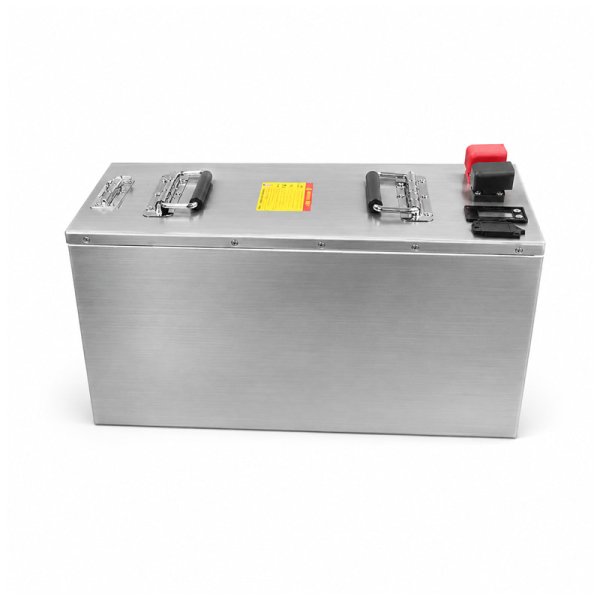
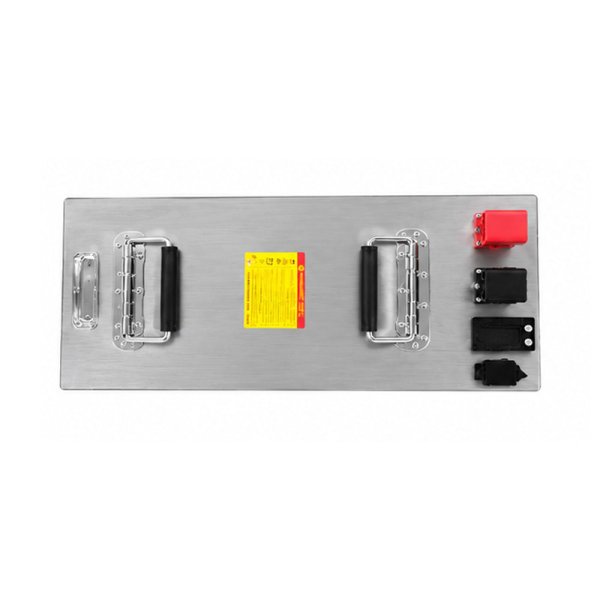
A custom marine lithium battery must be designed around the vessel’s actual installation envelope, not merely the dimensions of an empty compartment. Doorways, hatch openings, fastening access, cabling bends, inspection clearances, and safe lifting routes can all determine whether a prototype is installable.
Before freezing the enclosure, supply annotated drawings or a 3D model showing mounting points, allowable mass, orientation, service zones, and nearby heat or water sources. On retrofits, inspect the vessel itself; legacy drawings may not reflect later modifications.
For commercial service, a custom marine lithium battery enclosure also needs an agreed approach to vibration, mechanical shock, salt-laden atmosphere, moisture ingress, drainage, and corrosion between dissimilar metals. A claimed IP rating is not a substitute for evaluating installation-specific exposure.
Practical acceptance check: Can a technician isolate, remove, and replace a custom marine lithium battery using the vessel’s intended access route without dismantling unrelated equipment? If not, redesign the installation before approving production tooling. Service time becomes fleet downtime when the same defect appears across many hulls.
How Should OEMs Define BMS, Safety and Marine Protection?
For a custom marine lithium battery, the battery management system (BMS) must exchange the right information with the vessel—not simply report cell conditions. Specify communication protocols, message maps, update intervals, alarm priorities, and the response expected from the propulsion controller.
A marine BMS should provide appropriate monitoring and protective functions for temperature, current, voltage, state of charge, and abnormal operating conditions. Yet the critical design question is what happens next. Should a warning limit propulsion demand, alert the bridge, isolate one module, or initiate a coordinated shutdown? These decisions require a joint hazard review with the vessel integrator.
The custom marine lithium battery specification should therefore define:
- Warning and shutdown thresholds, with documented fault priorities and recovery conditions.
- CAN or RS485 integration, including signal definitions and communication-loss behavior where applicable.
- Isolation, contactor logic, interlocks, and coordination with vessel emergency procedures.
- Diagnostics accessible to fleet maintenance teams, including event logs and serviceable fault codes.
For a more focused explanation of fault handling, this marine battery management system guide addresses the safety layer in greater depth. This article’s concern is making that layer part of a manufacturable custom marine lithium battery specification.
Applicable standards depend on vessel type, jurisdiction, and classification. IEC 62619:2022 covers safety requirements for industrial lithium batteries, including marine applications; ABYC E-13-2025 addresses selection and installation of lithium-ion batteries on boats. Compliance must be evaluated against the actual project, not assumed from a component datasheet.
How Should Custom Marine Battery Prototypes Be Validated?
A custom marine lithium battery prototype is not approved simply because it powers the propulsion system during a demonstration. Before mass production, OEMs need a written design-verification plan, measurable acceptance criteria, and traceable evidence for the exact configuration being purchased.
| Verification stage | What the OEM should witness or receive |
|---|---|
| Fit and installation | Physical fit, mounting integrity, cable clearance, lifting and service access |
| Electrical performance | Usable energy, continuous and peak demand, voltage response, thermal behavior |
| Controls and fault response | Communication mapping, alarms, derating, isolation, restart logic |
| Marine environment | Agreed vibration, moisture, corrosion and temperature tests relevant to location |
| Fleet operation | Representative mission cycles, fault logging, maintainability and operator handover |
A custom marine lithium battery may pass bench tests yet fail during repeated maneuvering because a controller interprets an alarm incorrectly. Conduct integration testing with representative vessel hardware, not an abstract load alone. Include worst-case start, stop, and degraded-operation scenarios.
Require design reviews at prototype, pilot installation, and pre-production release. Each custom marine lithium battery design revision should have a controlled bill of materials, firmware version, test report, and change-approval record. Evidence for one variant does not automatically qualify another.
Marine installation approval and shipping compliance are separate workstreams. For example, UN 38.3 relates to transport testing; it does not independently demonstrate suitability for the intended vessel. A custom marine lithium battery should enter fleet rollout only after the relevant technical authority has accepted the agreed evidence.
What Should Be Included in a Custom Marine Lithium Battery RFQ?
A well-structured RFQ turns a custom marine lithium battery inquiry into a comparable engineering and commercial proposal. It should allow suppliers to identify design gaps rather than guess at duty cycles or promise an unsupported delivery date.
Essential RFQ inputs
- Vessel and mission: hull type, newbuild or retrofit, number of vessels, route or duty-cycle logs, operating hours, and seasonal conditions.
- Electrical profile:average and peak demand, required usable energy, reserve policy, auxiliary loads, and existing control equipment.
- Mechanical package:drawings, installation envelope, mass and mounting limits, access restrictions, and expected environmental exposure.
- Safety and integration:BMS interface protocol, fault-state expectations, applicable flag-state or class requirements, and requested test evidence.
- Commercial plan:prototype quantity, pilot-fleet size, annual forecast, delivery destination, spare-pack strategy, and targeted production schedule.
Ask bidders to separate non-recurring engineering fees, tooling, prototype costs, validation charges, unit pricing, and after-sales obligations. For a custom marine lithium battery, the lowest unit price can be misleading if every service replacement requires bespoke lead times or firmware changes.
The quotation should also identify ownership of drawings and software configurations, approved component substitutions, quality traceability, warranty boundaries, and the process for field failures. Before approving a custom marine lithium battery, agree who signs off each requirement and who pays if the specification changes after the pilot.
Finally, request a milestone plan covering feasibility review, engineering freeze, sample build, validation, pilot fleet, and series production. A custom marine lithium battery purchase is most reliable when commercial commitments follow technical acceptance—not the other way around.
Frequently Asked Questions About Custom Marine Lithium Batteries
Need an engineering review before your fleet order? Share your vessel duty cycle, integration drawings, and rollout plan. FEBATT’s power battery solutions team can use these inputs to discuss the feasibility of a custom marine lithium battery for your project.
Q: What can be customized in a marine lithium battery?
A: A custom marine lithium battery can be tailored in usable energy, peak-power capability, enclosure geometry, mounting, connectors, BMS communications, protection logic, and service interfaces, subject to validation.
Q: When is a custom marine lithium battery better than a standard pack?
A: Choose a custom marine lithium battery when standard units create documented safety, installation, uptime, or control-system problems that outweigh the extra engineering and validation cost.
Q: Can the battery enclosure be designed around an existing boat?
A: Yes. A custom marine lithium battery enclosure can accommodate existing hatch sizes, fastening points, cable routes, and service clearances, provided structural and marine-environment checks are completed.
Q: What tests are required before custom marine battery production?
A: Tests depend on the vessel and applicable rules. A custom marine lithium battery typically needs fit, performance, fault-response, environmental, and representative operating-cycle validation before release.
Q: What information should OEMs provide for a custom marine lithium battery quote?
A: Provide vessel type, fleet size, duty cycle, energy and peak-load requirements, installation drawings, control interfaces, operating conditions, required approvals, volumes, and target dates.