A marine battery pack should be specified for the vessel’s actual duty cycle, installation constraints, control architecture and approval pathway—not simply by nominal capacity. For OEMs, shipyards and fleet buyers, the question is whether the marine battery pack will deliver dependable power, communicate safely with onboard systems and pass acceptance testing before vessels enter service.
A credible specification therefore defines the battery boundary, mission profile, mechanical interfaces, protection logic and evidence required at delivery. These decisions can prevent costly redesigns, missed commissioning dates and inconsistent fleet performance.
What Is Included in a Marine Battery Pack—and What Remains Outside It?
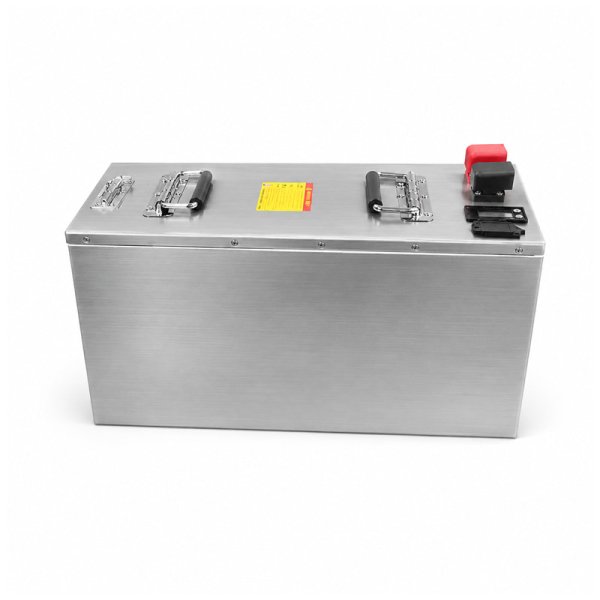
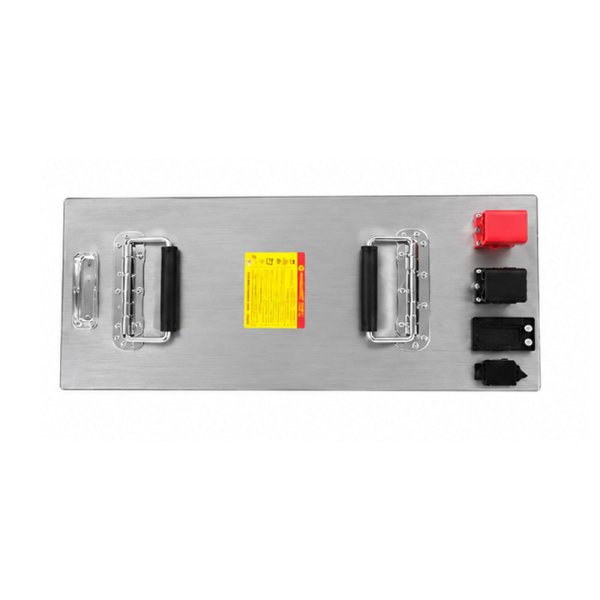
A marine battery pack typically integrates lithium cells or modules, electrical interconnections, monitoring and protective electronics, an enclosure, and power and communication interfaces. Depending on the design, it may also incorporate contactors, fuses, current sensing and thermal-management provisions. Not every advertised marine battery pack contains the same hardware.
The wider marine battery system may include additional packs, distribution equipment, supervisory controls, cooling equipment, isolation devices, ventilation, fire protection and vessel-level safety functions. An OEM should insist on a written scope boundary rather than assume these elements arrive as one marine battery pack assembly.

For example, a supplier may quote a marine battery pack with a local BMS but leave the supervisory controller, propulsion interlock and emergency shutdown integration to the shipyard. That is workable only when each party’s responsibilities are explicit.
Define the interfaces in an agreed responsibility matrix: who supplies the contactors, configures fault reactions, validates cooling and owns software integration? This power battery solution for OEM projects provides a starting point for discussing customized pack configurations and BMS integration; the vessel-level engineering scope must still be confirmed for each project.
How Should Vessel Duty Cycles Determine Energy and Power Requirements?
Start with operations, not a catalog voltage. Two vessels with similar hull dimensions may need fundamentally different marine battery pack designs because their propulsion loads, operating intervals and reserve requirements diverge.
| Commercial application | Load characteristic | Priority for the marine battery pack |
|---|---|---|
| Sightseeing or passenger shuttle | Repeated trips, predictable stops, hotel loads | Consistent usable energy across a full timetable |
| Harbor patrol or inspection | Long low-speed periods, intermittent acceleration | Peak-power headroom and reliable state-of-charge estimates |
| Utility or service vessel | Variable payload, maneuvering, auxiliary equipment | Transient-load capability and stable output under changing demand |
| Hybrid-electric vessel | Engine-battery transitions and variable power sharing | Controller coordination, defined fault response and operating limits |
A mission profile records propulsion demand, hotel loads, maneuvering events, operating hours, turnaround windows and environmental extremes. Calculate the expected energy demand, then account for usable state-of-charge limits, temperature-related derating, aging and the operational reserve required by the vessel’s approved design.

For an electric workboat battery, continuous output matters as much as stored energy. A marine battery pack that appears adequate in kilowatt-hours may still restrict maneuvering if its continuous-current limit or thermal derating is too low. Conversely, selecting a much larger pack without assessing mass, placement and cost can create avoidable integration penalties.
Specify required continuous and short-duration power, allowable voltage range, reserve policy and the conditions under which performance must be demonstrated. Let electrical ratings follow vessel architecture rather than dominate purchasing discussions.
How Does Marine Battery Pack Design Affect Vessel Integration and Fleet Maintenance?
A marine battery pack must fit the vessel as an engineered installation—not merely pass through a compartment opening. Footprint, height, service clearance, mass distribution, lifting points, mounting loads and cable access all affect shipyard labor and subsequent maintenance.
The marine environment adds persistent complications: salt-laden humidity, condensation, vibration, occasional water exposure and restricted ventilation. An enclosure’s ingress-protection rating is useful, but it cannot by itself establish corrosion resistance or suitability for the chosen location. Seals, cable glands, connectors and fasteners must be assessed as a complete installed assembly.
Thermal management deserves equal attention. A marine battery pack compartment that traps heat can force the BMS to reduce available power during summer passenger services or prolonged harbor maneuvers. Where active cooling is proposed, establish who supplies it, how failures are detected and what output remains available after a cooling fault.
For a practical dimensional reference, FEBATT lists a 96V 210Ah marine lithium battery for electric vessels. Such product data can inform preliminary layout studies; it does not replace project-specific verification of mounting, interfaces, safety functions or any required marine approval.
Fleet buyers should also consider replacement logistics. Standardized connections, traceable serial numbers, accessible diagnostics and a documented removal procedure can reduce off-hire time when one vessel requires service. A marine battery pack with marginally higher acquisition cost may deliver better value if it avoids extensive dismantling during maintenance.
What BMS and Communication Interfaces Should a Marine Battery Pack Support?
The battery management system is the pack’s operational gatekeeper. It monitors critical conditions and commands protective actions when limits are exceeded. For marine projects, however, protection inside the enclosure is only part of the requirement: propulsion, charging and vessel monitoring systems need a predictable exchange of information.
Specify the actual communication implementation, not merely a connector described as “CAN compatible.” CAN and RS485 are physical or data-link options; higher-level message definitions, baud rates, registers, update intervals and fault codes must also match. Modbus over RS485 may be suitable for some monitoring arrangements, while other installations require a bespoke CAN message map.
At a minimum, integration discussions should cover state of charge, state of health, pack current and voltage, temperature, permitted charge/discharge limits, contactor status, warning levels and fault history. Define how the marine battery pack responds when communications disappear, a sensor fails or an emergency-stop signal is received.

A vessel operator should know whether a fault causes controlled power limitation, a staged shutdown or immediate isolation—and which loads must remain available under the approved safety design. These behaviors require joint validation by the marine battery pack supplier and vessel integrator; they should never be inferred from a generic BMS datasheet.
Before approving production, request the interface-control document, communications database or register map, software revision controls and a witnessed marine battery pack integration demonstration using the intended vessel controller.
Which Safety Tests and Documents Should OEM Buyers Require?
Marine service requires evidence, not an unsupported claim that a pack is “marine grade.” The applicable approval route depends on vessel type, flag state, classification society, battery role and installation arrangement. Requirements for an auxiliary installation can differ materially from those for battery-dependent propulsion.
IEC 62619:2022 establishes industrial lithium-cell and battery safety requirements and explicitly includes marine applications. It is a relevant technical reference, but compliance with that standard alone does not establish vessel-level or class approval. Classification guidance, such as DNV’s battery-ship framework, addresses installation and system risks that extend beyond the pack.
Ask suppliers for traceable, model-relevant documentation: applicable safety test reports, a UN 38.3 transport test summary, electrical drawings, BMS functional specifications, installation instructions, maintenance guidance and serial-number traceability. Confirm that documents cover the quoted configuration rather than a different cell, enclosure or software revision.
A marine battery pack acceptance plan should test both normal operation and credible faults. This may include capacity and power verification, insulation and protective-device checks, communications loss, temperature limits, vibration and environmental exposure where applicable, and verification of safety interlocks. Factory acceptance testing (FAT) should be followed by integration or site acceptance testing (SAT) for vessel-level functions.
Thermal hazards also require installation-level controls, including appropriate detection, isolation and response provisions. For additional risk context, see FEBATT’s discussion of battery thermal runaway prevention for commercial fleets; marine-specific hazard assessment must still govern the final design.
No single certificate can substitute for proving that the complete installation behaves safely under the vessel’s operating conditions.
How Should OEMs Compare Marine Battery Pack Proposals and Prepare an RFQ?
A useful comparison begins with compliance against one common specification. If suppliers quote different usable-energy assumptions, protective functions or testing scopes, their prices are not directly comparable.
Request these six elements in every marine battery pack proposal:
- Mission profile: vessel type, route, loading, duty hours and environmental exposure.
- Electrical performance: usable energy, continuous/peak output, derating curves and end-of-life assumptions.
- Integration scope: dimensions, mass, mounting, cooling, connectors and interface responsibility.
- Control behavior: BMS messages, software versioning, interlocks and failure-response logic.
- Validation evidence: applicable standards, test reports, FAT/SAT plan and approval responsibilities.
- Commercial delivery: prototype milestones, lead time, production quality controls, spares and warranty conditions.
Evaluate total project exposure rather than pack unit price alone. A low quotation that excludes integration testing, documentation or replacement access may transfer substantial cost to the shipyard. Establish acceptance criteria before prototype production, and use the same test matrix for every candidate.
For multi-vessel programs, require configuration control between pilot and production batches, including traceable changes to cells, BMS firmware and safety-critical components. The transition from an approved prototype to consistent fleet deliveries is a procurement challenge; this OEM battery RFQ-to-production guide explains how to structure that process.
A well-written marine battery pack RFQ should make disagreements visible before purchase orders are issued—not after the first vessel reaches commissioning.
Frequently Asked Questions About Marine Battery Packs
Q: What is the difference between a marine battery pack and a marine battery system?
A: A marine battery pack is the defined battery assembly with its local protection and interfaces. A marine battery system can additionally include multiple packs, distribution, cooling, supervision and vessel-level safety equipment.
Q: Can marine battery packs be connected in parallel?
A: Yes, if the manufacturer explicitly supports parallel operation. OEMs must verify voltage matching, current sharing, protection coordination, communications and isolation before connecting multiple marine battery packs.
Q: What communication protocols are needed for marine battery integration?
A: CAN or RS485-based communications may be used, but the protocol name is insufficient. OEMs need an agreed message map, fault codes, update rates, interlocks and demonstrated compatibility with the vessel controller.
Q: What tests should an OEM require before approving a marine battery pack?
A: Require configuration-specific safety evidence and agreed factory tests for energy, output, protections and fault response. Then verify communication, shutdown logic and other vessel interfaces during integration testing.
Q: What specifications should be included in a marine battery pack RFQ?
A: Include vessel duty cycle, usable energy, continuous and peak power, environment, dimensions, mounting, BMS interface, safety requirements, acceptance tests, production quantity and delivery milestones.
Ready to Specify a Marine Battery Pack for Your Vessel Program?
Share your vessel application, operating profile, installation drawings, controller requirements and procurement schedule with FEBATT. An application-led discussion can establish the right marine battery pack specification and the validation work needed before fleet deployment.