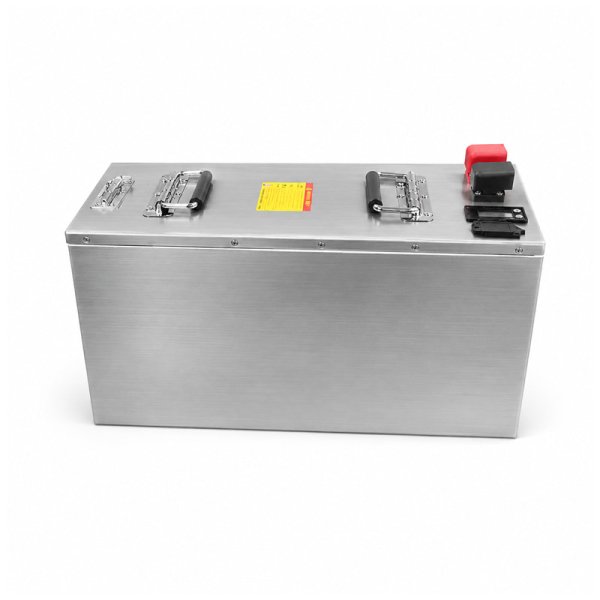
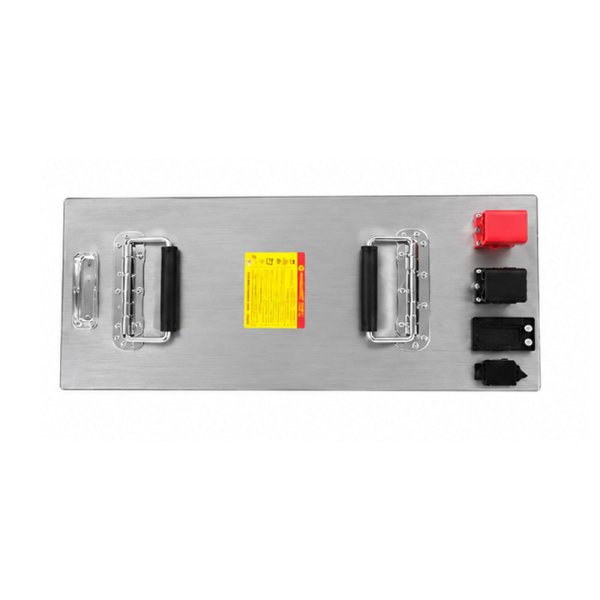
For rental fleet operators, a golf buggy battery must do more than power a vehicle. It must support repeated customer handovers, unpredictable driving patterns, and dependable dispatch throughout busy rental periods.
A vehicle that returns with insufficient usable energy, an unresolved battery fault, or an unreliable charge indication can disrupt the next booking—even when it appears operational.
The right golf buggy battery for rental fleets should combine predictable energy availability, effective protection, clear battery status, and compatibility across fleet vehicles. These requirements help rental companies assess whether a battery system is suitable for commercial deployment before committing to bulk procurement.
What Makes Golf Buggy Battery Requirements Different for Rental Fleets?
Privately owned buggies often follow familiar routines. Rental vehicles encounter varying drivers, uncertain payloads and fluctuating demand. One cart may spend much of the morning idle, while another completes several short bookings with little time between returns. The golf buggy battery must tolerate these patterns within the vehicle manufacturer’s operating limits.

Utilization alone is an incomplete measure. A rental operator needs to know whether the battery enables the next confirmed booking, not simply whether a vehicle performed well yesterday. A cart that becomes unavailable at a busy handover point may disrupt reservations, require reassignment and occupy staff who should be preparing other vehicles.
Before comparing a commercial golf buggy battery, define the operating profile:
- Booking pattern: hourly, half-day or full-day rentals, including peak-season turnover.
- Route conditions: typical terrain, passenger load and stop-start frequency.
- Dispatch practices: time available for inspection and charging between customers.
- Vehicle inventory: cart models, ages, modifications and existing interfaces.
A rental golf buggy battery specification should respond to this evidence. It should not be a generic recommendation extrapolated from a single demonstration vehicle.
How Should Rental Turnover Affect Golf Buggy Battery Readiness Requirements?
Rental turnover creates a recurring decision: release the returned vehicle, hold it for preparation or remove it from service. The golf buggy battery must provide sufficiently reliable information to support that decision.
Start with booking-specific readiness criteria. A short, predictable rental might require a different operational reserve from a longer booking over uneven terrain. Establish those criteria from monitored fleet use and validated vehicle performance, rather than imposing a universal state-of-charge (SOC) threshold. SOC is an estimate; its accuracy depends on the battery management system (BMS), calibration and operating conditions.
A practical golf buggy fleet battery handover policy can distinguish three outcomes:
| Status | Battery evidence | Operational decision |
|---|---|---|
| Ready | Adequate validated reserve; no relevant active fault | Release after vehicle checks |
| Hold | Reserve below the requirement for the next booking | Recharge or assign another vehicle |
| Inspect | Active protection event, abnormal indication or inconsistent readings | Quarantine from dispatch pending qualified assessment |
This framework does not replace vehicle safety procedures. A golf buggy battery readiness rule also accounts for charger availability, vehicle condition and the planned rental.
Keep records of battery-related dispatch refusals and bookings reassigned because of battery status. A golf buggy battery that consistently meets the next-booking requirement may contribute more to rental reliability than one marketed solely for impressive maximum range.
Which Battery Safety Features Matter When Multiple Customers Use the Same Golf Buggy?
Rental drivers differ in acceleration, braking and loading habits. A suitable golf buggy battery must be assessed under the resulting variations in electrical demand, not only under a light-duty bench test.
A golf buggy battery BMS should have appropriately specified protections for overcurrent, short circuit, overvoltage, undervoltage and temperature. Buyers should request the actual trigger conditions, response behavior and recovery requirements. Importantly, abrupt battery disconnection while a vehicle is moving can create a vehicle-level hazard; the supplier and cart integrator must verify how protective action interacts with the controller.

Mechanical considerations are equally consequential. Repeated movement, frequent cleaning and outdoor parking create opportunities for connector strain, loose mounting hardware and water ingress. Ask for relevant enclosure and vibration test evidence, without assuming that an IP rating establishes corrosion resistance or suitability for every washing procedure.
The lithium golf buggy battery should also be checked for charger compatibility and documented fault indications. Rental staff need clear instructions about when to stop using a vehicle and call a technician, not an invitation to bypass protection settings. These quick handover checks complement a fuller program of golf cart battery maintenance for commercial fleets.
Safety is an integration outcome. A golf buggy battery cannot be judged independently of its cart, wiring, controller and operating procedures.
How Can Rental Operators Standardize Golf Buggy Batteries Across Mixed Vehicle Fleets?
Mixed fleets are common in rental operations: two-seat buggies, larger passenger models and older carts may operate alongside newer vehicles. A single golf buggy battery model is not automatically interchangeable across them, even when the advertised system voltage appears similar.

Standardization should begin with a vehicle-to-battery compatibility matrix. Record each cart’s controller requirements, continuous and peak current demands, available mounting space, connector arrangement, charger and relevant display or communication interfaces. Then group compatible vehicles.
An illustrative procurement matrix:
| Vehicle group | Main question | Evidence to collect |
|---|---|---|
| Compact rental buggies | Does the pack fit and communicate correctly? | Tray dimensions, connectors, controller details |
| Multi-passenger buggies | Can it support loaded duty cycles? | Current demand and representative route tests |
| Older or modified carts | What must be adapted safely? | Charger, wiring and control-system review |
Reducing unnecessary golf buggy battery variants simplifies purchasing, identification and spare-pack planning. Yet forced uniformity can create mismatches and expensive rework. The aim is the fewest compatible specifications, not the fewest part numbers at any cost.
For broader specification comparisons, this LFP golf cart battery selection guide is a useful companion. In a rental fleet, the final golf buggy battery choice still requires confirmation on each vehicle group.
What Battery Data Should Rental Operators Use to Assess Fleet Readiness?
Rental desks need not install complex platforms to improve dispatch decisions. They need timely, interpretable evidence. At a minimum, assess what each golf buggy battery can report about SOC, active faults and temperatures, then confirm which values are actually accessible to staff.
Not all packs expose the same information. Some golf buggy battery systems show basic status locally; others may offer BMS communication or retrievable fault histories. Such capabilities must be specified and integrated. Installing a commercial golf buggy battery does not automatically provide a fleet dashboard, remote telemetry or dependable state-of-health measurements.
The most useful records connect electrical information with a decision: vehicle ID, battery ID, return time, next booking, status indication, relevant alarm and dispatch outcome. When an anomaly recurs on one cart, those records help a technician distinguish an isolated operational issue from a potentially persistent system fault.
Data quality matters more than dashboard complexity. SOC estimates can drift, and a normal-looking percentage does not overrule an active protection alarm. Before ordering a golf buggy battery, operators should agree with the supplier on display accuracy, fault definitions, access permissions and the actions that each warning requires.
For a golf buggy fleet battery, actionable status information is a procurement criterion. It should shorten uncertainty at handover without asking untrained staff to interpret raw diagnostics.
How Should Rental Companies Validate Golf Buggy Batteries Before Bulk Procurement?
A sample that powers one cart successfully has not yet demonstrated suitability for a rental fleet. Validate the proposed golf buggy battery through representative bookings and documented acceptance criteria before ordering at scale.
Choose pilot vehicles from each compatibility group. Include demanding but normal rental conditions: repeated departures, passenger loads, typical terrain and turnaround windows. Monitor battery indications alongside actual dispatch outcomes. An apparent SOC reading is less useful than evidence that the vehicle reliably completes an agreed duty cycle without unexpected protective shutdowns.
Set golf buggy battery acceptance criteria in advance. They might cover dispatch readiness, fault reporting, controller behavior, mechanical fit, charging-system compatibility and consistency across pilot vehicles. Define how abnormal findings are investigated and what constitutes a failed test. Do not infer a battery’s full service life from a short pilot.
When evaluating a rental golf buggy battery order, procurement teams should require a traceable specification for the approved sample and the production units. Confirm revision control, inspection records, serial identification and an agreed process for engineering changes. For shipping, request applicable transport documentation, including the UN 38.3 test summary; PHMSA guidance explains its transport role. Passing transport tests alone does not establish fitness for a particular rental vehicle.
A useful golf buggy battery RFQ describes the fleet rather than merely requesting a price per pack:
- Vehicle models, modifications and quantities by compatibility group.
- Booking profiles, expected turnover, routes and passenger loads.
- Mechanical, electrical, BMS-status and charger interfaces.
- Pilot acceptance criteria, deployment schedule and documentation needs.
This power battery solutions provide a starting point for discussing application-specific requirements. Share fleet requirements so a proposed golf buggy battery can be evaluated against how the vehicles actually earn revenue.
Frequently Asked Questions About Golf Buggy Batteries
Q: What makes a golf buggy battery suitable for commercial rental operations?
A: A suitable golf buggy battery supports repeated bookings, reliable safety protection and clear readiness checks. The operator should validate its performance with real rental schedules and vehicle loads.
Q: Can a rental company use the same golf buggy battery across different vehicle brands?
A: Only when the models are demonstrably compatible. Check the controller, current demand, charger, wiring, connectors, mounting space and communication requirements before standardizing packs.
Q: What battery checks should operators perform before handing over a rental golf buggy?
A: Confirm the required operational reserve, review displayed faults and check for visible damage or abnormal connections. Release the vehicle only after the complete prescribed pre-rental inspection.
Q: How can rental companies identify a golf buggy battery that is not ready for the next booking?
A: Hold the vehicle if its reserve is insufficient for the assigned rental, readings are inconsistent or a relevant protection alarm is active. Qualified staff should investigate faults before release.
Q: What information should rental fleet operators provide when requesting golf buggy battery quotations?
A: Provide fleet size, cart models, booking turnover, typical loads and routes, battery interfaces, charger details, order quantities and pilot acceptance criteria. Include any required data access.