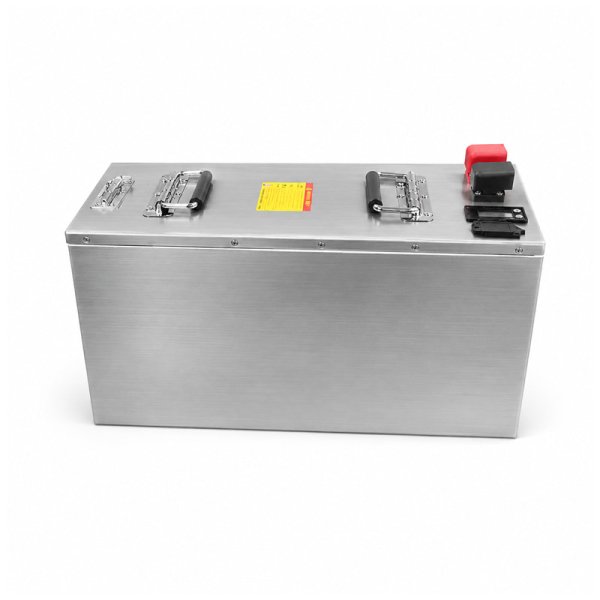
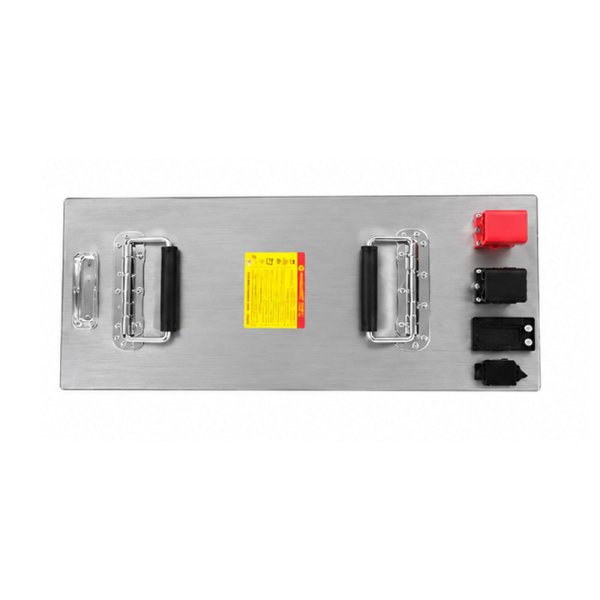
For OEMs and fleet operators, moving from lead-acid to lithium is rarely triggered by one voltage or Ah number. The change usually becomes necessary when battery energy, daily utilization, payload pressure, current demand, packaging constraints, and downtime make the old battery architecture expensive to operate.
A high capacity lithium battery addresses that broader business problem. It can store several kilowatt-hours without the mass and volume penalty of a comparable lead-acid system, while giving engineers more control over current capability, BMS protection, enclosure design, diagnostics, and charging strategy. The chemistry inside that lithium system still matters: NMC can minimize mass and volume, while LiFePO4 often provides the better balance of cycle life, thermal stability, usable energy, and lifecycle cost for high-use fleets.
The useful lesson behind the original 72V40Ah discussion is therefore not that one specification creates a universal chemistry boundary. A 72V40Ah pack is simply 2.88 kWh. Similar fleet pressures can appear at 64V60Ah, 72V50Ah, or other configurations. The correct B2B question is: when does the application make a high capacity lithium battery more commercially rational than lead-acid?
Why Is There No Universal Voltage or Ah Threshold?
Voltage and Ah are only labels on part of the system. Stored energy is voltage multiplied by capacity, while the vehicle also depends on peak current, continuous power, thermal conditions, available space, allowable mass, usable SOC, charging windows, and the annual number of operating cycles.
For example, 72V40Ah represents 2.88 kWh, 72V50Ah represents 3.6 kWh, and 64V60Ah represents 3.84 kWh. These packs sit in a similar energy range even though their voltage and capacity labels differ. A fleet can encounter the same weight, packaging, and replacement problems at any of these configurations.

A high capacity lithium battery should therefore be selected by application rather than by a fixed voltage line. Route distance, payload, hills, stop-start frequency, controller current, charge window, installation volume, annual energy throughput, and target service life are the real decision variables.
When Does Lead-Acid Weight Become a Commercial Problem?
Lead-acid becomes increasingly difficult in mobile applications as stored energy rises. The U.S. Department of Energy cites practical lead-acid specific energy around 30-45 Wh/kg. Modern lithium chemistries store several times more energy per kilogram at cell level, although final pack-level values are lower once enclosure, BMS, busbars, connectors, and protection hardware are included.
That difference scales with energy demand. A larger lead-acid system may require stronger battery trays, brackets, suspension components, or frame structures. It can also consume payload that would otherwise be available for cargo, tools, or permitted passengers. In a cargo tricycle, battery mass can directly reduce revenue-carrying capacity; in a delivery motorcycle, it can reduce packaging freedom and handling margin.

A high capacity lithium battery does not remove vehicle-weight engineering, but it gives the OEM far more room to package several kilowatt-hours without allowing the battery to dominate vehicle mass. This is one of the first reasons lithium becomes attractive as fleet energy demand grows.
Why Does High Daily Energy Throughput Favor Lithium?
High-utilization fleets need more than nominal capacity. They need a battery system that can repeat the same duty cycle day after day without creating frequent replacement events, route failures, or workshop queues.
A 2026 comparative review reports representative cycle-life ranges at 80% depth of discharge of about 300-500 cycles for lead-acid, 1,000-2,000 for NMC, and 2,000-5,000 for LFP. These are technology-level references rather than guarantees for a specific commercial pack, but they illustrate why chemistry matters when annual energy throughput is high.

A lightly used utility vehicle may never cycle enough to recover the higher purchase price of lithium. A delivery fleet that uses most of its available energy every day can reach the opposite conclusion. Fewer battery replacements mean lower battery replacement cost, fewer technician hours, less vehicle downtime, and less spare-pack inventory.
For this duty cycle, a high capacity lithium battery becomes easier to justify because the fleet is buying productive energy throughput and uptime rather than simply a larger Ah number. LiFePO4 is often the preferred chemistry when long cycle life and predictable replacement planning matter most.
Before choosing chemistry or capacity, buyers can use a commercial power battery solution framework to define route energy, payload, continuous and peak current, installation space, BMS communication, charger requirements, and operating temperature as one project specification.
How Does High Current Change the Battery Decision?
Higher-capacity commercial vehicles often have higher power demand as well as more energy storage. Heavy payload, hill starts, repeated acceleration, and stop-start delivery work can create current peaks that expose an undersized or high-resistance battery even when the nominal energy looks sufficient.
Lead-acid can deliver high current, but repeated heavy loading and deep cycling can increase voltage sag and accelerate wear. A pack may have enough nominal Ah yet still create route problems if voltage falls too quickly under load or usable capacity declines as the battery ages.
A properly engineered high capacity lithium battery can combine the required energy with cells, BMS, busbars, connectors, cables, and thermal design sized for the actual current profile. Buyers should request continuous current, peak current, peak duration, temperature derating, and the exact conditions under which BMS protection activates.
This is why a high current discharge battery must be validated against motor and controller data before a sample is approved. Current capability should be treated as a system requirement, not inferred from Ah alone.
Why Does Packaging Pressure Increase as Capacity Grows?
Battery capacity competes with cargo room, under-seat space, frame members, controllers, chargers, service access, and ground clearance. A large lead-acid system can force a manufacturer to redesign the battery compartment because the chemistry requires more mass and volume for the same usable energy.
Lithium pack architecture gives OEMs more flexibility to arrange cells, BMS hardware, fusing, connectors, and enclosure geometry around the available vehicle space. That flexibility still requires structural support, thermal paths, vibration validation, ingress protection, and service access; lithium is not a license to ignore pack engineering.
For distributors and vehicle manufacturers, a high capacity lithium battery can also simplify platform planning. One vehicle family may use different energy variants while retaining common connector logic, BMS communication, mounting principles, and service procedures. That can reduce redesign work as fleets request longer-range or heavier-duty versions.
Which Lithium Chemistry Fits High-Capacity Fleet Use Best?
A high capacity lithium battery can use different chemistries, and the best choice depends on what the fleet values most. NMC still holds an energy-density advantage. IEA 2026 reports latest-generation NMC cells up to about 265 Wh/kg compared with about 205 Wh/kg for LFP, which can matter when every kilogram and litre is constrained.
LiFePO4 becomes the stronger default when cycle-life potential, thermal margin, replacement planning, and cost matter more than minimum mass. IEA also reports that LFP battery packs were more than 40% cheaper on average than NMC alternatives per kWh in 2025 across EV and storage applications, although application mix affects that average.
For many delivery motorcycles, cargo tricycles, golf carts, and utility fleets, a high capacity LiFePO4 battery offers the more balanced commercial trade-off. NMC remains valid for compact premium platforms with aggressive range targets or very tight packaging.
How Much Safety Margin Does Chemistry Add?
Battery safety is a pack-level engineering problem, not a chemistry slogan. Cell quality, BMS protection, fusing, enclosure design, wiring, connectors, thermal paths, mechanical protection, charger control, and manufacturing consistency all affect the final risk profile.
LiFePO4 nevertheless provides a useful chemistry-level advantage. A 2025 peer-reviewed comparison of LFP and NMC622 cells reported thermal-runaway onset at 196.4 C for LFP and 154.6 C for NMC622 under the study conditions. The LFP cell also produced a lower peak temperature and less total heat.
The same study reported higher combustible-gas content from the tested LFP cells, so the result should not be simplified into “LFP cannot burn.” Venting, fault isolation, BMS protection, and pack validation remain necessary. For a high capacity lithium battery mounted close to riders, cargo, or other fleet assets, the complete system still needs engineering controls around credible failure modes.
How Should Fleets Size a High Capacity Lithium Battery?
Start with the work the vehicle must complete. Use field data or representative tests to determine energy per route or shift, then add a reserve for traffic, detours, weather, aging, and operational uncertainty. A larger battery is not automatically better if the extra energy creates unnecessary mass or cost.
Next, calculate power. Record continuous motor power, peak controller current, hill-start current, auxiliary loads, and any high-current accessories. A high capacity lithium battery with enough kWh can still fail the application if the cell configuration, BMS, or conductors cannot support the required current.
Then check packaging and vehicle limits. Compare the battery compartment, gross vehicle weight rating, payload target, mounting points, cable routing, service access, and environmental exposure. Finally define shifts per day, charging windows, target service life, end-of-life capacity threshold, seasonal temperature, and acceptable downtime.
As one reference configuration, the 72V 50Ah LiFePO4 pack provides 3.6 kWh of nominal energy for compatible commercial two-wheeler projects. It is an example rather than a universal recommendation; route energy, current demand, compartment size, controller limits, and charging strategy still determine suitability.
Which Applications Benefit Most from Higher-Capacity Lithium?
Last-mile delivery motorcycles
Commercial delivery motorcycles benefit when long routes, repeated stops, and high annual mileage make range loss and battery replacement expensive. A high capacity lithium battery can increase usable daily energy without the mass penalty of an equivalent lead-acid system, while BMS data can support more consistent fleet maintenance.
Cargo and vending tricycles
Cargo tricycles gain value when battery mass competes with payload. Higher-energy lithium systems can preserve cargo room and support frequent cycling. LiFePO4 is often attractive where the vehicle carries heavy loads or operates long routes every day.
Golf carts and utility fleets
Resorts, campuses, industrial sites, and service fleets often value predictable runtime more than minimum purchase price. A high capacity lithium battery can reduce routine battery service and make fleet charging, diagnostics, and replacement planning easier to standardize.
Rental and shared fleets
Rental fleets need predictable availability, traceable battery health, and consistent performance across many vehicles. BMS protection and operating data can make high-capacity lithium systems easier to manage at fleet scale.
How Should Buyers Calculate Fleet Battery Total Cost?
The correct comparison includes more than the first battery invoice. A fleet battery total cost model should include pack price, integration, charger changes, replacement count, labor, downtime, spare inventory, charging losses, diagnostics, warranty handling, and end-of-life logistics.
Lead-acid can still win where vehicles are lightly used and capital budget dominates. As utilization rises, the economics change: more cycles increase the value of LiFePO4 cycle life, more downtime increases the value of fewer replacement events, higher payload increases the value of lower battery mass, and limited packaging increases the value of higher battery energy density.
This is why a high capacity lithium battery should be evaluated by cost per productive year, cost per route, or cost per delivered kWh rather than purchase price per pack. The strongest business case appears when fewer replacements, higher vehicle availability, and more usable payload can be measured in fleet KPIs.
What Should OEM and Fleet Buyers Verify Before Approval?
Before approving a high capacity lithium battery project, buyers should verify:
- actual route or shift energy requirement and reserve margin;
- continuous and peak current with duration and temperature derating;
- cell chemistry, cell grade, and batch consistency controls;
- BMS protection thresholds, balancing, communication, and diagnostic data;
- charger voltage, current, connector, communication, and charging strategy;
- battery dimensions, weight, mounting, vibration, and environmental sealing;
- thermal limits for charging, discharge, storage, and high-load operation;
- end-of-line testing, traceability, warranty diagnostics, and service process;
- cycle-life test conditions and the capacity threshold used to define end of life;
- expected battery replacement cost and downtime over the target service period.
A supplier that asks for these inputs before quoting is more likely to deliver a commercial fleet battery that remains reliable after the sample stage and into mass production. A high capacity lithium battery should be treated as an engineered vehicle subsystem, not a commodity box selected only by voltage and Ah.
Frequently Asked Questions About High Capacity Lithium Batteries
1.What is a high capacity lithium battery?
A high capacity lithium battery stores enough energy for longer or heavier-duty operation. In fleet projects, high capacity should be defined by route energy, current, payload, space, and service needs rather than one Ah value.
2.How long does a high capacity lithium battery last?
Service life depends on chemistry, DoD, current, temperature, charging, and pack design. LFP can offer thousands of cycles, but fleets should verify the supplier’s test conditions.
3.Does a larger lithium battery always give more range?
Not automatically. Range also depends on payload, speed, road grade, stop-start frequency, temperature, drivetrain efficiency, and usable SOC. A larger pack must still match vehicle weight and current limits.
4.Is 72V40Ah a standard point for switching to lithium?
No. 72V40Ah is one 2.88 kWh configuration, not a universal chemistry threshold. Similar fleet pressures can appear at other voltage and capacity combinations depending on route, power, weight, and space.
5.How should a fleet choose a high capacity lithium battery?
Start with real route energy and peak current, then verify payload, installation space, temperature, charger, BMS, reserve margin, service-life target, and TCO. Chemistry should follow the duty cycle, not the label.
Conclusion
The useful lesson behind the 72V40Ah discussion is not that one exact specification forces a chemistry change. It is that as commercial battery energy and daily utilization rise, the penalties of a heavy, lower-specific-energy battery become harder to ignore.
For delivery motorcycles, cargo tricycles, golf carts, utility fleets, and similar high-use platforms, a high capacity lithium battery is often the right engineering direction because it reduces the mass and packaging constraints of lead-acid while supporting BMS protection, higher usable energy, and a more flexible vehicle architecture.
Within lithium, LiFePO4 is often the strongest starting chemistry when cycle-life potential, thermal margin, replacement planning, and lifecycle economics matter more than minimum mass. NMC still has a place where maximum energy density dominates, while lead-acid can remain rational for light-duty, low-cost applications.
The final decision should be based on application data: energy per shift, current profile, payload, installation space, charging windows, temperature, replacement target, and fleet battery total cost. A high capacity lithium battery creates value when those engineering choices translate into measurable uptime, route completion, payload, and lifecycle performance.