For commercial fleets, a battery is not judged only by purchase price. It has to keep vehicles and equipment available, carry the required load, fit the platform, support the required current, and avoid repeated service interruptions. These pressures explain why lithium iron phosphate batteries are increasingly considered for high-use electric motorcycles, cargo tricycles, golf carts, forklifts, AGV/AMR systems, and utility equipment.
The main attraction is not one isolated specification. It is the combination of long cycle-life potential, useful thermal stability, lower maintenance, lighter packaging than lead-acid, and BMS-based monitoring. For B2B buyers, those advantages can translate into fewer replacements, more predictable uptime, and a lower fleet battery total cost.
Why Do High-Use Fleets Favor LFP Chemistry?
High-utilization equipment consumes battery cycles quickly. A representative PNNL comparison lists about 2,000-3,000 cycles for LFP, 300-1,000 for NMC, and roughly 400 for lead-acid under its stated assumptions. These figures are technology references, not guarantees for a particular pack, but they show why cycle life becomes commercially important when equipment works every day.
Fewer replacement events reduce more than battery spend. They can also reduce technician labor, vehicle downtime, spare-pack inventory, and the operational disruption of removing equipment from service. This is where lithium iron phosphate batteries can create more value than a low initial purchase price.

How Do Weight and Packaging Affect Fleet Productivity?
Lead-acid batteries have much lower specific energy than modern lithium chemistries, so battery mass and volume rise quickly as the required energy increases. In mobile equipment, that can consume payload, complicate battery compartments, and force stronger mounting or chassis structures.
A lighter LiFePO4 battery pack gives OEMs more freedom to allocate space to cargo, vehicle structure, controls, or service access. For a cargo tricycle this can protect revenue-carrying payload; for a delivery motorcycle it can improve packaging freedom; for golf carts and utility equipment it reduces non-productive mass that must be moved all day.

Why Do Safety and BMS Matter to B2B Buyers?
Battery safety is a system issue. Cell quality, BMS protection, fusing, enclosure design, connectors, wiring, thermal management, mechanical protection, and charger compatibility all matter. Chemistry still contributes to the safety margin: a 2025 comparison reported thermal-runaway onset at 196.4°C for LFP and 154.6°C for NMC622 under the study conditions. The same study also showed that LFP still requires proper venting and pack-level protection, so buyers should avoid claims that the chemistry is risk-free.
Modern lithium iron phosphate batteries can also support useful BMS functions such as voltage, current, temperature, SOC, fault history, and cell-balance monitoring. Depending on the project, CAN or RS485 communication can give operators and service teams better diagnostic visibility than a simple battery status indicator.
For projects that need application-based engineering rather than a fixed catalog specification, this power battery solution can be used to define route energy, current, dimensions, communication, temperature, and service requirements as one system specification.
Which Applications Gain the Most Value?
Delivery motorcycles and cargo tricycles
Long routes, repeated acceleration, heavy payload, and high annual mileage make replacement frequency and usable energy important. Lithium iron phosphate batteries can help fleets reduce battery mass while supporting frequent cycling and consistent daily operation.
Golf carts and utility fleets
Resorts, campuses, factories, and service fleets often value predictable runtime and low maintenance more than the lowest first cost. LFP can support standardized fleet service and clearer replacement planning.
Forklifts and AGV/AMR systems
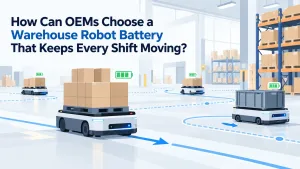
Industrial equipment can be costly to stop. Battery selection should therefore consider continuous and peak current, operating temperature, communication with the equipment, charging windows, and the cost of downtime. Lithium iron phosphate batteries are often attractive where high throughput and predictable availability matter.

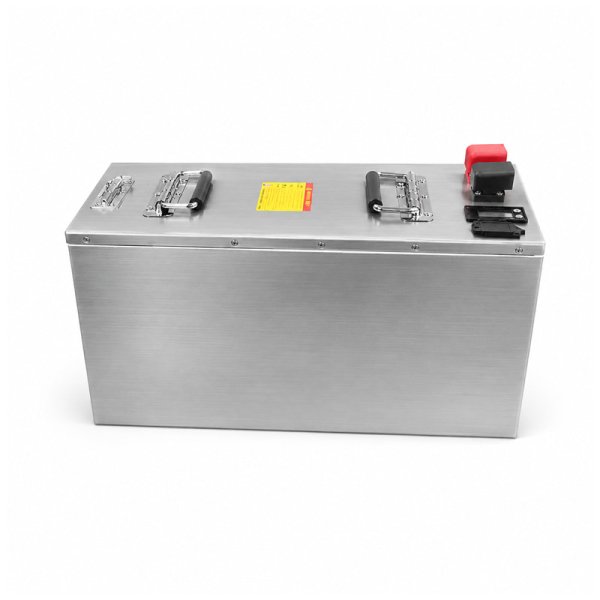
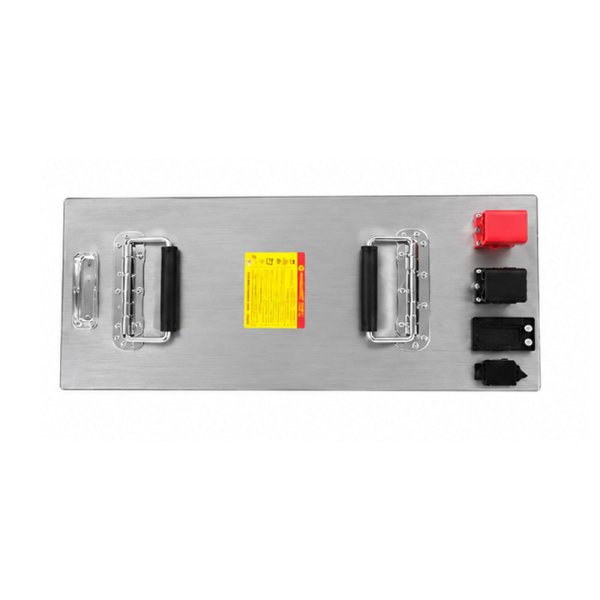
Buyers comparing actual pack formats can also review this power battery product range as configuration references, while final suitability should still be based on the application rather than voltage and Ah alone.
When Might Another Battery Chemistry Be Better?
LFP is not automatically the best answer for every platform. NMC can be preferable when minimum mass and maximum cell-level energy density dominate the design. Lead-acid can remain rational for lightly used equipment where capital cost is the main constraint and the fleet will not cycle the battery enough to recover a higher lithium investment.
For many high-use commercial applications, however, lithium iron phosphate batteries offer the more balanced starting point because cycle-life potential, thermal margin, maintenance burden, packaging, and replacement planning all influence the business case.
What Should OEMs Verify Before Approving a Pack?
- route or shift energy requirement and reserve margin;
- continuous and peak current, including duration and temperature derating;
- battery dimensions, mass, mounting, vibration, and environmental sealing;
- BMS protection thresholds, balancing, communication, and diagnostic data;
- charger compatibility and operating-temperature limits;
- cycle-life test conditions, end-of-life criteria, traceability, and warranty process.
A professional supplier should ask for these inputs before finalizing a battery. The goal is not merely to supply lithium iron phosphate batteries, but to make the pack fit the equipment, operating profile, and service model.
Conclusion
The reason more commercial equipment is moving toward LFP is not simply that lithium is newer technology. It is that lithium iron phosphate batteries can solve several B2B problems at the same time: frequent replacement, heavy battery mass, limited packaging space, maintenance pressure, insufficient diagnostic visibility, and costly downtime.
For fleets that operate every day, choosing the lithium iron phosphate batteries can improve availability and lifecycle economics. LiFePO4 is often the strongest default chemistry when long service life, thermal margin, practical packaging, and predictable fleet operation matter more than achieving the absolute highest cell energy density.
Frequently Asked Questions About Lithium Iron Phosphate Batteries
Q: What are lithium iron phosphate batteries?
A: They are lithium-ion batteries that use lithium iron phosphate as the cathode chemistry. They are widely used where cycle life, thermal stability, and predictable power delivery are important.
Q: How long do LiFePO4 batteries last?
A: Service life depends on depth of discharge, current, temperature, charging, cell quality, and the end-of-life threshold. Buyers should compare cycle-life claims using the same test conditions.
Q: Are LiFePO4 batteries safer than NMC?
A: LFP generally offers a stronger intrinsic thermal margin, but pack-level safety still depends on BMS protection, fusing, enclosure design, wiring, charging control, and manufacturing quality.
Q: Are LFP batteries better than lead-acid for fleets?
A: Often for high-use fleets. LFP can reduce battery mass, replacement frequency, routine maintenance, and downtime. Lead-acid can still suit low-use applications where upfront cost dominates.
Q: What should a B2B buyer specify before ordering?
A: Define energy per shift, continuous and peak current, dimensions, mounting, temperature, charger, BMS communication, service-life target, and expected fleet operating conditions.