Golf carts now support golf courses, resorts, hotels, campuses, industrial parks, airports, residential communities, and commercial transport operations. In these environments, battery condition directly affects vehicle availability, labor planning, route reliability, and operating cost. That is why golf cart battery maintenance should be managed as a fleet process rather than as an occasional workshop task.
For flooded lead-acid systems, golf cart battery maintenance includes electrolyte inspection, watering, terminal cleaning, cable checks, charging review, and periodic performance testing. These tasks are familiar, but the labor grows quickly when a fleet contains dozens or hundreds of vehicles. Missed watering or poor charging practices can also shorten service life and create avoidable downtime.
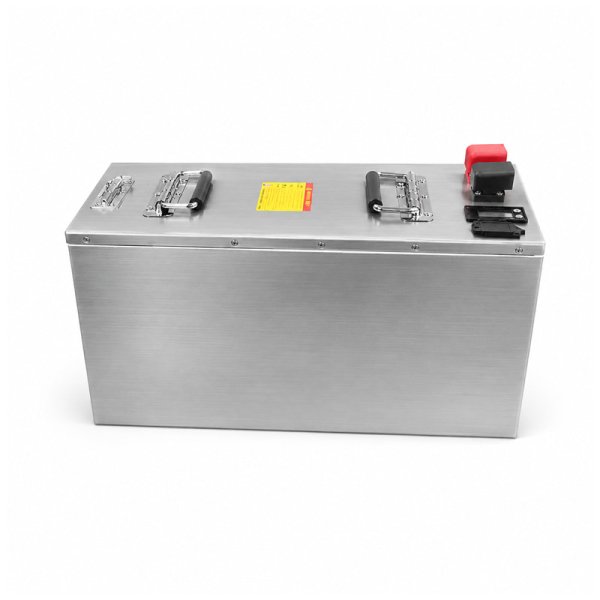
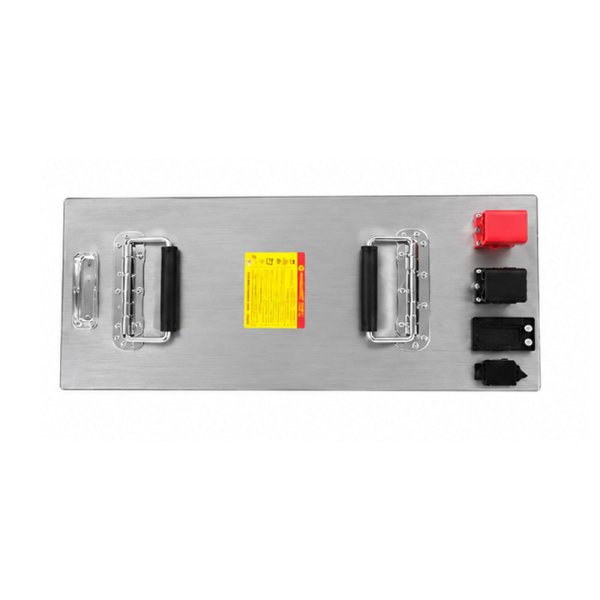
Lithium golf cart batteries change the maintenance model. A sealed lithium pack does not require users to replenish water or service electrolyte levels, but it is not a “forget it forever” component. Fleet teams still need to inspect cables, connectors, mounting hardware, the enclosure, charger compatibility, BMS alerts, and storage conditions. The objective is not to eliminate golf cart battery maintenance, but to reduce repetitive work while improving control over the complete battery system.
For procurement teams evaluating upgrades or new vehicle programs, FEBATT’s golf cart battery solutions provide a starting point for comparing lithium voltage and capacity options. Final selection should still be based on the cart’s controller, charger, current demand, mechanical layout, duty cycle, and required operating reserve.
This guide explains how to structure golf cart battery maintenance for commercial fleets, how a golf cart battery watering system and battery watering pump should be managed, what technicians should check on flooded lead-acid batteries, and how the workload changes when a fleet moves to lithium.
What Does Golf Cart Battery Maintenance Involve for Flooded Lead-Acid Fleets?
Flooded lead-acid batteries use lead-based plates immersed in a sulfuric-acid electrolyte. During charging, especially near full charge, some water can be lost through electrolysis and gassing. If the electrolyte level falls too far, the upper portions of the plates may become exposed and suffer permanent damage. Regular watering is therefore a central part of golf cart battery maintenance on flooded systems.
A practical fleet routine normally includes visual inspection, electrolyte-level checks, approved water addition when required, terminal and cable inspection, charger verification, cleaning, and periodic electrical testing. The exact interval should come from the battery manufacturer’s manual and the fleet’s operating data. Heavy daily use, high ambient temperatures, repeated deep discharge, or aggressive charging can increase water consumption.
Flooded batteries can release hydrogen and oxygen during charging, so ventilation and ignition-source control matter. Technicians should use appropriate PPE and follow the vehicle and battery manufacturer’s isolation procedures before cleaning or servicing electrical connections.
For B2B fleets, consistency is the main challenge. A written golf cart battery maintenance schedule should identify the vehicle, battery set, watering date, water consumption, terminal condition, charging observations, test results, and corrective actions. Trend data can reveal a weak battery or charger before a vehicle fails in service.

How Should a Golf Cart Battery Watering System Be Managed?
A golf cart battery watering system helps maintain electrolyte levels across flooded lead-acid cells. In a manual process, technicians open vent caps, inspect the fill wells, and add approved water to individual cells. In a single-point system, tubing and valves connect the cells so water can be supplied from one service point.
Watering must follow the battery manufacturer’s specified level and sequence. A common practice is to inspect the plates before charging. If plates are exposed, add only enough distilled water to cover them before charging. After the battery is fully charged, recheck the level and top up to the specified fill point. Filling too high before charging can cause electrolyte to expand and overflow.
A golf cart battery watering system reduces repetitive cap-by-cap filling, but it does not remove the need for golf cart battery maintenance. Tubes can be pinched, connectors can loosen, valves can stick, and reservoirs can become contaminated. Inspect the system for leaks, blocked lines, damaged fittings, and unusual differences in water consumption between battery sets.
Distilled water is the safest default for most flooded golf cart batteries unless the manufacturer approves another specification. Keep the reservoir, hose, and filling equipment clean. A battery set that suddenly requires much more water than comparable vehicles may have a charging, cell, or usage problem that deserves investigation.
Why Do Large Fleets Use a Battery Watering Pump?
A battery watering pump moves distilled water from a clean reservoir into a manual or single-point watering arrangement. Its main value is labor efficiency: a technician can service multiple battery sets more consistently instead of filling every cell from a small container.
The pump does not manage battery health. It cannot determine whether a battery has been overcharged, whether one cell has unusual water consumption, or whether a connection is heating under load. Those issues still belong to the broader golf cart battery maintenance program.
Before use, inspect the battery watering pump, hose, couplings, and reservoir for contamination or damage. If it connects to a single-point system, verify that all fittings seat correctly and that the flow-control mechanism stops as intended. After service, check for leakage and make sure caps or watering fittings are secure.
For a small low-use fleet, manual watering may remain practical. For a high-utilization fleet, a pump can reduce service time, but golf cart battery maintenance still requires inspection because flooded chemistry continues to consume water.
What Are the Risks of Overwatering and Underwatering?
Incorrect electrolyte levels can turn routine golf cart battery maintenance into a source of damage. Underwatering allows the level to fall below the required point. If plates become exposed, active material can corrode and the battery may lose usable capacity, show weaker performance under load, or fail earlier.
Overwatering creates a different problem. During charging, electrolyte volume can rise. If cells are filled too high beforehand, acidic electrolyte may overflow through the vents. The result can be corrosion on terminals, cable ends, hold-downs, battery trays, and nearby metal surfaces, along with additional cleaning work.

Use the battery manufacturer’s level indicators and watering procedure rather than filling every cell to the top. If the fleet uses a golf cart battery watering system, verify that its valves are compatible with the battery model and operate uniformly.
Water consumption can also be a diagnostic clue. If one battery set needs much more water than the rest of the fleet, investigate charging voltage, charger behavior, temperature, and battery condition. Good golf cart battery maintenance uses watering records as data, not merely as a checklist item.
How Should Terminals, Cables, and Battery Trays Be Inspected?
Electrical connections are another golf cart battery maintenance priority. Corrosion, loose hardware, damaged insulation, or a high-resistance connection can create voltage drop and localized heating. In a multi-battery bank, one poor interconnect can affect the entire vehicle.
Inspect terminals and cable lugs for deposits, cracked boots, loose fasteners, heat discoloration, frayed conductors, and movement at the crimp. Check battery hold-downs and trays for corrosion or damage. A battery that can shift during driving may strain cables and increase mechanical wear.
For external acid residue on flooded batteries, a baking-soda-and-water solution is commonly used as a neutralizing cleaner. First make the vehicle safe according to the manufacturer’s procedure and wear appropriate PPE. Cleaning solution should not enter battery cells. After cleaning, dry the area thoroughly and apply an approved terminal protectant where specified.

Do not assume that every golf cart battery maintenance procedure uses one universal cable-disconnection sequence or terminal torque. Vehicle architectures differ. Follow the cart and battery service documentation.
Lithium systems greatly reduce acid-related corrosion, but cable and connector inspection remains necessary. High-current connectors, communication plugs, mounting points, and enclosure seals should still be checked for looseness, damage, water ingress, or abnormal heating.
What Do Voltage Checks and Load Tests Actually Tell You?
A resting-voltage reading is useful, but it does not provide a complete picture of battery health. A flooded battery can show acceptable open-circuit voltage and still have low usable capacity, high internal resistance, or weak performance under load. Effective golf cart battery maintenance combines voltage checks with trend data and, when required, manufacturer-approved load or capacity testing.
For multi-battery banks, compare units under similar state-of-charge and temperature conditions. A battery that repeatedly deviates from the rest of the set deserves further investigation. Depending on the service procedure, technicians may also use specific-gravity measurements on flooded cells, charger-output checks, or controlled discharge tests.
Testing should answer operational questions: Can the cart complete its route? Does voltage remain stable under representative load? Is one unit causing the bank to reach cutoff early? Is charging completing correctly? Are failure trends concentrated around one vehicle or charger?
Lithium systems can provide more data through the BMS. Depending on the product, the BMS may monitor cell voltage, pack current, temperature, state of charge, and fault history. This can make golf cart battery maintenance more data-driven, but only if fleet staff review repeated alarms and investigate their cause.
How Does Lithium Change Golf Cart Battery Maintenance?
Lithium golf cart batteries remove several labor-intensive tasks associated with flooded lead-acid systems. Sealed lithium cells do not require users to add water, inspect electrolyte levels, operate a golf cart battery watering system, or use a battery watering pump. They also avoid routine equalization procedures required by some flooded batteries.
That reduction is meaningful, but lithium should be described as low-maintenance rather than maintenance-free. A professional golf cart battery maintenance plan for lithium still includes connector inspection, mounting checks, enclosure inspection, charger verification, BMS review, and correct storage during seasonal shutdown.
The charger must match the actual pack. A “48V” market label alone does not prove compatibility because nominal voltage, maximum charge voltage, BMS limits, and controller requirements vary between chemistries and pack architectures. For conversions, verify the controller voltage window, regenerative-charging behavior, continuous and peak current, fuse and cable ratings, polarity, connector type, state-of-charge display, pack dimensions, weight distribution, and charging profile.
Lithium can support shorter charging windows when the cells, BMS, connectors, and charger are designed for the selected current. Do not assume every LiFePO4 pack supports fast charging. Charging current, temperature limits, and cooling requirements should come from the model-specific specification.
The operational benefit is that golf cart battery maintenance shifts from repetitive electrolyte service toward inspection and system monitoring. For a high-use commercial fleet, this can improve vehicle availability and reduce technician hours. For a lightly used fleet, the business case may be different.
How Should B2B Fleets Compare Maintenance Labor and Total Cost?
The battery purchase price is only one line in fleet economics. Golf cart battery maintenance creates labor cost, materials cost, downtime, equipment requirements, and management overhead. A flooded fleet may need distilled water, a golf cart battery watering system, a battery watering pump, cleaning supplies, PPE, testing equipment, and scheduled technician time.
A useful annual maintenance model is:
Annual maintenance cost = technician hours x labor rate + materials + maintenance equipment + downtime cost + corrective repairs
For a lifecycle comparison:
TCO = battery purchase + charger and installation + energy + maintenance + downtime + replacements + logistics – residual value
Use golf cart battery maintenance records when comparing the result per operating hour, route kilometer, passenger trip, or vehicle-year rather than per battery alone. Record how many hours are spent on watering, cleaning, inspection, and battery-related repairs. Track vehicle downtime, replacement frequency, and the labor required to change a battery bank.
This process prevents exaggerated claims. Lithium may reduce golf cart battery maintenance and replacement frequency in a high-utilization fleet, but payback depends on annual use, electricity price, labor cost, charging windows, warranty, and service life under the actual duty cycle. A low-use fleet with serviceable lead-acid infrastructure may reach a different conclusion.
What Should Buyers Verify Before Replacing Lead-Acid With Lithium?
A lithium conversion is not simply a matter of replacing one battery bank with another carrying a similar voltage label. B2B buyers should verify the complete electrical and mechanical interface before approving the project.
At minimum, confirm:
- Nominal voltage and full operating voltage range
- Maximum charge voltage and approved charger current
- Continuous, peak, and short-duration discharge-current limits
- Controller compatibility and regenerative-charging limits
- Fuse, cable, contactor, and connector ratings
- Battery dimensions, mass, mounting points, and vehicle weight distribution
- BMS protection thresholds and communication protocol
- State-of-charge display compatibility
- Charging and discharging temperature limits
- Storage state-of-charge and inspection requirements
- Applicable transport documentation and product-specific compliance evidence
- Warranty scope, exclusions, and claim procedure
- Serial-number traceability and change-control process
After conversion, a documented golf cart battery maintenance plan should be written into the fleet’s standard operating procedure. Operators need to know which alerts require the cart to be removed from service, which charger is approved, and what checks are required after impact, water exposure, or repeated BMS faults.
For supplier approval, request model-specific drawings and limits rather than generic chemistry claims. A reliable lithium system combines appropriate cells, BMS settings, mechanical protection, electrical protection, charger integration, and vehicle validation. That complete-system approach provides a stronger basis for reduced maintenance than chemistry alone.
FAQ About Golf Cart Battery Maintenance
1.How often should I check the water in flooded golf cart batteries?
There is no single interval that fits every fleet. A monthly inspection is a practical starting point while the fleet establishes its actual water-consumption pattern, but high utilization, heat, frequent charging, or battery age can require more frequent checks. Follow the battery manufacturer’s instructions and adjust the golf cart battery maintenance schedule using recorded water consumption. If plates are exposed before charging, add only enough approved water to cover them; complete the top-up after charging to the specified fill level.
2.Can I use tap water in a golf cart battery watering system?
Ordinary tap water is not recommended for routine flooded-battery watering because dissolved minerals and other contaminants can enter the electrolyte. Distilled water is the safest default unless the battery manufacturer approves another water specification. Keep the reservoir, tubing, and golf cart battery watering system clean so maintenance does not introduce contamination into the cells.
3.What happens if a flooded battery dries out?
If electrolyte falls below the tops of the plates, exposed active material can corrode and suffer permanent damage. The battery may lose usable capacity, show weaker performance under load, develop imbalance, and fail earlier. Follow the battery manufacturer’s inspection and recovery procedure before returning a severely low-electrolyte battery to service.
4.Are lithium golf cart batteries really maintenance-free?
They eliminate watering, electrolyte-level checks, and routine use of a battery watering pump, which can greatly simplify golf cart battery maintenance. However, lithium packs still require periodic inspection of cables, connectors, mounting hardware, enclosure condition, charger compatibility, BMS status, and storage conditions. “Low-maintenance” is more technically accurate than “zero-maintenance.”
5.How should corroded battery terminals be cleaned safely?
Make the cart safe according to the vehicle and battery service procedure and wear suitable PPE. For external acid residue on flooded batteries, an approved battery cleaner or a baking-soda-and-water solution can be used on external surfaces. Prevent cleaner from entering the cells, dry the area thoroughly, and apply an approved terminal protectant if specified. Replace damaged cables or terminals rather than repeatedly cleaning a failing connection.
6.Does a battery watering pump reduce maintenance cost?
A battery watering pump can reduce labor for a large flooded fleet, particularly when used with a compatible single-point watering arrangement. It does not eliminate inspection, cleaning, charger checks, or battery-condition monitoring. Its value depends on fleet size, watering frequency, labor cost, and how well the equipment is maintained.
Conclusion
Effective golf cart battery maintenance is a fleet-management discipline, not just a workshop routine. Flooded lead-acid batteries can provide dependable service when electrolyte levels, terminals, charging, and battery condition are managed consistently. A golf cart battery watering system and battery watering pump can improve service efficiency, but they do not remove the recurring maintenance created by flooded chemistry.
Lithium changes that workload by eliminating user watering and reducing acid-related corrosion, while shifting attention toward electrical connections, BMS status, charger compatibility, mounting, storage, and vehicle integration. For B2B fleets, the question is not whether one battery type requires “maintenance” and another does not. The real question is how much labor, downtime, equipment, and risk each system adds over the ownership period.
The best golf cart battery maintenance strategy combines model-specific instructions, accurate records, trained technicians, and a battery system matched to the vehicle’s real duty cycle. When procurement teams evaluate maintenance time alongside charging, reliability, replacement frequency, and total cost of ownership, they can choose a power system that supports predictable fleet availability instead of simply minimizing the initial battery price.