Electric motorcycle and delivery-tricycle manufacturers rarely achieve reliable fleet performance by choosing a battery only from a voltage-and-capacity catalog. Commercial vehicles can operate for long shifts, carry changing payloads, climb steep routes, face repeated vibration, and recharge several times each day. The battery must therefore be engineered as part of the vehicle rather than treated as an isolated component.
A custom lithium battery pack coordinates the cell configuration, battery management system, enclosure, wiring, communication, and validation plan. For an OEM, the goal is not simply to increase advertised range. The goal is to deliver the required energy and power while maintaining mechanical stability, thermal control, serviceability, traceability, and compatibility with the controller and charger.
This guide explains how a custom lithium battery pack should be specified for electric motorcycles and e-trikes, with principles that also apply to other power-driven vehicles.
Why Do Commercial Vehicle OEMs Need a Custom Battery Design?
Before defining a custom pack, buyers should align voltage, chemistry, performance, charging, and safety requirements. Our electric motorcycle battery guide for OEM projects summarizes that full decision framework.
Commercial electric motorcycles and tricycles operate under demanding conditions. Delivery fleets may run eight or more hours per day and encounter rain, dust, heat, curb impacts, potholes, and overloaded routes. A standard pack may match nominal voltage but still fail the real duty cycle.
A custom lithium battery pack allows the vehicle manufacturer to define continuous and peak power, usable energy, charging window, temperature limits, enclosure dimensions, mounting points, connector orientation, communication protocol, and expected service life. Confirming these requirements early reduces late changes to the frame, controller, charger, and vehicle harness.
A qualified custom lithium battery pack manufacturer should evaluate the complete vehicle, document assumptions, identify conflicting requirements, and recommend validation steps. FEBATT supports application review, pack architecture, BMS configuration, prototype development, and production planning. Buyers can review FEBATT power battery solutions.
A well-matched custom lithium battery pack can improve packaging, reduce cable losses, simplify assembly, and create a controlled baseline for future models.

How Should Voltage and Capacity Be Calculated?
Voltage selection begins with the motor, controller, charger, and performance target. Labels such as 48V, 60V, or 72V describe a platform, but the exact nominal and maximum voltage depend on cell chemistry and series count. The controller’s operating window, regenerative-braking voltage, low-voltage cutoff, and insulation requirements must be checked before the custom lithium battery pack architecture is frozen.
Energy is calculated as:
Energy (kWh) = Nominal voltage (V) x Capacity (Ah) / 1,000
A nominal 72V, 60Ah system contains 4.32kWh of rated energy. Usable energy is lower because of BMS operating margins, discharge rate, temperature, aging, and system losses.
Power demand is equally important. A 5kW motor supplied by a nominal 72V battery draws about 69.4A before losses. If the controller requests 10kW during acceleration or hill climbing, theoretical current rises to about 138.9A. Cells, busbars, fuse, contactor, BMS current path, cables, and connectors must be selected for the actual continuous current, peak current, and peak duration.
Capacity sizing should consider vehicle mass, payload, route gradient, speed, drivetrain losses, start-stop frequency, auxiliary loads, daily distance, charging opportunities, and reserve. A custom lithium battery pack manufacturer should use route data whenever possible because it is more reliable than one claimed range number.
For an OEM electric motorcycle battery design, range should be validated at defined payload, speed, temperature, tire pressure, and route conditions. A custom lithium battery pack should be sized with a documented energy model and then verified on the complete vehicle.
How Do Prismatic and Cylindrical Cells Compare?
Cell format affects packaging, thermal behavior, assembly complexity, and sourcing. Neither prismatic nor cylindrical cells are automatically superior for every custom lithium battery pack.
Prismatic cells use enclosure volume efficiently and may require fewer series connections. Their broad surfaces can support controlled compression and direct contact with thermal pads or heat-spreading structures.
Cylindrical cells offer flexible arrangement options and mature high-volume manufacturing. Their smaller size can help shape a custom lithium battery pack around narrow or irregular spaces. However, a large cell count creates more weld points and parallel connections, so welding quality, busbar design, cell holders, fusing, and current sharing require strict process control.
Cell chemistry must be considered separately from format. A custom LiFePO4 pack for e-trikes may suit frequent cycling and thermal-stability priorities, but mass, volume, power, charging time, cost, and installation limits still require evaluation.
How Can the Battery Fit an Irregular Chassis Space?
Electric motorcycles and delivery tricycles often have limited space around the frame, suspension, storage area, controller, and body panels. A rectangular catalog battery may waste volume or interfere with maintenance access. Three-dimensional packaging is therefore a core part of custom lithium battery pack development.
The OEM should provide CAD data or verified drawings showing mounting points, clearance zones, connector access, cable bend radius, service-removal direction, and nearby heat sources. The designer can then evaluate cell orientation, BMS position, fuse access, sealing surfaces, and fasteners.
A custom lithium battery pack should allow clearance for tolerances, frame movement, installation variation, and service access. Weight distribution also affects handling and braking.
For complex OEM electric motorcycle battery design projects, the pack model should be reviewed together with the controller, charging interface, and vehicle harness. This reduces the risk of discovering connector conflicts or inaccessible fasteners after tooling begins.
What Makes a Battery Enclosure Resistant to Vibration and Impact?
Road vehicles experience random vibration, repeated shock, and occasional impact. These loads can loosen fasteners, fatigue busbars, damage welds, abrade wiring, or allow cells to move. A robust custom lithium battery pack needs a mechanical load path that controls movement without applying damaging stress to the cells.
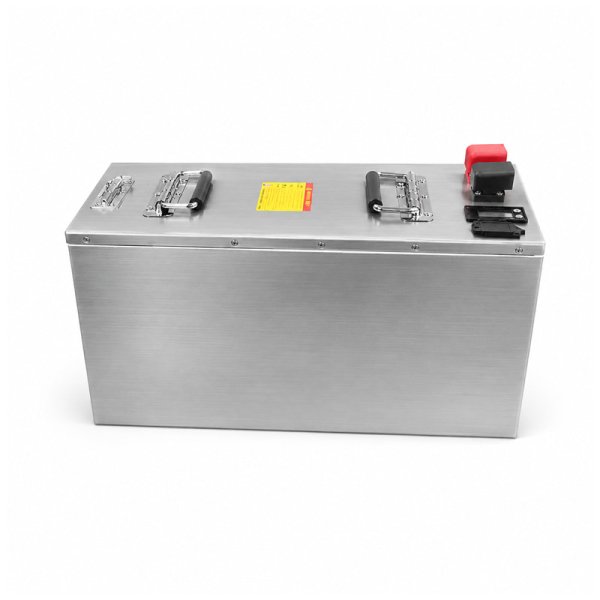
Common measures include rigid mounting points, internal supports, anti-loosening hardware, insulated barriers, strain relief, protected cable routing, and suitable cushioning. Heavy components should not be supported only by terminals or printed circuit boards.
The sourcing phrase shockproof custom battery enclosure is common, but no enclosure is immune to every shock. The technically accurate target is a vibration- and impact-resistant design that passes the agreed profile without hazardous damage, internal short circuit, leakage, loss of electrical isolation, or functional failure.
A shockproof custom battery enclosure should therefore be treated as a performance claim tied to defined conditions. The mounting bracket, vehicle frame, and fastening method should be tested together with the custom lithium battery pack because the enclosure cannot compensate for an unstable installation.
How Do Thermal Pads and Aluminum Enclosures Improve Heat Control?
Heat is produced by cells, busbars, connectors, contactors, and other current-carrying components. Uneven temperature can accelerate aging, while excessive temperature can cause power limitation or protective shutdown. Thermal design must be based on the expected current profile and cell supplier limits.
Thermal pads fill controlled gaps between cells or modules and heat-spreading surfaces. Their thickness, thermal conductivity, compression, electrical insulation, and long-term aging must be considered. They should not be used to hide poor tolerances or compress cells beyond approved limits.
An aluminum enclosure can spread heat and reduce weight compared with some steel structures, but aluminum alone does not guarantee cooling. The custom lithium battery pack needs a defined path from each heat source to the enclosure and then to ambient air. Sealing, coatings, mounting surfaces, and vehicle airflow all influence the result.
Engineers should measure temperatures at representative loads. The objective is acceptable and reasonably uniform temperature across the critical components.
Which IP Rating Is Appropriate for Delivery Tricycles?
Ingress protection should be selected from the installation environment. IEC 60529 defines the IP code for enclosure protection against solids and water. IP65 indicates dust-tight protection and resistance to water jets under specified test conditions. IP67 adds protection against temporary immersion under specified conditions.
A custom LiFePO4 pack for e-trikes operating in normal urban delivery may use an IP65 target when the battery is protected by the vehicle body. IP67 may be appropriate when the pack is mounted low or exposed to severe rain and temporary water exposure. The correct target depends on the complete installation, connector system, venting method, service openings, and market requirements.
Cable glands, connectors, windows, valves, seams, fasteners, and covers must maintain the same design intent. A custom lithium battery pack should be tested in its final configuration because changing one gasket or connector can change the sealing result.

How Should Connectors, Wiring, and CAN Communication Be Integrated?
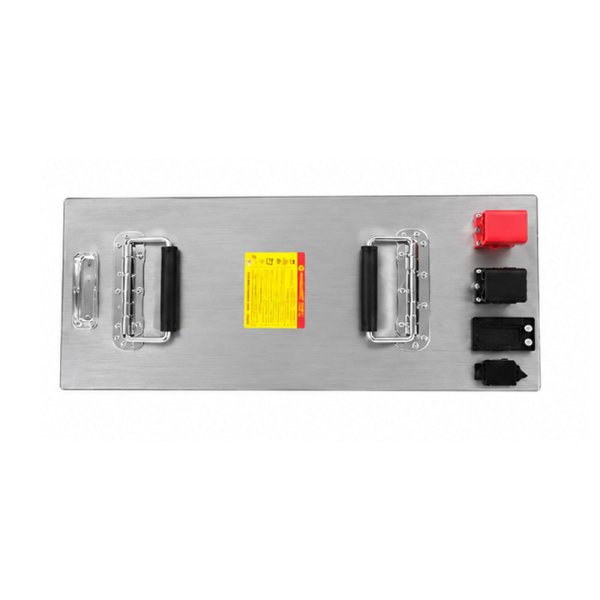
A custom lithium battery pack may require separate discharge, charge, signal, wake-up, interlock, and communication connections. Connector ratings must cover voltage, current, temperature rise, mating cycles, sealing, vibration, and anti-misconnection requirements.
Cable sizing should consider current, voltage drop, temperature, insulation, routing, and terminal temperature. Service access and bend radius must be maintained, while power and communication cables should be routed to reduce interference and abrasion.
A customized BMS can exchange state of charge, voltage, current, temperature, warning, fault, and charge-limit information through CAN bus or another agreed interface. The OEM should provide baud rate, message identifiers, byte order, scaling, update rate, timeout behavior, wake-up logic, and diagnostic requirements. A DBC file is useful when available.
Communication testing should include startup, shutdown, missing messages, invalid data, interruption, and recovery. The connected systems should enter predictable states rather than continue with stale data.
What Testing Should a Custom Battery Pack Pass?
Testing should reflect product risk, destination market, vehicle category, logistics method, and the OEM’s acceptance criteria. No single checklist applies to every custom lithium battery pack, but a professional validation plan covers electrical, mechanical, environmental, communication, vehicle, and transport-related risks.
Electrical validation may include capacity, energy, continuous and peak discharge, charging, efficiency, sensor accuracy, insulation resistance, overcharge, over-discharge, overcurrent, short-circuit protection, pre-charge behavior, and fuse coordination. Results should be compared with predefined pass/fail limits.
Mechanical validation may include vibration, shock, handling or drop tests, mounting strength, connector retention, cable pull, fastener torque retention, and enclosure deformation. The severity should represent the actual vehicle and installation rather than an unrelated product.
Environmental validation may include temperature operation, thermal cycling, humidity, ingress, corrosion, and storage. After testing, the custom lithium battery pack should be checked for damage, loose parts, leakage, isolation problems, and functional changes.
Vehicle testing should confirm acceleration, hill climbing, regenerative braking, range, thermal behavior, fault reporting, and charging under representative payload conditions. Charger compatibility should be checked across startup, charging, termination, temperature limitation, and communication loss.
Lithium batteries offered for transport must be evaluated against the applicable requirements of the UN Manual of Tests and Criteria, Part III, subsection 38.3. The sequence includes altitude simulation, thermal testing, vibration, shock, external short circuit, impact or crush as applicable, overcharge for rechargeable batteries, and forced discharge for cells. The transport framework also includes a battery test summary.
For electric motorcycles and tricycles in markets applying UNECE vehicle regulations, UN Regulation No. 136 addresses electric-power-train and rechargeable-energy-storage-system requirements for category L vehicles. Applicability, amendment series, approval route, and national requirements should be confirmed with a compliance specialist. A custom lithium battery pack manufacturer should not claim universal compliance without defining the exact product, market, and test basis.
How Does FEBATT Manage OEM and ODM Battery Development?
FEBATT’s process begins with application review. Engineers examine vehicle voltage, power, range, installation space, payload, route, charging method, environmental exposure, communication, connectors, and forecast volume.
The next stage defines the custom lithium battery pack architecture, including chemistry, cell format, series and parallel configuration, BMS functions, current path, fuse and contactor strategy, enclosure, thermal path, sealing, mounting, and external interfaces. Engineering assumptions should be recorded so later changes can be evaluated.
Prototype development follows approved design input. The sample is checked for fit, electrical function, communication, charging, protection logic, and initial performance. FEBATT’s source material indicates that general sample R&D and prototype testing may take about 30 days after requirements and design inputs are confirmed. Projects involving new tooling, firmware, specialized components, or repeated vehicle revisions may require more time.
After approval, the custom lithium battery pack moves through validation and production preparation. Work instructions, traceability, firmware control, tooling, end-of-line testing, packaging, and quality records should be defined. Critical design or process changes require validation review.
A custom lithium battery pack manufacturer must also maintain repeatability, change control, documentation, and communication during pilot production and scaling.

FAQ About Custom Lithium Battery Pack
1.What Is the Minimum Order Quantity for a Custom Battery Project?
FEBATT does not apply one universal MOQ to every custom lithium battery pack. Prototype, pilot-production, and mass-production quantities depend on whether the project uses existing cells, BMS hardware, connectors, and enclosures or requires new tooling, firmware, certification work, or dedicated components. Expected annual volume and forecast stability also affect the commercial plan. Buyers should provide a realistic forecast so engineering investment, component procurement, and capacity can be evaluated together.
2.How Long Does It Take to Receive a Custom Prototype?
The schedule cannot be defined by one fixed number because requirement review and design approval occur before sample production. FEBATT’s source information indicates that general sample R&D and prototype testing may take approximately 30 days after technical requirements and design inputs are confirmed. A custom lithium battery pack that needs a new enclosure, tooling, CAN development, unusual connectors, additional testing, or vehicle-fit revisions may take longer. The supplier should issue a milestone plan covering design freeze, material readiness, assembly, testing, and shipment.
3.Can FEBATT Program a Custom CAN Bus Protocol?
Yes. FEBATT can configure CAN bus communication for a custom lithium battery pack when the OEM provides a complete and stable specification. Required inputs normally include baud rate, message identifiers, transmit and receive definitions, byte order, scaling, update rate, timeout logic, wake-up and sleep behavior, fault handling, and charger or controller handshake requirements. Both parties should test normal operation, missing-message, invalid-data, and recovery conditions on the actual vehicle.
4.Which Enclosure Material Is Better?
No material is universally best. Steel offers rigidity but adds weight; aluminum can reduce weight and spread heat but needs careful joining and corrosion design; engineering plastics support complex shapes but require strength, aging, flame, temperature, and sealing validation. The enclosure for a custom lithium battery pack should be selected from structural loads, weight, production volume, thermal path, ingress target, tooling cost, and service requirements.
5.How Is Cell Consistency Controlled?
Cell consistency should be controlled through supplier qualification, incoming inspection, batch management, capacity grading, open-circuit-voltage matching, internal-resistance matching, and controlled assembly. Welding quality, connection resistance, torque, insulation, sensor placement, and end-of-line testing also affect pack consistency. BMS balancing can reduce voltage differences during operation, but it cannot repair a defective cell or replace proper grading. A credible custom lithium battery pack manufacturer should maintain cell and production traceability.
6.Can a Custom LiFePO4 Pack Be Developed for E-Trikes?
Yes. A custom LiFePO4 pack for e-trikes can be configured around motor power, controller limits, payload, route, charging frequency, installation space, and environmental exposure. LiFePO4 chemistry is often considered when frequent cycling and thermal stability are important, but weight, volume, power, charging time, and cost must also be considered. The pack still requires appropriate BMS limits, structural support, sealing, connectors, vibration validation, and vehicle-level testing.
Conclusion
A successful electric motorcycle or delivery-tricycle project begins with verified vehicle data and ends with controlled production. A custom lithium battery pack must integrate energy, power, cells, BMS, enclosure, thermal management, mounting, wiring, communication, charging, and validation as one system.
OEMs should document the duty cycle, confirm electrical and mechanical interfaces, test the complete vehicle, and control critical design changes. A qualified custom lithium battery pack manufacturer should explain the assumptions behind its proposal, provide a practical validation plan, and support the transition from prototype to repeatable production.
FEBATT develops custom lithium battery pack solutions for electric motorcycles, delivery tricycles, forklifts, golf carts, RV power systems, and other power-driven applications. By combining application analysis, engineering customization, testing, and production planning, FEBATT helps B2B customers build battery platforms matched to real operating conditions.