Battery selection is a major engineering decision in an electric motorcycle program. Beyond voltage and capacity, OEMs and fleet operators must evaluate thermal behavior, cycle life, discharge capability, charging control, enclosure strength, transport documentation, and total cost of ownership. A motorcycle battery lifepo4 solution can be a strong option when a project prioritizes stable operation, long service life, and predictable performance rather than maximum energy density alone.
Lithium iron phosphate, commonly abbreviated as LiFePO4 or LFP, uses an iron-phosphate cathode with a comparatively stable crystal structure. That chemistry generally has lower thermal reactivity than many nickel-rich lithium-ion chemistries, but it is not fireproof and should never be treated as risk-free. Safe performance still depends on cell quality, pack architecture, the Battery Management System, mechanical protection, thermal pathways, charger compatibility, and validated operating limits. For this reason, a professionally engineered motorcycle battery lifepo4 system is more than a collection of cells; it is a complete electrical and mechanical subsystem designed around the motorcycle’s actual duty cycle.
This guide explains the chemistry, safety characteristics, cycle-life factors, temperature behavior, discharge profile, maintenance needs, environmental considerations, and sourcing criteria that B2B buyers should examine. It also clarifies several common misconceptions, including the idea that a flat discharge curve automatically makes state-of-charge estimation easy or that all LFP batteries provide the same number of cycles. The aim is to help buyers specify a motorcycle battery lifepo4 product using verifiable data instead of broad marketing claims.
What Chemistry Is Used in a Motorcycle Battery LiFePO4 System?
The cathode in an LFP cell is lithium iron phosphate, while the anode is typically graphite. During discharge, lithium ions move through the electrolyte from the anode toward the cathode while electrons travel through the external circuit to power the controller, motor, lighting, and auxiliary electronics. During charging, the process reverses. The strong phosphate bonding in the cathode contributes to structural stability and helps reduce oxygen release under abuse compared with some nickel-based cathodes.
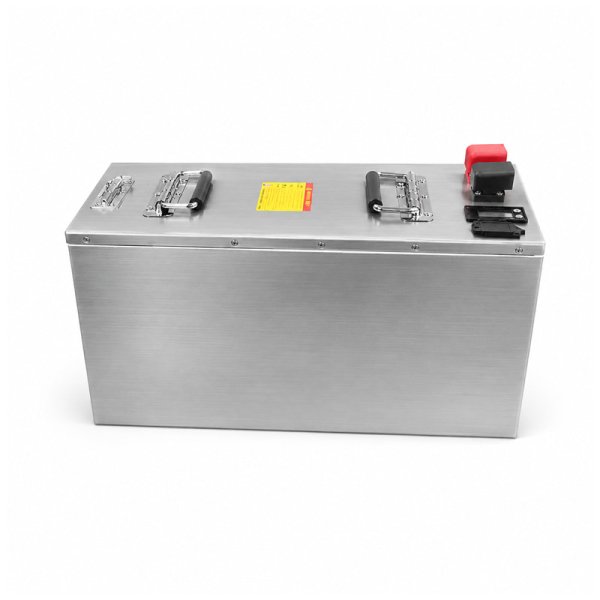
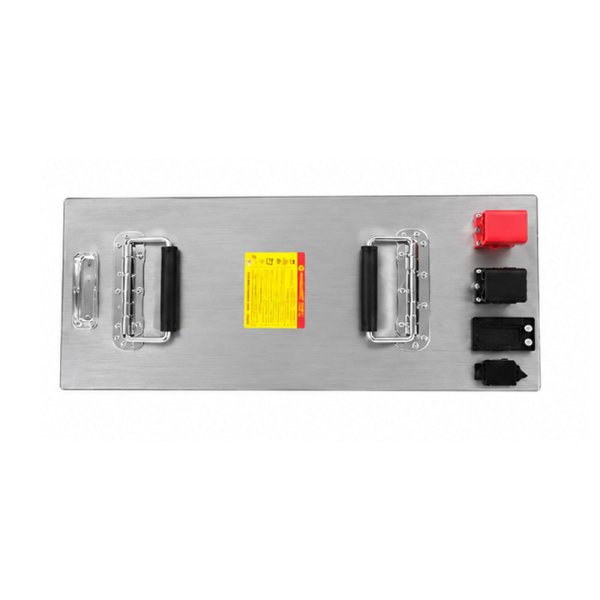
A motorcycle battery lifepo4 product must convert cell-level characteristics into usable vehicle performance. Cells are connected in series to reach the required voltage and in parallel when additional capacity or current capability is needed. The resulting lifepo4 battery pack should include matched cells, busbars sized for current, insulation, fusing or equivalent protection, temperature sensing, a suitable enclosure, and a BMS calibrated for the selected cells. Communication interfaces such as CAN or RS485 may also be required when the battery must exchange operating data with the vehicle controller or fleet platform.
The chemistry offers a relatively flat voltage profile and can support high cycle life within validated temperature, voltage, and current limits. Because LFP has lower gravimetric energy density than many NMC systems, buyers should compare complete pack energy, mass, dimensions, current capability, and thermal design.
Chemistry should be evaluated together with voltage, BMS, charging, duty cycle, and integration requirements. Our electric motorcycle battery guide for OEMs and fleets brings these decisions into one framework.
Why Can LiFePO4 Be a Safer Lithium Chemistry?
A motorcycle battery lifepo4 system is often selected for applications that value thermal and chemical stability. Its cathode structure is less prone to oxygen release than many nickel-rich materials, which can reduce the severity and probability of self-heating reactions under comparable conditions. This does not eliminate the possibility of thermal runaway. Research on high-capacity LFP cells confirms that severe heating, internal short circuits, mechanical damage, or uncontrolled electrical abuse can still initiate hazardous reactions.
The practical safety of a motorcycle battery lifepo4 design therefore comes from layered protection. The cell chemistry provides one layer, while the BMS, charger, current paths, enclosure, sealing, structural supports, and production controls provide others. A safe lithium motorcycle battery should monitor cell voltages, pack current, temperatures, and cell imbalance. It should interrupt charging or discharge when measured values exceed validated limits and record faults so that technicians can investigate abnormal behavior.
Mechanical protection is equally important because electric motorcycles experience vibration, impact, water, debris, and thermal cycling. The enclosure, connectors, cable exits, and mounting points must suit the real vehicle environment. Buyers should request relevant vibration, ingress, thermal, electrical, and transport-test evidence.
How Does a LiFePO4 Battery Pack Manage Thermal Runaway Risk?
Thermal runaway is a self-accelerating process in which heat causes reactions that generate still more heat. A motorcycle battery lifepo4 system is generally less reactive than many other lithium-ion cathode chemistries, but it can still fail if cells are defective, crushed, short-circuited, overheated, overcharged, or used beyond design limits. A motorcycle battery lifepo4 system should be engineered to prevent abnormal conditions and to limit their consequences if prevention fails.
The BMS should provide overcharge, over-discharge, overcurrent, short-circuit, and over-temperature protection. These functions are only effective when thresholds, delay times, sensors, switching devices, and current ratings match the cell and vehicle design. Cell balancing helps prevent one cell group from reaching a voltage limit before the rest of the pack, but balancing is not a substitute for good cell matching and quality control.

Pack layout also matters. Adequate spacing, heat-transfer paths, flame-resistant insulation where appropriate, mechanically secure busbars, and protected sensing wires can reduce local hot spots and failure propagation. For high-power motorcycles, the supplier should validate temperature distribution under repeated acceleration, hill climbing, payload operation, and the intended charging profile. A safe lithium motorcycle battery is the result of verified system design, not chemistry alone.
What Cycle Life Can B2B Buyers Expect?
Cycle life is the number of charge-discharge cycles completed before a defined end-of-life threshold, often 80 percent remaining capacity. It is not universal: temperature, depth of discharge, current rates, average state of charge, and rest periods all affect aging.

A qualified motorcycle battery lifepo4 product may provide several thousand cycles under appropriate conditions, but a supplier should state the exact cell model and test method behind any claim. B2B buyers should request the test temperature, C-rate, depth of discharge, charging protocol, end-of-life threshold, and whether the result comes from cell-level or pack-level testing. A statement such as ‘5,000 cycles’ is incomplete without these conditions.
For commercial fleets, the business benefit is lower replacement frequency and more predictable maintenance planning. The relevant metric is not the highest advertised cycle count but the number of usable cycles under the actual route, payload, climate, charging schedule, and daily depth of discharge. A well-matched motorcycle battery lifepo4 pack can reduce downtime and lifecycle cost, while an undersized pack exposed to deep discharge and rapid charging may age faster.
How Does LiFePO4 Perform in Hot and Cold Weather?
High temperature accelerates many battery-aging reactions, even when the chemistry is thermally stable. In hot climates, a motorcycle battery lifepo4 system needs appropriate ventilation or heat dissipation, temperature sensing, and BMS limits. Mounting the pack next to major heat sources or inside a poorly ventilated enclosure can shorten life. Fleet operators should monitor temperature history rather than assuming that LFP can tolerate unlimited heat.
Low temperature creates a different problem. Internal resistance increases, available power and capacity may temporarily decline, and charging can become unsafe if lithium plating occurs at the graphite anode. The BMS should restrict or prevent charging below the cell manufacturer’s approved temperature. Some applications use controlled preheating, but this must be designed as part of the battery and charger system.

The correct operating range for a motorcycle battery lifepo4 system depends on the chosen cells and pack design. Buyers should not accept a broad temperature claim without a datasheet and test evidence. For tropical, cold-region, or seasonal fleets, the supplier should evaluate ambient temperature, pack location, airflow, charging conditions, and dwell time before recommending a motorcycle battery lifepo4 configuration.
Why Is the LFP Discharge Curve Useful for Electric Motorcycles?
LFP cells maintain a relatively stable voltage across much of their usable state-of-charge range. For the rider, this can support more consistent motor-controller input and more predictable acceleration than a battery whose voltage falls sharply throughout discharge. The benefit is especially relevant during stop-and-go delivery routes, hill climbing, passenger transport, and repeated acceleration.
However, the flat curve creates a measurement challenge. Voltage alone changes only slightly through much of the operating range, so it is not sufficient for accurate state-of-charge estimation. A motorcycle battery lifepo4 BMS should combine current integration, calibrated open-circuit-voltage data, temperature compensation, and battery-model logic. The system should also be validated against the motorcycle’s real load profile.
For fleet managers using a motorcycle battery lifepo4 system, accurate state-of-charge and state-of-health estimates are essential for route planning and maintenance. Data quality depends on current-sensor accuracy, software calibration, cell consistency, and the way the vehicle is used. A safe lithium motorcycle battery should deliver stable power while also providing the diagnostic data needed to avoid unexpected depletion or premature replacement.
What Does a Professional BMS Need to Control?
The BMS is the control layer of a motorcycle battery lifepo4 pack. At minimum, it should monitor individual cell-group voltages, pack voltage, charge and discharge current, and strategically placed temperatures. It should apply protection thresholds that match the cell manufacturer’s limits and the motorcycle’s electrical architecture.
For higher-value commercial platforms, communication and diagnostics become equally important. A motorcycle battery lifepo4 system may need CAN communication, fault codes, cycle count, temperature history, state-of-charge reporting, state-of-health estimation, and event logging. These functions support predictive maintenance, warranty analysis, and remote fleet management, but they must be validated rather than merely listed in a brochure.
The BMS should also coordinate with the charger and controller. Overly aggressive regenerative braking, incompatible charging voltage, or current peaks beyond the contactor and cell limits can create faults even when the cells are high quality. During procurement, buyers should provide motor power, peak current, continuous current, regenerative-current profile, charger specification, communication requirements, and expected environmental conditions.
What Maintenance Extends Battery Service Life?
A motorcycle battery lifepo4 product requires less routine maintenance than a flooded lead-acid system, but it still benefits from disciplined operation. The first requirement is a charger designed for the pack’s voltage limits and charging protocol. A lead-acid charger may use unsuitable stages or voltages, while an unapproved fast charger may exceed cell, connector, or thermal limits.
Operators should avoid repeated operation at extreme temperatures and should not routinely drive the battery to protection shutdown. Moderate depth of discharge generally reduces stress compared with continuous full-depth cycling. For long storage, the supplier should specify an appropriate state of charge, inspection interval, temperature range, and method for preventing excessive self-discharge.
Fleet maintenance should include checking connectors, cable strain relief, mounting bolts, enclosure damage, water ingress, and diagnostic fault history. Software data can reveal unusual temperature, imbalance, or current events before a vehicle stops operating. A motorcycle battery lifepo4 product lasts longest when the pack, charger, controller, and operating procedure are treated as one system.
What Environmental Advantages and Limitations Should Buyers Consider?
The chemistry used in a motorcycle battery lifepo4 system avoids nickel and cobalt in the cathode and may reduce replacement demand through longer service life. These are potential lifecycle advantages, not proof that production is impact-free.
Mining, refining, manufacturing, logistics, electricity use, and end-of-life treatment all contribute to environmental impact. A motorcycle battery lifepo4 project should therefore consider durability, energy efficiency, responsible sourcing, repairability where practical, and access to qualified recycling channels. Claims such as ‘green’ or ‘zero impact’ should be avoided unless supported by a defined lifecycle assessment.
For B2B procurement, useful evidence includes supplier environmental-management practices, restricted-substance documentation, traceability, packaging design, and end-of-life guidance. A lifepo4 battery pack that lasts longer and is properly recovered can offer a better lifecycle outcome than a short-lived alternative, but the result depends on how the complete product is manufactured, used, and handled after service.
How Should OEMs Specify a LiFePO4 Motorcycle Battery?
A battery request should begin with the vehicle duty cycle. The OEM should provide motor rating, peak and continuous current, target range, payload, route profile, maximum speed, regeneration behavior, installation space, connectors, temperature range, ingress target, communication protocol, charging time, and forecast volume.
The supplier can then select cells and design the motorcycle battery lifepo4 pack around usable energy and current capability. For example, two batteries with the same nominal watt-hours may perform differently because of cell resistance, discharge limits, thermal design, BMS calibration, or enclosure mass. A motorcycle battery lifepo4 quotation should identify the nominal voltage, usable capacity, continuous and peak current, dimensions, weight, connector, communication, protection functions, charging limits, and validation plan.
Buyers should also request a sample and pilot-validation process before mass production. Vehicle-level testing should include acceleration, gradeability, repeated starts, braking regeneration, charging, vibration, water exposure where applicable, temperature rise, and fault handling. This process is more reliable than selecting a battery from a catalog based only on voltage and ampere-hours.
How Should Buyers Verify Quality Before Ordering?
A professional evaluation should examine the cell model, incoming inspection, matching criteria, joining process, busbars, insulation, traceability, BMS validation, enclosure, end-of-line testing, and quality records. Confirm that samples and mass production use the same cells, hardware, software, and mechanical design.
Transport documentation is another essential check for a motorcycle battery lifepo4 order. Lithium cells and batteries offered for international transport should be of a type demonstrated to meet the applicable UN Manual of Tests and Criteria, Part III, subsection 38.3 requirements, and the required test summary should be available. Additional product or vehicle requirements depend on the destination, application, transport mode, and complete system.
For B2B buyers seeking a motorcycle battery lifepo4 solution, the most useful supplier is one that can translate vehicle requirements into verifiable specifications and explain the limitations of the proposed design. FEBATT’s electric motorcycle battery portfolio can be reviewed through the company’s electric motorcycle battery solutions page. Standard and customized projects should still proceed through technical review, sampling, and vehicle-level validation before volume orders.
FAQ About Motorcycle Battery LiFePO4
1.Can a LiFePO4 motorcycle battery catch fire?
Yes. LiFePO4 is generally less thermally reactive than many nickel-rich lithium-ion chemistries, but it can still fail under severe heating, internal short circuit, crushing, puncture, manufacturing defect, or uncontrolled electrical abuse. A motorcycle battery lifepo4 product should combine qualified cells with a validated BMS, robust mechanical protection, appropriate thermal design, and a compatible charger.
2.How many cycles can an LFP motorcycle battery provide?
There is no universal number. Depending on the cell, temperature, depth of discharge, charge and discharge rates, and end-of-life criterion, an LFP battery may provide several thousand cycles. Buyers should request the actual test report and confirm whether the quoted result applies to cells or to the complete lifepo4 battery pack.
3.Does an LFP battery lose power as it discharges?
Voltage remains relatively stable across much of the usable charge range, which can support consistent controller and motor performance. Near the end of discharge, voltage falls more rapidly. Because the curve is flat, accurate state-of-charge estimation requires more than voltage alone.
4.Can a motorcycle battery LiFePO4 system remain fully charged?
A fully charged battery is normal before immediate use, but storing it at maximum state of charge for extended periods can increase aging stress. Follow the cell and pack supplier’s storage state-of-charge, temperature, and inspection recommendations.
5.Is LFP heavier than NMC?
At the same usable energy, a motorcycle battery lifepo4 pack is generally larger and heavier than an equivalent NMC pack because LFP has lower gravimetric energy density. Final weight also depends on the enclosure, cooling strategy, BMS, current capability, and mechanical protection.
6.Can an LFP battery be charged below 0°C?
Only when the selected cells and battery system explicitly permit it. Charging a cold graphite-based lithium-ion cell can promote lithium plating. A safe lithium motorcycle battery should use temperature-based charging limits or a validated preheating strategy for sub-zero operation.
7.What documentation is needed for international transport?
Requirements depend on the battery, transport mode, route, and destination. Lithium batteries offered for transport generally need evidence that the design type has passed the applicable UN 38.3 tests and a test summary must be available. Packaging, labeling, state-of-charge, and shipment documentation may also apply.
Conclusion
LiFePO4 is a strong candidate for electric motorcycles that prioritize thermal stability, long service life, consistent power delivery, and manageable lifecycle cost. Its chemistry can reduce thermal reactivity compared with many nickel-rich alternatives, but safe performance still depends on cell quality, BMS design, charger compatibility, mechanical protection, thermal control, and disciplined manufacturing.
For OEMs and fleet operators, the correct motorcycle battery lifepo4 solution is the one validated against the vehicle’s real current, route, payload, temperature, charging, and installation requirements. Buyers should compare verified cycle-test conditions, fault protection, pack-level performance, transport documentation, and production consistency rather than selecting only by advertised capacity or price.
A carefully engineered lifepo4 battery pack can improve fleet availability and reduce replacement frequency, but the procurement process should include technical review, samples, pilot vehicles, and documented acceptance tests. That approach gives manufacturers and operators a defensible basis for choosing a safe lithium motorcycle battery and scaling it into commercial production.