Electric forklifts depend on the battery as both an energy source and, in many designs, part of the truck’s required counterweight. Neglect can lead to shorter runtime, slow charging, excessive heat, unplanned downtime, and premature replacement. A structured forklift battery maintenance program helps warehouse operators detect deterioration early, standardize safe charging, and make better repair or replacement decisions.
Effective forklift battery maintenance depends on battery chemistry. Flooded lead-acid batteries require inspection, controlled watering, and cleaning. Lithium-ion forklift batteries are sealed and normally require no watering, but they still need connector inspections, correct charging, temperature control, and review of battery management system alerts. This guide is general. Always follow the forklift, battery, and charger manuals, the safety data sheet, and applicable local rules. Internal cell work, high-voltage work, electrolyte handling, and assessment of damaged batteries should be completed only by trained and authorized personnel.
Why Does Forklift Battery Maintenance Matter?
Forklift battery maintenance is part of fleet availability, labor planning, energy management, and workplace safety. A battery with declining capacity may still operate, yet force extra charging stops and reduce productive shift time.
The objective is reliable, economical service without unacceptable safety or downtime risk. A disciplined forklift battery maintenance record helps teams identify damaged connectors, abnormal charging, recurring heat, electrolyte problems, and reduced runtime before they cause a major interruption.
Official guidance also treats battery charging as a controlled industrial activity. OSHA requires designated charging areas and specifies precautions involving ventilation, spill control, fire protection, truck positioning, sparks, flames, and metallic objects. These controls are especially relevant to flooded lead-acid systems, which contain corrosive electrolyte and can release hydrogen during charging.

Identify the Battery Chemistry First
No forklift battery maintenance checklist is safe unless it begins with identification. Confirm the chemistry, nominal voltage, rated capacity, compatible charger, connector type, battery weight, and manufacturer instructions before work begins.
Flooded lead-acid batteries contain liquid electrolyte and vent during charging. Their routine may include watering after charging, corrosion removal, and equalization only when specified by the manufacturer. Appropriate personal protective equipment and emergency facilities are required where electrolyte exposure is possible.
Sealed lead-acid technologies have different service requirements and should not be opened or watered unless the manufacturer provides an approved procedure.
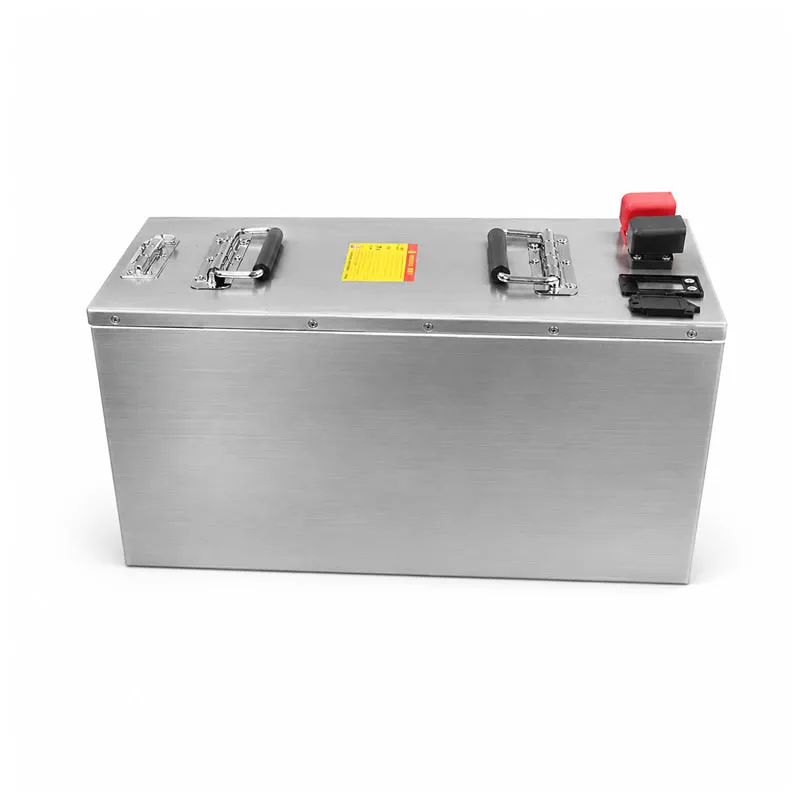
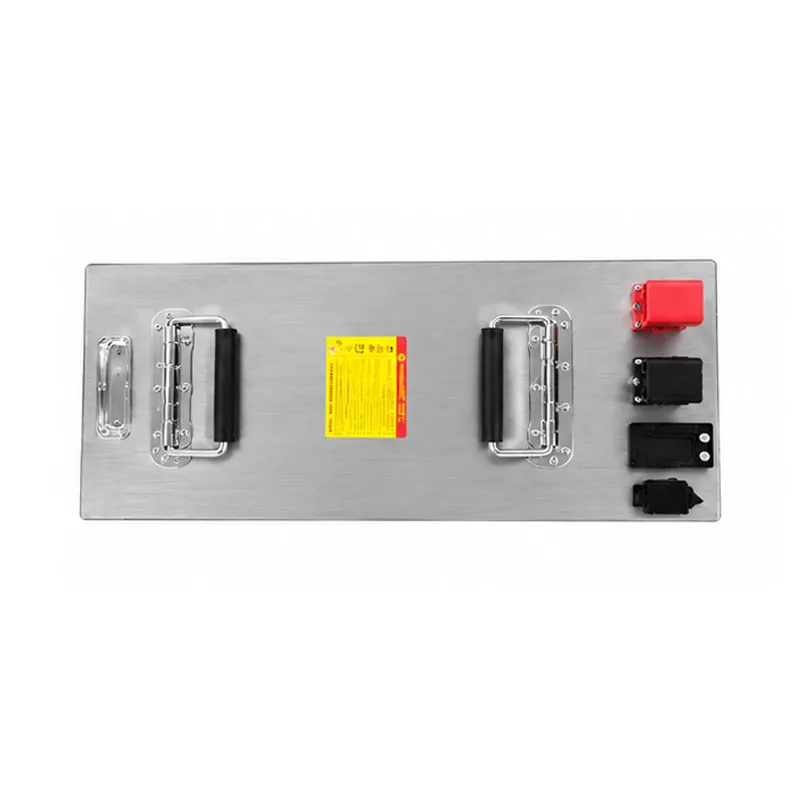
Lithium-ion forklift batteries contain cells, contactors, sensors, electronic controls, and a battery management system, or BMS. Lithium forklift battery maintenance focuses on the enclosure, mounting, cables, communication, charger compatibility, operating temperature, fault codes, and charge history. A BMS warning must never be bypassed merely to return the truck to service.
Daily Forklift Battery Maintenance Checklist
A daily forklift battery maintenance inspection should be easy to repeat and detailed enough to identify conditions requiring isolation. In forklift battery maintenance, the operator should observe, record, and escalate – not dismantle the battery.

1.Confirm the battery is secure
compartment. A loose battery can damage cables, connectors, trays, and the truck. Never substitute a battery with an unapproved size or weight, because the battery may form part of the forklift’s specified counterweight.
2.Inspect the enclosure and tray
Look for cracks, dents, swelling, leakage, damaged covers, missing fasteners, or evidence that the battery has shifted. For lead-acid batteries, inspect the tray for residue and corrosion. For lithium-ion batteries, swelling, impact damage, or a deformed enclosure requires immediate isolation and professional assessment.
3.Examine cables and connectors
Check for cuts, exposed conductors, flattened insulation, loose routing, discoloration, heat damage, melting, arcing marks, or severe corrosion. A poor connection increases resistance and can overheat the battery, charger, or truck wiring.
4.Review charge and warning indicators
Record the displayed state of charge and note charger errors, BMS warnings, dashboard alerts, or unexpected shutdowns. Repeatedly clearing an alert without diagnosing it is not acceptable forklift battery maintenance. Record the exact code and operating conditions for the technician.
5.Observe runtime and temperature
Report a meaningful drop in runtime, premature low-charge warnings, slow performance under normal loads, or unusual heat during charging or operation. A repeated trend requires testing.
6.Remove unsafe equipment from service
Use a log that identifies the forklift, battery, charger, date, shift, symptom, and action taken. If the truck or battery is unsafe, isolate it according to site procedure. OSHA requires unsafe industrial trucks to be removed from service until they are restored to safe condition.
Weekly and Monthly Maintenance Schedule
Daily forklift battery maintenance observations should be supported by planned tasks assigned to trained personnel. Intervals must follow the manufacturer’s manual and operating environment.
Weekly tasks may include cleaning accessible surfaces, inspecting charging cables and connectors, reviewing fault logs, checking lead-acid electrolyte by the approved method, and comparing runtime with the expected duty cycle.
Monthly or planned service may include reviewing charging history, checking mounting hardware, inspecting charging-area ventilation, investigating recurring faults, and comparing performance across the fleet. Large operations should trend charging duration, temperature alerts, watering, capacity tests, and service by asset number.
| Frequency | Flooded lead-acid battery | Lithium-ion battery |
|---|---|---|
| Before each shift | Check charge, housing, cables, connector, leakage, and heat | Check charge, enclosure, connector, BMS alerts, impact damage, and heat |
| Weekly | Inspect electrolyte as directed; clean residue; review charging | Review faults; inspect cables, ports, communication, and mounting |
| Planned service | Review watering, corrosion, cell condition, charger settings, and equalization requirements | Review charge data, temperature events, diagnostic data, and communication issues |
| Immediate isolation | Smoke, strong odor, severe leakage, exposed conductors, overheating, or damaged tray | Smoke, unusual odor, swelling, impact damage, overheating, repeated protection trips, or enclosure damage |
Safe Lead-Acid Battery Watering and Cleaning
Forklift battery maintenance for lead-acid systems requires disciplined watering. Low electrolyte can expose and damage the plates. Overfilling can cause overflow during charging, leading to corrosion, contamination, and chemical exposure.
Follow the manufacturer’s level indicators and procedure. In many flooded designs, routine watering is completed after a full charge, when the electrolyte level has risen. If plates are exposed before charging, follow the manufacturer’s emergency top-up instructions rather than filling to the normal final level. Use water of the specified quality; many systems require approved purified or deionized water. Never add acid as part of routine watering.
Cleaning must be performed by trained personnel using the required protective equipment and isolation procedure. Prevent cleaning liquid or neutralizer from entering cells, connectors, or electronics, and keep metallic tools away from exposed terminals. After cleaning, inspect the tray, cables, and terminals. Recurring overflow may indicate overfilling, unsuitable charger settings, high temperature, or a cell problem – not merely a dirty battery.

Lithium-Ion Forklift Battery Maintenance
Lithium systems eliminate watering and routine equalization, but chemistry-specific forklift battery maintenance remains necessary. Use only an approved charger and charging profile. Compatibility includes voltage, current, connector design, communication protocol, and software configuration; a charger that physically connects is not automatically suitable.
Inspect the enclosure, mounting points, high-current cables, communication connectors, charging inlet, and any specified cooling paths. Keep them dry and free of conductive debris. Do not pressure-wash the battery or introduce fluid into ports unless the manufacturer expressly permits it.
The BMS monitors conditions such as cell voltage, current, and temperature. When it limits charging or discharging, diagnose the underlying condition instead of bypassing protection. Persistent imbalance, overtemperature events, communication loss, insulation faults, or contactor problems require trained diagnostic support.
Opportunity charging may support multi-shift operation, but the strategy must remain within the battery and charger supplier’s limits. Use charge history and temperature data to confirm that the schedule suits the real duty cycle.
Charging Area Safety
Complete forklift battery maintenance includes the charging environment. For lead-acid systems, hydrogen generation and sulfuric acid exposure are central hazards. OSHA and CCOHS guidance emphasizes designated, well-ventilated charging areas, trained workers, emergency equipment, and control of ignition sources.
Before charging, position the truck correctly, apply the brake, lower the forks, switch it off, and follow the manufacturer’s connection sequence. Inspect plugs and cables; never connect visibly damaged equipment.
Keep smoking, flames, sparks, electric arcs, and loose metallic objects away from charging areas. Protect charging apparatus from vehicle impact. Where electrolyte handling is possible, provide the spill response, flushing, eyewash, shower, fire protection, and PPE required by the applicable rules and risk assessment.
Lithium charging areas also need emergency procedures for damage, smoke, unusual odors, thermal events, isolation, and supplier contact. An affected battery must not return to service without authorization.
How Does Temperature Affect Battery Performance?
Temperature should be tracked during forklift battery maintenance because it affects available power, charging behavior, degradation, and safety. Cold conditions can reduce capacity and power. Some lithium batteries restrict charging below their permitted cell-temperature range, while lead-acid charging performance also changes in cold environments.
High temperature generally accelerates aging and can worsen problems caused by high current, poor connections, restricted ventilation, or unsuitable charging. Do not assume that a hot battery is normal because the forklift has worked hard. Compare measured temperature with the manufacturer’s range and the history of similar batteries in the same duty cycle.
For cold stores or hot facilities, define operating, charging, and storage procedures before selection. Consider shift length, load profile, charger location, and movement between temperature zones.
Common Signs of Battery Failure
Effective forklift battery maintenance depends on early recognition, reporting, and isolation. Investigate when:
- runtime declines under the same workload;
- charging takes longer or stops repeatedly;
- a cable, connector, or battery becomes unusually hot;
- voltage falls sharply under a normal load;
- charger or BMS faults recur;
- a lead-acid battery needs water much more often than comparable units;
- corrosion or overflow repeatedly returns;
- the tray, enclosure, or connector has impact damage; or
- swelling, leakage, smoke, or unusual odor appears.
Smoke, burning odor, strong chemical odor, rapid heating, or swelling is an emergency warning. Stop operation and charging, keep people away, follow the site emergency plan, and contact qualified personnel. Do not reconnect the battery, open the enclosure, or attempt improvised forklift battery repair.
When Dose Forklift Battery Repair Makes Sense?
Forklift battery repair should start with diagnosis. The fault may be in the battery, charger, connector, truck wiring, communication, operating practice, or sizing. Replacing a battery will not correct a charger configuration problem, and replacing a connector will not restore irreversibly degraded cells.
Repair may be reasonable when the fault is isolated, safety can be fully restored, approved parts and procedures are available, and the remaining battery condition meets the duty cycle. Depending on the design, serviceable items may include external connectors, cables, sensors, contactors, or communication components.
Internal cell or module work requires training, test equipment, isolation, and manufacturer authorization. Evaluate cost, remaining capacity, warranty impact, downtime, and recurrence risk.
When Should B2B Buyers Replace the Battery?
Replacement is usually preferable when the battery cannot safely deliver the required runtime, has serious physical damage, experiences recurring internal faults, lacks supported parts, or would require repeated forklift battery repair with uncertain results. Age and cycle count provide context but are not enough on their own.
Use capacity testing, cell or module consistency, voltage response under load, charge acceptance, temperature history, fault records, and service cost. Confirm that the replacement matches the forklift’s voltage, weight, dimensions, compartment, connector, charger, communication, and certification requirements.
Businesses planning a replacement or fleet conversion can explore FEBATT forklift battery solutions. Selection should consider truck model, shift pattern, current demand, charging windows, temperature, space, and communication needs.
How Can B2B Buyers Evaluate Used Forklift Batteries?
Used forklift batteries can reduce initial expenditure, but condition matters more than appearance or age. Request the model, serial number, chemistry, rated capacity, production date, service history, charging records, lead-acid watering history, lithium fault history, and reason for removal from the previous fleet.
Assessment may include visual inspection, cable and connector checks, applicable electrical tests, capacity testing, load response, and cell or module consistency. Confirm charger compatibility, technical support, parts availability, and remaining warranty.
Used forklift batteries that cannot support the required shift may cost more through battery changes, charging interruptions, and lost productivity than they save at purchase. Apply the same forklift battery maintenance standards from the first day and establish a baseline for capacity, runtime, temperature, and faults.
How Does Maintenance Extend Productive Service Life?
Forklift battery maintenance extends productive service by controlling avoidable stress and exposing deterioration before failure. Correct charging limits chronic undercharge or unsuitable overcharge. Lead-acid watering protects the plates. Clean, secure connections reduce resistance and heating. Temperature control reduces thermal stress, while records reveal whether decline is gradual or linked to a specific problem.
Track runtime per shift, charging duration, energy use, maintenance hours, repair cost, and unplanned downtime. These measures support defensible decisions about continued use, forklift battery repair, reassignment to a lighter duty, or replacement.
FAQ About Forklift Battery Maintenance
1.How often should forklift battery maintenance be performed?
Operators should complete a visual and functional check before each shift. Trained personnel should perform chemistry-specific weekly, monthly, and scheduled tasks according to the battery, charger, and forklift manuals. Harsh temperatures, multi-shift use, corrosive environments, or recurring faults may require more frequent inspection.
2.How long does a forklift battery last?
There is no universal service-life figure. Life depends on chemistry, depth of discharge, charge rate, temperature, duty cycle, maintenance, and the manufacturer’s end-of-life definition. Flooded lead-acid traction batteries are often discussed in relation to approximately 1,500 cycles under specified conditions, while some industrial lithium products are rated or warranted for several thousand cycles. Compare the supplier’s test conditions, usable-capacity threshold, warranty, and expected application profile.
3.What PPE is required for battery maintenance?
Forklift battery maintenance PPE must follow the risk assessment, safety data sheet, local rules, and manufacturer instructions. Flooded lead-acid work commonly requires chemical splash eye protection, a face shield where splash risk exists, acid-resistant gloves, protective clothing or an apron, and suitable footwear. Electrical work may require additional voltage-rated and arc-rated protection. Only trained and authorized personnel should perform the task.
4.Why is the forklift battery smoking or producing an unusual smell?
Smoke or unusual odor may indicate overheating, overcharging, a damaged connector, internal short circuit, electrolyte gassing, cell venting, or another serious failure. Stop operation and charging, isolate the area according to the emergency plan, and contact qualified personnel. Do not touch, open, reconnect, or move an unstable battery unless an approved emergency procedure requires it.
5.Can a completely dead forklift battery be revived?
Do not use an improvised charger, voltage bypass, or manual BMS reset. Some flooded lead-acid batteries affected by limited sulfation may be recoverable through professional testing and approved reconditioning. Batteries with damaged plates, internal shorts, severe corrosion, physical damage, swelling, overheating, or repeated protection trips may require replacement. Lithium batteries should be evaluated only by an authorized technician.
6.Is it better to repair or replace an old forklift battery?
Choose using condition and economics, not age alone. Forklift battery repair may be justified for a safe, isolated, serviceable fault when the battery retains adequate capacity and supported parts are available. Replacement is normally more appropriate when faults recur, runtime no longer meets the shift, the enclosure or cells are damaged, or repair cost and downtime approach the value of a reliable replacement.
7.Can the same routine be used for lead-acid and lithium batteries?
No. Flooded lead-acid batteries may require watering, electrolyte-related PPE, corrosion control, and ventilation for charging gases. Lithium batteries normally require no watering, but they depend on correct charger communication, BMS operation, enclosure integrity, and temperature control. Always use chemistry-specific forklift battery maintenance procedures.
8.What maintenance records should a warehouse keep?
Record battery and charger asset numbers, date, shift, state of charge, runtime concerns, temperature alerts, watering, cleaning, faults, repairs, capacity tests, and replacement decisions. For used forklift batteries, retain available previous records and the condition baseline established when the battery enters the fleet.
Conclusion
Reliable electric forklift operation begins with a documented, chemistry-specific forklift battery maintenance program. Daily inspection, safe charging, correct lead-acid watering, clean connections, temperature monitoring, BMS review, and accurate records reduce preventable downtime and show when professional attention is needed.
The strongest forklift battery maintenance program links operating data to business decisions. It distinguishes repairable external defects from internal degradation, evaluates used forklift batteries using evidence, and replaces batteries when continued operation is no longer safe or economical. Following manufacturer instructions and applicable safety requirements helps warehouses protect workers, improve fleet availability, and obtain more productive value from every battery asset.