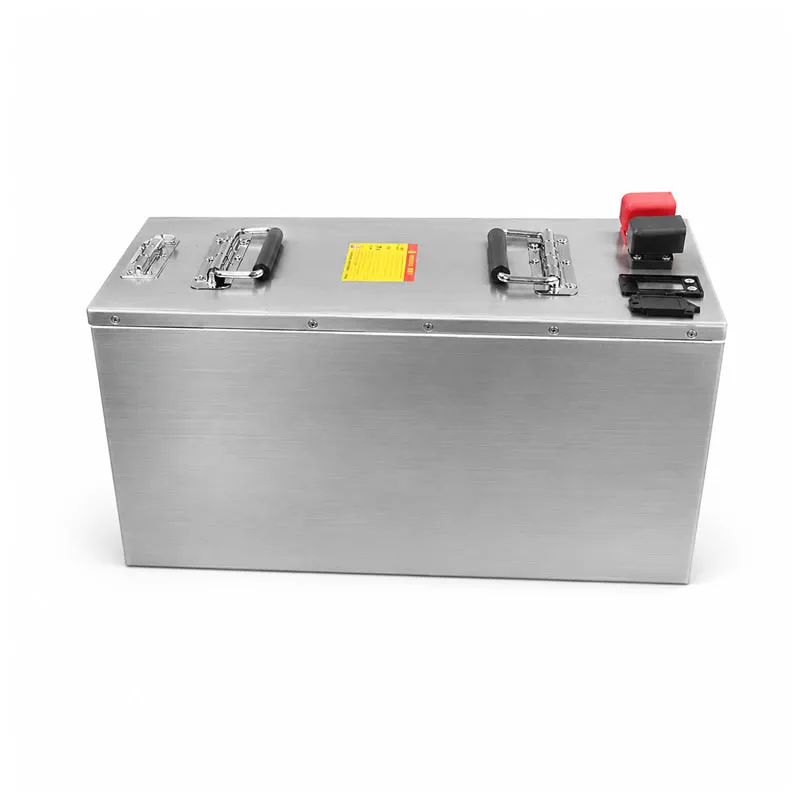
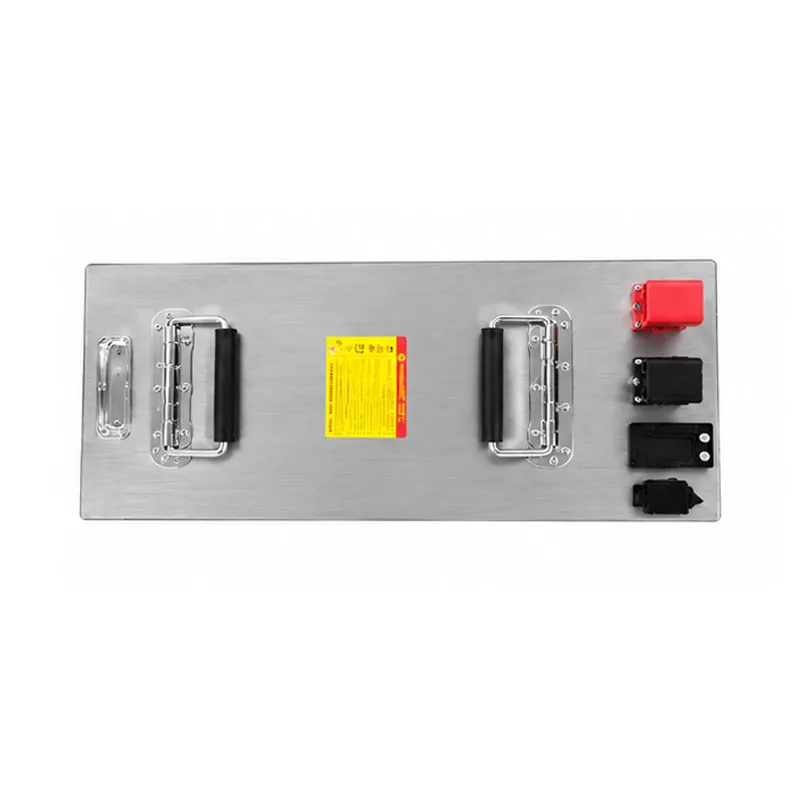
Electric motorcycles are now used for delivery, shared mobility, security patrols, commercial commuting, and other demanding applications. In these vehicles, a 72 volt lithium ion battery influences acceleration, usable range, climbing performance, charging time, vehicle weight, service life, and operating cost.
For many medium- and high-power platforms, a 72 volt lithium ion battery offers a practical balance between performance, efficiency, packaging, and system compatibility. However, voltage alone does not determine battery quality. Buyers must also evaluate usable energy, cell chemistry, continuous and peak current, thermal design, enclosure strength, communication protocol, charger compatibility, and production consistency.
This guide explains how OEMs, distributors, fleet operators, and vehicle developers should evaluate a 72 volt lithium ion battery without relying on exaggerated claims. It also compares common chemistries, explains the role of a smart BMS, outlines important transport documents, and shows why customization matters in commercial projects.
Why Do Modern Electric Motorcycles Use 72V Systems?
Electric motorcycles using a 72 volt lithium ion battery usually require more power than entry-level scooters or low-speed bicycles. Higher vehicle weight, stronger acceleration, larger motors, heavier payloads, and longer duty cycles place greater demands on the electrical system.
A 72 volt lithium ion battery can deliver a given power level at a lower current than a lower-voltage system. Because power equals voltage multiplied by current, increasing voltage can reduce the current required for the same output. Lower current may reduce resistive losses in cables, connectors, controllers, and other components when the complete system is properly designed.
This does not mean every 72V vehicle automatically has better range or torque. Actual performance depends on the motor, controller, battery energy, discharge capability, vehicle mass, gearing, road conditions, and riding behavior. The main advantage of a 72 volt lithium ion battery is that it gives engineers more flexibility when developing motorcycles that require higher continuous power.
Compared with an electric bicycle lithium battery, a commercial 72 volt lithium ion battery normally needs higher-current cells, a stronger BMS, reinforced mechanical protection, more robust connectors, and greater resistance to vibration, moisture, and heat.
How Can a 72V System Improve Power Delivery?
A properly matched 72 volt lithium ion battery can support efficient power delivery by reducing current at a given motor output. For example, a 3.6 kW load theoretically draws about 50 A from a 72V system, excluding losses. The same power at 48V would require about 75 A. Actual current varies with controller efficiency, motor load, acceleration, gradient, and battery voltage under load.

Lower current can offer several benefits:
- Reduced heating in cables and connectors
- Lower voltage drop under comparable conditions
- More manageable conductor requirements
- Better compatibility with higher-power controllers
- Easier thermal control across the drivetrain
A 72 volt lithium ion battery must still be designed for the vehicle’s true continuous and peak current. A pack with adequate voltage but insufficient discharge capability may experience voltage sag, BMS shutdown, excessive heat, or accelerated aging.
For this reason, buyers evaluating a 72 volt lithium ion battery should compare total energy, continuous current, peak-current duration, internal resistance, operating temperature, and BMS limits—not voltage and ampere-hours alone.
Does Higher Voltage Increase Range and Torque?
A 72 volt lithium ion battery can contribute to system efficiency, but it does not independently create range or torque. Range mainly depends on usable battery energy, usually expressed in kilowatt-hours, and the vehicle’s energy consumption per kilometer.
A 72 volt lithium ion battery rated at 40Ah stores approximately 2.88 kWh based on nominal voltage and rated capacity. A 72 volt lithium ion battery rated at 60Ah stores approximately 4.32 kWh. The larger pack may provide more range if both operate in the same vehicle under the same conditions.
Torque is mainly determined by the motor, controller, phase current, gearing, wheel size, and control strategy. A 72 volt lithium ion battery can support higher power when paired with suitable components, but the drivetrain must be engineered as one system.
Commercial buyers sourcing a 72 volt lithium ion battery should request performance data under defined conditions, including vehicle weight, payload, speed, road gradient, ambient temperature, motor rating, controller limits, and usable state-of-charge range. For a battery motorcycle used in delivery or fleet service, repeatable performance is more valuable than an optimistic maximum-range claim.
What Capacity Is Suitable for an Electric Motorcycle?
The correct capacity depends on energy consumption and daily operating distance. Buyers should estimate required energy before selecting a 72 volt lithium ion battery.
Required battery energy = expected distance × energy use per kilometer
When sizing a 72 volt lithium ion battery, if a motorcycle consumes 45 Wh/km and must travel 80 km, the theoretical requirement is 3.6 kWh. Extra allowance may be needed for reserve capacity, aging, temperature, gradients, payload changes, and charging availability.
Ampere-hours alone can be misleading because the same Ah rating stores different energy at different voltages. A 72 volt lithium ion battery rated at 50Ah stores about 3.6 kWh at nominal conditions, while a 48V 50Ah pack stores about 2.4 kWh.
When selecting a 72 volt lithium ion battery, confirm:
- Nominal and operating voltage
- Rated and usable capacity
- Nominal energy in kWh
- Continuous and peak discharge current
- Maximum charging current
- Vehicle energy consumption
- Installation space and weight limit
A well-sized 72 volt lithium ion battery should meet the real duty cycle without being unnecessarily oversized. Oversizing increases cost and weight, while undersizing can cause frequent deep discharge, reduced availability, and faster degradation.
How Long Can a 72V Lithium Battery Last?
The service life of a 72 volt lithium ion battery depends on chemistry, cell quality, depth of discharge, charging rate, temperature, storage conditions, BMS calibration, and pack construction. No single cycle-life figure applies to every product.
LiFePO4 is often chosen for thermal stability and long cycle life. NCM is commonly used where lower weight and higher energy density are more important. Actual results vary by cell model and test conditions.
Cycle-life data should state:
- Depth of discharge
- Charge and discharge rate
- Test temperature
- End-of-life capacity threshold
- Whether results apply to cells or the complete pack
A cell may reach a stated cycle count before falling to 80% capacity, but pack-level results can differ because of heat, imbalance, mechanical stress, and real charging behavior.
To extend the life of a 72 volt lithium ion battery, avoid prolonged storage at extreme states of charge, charge within the specified temperature range, use a compatible charger, prevent repeated overheating, and reduce unnecessary deep discharge. Fleet monitoring can also identify abnormal temperature, voltage imbalance, or capacity loss early.
Should Buyers Choose NCM or LiFePO4?
Both chemistries can be used in a 72 volt lithium ion battery, but they serve different priorities.

NCM for Energy Density
In a 72 volt lithium ion battery, NCM cells generally offer higher gravimetric and volumetric energy density than LiFePO4. This can reduce pack size and weight for a given energy target. NCM may suit premium motorcycles, performance models, or vehicles with limited installation space.
However, an NCM-based 72 volt lithium ion battery requires careful thermal design, accurate BMS control, suitable charging limits, and robust safety protection.
LiFePO4 for Stability and Cycle Life
LiFePO4 cells are valued for thermal stability, long service life, and tolerance of frequent cycling. A LiFePO4-based 72 volt lithium ion battery can suit delivery fleets, shared vehicles, utility motorcycles, and applications where durability matters more than minimum weight.
LiFePO4 normally has lower energy density than NCM, so the pack may be larger or heavier for the same stored energy.
The correct chemistry for a 72v lithium battery pack depends on range, motor power, payload, available space, target weight, charging strategy, climate, cycle frequency, and cost. Buyers should ask the supplier to explain why the proposed cell matches the operating profile.
Why Is a Smart BMS Essential?
The BMS is a critical component in a 72 volt lithium ion battery. It monitors operating conditions, manages protection limits, supports cell balancing, and may communicate with the charger, controller, dashboard, or fleet platform.
Typical functions include cell-voltage monitoring, current measurement, temperature monitoring, overcharge and over-discharge protection, overcurrent protection, short-circuit protection, balancing, state-of-charge estimation, and fault recording.

An advanced e moto battery may support CAN, RS485, UART, or Bluetooth communication. Compatibility must be confirmed during development, not after production.
A smart BMS cannot compensate for poor cells, weak busbars, inadequate insulation, or an unsuitable enclosure. The complete 72 volt lithium ion battery must be designed as an integrated system, and BMS settings must match the cells, charger, controller, and expected temperature range.
For fleets, fault records and operating data can help identify repeated overcurrent events, abnormal temperatures, imbalance, and misuse before they cause downtime.
What Safety and Compliance Documents Should Buyers Check?
International buyers should verify the documents required for transportation, market access, and the final vehicle application. Requirements vary by destination, battery configuration, shipping method, and product category.
For lithium battery transport, UN38.3 testing is important. Buyers should request the relevant UN38.3 test report or test summary for the exact cell or pack configuration being shipped. A Safety Data Sheet may also be required for logistics and handling.
Other documents may include CE-related technical files, RoHS declarations, IEC test reports, or quality-management certificates. These documents are not interchangeable. ISO 9001 relates to the manufacturer’s management system, while a product test report applies to a defined model and scope.
Before ordering a 72 volt lithium ion battery, confirm:
- Reports apply to the exact battery model
- Product names and model numbers are consistent
- The cell manufacturer and cell model are identified
- Test laboratory information is available
- Shipping classification and packaging are correct
- Final-vehicle requirements have been evaluated
A credible supplier should not use “fully certified” without identifying the relevant standard, product, report, and scope.
How Is a Heavy-Duty Motorcycle Battery Different?
A battery motorcycle designed for commercial or high-performance use normally demands more from the pack than a light scooter. It may require higher discharge current, stronger vibration resistance, greater daily energy throughput, and improved thermal performance.
Compared with a basic scooter battery or electric bicycle lithium battery, a heavy-duty 72 volt lithium ion battery may need:
- Higher-current cells and busbars
- Reinforced mounting structures
- Stronger connectors
- Better sealing against dust and moisture
- Improved heat dissipation
- More temperature sensors
- Controller and display communication
- Stronger production traceability
The enclosure must protect the cells without adding unnecessary weight or trapping heat. Aluminum and steel housings are both used, depending on structural, thermal, cost, and production needs.
A high IP rating alone does not guarantee field reliability. Cable entries, connectors, pressure equalization, mounting points, and service procedures also affect sealing performance.
How Should Fleets Manage Charging?
Charging strategy directly affects the life and availability of a 72 volt lithium ion battery. The charger must match the chemistry, series-cell count, charge-voltage limit, communication method, and maximum charging current.
Fleet operators should:
- Use an approved charger
- Charge within the specified temperature range
- Avoid unnecessary time at full charge
- Reduce repeated deep discharge where possible
- Keep connectors clean and secure
- Investigate unusual charging time or heat
- Monitor state of health and cell imbalance
- Follow storage instructions for inactive batteries
Fast charging can improve availability, but it may increase heat and stress if the charge rate and thermal design are unsuitable. A 72v battery pack intended for frequent fast charging should be specifically designed and validated for that duty cycle.
Opportunity charging may help delivery fleets, but the charging profile should follow cell capability rather than operational pressure alone. A well-managed 72 volt lithium ion battery can provide more consistent service than one repeatedly operated outside its limits.
Why Is Customization Important for OEM Projects?
Electric motorcycle frames, motors, controllers, connectors, and communication systems vary widely. A standard pack may not fit the available space or meet current, range, sealing, and integration targets.
Customization for a 72 volt lithium ion battery may include dimensions, capacity, chemistry, cell model, current limits, connector type, cable length, communication protocol, mounting brackets, enclosure material, thermal design, charger matching, labeling, and traceability.
A custom 72v lithium battery pack should follow a controlled process: requirement review, electrical design, mechanical design, BMS definition, prototype production, bench testing, vehicle integration, pilot production, and mass-production validation.
OEM buyers should provide motor rating, controller current, peak-power duration, installation drawings, target range, payload, road conditions, temperature range, charging method, communication protocol, and expected annual volume.
FEBATT provides battery solutions for electric motorcycles and other mobility applications. Buyers can review its electric motorcycle battery solutions before submitting vehicle parameters for an engineering assessment.
How Should B2B Buyers Evaluate a Supplier?
A reliable supplier should demonstrate more than cell assembly. It should be able to translate vehicle requirements into electrical, mechanical, thermal, and communication specifications.
When sourcing a 72 volt lithium ion battery, evaluate engineering experience, cell sourcing, incoming inspection, BMS integration, pack-level testing, production traceability, prototype support, change control, documentation quality, and response to field issues.
Ask how the supplier manages cell matching, welding quality, insulation, torque control, firmware versions, serial-number tracking, aging tests, and final inspection. These controls affect consistency between samples and mass production.
A low quotation may exclude engineering, testing, tooling, certification, or technical support. Total project cost should include development time, integration risk, expected replacement rate, downtime, and after-sales handling.
FAQ About 72V lithium ion battery
1.How long does a custom battery project take?
The schedule depends on development scope. Adapting an existing 72 volt lithium ion battery is usually faster than creating a new enclosure, BMS protocol, or certification package. Requirement confirmation, design, prototypes, testing, vehicle validation, and pilot production all affect timing.
Buyers should request a project schedule after submitting complete technical requirements. Mass-production lead time should be confirmed separately because it depends on materials, cell availability, tooling, order quantity, and factory capacity.
2.What documents are commonly required for shipment?
Lithium battery shipments commonly require applicable UN38.3 documentation and a Safety Data Sheet. Additional documents may be required by the carrier, destination country, battery configuration, or final application.
Buyers should confirm that documents match the exact 72v battery pack being purchased rather than a different model.
3.Can a 72V pack fit a specific motorcycle chassis?
Yes. A 72 volt lithium ion battery can be designed around the available installation space if energy, current, safety clearances, thermal conditions, and service access remain acceptable.
Buyers should provide drawings, dimensional limits, mounting details, connector positions, controller specifications, and operating conditions.
4.What is the typical MOQ for a custom battery?
There is no universal MOQ. It depends on whether the project uses an existing design, requires a custom enclosure, needs tooling, uses special cells, or requires dedicated testing.
Prototype and production quantities should be discussed separately. A written quotation should identify engineering fees, tooling charges, sample quantity, production MOQ, and volume price breaks.
5.How should buyers verify cycle life?
Request a test report or cell datasheet that states depth of discharge, charge and discharge rate, temperature, and end-of-life threshold. A cycle number without these conditions is incomplete.
Buyers should also confirm whether the result applies to individual cells or the complete 72v lithium battery pack.
6.Can a 72V motorcycle battery support fast charging?
It may support fast charging when the cells, BMS, busbars, connectors, charger, and thermal design are rated for the required current.
Fast-charging capability should be defined by a specific charge rate and temperature range. It should not be assumed from voltage or capacity alone.
7.What information is needed for a custom quotation?
A supplier normally needs nominal voltage, capacity or range target, motor power, controller current, peak-current duration, installation dimensions, weight limit, connector type, protocol, charging method, temperature range, waterproof target, annual demand, and target market.
Complete information helps the supplier select an appropriate 72 volt lithium ion battery architecture.
8.What warranty and technical support should buyers expect?
Warranty terms should define the coverage period, capacity threshold, operating limits, exclusions, claim procedure, required data, and responsibility for shipping or replacement.
Technical support may include integration guidance, fault analysis, BMS parameter review, charger matching, and corrective-action support. These terms should be confirmed in writing before a production order.
Conclusion
Choosing a 72 volt lithium ion battery is not simply a matter of voltage and capacity. The pack must match the motor, controller, chassis, range target, payload, charging strategy, communication system, and operating environment.
A suitable battery should combine verified cells, an accurately configured BMS, robust mechanical protection, controlled production, and documents that apply to the actual product. Buyers should also compare usable energy, discharge capability, thermal behavior, lifecycle cost, and supplier engineering support.
For manufacturers and fleet operators, the best 72 volt lithium ion battery is the one that performs consistently under the real duty cycle and can be produced reliably at scale. Careful requirement definition, prototype validation, and supplier evaluation reduce technical risk and support long-term commercial operation.