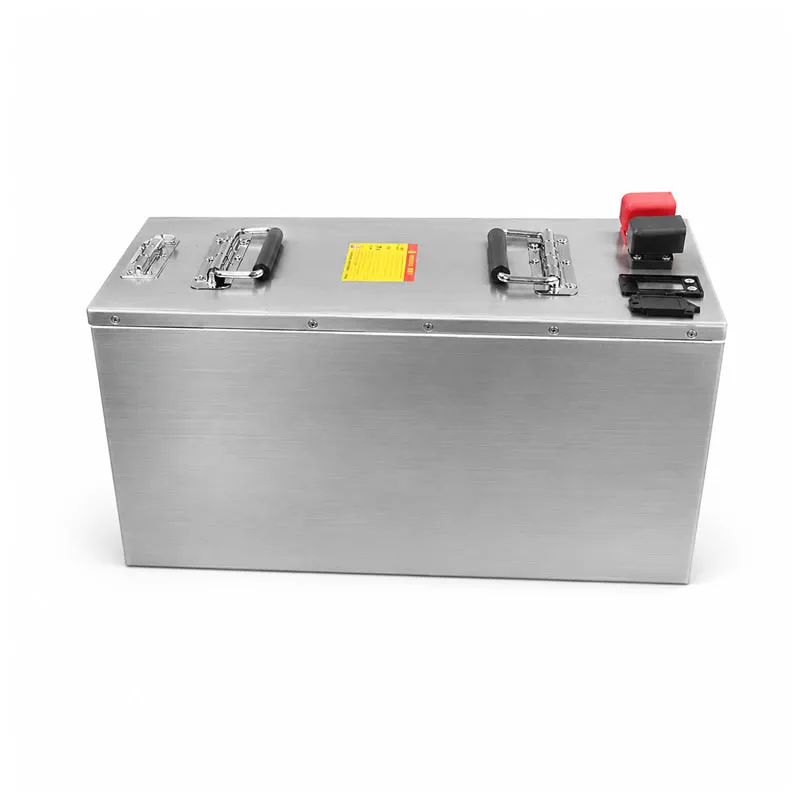
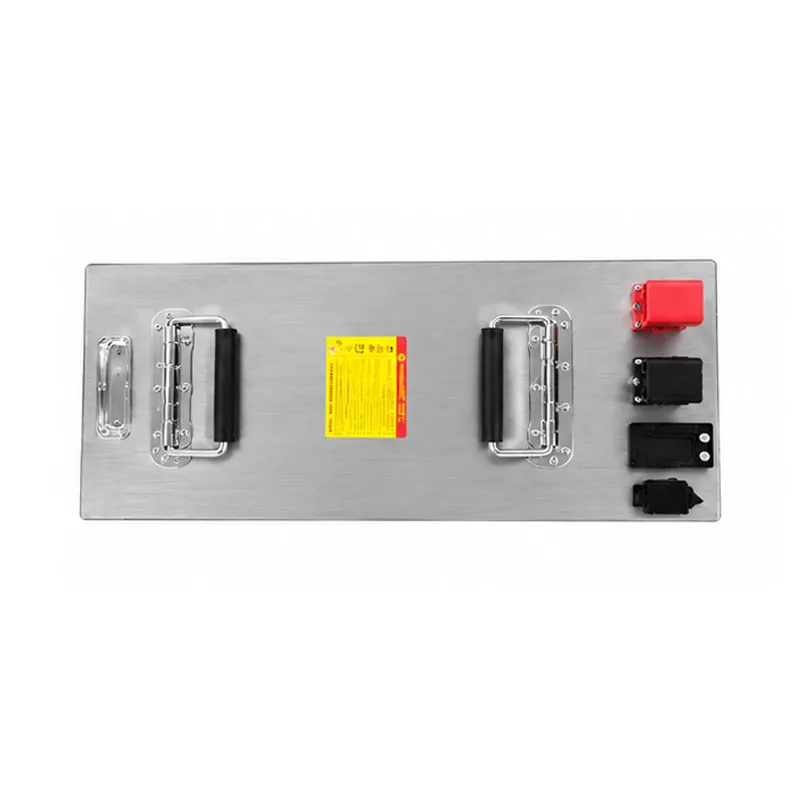
Commercial electric motorcycles, cargo trikes and utility vehicles need more than a suitable voltage label. The power system must deliver stable current, fit the chassis, tolerate vibration and weather exposure, communicate with the controller and remain consistent in production. A properly engineered 72 volt battery pack can support higher-power drivetrains without relying on excessive current.
The engineering advantage comes from the relationship between power, voltage and current:
Power (W) = Voltage (V) × Current (A)
For the same output power, a higher voltage can reduce current and related losses when the drivetrain is designed correctly. However, a 72 volt battery is not automatically safer, more efficient or longer-lasting. Chemistry, usable energy, controller compatibility, thermal design, BMS calibration and manufacturing quality remain decisive.
This guide explains how B2B buyers should evaluate a 72 volt battery pack for electric motorcycles, delivery tricycles and other commercial vehicles. It covers energy sizing, discharge performance, construction, thermal control, CAN communication, testing and OEM customization. Buyers can also review FEBATT’s electric motorcycle battery solutions and 72 volt lithium-ion battery guide.
What Commercial Applications Benefit from a 72 Volt Battery Pack?
A 72 volt battery pack is useful when a vehicle needs repeated acceleration, substantial payload capacity and compact installation. Applications include cargo motorcycles, delivery tricycles, patrol vehicles, agricultural utility vehicles and higher-performance two-wheelers.
Cargo motorcycles repeatedly start, stop and climb with changing payloads. Delivery tricycles may operate for long shifts, while utility vehicles face rough surfaces, moisture, dust and temperature changes. The battery must provide both energy and power; high capacity without sufficient discharge capability can still cause voltage sag, heat or BMS shutdown.

A 72 volt battery can reduce the current needed to produce a given level of power compared with a lower-voltage architecture. The actual benefit depends on the motor, controller, conductor size, connector resistance, gearing, speed and duty cycle. The complete system must be validated together. A battery selected independently from the vehicle can create incompatible voltage limits, incorrect charging behavior or insufficient peak-current support.
For an OEM, the strongest business case appears when the 72 volt battery pack improves productivity through fewer charging interruptions, stable hill climbing, predictable low-charge performance or better use of chassis space.
How Should Capacity Be Selected for Cargo Motorcycles and Trikes?
Capacity should be based on usable energy, not ampere-hours alone. The nominal energy of a 72 volt battery pack can be estimated with a simple calculation:
Nominal energy (Wh) = Nominal voltage (V) × Rated capacity (Ah)
A nominal 72V 100Ah system contains approximately 7,200Wh, or 7.2 kWh, before the operating reserve and other limits are considered. A 72V 50Ah system contains approximately 3.6 kWh. Usable energy will be lower because the BMS and controller maintain upper and lower voltage limits to protect the cells.
To estimate required energy, provide daily distance, payload, speed, gradients, stop frequency, temperature and auxiliary loads. Vehicle consumption should ideally come from road data measured in Wh/km. Without measured data, the first prototype should validate range rather than support a guaranteed claim.
A larger 72 volt battery pack may extend range but adds weight, cost and charging demand. Oversizing can reduce payload or affect handling; undersizing can create frequent deep cycling and delays. Select enough usable energy for the route plus a reserve for detours, aging and temperature.
Some customers search for a battery motorcycle product, but the engineering requirement is a complete traction system matched to the motor, controller, charger and chassis. Treating a battery motorcycle project as a voltage-and-capacity purchase creates integration risk.
How Does a 72V Battery Perform Under Heavy Industrial Loads?
A 72v battery experiences its greatest stress during acceleration, hill climbing, heavy payload operation and repeated start-stop use. High current flowing through internal resistance produces heat and a temporary voltage drop known as voltage sag. If pack voltage approaches the controller’s low-voltage threshold, the vehicle may reduce power even when some energy remains.
A commercial 72 volt battery pack should specify continuous current, peak current, permitted peak duration and applicable temperature. A five-second peak is not equivalent to several minutes of sustained discharge. Buyers should request voltage and temperature curves under representative loads and states of charge.
Cold temperatures can reduce available power and limit charging. High temperatures can accelerate degradation and cause protective derating. A lithium ion battery should only be charged within the temperature range approved for its cells and pack design. When operation extends beyond that range, the system may need heating, cooling or revised charging logic.
Aging reduces capacity and can increase internal resistance. The BMS can limit current, estimate charge and record faults, but it cannot reverse electrochemical aging. Service-life claims should state depth of discharge, charge and discharge rate, temperature and end-of-life capacity threshold.
What Specifications Should a Commercial Battery Motorcycle Pack Meet?
A commercial battery motorcycle pack should be defined through a controlled technical specification. At minimum, the document should cover the following areas:
- Nominal voltage, operating voltage range and maximum charging voltage.
- Rated and usable capacity, expressed in Ah and Wh or kWh.
- Continuous discharge current, peak current and peak duration.
- Maximum charging current and compatible charger profile.
- Cell chemistry, cell model and series-parallel configuration.
- BMS protection limits, balancing strategy and communication interface.
- Fuse, contactor or MOSFET architecture and precharge requirements.
- Enclosure dimensions, weight, mounting points and service access.
- Connector model, cable size, cable direction and interlock requirements.
- Temperature range, ingress requirement and vibration profile.
- Prototype, validation and production acceptance criteria.
The term “72V” does not describe one universal configuration. Nominal and maximum charging voltage depend on chemistry and series count. LiFePO4 and NMC packs marketed for a 72V platform can use different operating windows, so every connected component must support the complete range.
A well-specified 72 volt battery pack also separates product requirements from assumptions. “Fast charging,” “long life” and “waterproof” must be converted into measurable current, time, cycle, temperature and ingress-test criteria. Without those definitions, suppliers may quote technically different products under the same commercial description.
Which Cell Chemistry Is Suitable for a 72 Volt Battery?
LiFePO4 and NMC are common lithium ion battery chemistries for commercial mobility. LiFePO4 is often selected when thermal stability, frequent cycling and durability are priorities. NMC is often considered when lower weight and higher energy density are more important within a restricted installation volume.
Neither chemistry is automatically correct for every 72 volt battery pack. The decision should compare usable energy, continuous and peak power, temperature behavior, expected cycle profile, weight, space, material availability and cost. Buyers should request the proposed cell model and its datasheet rather than accepting chemistry alone as proof of performance.
Cell format also matters. Cylindrical cells support flexible layouts but require many connections. Prismatic cells use rectangular space efficiently but need mechanical support and compression control. Pouch cells suit thin spaces but require protection against swelling, impact and puncture.
The best lithium ion battery design meets the duty cycle with controlled temperature and repeatable production. High cell energy density cannot compensate for weak connections, inadequate cooling or inconsistent BMS limits.
Why Choose a Custom 72 Volt Battery Pack?
Off-the-shelf batteries often force compromises in dimensions, connector position, cable routing, mounting and communication. A custom 72 volt battery pack allows the electrical and mechanical design to follow the vehicle instead of forcing the vehicle around a generic box.
Customization can include voltage configuration, capacity, cell chemistry, cell arrangement, BMS logic, CAN protocol, enclosure material, mounting points, handles, charging port, discharge connector and thermal provisions. It can also support removable packs, fixed packs, dual-pack systems or a standardized battery family used across several vehicle models.
The OEM should provide motor power, controller limits, charger profile, target range, CAD space, mounting tolerances, weight limit, temperature, ingress target, communication protocol and annual volume. Photographs do not replace a dimensioned drawing or 3D model.
FEBATT’s electric motorcycle battery solutions show several voltage and capacity formats for electric two-wheelers. For broader technical selection principles, the company’s 72 volt lithium-ion battery guide explains voltage, capacity, chemistry, BMS and supplier-evaluation considerations. These internal resources should support, not replace, a project-specific engineering review.
How Do Manufacturing Controls Reduce Cell Imbalance?
A large 72 volt battery pack contains many cells and electrical connections. Small differences in capacity, internal resistance and self-discharge can become more significant over time. Production controls should therefore begin before assembly.
Incoming cells may be checked for voltage, capacity, internal resistance and appearance, then grouped according to defined matching rules. The cell model, batch and inspection results should be traceable. Busbars, welds, fasteners and connectors also need controlled processes because an inconsistent connection can create local resistance and heat.
BMS balancing does not replace proper cell matching. Passive balancing removes limited energy from higher-voltage groups; active balancing can redistribute energy but adds cost and complexity. The strategy should match pack size, cell consistency and operating profile.
End-of-line testing for a 72 volt battery pack may include voltage verification, insulation checks, BMS protection checks, communication tests, charging and discharging verification, temperature-sensor checks and inspection of connectors and enclosure assembly. Aging or cycle screening should be defined by the project rather than described with an unsupported universal procedure.
What Thermal Management Does a 72V Battery Need?
Thermal design should be based on heat generation, ambient temperature and available heat-rejection paths. A lower-current 72v battery architecture can reduce conductor losses for the same power, but the cells still generate heat under load and during charging.

Many commercial packs use passive heat paths through cell holders, thermal materials, structural plates and the enclosure. High-power or enclosed applications may require forced-air or liquid cooling. Cold-climate projects may require heating or charging restrictions.
Temperature sensors should be placed where they can detect representative and high-risk conditions. A single sensor near the BMS may not identify a hot cell group or connector. The BMS should apply charge and discharge limits based on validated thresholds, but the pack should first be designed to avoid excessive temperature gradients.
Ingress protection and thermal control must be considered together. A sealed 72 volt battery pack may resist water and dust but retain more heat. Venting, pressure equalization, sealing, heat transfer and service access should be resolved as one mechanical design problem.
How Should B2B Buyers Evaluate Build Quality?
Buyers should look beyond appearance and request a controlled specification, component identification, drawings, BMS interface information, test criteria and production traceability.

Inspect the enclosure for mounting strength, protected connector placement, cable strain relief and service access. Ask how cells are restrained against vibration and how conductive components are insulated. Review fuse placement, contactors or MOSFETs, precharge, busbar design and high-current connector ratings.
For a 72 volt battery pack, the supplier should be able to explain why the chosen cells, current paths and thermal design meet the actual workload. Broad claims such as “industrial grade” or “long lifespan” are not substitutes for load tests, temperature data and acceptance limits.
The buyer should also confirm change control. A prototype built with one cell, BMS or connector is not equivalent to a production unit built with substituted components. The supplier should disclose approved alternatives and obtain agreement before critical design changes.
What Does CAN Communication Add to a 72 Volt Battery Pack?
CAN communication lets the BMS exchange state of charge, voltage, current, temperatures, fault codes and permitted power with the controller, charger, display or telematics platform.
This coordination can improve vehicle behavior. When temperature rises, the 72 volt battery pack can report a temporary power limit so the controller reduces output in a controlled way. The charger can follow BMS limits rather than relying only on its own voltage setting. Fleet systems can use fault history and operating data to identify recurring overheating, low capacity or repeated protection events.
CAN is not plug-and-play unless both parties use the same definitions. The OEM and battery supplier must agree on identifiers, baud rate, scaling, message frequency, wake and sleep logic, charger interlocks, fault handling and diagnostic access. Communication should be validated on the vehicle before the software and wiring are frozen.
A simpler 72 volt battery may use RS485, UART or no external communication. The interface should match the application rather than being added only as a marketing feature.
Why Can a Direct Factory Partnership Reduce ODM Risk?
Custom vehicle projects change during development: the chassis, current limits, connector positions or BMS firmware may require revision. Direct communication between vehicle and battery engineers shortens the feedback loop.
A capable partner should support requirements review, design, prototypes, vehicle integration, validation, pilot production and controlled mass production, with clear responsibilities for testing, software, documentation and field support.
A customized 72 volt battery pack creates value when it reduces installation work, improves operating time or standardizes service parts. The goal is a documented, repeatable configuration rather than a one-off prototype.
FAQ About 72 Volt Battery Pack
1.Can a 72 volt battery pack use two batteries for extended range?
Yes, but a dual-pack system must be engineered as part of the vehicle. Packs connected in parallel should use compatible chemistry, series configuration, voltage range, capacity, current capability and BMS strategy. Their states of charge should be controlled before connection to prevent damaging equalization current.
A safe design may require contactors, precharge, fusing, reverse-current protection and coordinated communication. A manual switch must be rated for the full DC voltage and current and prevent switching under load. Unrelated packs should not be connected simply because both are described as a 72v battery.
2.Does an off-road 72 volt battery pack need IP67 protection?
Not automatically. IP ratings are selected according to the expected exposure and vehicle design. Under IEC 60529, IP67 indicates a dust-tight enclosure and protection against temporary immersion under defined test conditions. It does not guarantee unlimited underwater use, resistance to high-pressure washing or complete vehicle protection.
The required rating should be agreed with the OEM and verified on the final enclosure, connectors, seals and pressure-management features. Some applications may require a different IP rating or additional corrosion, vibration and wash testing.
3.How should FEBATT and the buyer define aging and quality checks?
The test plan should be agreed before production. Checks may include incoming cell inspection, matching, weld and fastener control, insulation verification, BMS protection tests, communication checks, charge-discharge verification and final inspection.
Aging tests should state cycle count, current, temperature, rest time and acceptance limits. FEBATT-specific claims should be supported by the agreed project documents and actual records for the delivered 72 volt battery pack rather than by a general statement that every model receives the same procedure.
4.Which documents may accompany a bulk lithium ion battery shipment?
Documentation depends on the battery, shipment method and destination. It may include the specification, Safety Data Sheet, UN 38.3 test summary, dangerous-goods documents, packing information and project-specific reports.
UN 38.3 is a transport testing requirement for lithium cells and batteries; it is not a complete vehicle approval. Product compliance, functional safety, charging standards and market-access responsibilities must be reviewed separately for the target vehicle and country.
5.Can a 72 volt battery pack fit an existing lead-acid tray?
Often, but the project requires more than matching length, width and height. The supplier must verify mounting strength, usable internal volume, terminal position, cable routing, weight distribution, ventilation or thermal paths, charger compatibility and the complete voltage range.
A lithium replacement may be lighter and provide more usable energy, but the controller and charger must be compatible. The final 72 volt battery pack should be installed and tested before production approval.
6.How long should a commercial 72 volt battery last?
There is no universal cycle-life figure. Service life depends on chemistry, cell design, depth of discharge, current, temperature, storage, balancing and the end-of-life capacity threshold.
Ask for cycle-test conditions and warranty assumptions. A lithium ion battery tested under mild laboratory conditions cannot be compared directly with a pack exposed to high payloads, frequent fast charging or elevated temperature. Calendar aging should also be considered.
Conclusion
Choosing a 72 volt battery pack for commercial mobility requires a system-level decision. The battery must match the motor, controller, charger, chassis, duty cycle, temperature range and communication architecture. Capacity should be based on usable energy and measured consumption, while current ratings should reflect sustained loads and repeatable peak events.
B2B buyers should evaluate cell selection, traceability, BMS limits, thermal management, enclosure design, CAN integration and test criteria. A 72 volt battery supports demanding vehicles only when the drivetrain uses compatible voltage and current limits.
The strongest project begins with accurate vehicle data and continues through prototype testing, pilot production and controlled change management. When those steps are followed, a custom 72 volt battery pack can improve packaging, uptime and lifecycle value without relying on unsupported performance claims.