For warehouses, factories, logistics hubs, and distribution centers, forklift battery selection directly affects uptime, charging schedules, maintenance cost, operator efficiency, and long-term fleet planning. A 72V 105Ah electric forklift battery can be a practical lithium power solution for compatible 72V forklift systems, but it should be selected through technical verification rather than price comparison alone.
A 72V 105Ah electric forklift battery provides about 7.56kWh of nominal energy, calculated as 72V × 105Ah = 7,560Wh. This energy level can support medium-duty material-handling applications when the forklift voltage, battery compartment, counterweight requirement, connector, charger, BMS, and duty cycle are properly matched.
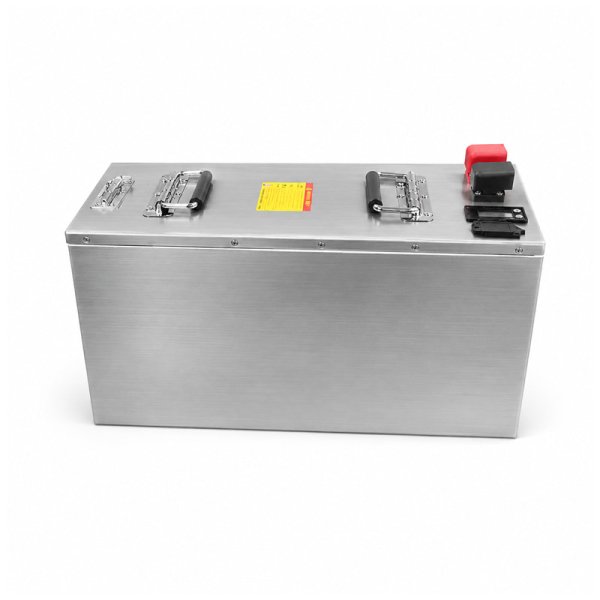
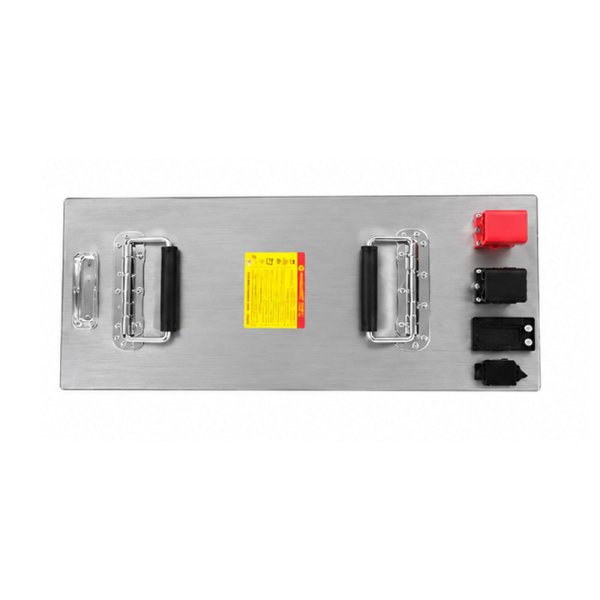
This guide explains how to select a 72V 105Ah electric forklift battery from a B2B buyer’s perspective. It covers specification checks, runtime calculation, LiFePO4 advantages, operating conditions, safety systems, certifications, supplier comparison, total cost, and final buying advice. For buyers comparing a real product option, FEBATT’s 72V 105Ah Forklift Battery can be reviewed as a lithium solution for suitable 72V forklift systems.
What Makes a 72V 105Ah Electric Forklift Battery Suitable for Industrial Operations?
A 72V 105Ah electric forklift battery is designed for electric forklifts that require a 72V power platform and a moderate energy reserve. The 72V system supports drive motors, hydraulic lifting, steering assistance, and onboard electrical functions. The 105Ah capacity defines how much energy the battery can store before recharging is required.
| Specification | Practical meaning |
|---|---|
| Voltage | 72V forklift system compatibility |
| Capacity | 105Ah energy storage capacity |
| Nominal energy | About 7.56kWh |
| Main use | Compatible medium-duty electric forklifts |
| Key checks | Voltage, size, weight, connector, charger, BMS |

A 72V 105Ah electric forklift battery is most valuable when it supports the required working cycle without unnecessary oversizing. For a warehouse with predictable shifts and suitable charging windows, this battery can help control operating cost. For heavy continuous lifting or multi-shift use, buyers should verify whether 105Ah is enough before bulk purchasing.
Why Should Fleet Managers Pay Attention to Battery Specifications?
Battery specifications are not just numbers on a datasheet. They influence runtime, power delivery, charging time, safety, replacement planning, and total cost of ownership. A 72V 105Ah electric forklift battery should be reviewed together with forklift requirements and real operating conditions.
Fleet managers should check:
- Nominal voltage and voltage range.
- Nominal capacity and usable energy.
- Continuous discharge current.
- Peak discharge current.
- Charging current limit.
- Battery dimensions.
- Battery weight.
- Connector type.
- BMS
- Charger compatibility.
- Communication requirements if applicable.
A 72V 105Ah electric forklift battery may have the right voltage, but still fail to fit the forklift if the size, weight, connector, or charger profile is wrong. For B2B procurement, specification verification reduces installation risk and avoids costly returns.
How Do You Determine Whether a 72V 105Ah Battery Fits Your Forklift?
Before ordering a 72V 105Ah electric forklift battery, buyers should confirm compatibility with the forklift manufacturer’s requirements. The most important starting point is voltage. A forklift designed for a 72V system should use a battery that matches the correct voltage range.
Next, check physical fit. The battery compartment must have enough space for the battery case, cable routing, connector access, and safe installation. Battery weight is also important because forklift batteries often contribute to counterbalance. A battery that is too light or too heavy may affect stability and safe operation.
Finally, review electrical integration. The charger, connector, controller, discharge current, and BMS must work together. A 72V 105Ah electric forklift battery should not be treated as a universal replacement. It should be treated as part of the forklift power system.

How Do Operating Conditions Affect Battery Choice?
Operating conditions determine whether a 72V 105Ah electric forklift battery will perform reliably over time. Indoor warehouses with moderate temperatures are easier on batteries than outdoor yards, cold storage areas, or dusty manufacturing environments.
Important conditions include:
- Ambient temperature.
- Cold storage exposure.
- Humidity.
- Dust and debris.
- Floor condition.
- Lifting frequency.
- Payload weight.
- Travel distance.
- Shift length.
- Charging access.
A 72V 105Ah electric forklift battery used in light to medium-duty indoor handling may experience less stress than the same battery used for frequent heavy lifting, long-distance travel, or harsh environments. Buyers should match the battery to real workload, not just the forklift model name.
How Important Is Battery Chemistry?
Battery chemistry has a major impact on charging behavior, maintenance, safety, usable capacity, and service life. Many B2B buyers choose LiFePO4 because it can offer stable discharge, lower maintenance, and better safety characteristics than traditional lead-acid batteries when properly designed.
| Factor | Lead-acid forklift battery | LiFePO4 72V 105Ah electric forklift battery |
|---|---|---|
| Maintenance | Watering and regular checks | Low maintenance |
| Charging | Usually slower | Faster with compatible charger |
| Voltage output | More voltage drop | More stable output |
| Usable energy | More limited | Higher usable range |
| Opportunity charging | Limited | More practical when supported |
| Best fit | Low-cost replacement | Productivity-focused fleets |
A 72V 105Ah electric forklift battery using LiFePO4 chemistry can reduce routine maintenance and support more flexible charging. However, the real benefit depends on cell quality, BMS design, charger compatibility, temperature, workload, and depth of discharge. Buyers should avoid unsupported claims and request datasheets, test results, and warranty terms.
Which Safety Features Are Essential?
Safety is critical in forklift operations because batteries work under high current, vibration, load changes, and frequent charging. A 72V 105Ah electric forklift battery should include a reliable Battery Management System and multiple protection functions.
Essential safety features include:
- Overcharge protection.
- Over-discharge protection.
- Overcurrent protection.
- Short-circuit protection.
- Temperature monitoring.
- Cell balancing.
- Charger compatibility control.
- Fault diagnosis if supported.
- Durable casing and secure connectors.
The BMS should monitor voltage, current, temperature, and cell balance. A 72V 105Ah electric forklift battery with a weak BMS may cost less at first, but it can create reliability and safety risks in daily fleet use.
What Certifications Should Buyers Verify?
Certifications and documentation are important for B2B purchasing, especially for international shipping and industrial use. A 72V 105Ah electric forklift battery supplier should provide clear documentation rather than vague claims.
Buyers should request:
| Document or certification | Why it matters |
|---|---|
| UN38.3 | Transport safety for lithium batteries |
| MSDS | Material safety documentation |
| CE | Compliance reference for applicable markets |
| RoHS | Restricted substance compliance |
| IEC-related documents | Safety and electrical reference when applicable |
| Product inspection report | Confirms outgoing quality control |
| User manual | Supports installation and operation |
A 72V 105Ah electric forklift battery used in export projects should have documentation prepared before shipment. Missing documents can delay customs clearance, logistics, or customer approval.
How Can You Compare Battery Suppliers Effectively?
Choosing a supplier is as important as choosing the battery. A reliable supplier should help confirm voltage, size, weight, connector, charger, BMS, discharge current, warranty, and application fit.
| Supplier factor | What to verify |
|---|---|
| Manufacturing ability | Factory process and quality control |
| Engineering support | Ability to review forklift compatibility |
| Customization | Size, connector, cable, BMS, case, label |
| Documentation | Datasheet, certificates, manual, warranty |
| Warranty process | Clear terms and claim handling |
| Production stability | Ability to support repeat B2B orders |
| Application experience | Forklift and industrial vehicle knowledge |
A professional supplier should not simply recommend a 72V 105Ah electric forklift battery because the voltage matches. The supplier should ask about forklift model, load, shift length, charging access, and installation space before confirming suitability.

How Can a 72V 105Ah Battery Support Sustainability Goals?
A 72V 105Ah electric forklift battery based on LiFePO4 technology can support sustainability goals when it replaces high-maintenance or less efficient battery systems in suitable applications. Better charging efficiency may reduce energy waste, while longer practical service life can reduce replacement frequency.
Lithium forklift batteries can also reduce acid-related maintenance and water refilling associated with lead-acid batteries. This can improve workplace cleanliness and reduce maintenance complexity. However, sustainability benefits depend on the actual product quality, operating profile, charging habits, and recycling process at end of life.
For companies working on ESG improvement, a 72V 105Ah electric forklift battery should be evaluated as part of a broader fleet efficiency plan, not as a standalone environmental claim.
What Total Cost Factors Should Be Included?
The lowest purchase price is not always the lowest operating cost. A 72V 105Ah electric forklift battery should be evaluated by total cost of ownership, especially for fleets that depend on uptime.
Cost factors include:
- Initial battery price.
- Charger investment.
- Installation cost.
- Maintenance labor.
- Energy consumption.
- Downtime cost.
- Expected service life.
- Replacement frequency.
- Warranty coverage.
- Spare battery requirements.
- Technical support.
- Disposal or recycling cost.
A lithium 72V 105Ah electric forklift battery may require higher upfront investment than some lead-acid options, but it can reduce maintenance and improve charging flexibility under suitable conditions. The buyer should calculate real cost based on fleet usage, not only procurement budget.
How Do You Calculate Whether 105Ah Is Enough?
To estimate runtime, calculate nominal energy first:
72V × 105Ah = 7,560Wh, or about 7.56kWh.
Then divide energy by average power consumption:
Runtime = Battery energy ÷ average forklift power consumption.
| Average forklift power demand | Estimated theoretical runtime |
|---|---|
| 1.5kW | About 5.0 hours |
| 2.0kW | About 3.8 hours |
| 2.5kW | About 3.0 hours |
| 3.0kW | About 2.5 hours |
| 4.0kW | About 1.9 hours |
These are theoretical examples. Real runtime is affected by payload, lift frequency, temperature, floor conditions, battery age, BMS limits, and reserve margin. Before selecting a 72V 105Ah electric forklift battery for fleet operation, buyers should use actual current draw data or conduct real forklift testing.
Quick Selection Checklist for B2B Buyers
Use this checklist before approving a purchase order. A 72V 105Ah electric forklift battery should match the forklift system first, then the price target. A 72V 105Ah electric forklift battery should also match the charger, connector, compartment size, and daily operating hours. A 72V 105Ah electric forklift battery should be reviewed with real load data, not only catalog capacity.
Before placing a bulk order, confirm whether the 72V 105Ah electric forklift battery has complete BMS protection, transport documentation, warranty terms, and supplier support. The right 72V 105Ah electric forklift battery should reduce mismatch risk and support stable fleet operation over time.
A final 72V 105Ah electric forklift battery review should be completed before sample approval. The 72V 105Ah electric forklift battery review should include technical fit, cost, safety, and supplier reliability. For fleet expansion, standardizing the 72V 105Ah electric forklift battery can also simplify spare parts, charging planning, and maintenance training when the same battery specification fits multiple forklift models.
The final decision should prove that the 72V 105Ah electric forklift battery fits the workload and that the 72V 105Ah electric forklift battery supplier can support repeated B2B orders. Use the 72V 105Ah electric forklift battery only when both technical fit and commercial support are clear.
FAQ About 72V 105Ah electric forklift battery
1.Is a 72V 105Ah battery suitable for all electric forklifts?
No. A 72V 105Ah electric forklift battery is only suitable for forklifts that match its voltage, battery compartment size, weight requirement, connector, charger profile, current demand, and BMS requirements. Compatibility must be checked before purchase.
2.How long does a 72V 105Ah LiFePO4 forklift battery last?
A 72V 105Ah LiFePO4 forklift battery typically lasts between 8 to 12 years, providing 3,000 to 5,000 charge-discharge cycles before its capacity drops to 80% of its original limit.
3.How fast can a 72V 105Ah forklift battery be recharged?
A 72V 105Ah forklift battery delivers 7.56kWh of energy. Service life depends on cell quality, BMS design, depth of discharge, charging profile, temperature, workload, and storage conditions. A well-designed LiFePO4 72V 105Ah electric forklift battery can often provide longer practical service life than lead-acid, but exact cycle life should be confirmed from the supplier’s datasheet and warranty terms.
4.How do I calculate whether 105Ah capacity is enough for my operations?
You could start with the 7.56kWh nominal energy value, then compare it with the forklift’s average power consumption and required working time. The correct 72V 105Ah electric forklift battery decision should also include payload, lift frequency, travel distance, charging windows, and downtime cost.
5.Can a Lithium Battery Directly Replace a Lead-Acid Forklift Battery?
Yes, but sometimes, it should not be treated as a simple drop-in replacement. Before replacing lead-acid with a 72V 105Ah electric forklift battery, check voltage, dimensions, weight, charger, connector, counterbalance needs, controller limits, and BMS compatibility.
Conclusion
A 72V 105Ah electric forklift battery can be a strong lithium solution for compatible medium-duty forklift systems. It offers about 7.56kWh of nominal energy and can support stable operation when selected according to real duty cycle, charger access, and forklift compatibility.
Before purchasing, confirm voltage, battery size, battery weight, connector type, charger compatibility, BMS functions, discharge current, safety documentation, warranty terms, and supplier support. Do not choose a 72V 105Ah electric forklift battery only because it has the right voltage or a competitive price.
For B2B fleets, the right 72V 105Ah electric forklift battery is the one that fits the forklift, supports the shift schedule, reduces unnecessary downtime, and provides reliable technical backing throughout the battery’s service life.