For B2B buyers, battery selection is not only about voltage and price. It directly affects runtime, charging frequency, warehouse productivity, maintenance planning, and equipment compatibility. When buyers evaluate 24V 30Ah forklift battery capacity, they need to understand what the specification means in real working conditions, not just on a product label. For procurement, 24V 30Ah forklift battery capacity should be matched before comparing price.
A 24V 30Ah battery stores about 0.72kWh of nominal energy. That capacity can suit compatible pallet trucks, walkie stackers and other light-duty warehouse equipment, but it is generally not a direct fit for heavy ride-on forklifts or long continuous shifts. Actual runtime depends on average power demand, usable depth of discharge, lift frequency, travel, payload, temperature and BMS limits.
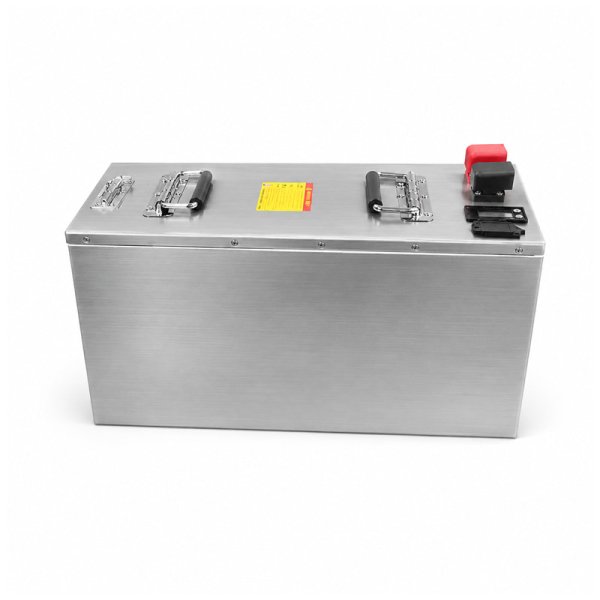
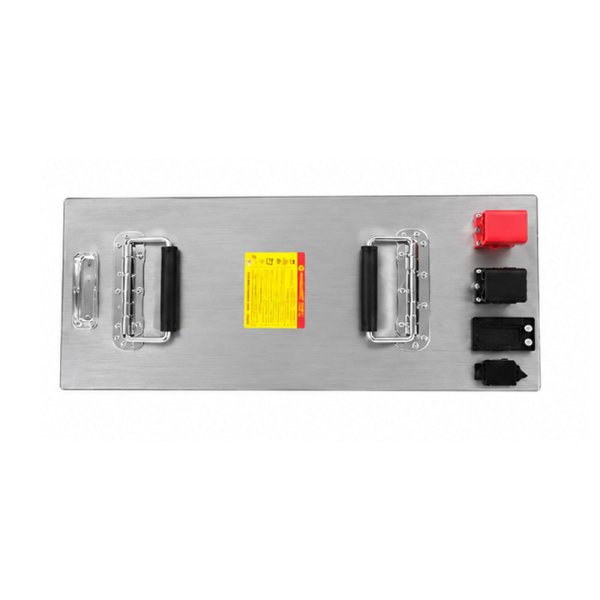
This guide explains how 24V 30Ah forklift battery capacity affects energy storage, runtime calculation, charging time, lithium advantages, safety features, supplier evaluation, and application selection. For buyers comparing a real product option, FEBATT’s 24V 30Ah Forklift Battery can be reviewed as a compact lithium solution for compatible equipment.
What Does 24V 30Ah Forklift Battery Capacity Mean?
The term 24V 30Ah contains two key values. The first value, 24V, refers to the battery voltage platform. It must match the voltage requirement of the forklift, pallet truck, walkie stacker, or other electric equipment. The second value, 30Ah, refers to the amp-hour capacity, which indicates how much current the battery can theoretically deliver over time.
When discussing 24V 30Ah forklift battery capacity, buyers are really evaluating the battery’s stored energy reserve. The basic formula is:
Energy = Voltage × Capacity
For a 24V 30Ah battery:
24V × 30Ah = 720Wh

This means the battery stores about 720 watt-hours, or 0.72kWh, of nominal energy before considering losses, safety margins, battery age, operating temperature, and depth of discharge. This is useful capacity for compact and light-duty equipment, but it should not be confused with the large battery systems used in heavy warehouse forklifts. 24V 30Ah forklift battery capacity should be treated as compact energy reserve, not heavy traction power.
How Long Can a 24V 30Ah Forklift Battery Run?
Runtime depends on the actual power draw of the equipment. A forklift or pallet truck does not consume the same power every minute. Driving, lifting, acceleration, floor condition, load weight, temperature, and operator behavior all affect energy consumption.
Theoretical runtime can be estimated from the 720Wh nominal energy value:
| Average equipment power consumption | Estimated theoretical runtime |
|---|---|
| 100W | About 7.2 hours |
| 150W | About 4.8 hours |
| 200W | About 3.6 hours |
| 300W | About 2.4 hours |
| 400W | About 1.8 hours |
These values are calculation examples, not guaranteed working hours. Real-world runtime is usually lower after allowing for efficiency loss, battery reserve, high-current peaks, cold temperature, aging, and safety margins. For practical fleet planning, many buyers use a 15% to 20% reserve margin. Real equipment testing helps confirm whether 24V 30Ah forklift battery capacity can meet shift needs.
That is why 24V 30Ah forklift battery capacity should be evaluated with real equipment data. A light electric pallet truck used intermittently may work well with this battery size. A heavy-duty forklift moving large pallets continuously will usually need a much larger capacity.
How Do You Calculate Forklift Battery Runtime?
The standard calculation is:
Runtime = Battery energy ÷ Average power consumption
Using 24V 30Ah forklift battery capacity as the example:
720Wh ÷ 180W = 4 hours
If the average power draw is 180W, the theoretical runtime is about 4 hours. If the power draw rises to 360W, the theoretical runtime drops to about 2 hours. This shows why two users can have different experiences with the same battery. 24V 30Ah forklift battery capacity changes practical runtime when average power demand increases.
Runtime calculation should include:
- Average motor power demand.
- Lift frequency.
- Load weight.
- Travel distance.
- Floor condition.
- Stop-and-go frequency.
- Ambient temperature.
- Battery age and state of health.
- BMS protection limits.
- Charger quality and charging habits.
For B2B buyers, this calculation is more useful than a simple runtime claim. It helps determine whether 24V 30Ah forklift battery capacity is enough for the actual duty cycle.
Is a 24V 30Ah Forklift Battery Suitable for Your Application?
A 24V 30Ah battery is suitable when the equipment and workload are light enough. It is usually a practical option for compact and short-duty equipment rather than large ride-on industrial forklifts. Buyers should match 24V 30Ah forklift battery capacity with machine model, route, and load.

| Application | Suitability |
|---|---|
| Electric pallet truck | Suitable for light-duty use if voltage and current match |
| Walkie stacker | Suitable for short-duty operation if system requirements match |
| Compact warehouse utility vehicle | Often suitable |
| Small stock movement equipment | Often suitable |
| Full-size ride-on forklift | Usually requires higher capacity |
| Multi-shift warehouse operation | Usually requires higher capacity |
24V 30Ah forklift battery capacity is best suited for operations with short travel routes, moderate loads, intermittent lifting, and regular charging access. It is not the right choice for every warehouse. If the operation requires continuous lifting, heavy payloads, long travel distance, or full-shift use, the buyer should consider higher-capacity options.
The correct question is not “Can this battery power a forklift?” The correct question is: “Can this battery support this specific equipment and duty cycle safely and efficiently?”
How Does a 24V 30Ah Lithium Battery Compare with Lead-Acid Alternatives?
Lithium batteries are often chosen because they can reduce maintenance and improve charging flexibility compared with many lead-acid systems. However, buyers should still verify the actual product specification, BMS design, and charger compatibility before purchasing.
| Factor | 24V 30Ah lithium battery | Lead-acid alternative |
|---|---|---|
| Maintenance | Low maintenance | Requires more regular checks |
| Charging | Faster if charger is compatible | Usually slower |
| Usable energy | Often higher usable range | More limited usable range |
| Weight | Usually lighter | Usually heavier |
| Voltage stability | More stable under discharge | More voltage sag as charge drops |
| Best use | Compact, efficient equipment | Cost-sensitive replacement |
A well-designed lithium battery can offer better usable energy, faster charging, lower maintenance, and more stable voltage delivery. But these advantages depend on cell quality, BMS protection, charger profile, temperature control, and application fit. For lithium upgrades, 24V 30Ah forklift battery capacity also depends on charger and BMS compatibility.
For buyers evaluating 24V 30Ah forklift battery capacity, lithium technology is often attractive when the goal is cleaner operation, easier charging, lower maintenance labor, and better energy efficiency in compact equipment.
How Fast Can a 24V 30Ah Forklift Battery Be Charged?
Charging time depends on charger current, battery chemistry, starting state of charge, BMS settings, temperature, and charging profile. The basic estimate is:
Charging time = Capacity ÷ Charger current
For a 30Ah battery:
| Charger current | Approximate theoretical charging time |
|---|---|
| 5A | About 6 hours |
| 10A | About 3 hours |
| 15A | About 2 hours |
| 30A | About 1 hour |
These are theoretical estimates. Real charging time may be longer because lithium charging may include constant-current and constant-voltage stages, and the BMS may limit charging current for safety. The charger must match the battery voltage, chemistry, current limit, connector, and BMS requirements.
24V 30Ah forklift battery capacity can be convenient for users who need shorter charging windows because the battery stores less energy than larger packs. However, faster charging should not be forced with an unsuitable charger. Incorrect charging can reduce service life or trigger protection faults.
What Is the Expected Lifespan of a 24V 30Ah Forklift Battery?
Battery lifespan depends on cell quality, chemistry, depth of discharge, charger compatibility, temperature, current demand, storage conditions, and daily operating habits. A lithium battery can often provide a longer practical service life than lead-acid when it is properly designed and correctly used, but exact cycle life should be confirmed from the product specification.
For B2B buyers, lifespan should not be judged only by a general cycle number. It should be evaluated together with:
- Real depth of discharge.
- Charging frequency.
- Operating temperature.
- BMS protection.
- Mechanical vibration.
- Connector quality.
- Storage state of charge.
- Warranty terms.
If 24V 30Ah forklift battery capacity is used within the correct duty cycle, the battery may deliver stable long-term value. If the same battery is used in an application that is too demanding, the battery may experience deeper discharge, more frequent charging, and shorter practical service life.
What Safety Features Should Buyers Look For?
Safety is critical in warehouse and logistics environments. A 24V 30Ah lithium forklift battery should include a reliable BMS and electrical protection features.
Key safety features include:
- Overcharge protection.
- Over-discharge protection.
- Overcurrent protection.
- Short-circuit protection.
- Temperature monitoring.
- Cell balancing.
- Charger compatibility control.
- Connector and cable protection.
- Durable battery housing.
The BMS is especially important because it monitors voltage, current, temperature, and charging/discharging status. When buyers compare 24V 30Ah forklift battery capacity, they should also compare the BMS design. The same capacity value does not mean the same safety level.
For export and transport compliance, buyers can also review FEBATT’s guide to UN38.3 standard testing. Certification documents and test reports are important for international shipping and B2B procurement.

How Should B2B Buyers Evaluate a 24V 30Ah Forklift Battery Supplier?
A battery supplier should provide more than a price. B2B buyers should evaluate the supplier’s engineering ability, documentation, product consistency, after-sales support, and production experience.
Important supplier checks include:
| Supplier factor | What buyers should confirm |
|---|---|
| Product quality | Cell quality, assembly process, and inspection standards |
| Technical support | Ability to help with voltage, current, charger, and connector matching |
| Certifications | UN38.3, MSDS, CE, RoHS, IEC-related documents if applicable |
| Customization | Size, connector, cable, BMS, label, and packaging options |
| Warranty | Coverage period, claim process, and failure-handling policy |
| Production capacity | Stable supply for repeated B2B orders |
| Application experience | Understanding of forklifts, pallet trucks, and warehouse equipment |
A professional supplier should be able to explain whether 24V 30Ah forklift battery capacity is suitable for the buyer’s actual equipment. A weak supplier may only quote a price without confirming workload, charger, current demand, or battery compartment requirements.
FAQ About 24V 30Ah Forklift Battery Capacity
1.How many watt-hours are stored in a 24V 30Ah forklift battery?
A 24V 30Ah battery stores about 720Wh of nominal energy. The calculation is 24V × 30Ah = 720Wh. Actual usable energy depends on BMS settings, temperature, battery condition, and safe discharge limits.
2.How long will a 24V 30Ah forklift battery run on a single charge?
Runtime depends on average power consumption. With 720Wh nominal energy, equipment using 200W may theoretically run for about 3.6 hours, while equipment using 400W may run for about 1.8 hours. Real runtime should include safety margin and actual workload testing.
3.Can a 24V 30Ah battery replace a lead-acid forklift battery?
It can replace a lead-acid battery only when voltage, current demand, size, connector, charger, weight requirement, and BMS compatibility are confirmed. A 24V 30Ah battery is better for compact/light-duty equipment, not every forklift.
4.What is the difference between battery capacity and battery runtime?
Battery capacity is the stored energy reserve. Runtime is how long the equipment can operate before charging. 24V 30Ah forklift battery capacity provides the energy base, but runtime depends on power draw and working conditions.
5.Is a 24V 30Ah battery sufficient for a full warehouse shift?
A 24V 30Ah battery is generally not sufficient for a standard 8-hour shift on most ride-on forklifts or powered pallet jacks. It may be sufficient for light-duty, intermittent, or backup operation, but it is usually not enough for a full shift on heavy ride-on forklifts or high-utilization warehouse equipment. Buyers should calculate runtime from actual power consumption before ordering.
Conclusion
24V 30Ah forklift battery capacity is a practical option for compact electric pallet trucks, walkie stackers, utility vehicles, and light-duty material-handling equipment. It offers 720Wh of nominal energy, compact size, manageable charging time, and good flexibility when used in the right application.
Before purchasing, buyers should confirm equipment voltage, current demand, battery compartment size, connector type, charger compatibility, BMS protection, certification needs, and daily runtime requirements. A 24V 30Ah battery should not be selected only because it is compact or affordable. It should be selected because the application truly matches the battery capacity.
For B2B buyers, the best use of 24V 30Ah forklift battery capacity is in a right-sized system: enough energy for the work cycle, enough protection for safe operation, and enough supplier support for long-term reliability.