The electric motorcycle market is moving beyond novelty. Buyers now care about safety, range stability, service life, charging reliability, and total operating cost. For manufacturers, fleet operators, and battery distributors, the battery is no longer just a power source. It is one of the most important factors behind product reputation, user satisfaction, and long-term profitability.
This is why the LFP electric motorcycle battery is gaining attention in commercial mobility. LFP, also known as lithium iron phosphate or LiFePO4, is valued for its thermal stability, long cycle life, strong safety profile, and predictable performance. Compared with many traditional lithium-ion options, it may not always offer the highest energy density, but it often delivers the balance that B2B buyers care about most: safer operation, longer service life, and lower lifecycle cost.
For electric motorcycle manufacturers and fleet operators, this balance matters. Vehicles may run every day, carry delivery loads, stop and start frequently, and charge repeatedly. In those conditions, a battery must do more than look good on a specification sheet. It must remain stable after months and years of use. For companies comparing options, FEBATT provides electric motorcycle battery solutions for different voltage, capacity, and customization needs.

What Are LFP Batteries?
LFP stands for lithium iron phosphate, a lithium-ion battery chemistry that uses iron phosphate as the cathode material. This chemistry is known for stable thermal behavior, strong cycle endurance, and a lower risk of thermal runaway compared with cobalt- and nickel-rich lithium battery chemistries.
For electric motorcycles, this matters because the battery is exposed to demanding conditions. It may face vibration, high current output, frequent charging, hot weather, cold starts, and repeated daily use. A well-designed LFP electric motorcycle battery can support these conditions with steady power delivery and reliable safety performance.
LFP batteries are often used in applications where long life and safety are more important than the highest possible energy density. This is why the chemistry has become common in electric motorcycles, electric tricycles, golf carts, forklifts, energy storage systems, and other commercial electric platforms.
Why Are Electric Motorcycle Manufacturers Choosing LFP Batteries?
Electric motorcycle manufacturers are choosing LFP because it supports stable product design and better long-term reliability. For OEMs, the battery must fit the vehicle structure, match the motor controller, meet range expectations, and perform safely under real-world use. A battery failure does not only affect one vehicle. It can affect brand trust, warranty cost, and customer retention.
The LFP electric motorcycle battery gives manufacturers a more stable foundation for commercial product lines. Its long cycle life helps reduce early replacement claims. Its safer chemistry supports stronger user confidence. Its material structure can also reduce exposure to cobalt-related supply concerns.
For B2B buyers, this is especially important. A delivery fleet or distributor does not only buy a battery once. It needs a battery platform that can be supplied consistently, installed efficiently, maintained easily, and supported over time. LFP chemistry fits this requirement well.
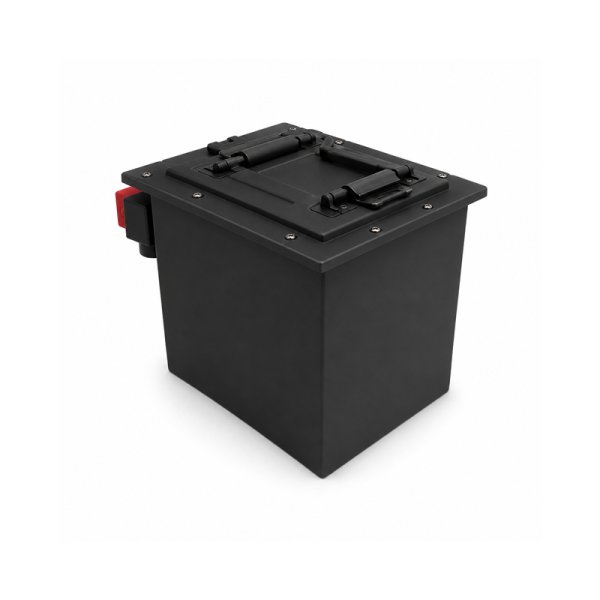
FEBATT’s 48V 30Ah LFP battery power pack is one example of a compact battery solution for electric motorcycle applications where stable power, lighter structure, and daily-use reliability are required.
How Does an LFP Electric Motorcycle Battery Improve Safety?
Safety is one of the strongest advantages of LFP chemistry. Electric motorcycles are often used in dense urban areas, delivery fleets, parking facilities, and residential environments. A safer battery structure is valuable for riders, operators, dealers, and fleet managers.
An LFP electric motorcycle battery has higher thermal stability than many nickel- and cobalt-based lithium batteries. This means it is less likely to experience dangerous heat-related reactions when exposed to abuse, high temperature, overcharging, or physical stress. The battery chemistry itself is more stable, which gives system designers a stronger safety foundation.
Of course, chemistry alone is not enough. A safe battery pack also needs a reliable BMS, correct cell matching, strong enclosure design, proper wiring, and quality testing. For B2B buyers, the right question is not only “Is it LFP?” but also “How is the battery pack engineered and protected?”
A well-designed LFP electric motorcycle battery pack should include protection against overcharge, over-discharge, overcurrent, short circuit, and temperature abnormalities. These protections help the battery remain safe during daily operation and charging.
Why Is Long Cycle Life Important for B2B Buyers?
Cycle life is one of the most important purchasing factors for commercial electric motorcycles. A battery with poor cycle life may look affordable at first, but it can become expensive when replacement, downtime, labor, and customer complaints are included.
The LFP electric motorcycle battery is valued because it can usually withstand more charge and discharge cycles than many other lithium-ion battery types. This makes it suitable for delivery fleets, rental fleets, shared mobility, and commercial transport vehicles that operate frequently.
Long cycle life directly improves total cost of ownership. When a battery lasts longer, the cost per day of operation becomes lower. Replacement intervals are extended. Fleet managers can plan maintenance more accurately. Dealers can reduce after-sales pressure. OEMs can improve customer satisfaction.
For B2B customers, this is where LFP becomes practical. The goal is not only to achieve strong performance on day one. The goal is to keep the vehicle working reliably over hundreds or thousands of operating cycles.
How Does an LFP Electric Motorcycle Battery Reduce Operating Costs?
Operating cost includes more than the purchase price. It includes replacement frequency, charging efficiency, maintenance labor, vehicle downtime, warranty risk, and user complaints. In commercial use, these hidden costs can be more important than the initial battery cost.
An LFP electric motorcycle battery can reduce operating cost in several ways. First, its longer cycle life reduces replacement frequency. Second, its stable chemistry can reduce safety-related risks. Third, its consistent discharge behavior helps vehicles maintain predictable performance over time.
For delivery fleets, predictable operation is crucial. A vehicle that loses range too quickly or becomes unreliable can interrupt routes and reduce driver productivity. With a properly sized LFP electric motorcycle battery, fleet managers can plan charging and dispatch with greater confidence.
Lower operating cost also supports better resale value. A vehicle equipped with a durable lithium iron phosphate battery may remain more attractive to second-hand buyers than one with a battery that degrades quickly.
Can LFP Batteries Deliver Reliable Power for Electric Motorcycles?
Yes. A properly engineered LFP electric motorcycle battery can deliver reliable power for urban commuting, delivery routes, commercial use, and stop-start operation. The key is correct battery pack design.
Battery reliability depends on voltage, capacity, discharge current, BMS settings, cell quality, thermal control, and compatibility with the vehicle’s motor controller. When these elements are matched correctly, an LFP electric motorcycle battery can provide stable acceleration, consistent voltage output, and dependable range.
Some buyers worry that LFP has lower energy density than NMC batteries. This is true in many cases, but it does not mean LFP is weak. For many electric motorcycle applications, especially commercial models, the real priority is not maximum compact range. It is safe, stable, repeatable performance.
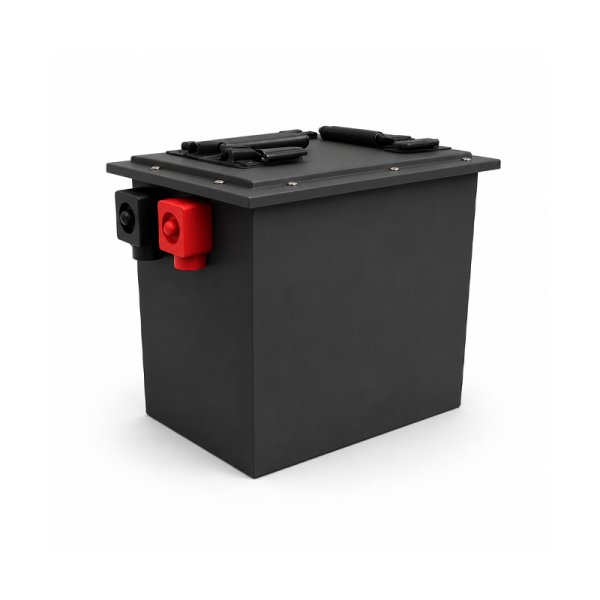
For electric motorcycles that require more energy capacity, FEBATT’s 48V 45Ah LFP power battery pack can support applications that need longer runtime and stronger endurance than smaller-capacity options.
How Do LFP Batteries Compare with NMC Batteries?
LFP and NMC are both lithium-ion battery chemistries, but they serve different priorities. NMC batteries use nickel, manganese, and cobalt. They often provide higher energy density, which can be useful when the vehicle needs longer range in a smaller battery space. LFP batteries usually provide stronger safety, longer cycle life, and better cost stability.
| Factor | LFP Battery | NMC Battery |
|---|---|---|
| Safety | Higher thermal stability | More heat-sensitive under abuse |
| Cycle Life | Usually longer | Usually shorter |
| Energy Density | Lower to moderate | Higher |
| Material Cost Stability | Generally more stable | More affected by nickel and cobalt |
| Best Use Case | Fleets, delivery, daily commercial use | Compact designs needing high energy density |
| Maintenance Risk | Lower when properly engineered | Higher thermal-management demand |
For B2B buyers, the better choice depends on the vehicle’s purpose. If the electric motorcycle must be as compact as possible and range is the top priority, NMC may be considered. If the priority is safety, cycle life, daily durability, and predictable cost, LFP is often the stronger choice.
This is why the LFP electric motorcycle battery is becoming popular in commercial fleets and OEM platforms where long-term value matters more than a single specification advantage.
Why Are LFP Batteries Suitable for Commercial Delivery Fleets?
Commercial delivery motorcycles operate under tough conditions. They may run many hours per day, stop and start frequently, carry cargo, and charge daily. These patterns place heavy stress on the battery.
The LFP electric motorcycle battery fits this use case because it is designed for repeated cycling and stable performance. It can help reduce early capacity loss, improve vehicle uptime, and simplify fleet maintenance planning.
For a delivery company, battery consistency is a business issue. If vehicles have different range behavior every day, route planning becomes difficult. If batteries degrade too soon, the fleet faces higher replacement cost. If charging safety is poor, storage and charging operations become risky.
LFP helps solve these problems by providing a safer and more predictable battery platform. For fleets that need reliable short- to medium-range urban delivery vehicles, LFP can be a very practical choice.

How Can an LFP Battery Pack Be Customized for Electric Motorcycles?
Electric motorcycle battery packs often need customization because vehicle designs vary. Different models may require different voltage platforms, dimensions, connector types, mounting structures, discharge rates, communication protocols, and waterproofing levels.
A supplier should be able to customize the LFP electric motorcycle battery pack based on real vehicle requirements. This may include 48V, 60V, 72V, or other voltage platforms, depending on the motor and controller. It may also include custom enclosure design, CAN communication, smart BMS settings, special cable layout, and charging-port configuration.
For B2B buyers, customization should be based on engineering data rather than guesswork. Important information includes motor power, controller current, expected range, available installation space, charging method, operating temperature, and daily usage pattern.
This is where an LFP electric motorcycle battery supplier adds value beyond the cells. The supplier should help match the battery to the vehicle so the final system works safely and efficiently.

What Should B2B Buyers Check Before Choosing a Supplier?
Choosing the right battery supplier is just as important as choosing the right chemistry. A low-cost battery pack can create serious problems if it lacks proper protection, testing, consistency, or after-sales support.
B2B buyers should check whether the supplier can provide stable cell sourcing, pack design experience, BMS configuration, quality testing, and technical documentation. The supplier should also understand electric motorcycle integration, not only battery assembly.
Important factors include cycle life, discharge current, charging performance, waterproof rating, vibration resistance, thermal protection, certification support, and warranty policy. Buyers should also ask whether the supplier can support sample testing, batch consistency, and long-term production.
A good supplier will not simply sell an LFP electric motorcycle battery as a standard box. It will help evaluate the vehicle’s real operating requirements and provide a battery solution that fits the application.
Why Are LFP Batteries Considered More Sustainable?
Sustainability is increasingly important for electric vehicle buyers, especially companies building commercial fleets or selling into regulated markets. LFP chemistry is often considered more sustainable because it does not rely on cobalt and uses more abundant materials.
The sustainability benefit also comes from service life. A battery that lasts longer creates less replacement waste. If a battery can remain useful for more operating cycles, its environmental impact is spread across a longer working life.
For companies with ESG goals, the LFP electric motorcycle battery offers a practical way to support safer and more responsible electric mobility. It is not only a marketing claim. It is connected to material selection, lifecycle performance, and reduced replacement frequency.
How Do LFP Batteries Benefit Other Electric Vehicles?
The same qualities that make LFP useful for electric motorcycles also make it valuable for other electric vehicles. Electric tricycles, golf carts, forklifts, utility vehicles, and low-speed commercial vehicles all benefit from long cycle life, safety, and stable output.
Electric tricycles often need durable batteries for cargo delivery and passenger transport. Golf carts need reliable runtime and low maintenance. Forklifts need batteries that can handle frequent cycling in warehouse environments. In each case, LFP chemistry supports daily work rather than occasional use.
This cross-application value gives B2B buyers more flexibility. A company can build a broader battery platform around LFP and apply it across multiple vehicle types. That can simplify sourcing, technical support, maintenance training, and spare parts management.
FAQ About LFP E-motorcycle battery
1.What is the average lifespan of an LFP battery in an electric motorcycle?
The lifespan depends on cell quality, BMS design, charging habits, temperature, discharge depth, and vehicle load. An LFP (Lithium Iron Phosphate) battery typically lasts 5 to 10 years in an electric motorcycle. In many applications, LFP batteries can support thousands of charge cycles. For B2B buyers, the real value is longer replacement intervals and more predictable maintenance planning.
2.Are LFP batteries safer than traditional lithium-ion batteries?
Yes. LFP batteries are generally considered safer than many cobalt- and nickel-based lithium-ion batteries because they have stronger thermal stability and lower risk of thermal runaway. However, battery pack design, BMS protection, and quality control are still essential.
3.Are LFP batteries suitable for commercial delivery fleets?
Yes. LFP batteries are well suited for delivery fleets because they support frequent cycling, stable power output, and long service life. They are especially useful for vehicles that operate daily and require predictable charging and dispatch schedules.
4.Can LFP batteries be customized for different electric motorcycle models?
Yes. LFP battery packs can be customized by voltage, capacity, size, connector type, enclosure structure, BMS settings, communication protocol, and charging method. Customization is important when the battery must fit a specific motorcycle frame or commercial duty cycle.
5.Is an LFP electric motorcycle battery better than an NMC battery?
It depends on the application. NMC may offer higher energy density, which can help when space is limited and maximum range is the top goal. LFP is usually better for safety, cycle life, cost stability, and daily commercial operation.
6.Are LFP batteries useful for electric tricycles, golf carts, and forklifts?
Yes. LFP batteries are suitable for many commercial electric vehicles because they offer long cycle life, strong safety, low maintenance, and stable performance. They are widely used beyond electric motorcycles.
Conclusion
The LFP electric motorcycle battery is gaining popularity because it solves real commercial problems. It improves safety, supports long service life, reduces replacement pressure, and provides stable performance for daily operation. For OEMs, it supports reliable product development. For fleets, it supports better uptime and lower lifecycle cost. For distributors, it creates a more credible battery solution for customers who care about long-term value.
The best battery choice depends on the vehicle’s design, duty cycle, power demand, charging method, and installation space. Buyers should not choose only by price or capacity. They should evaluate safety design, BMS protection, pack structure, testing standards, supplier support, and total cost of ownership.
For many electric motorcycle applications, especially commercial and B2B use, LFP is not just a battery chemistry. It is a practical platform for safer, more durable, and more predictable electric mobility.